Rice Flour Substitute: What to Use Instead
Free calculator from Baking Resources
Rice Flour Substitute Finder
Pick the use and what you have on hand.
Need more? Open the free Baking Substitutions.
More free baking tools


Want more options? Open the full Baking Substitutions tool.
- Best all-around swap: all-purpose flour, 1 cup (125 g) for 1 cup of rice flour.
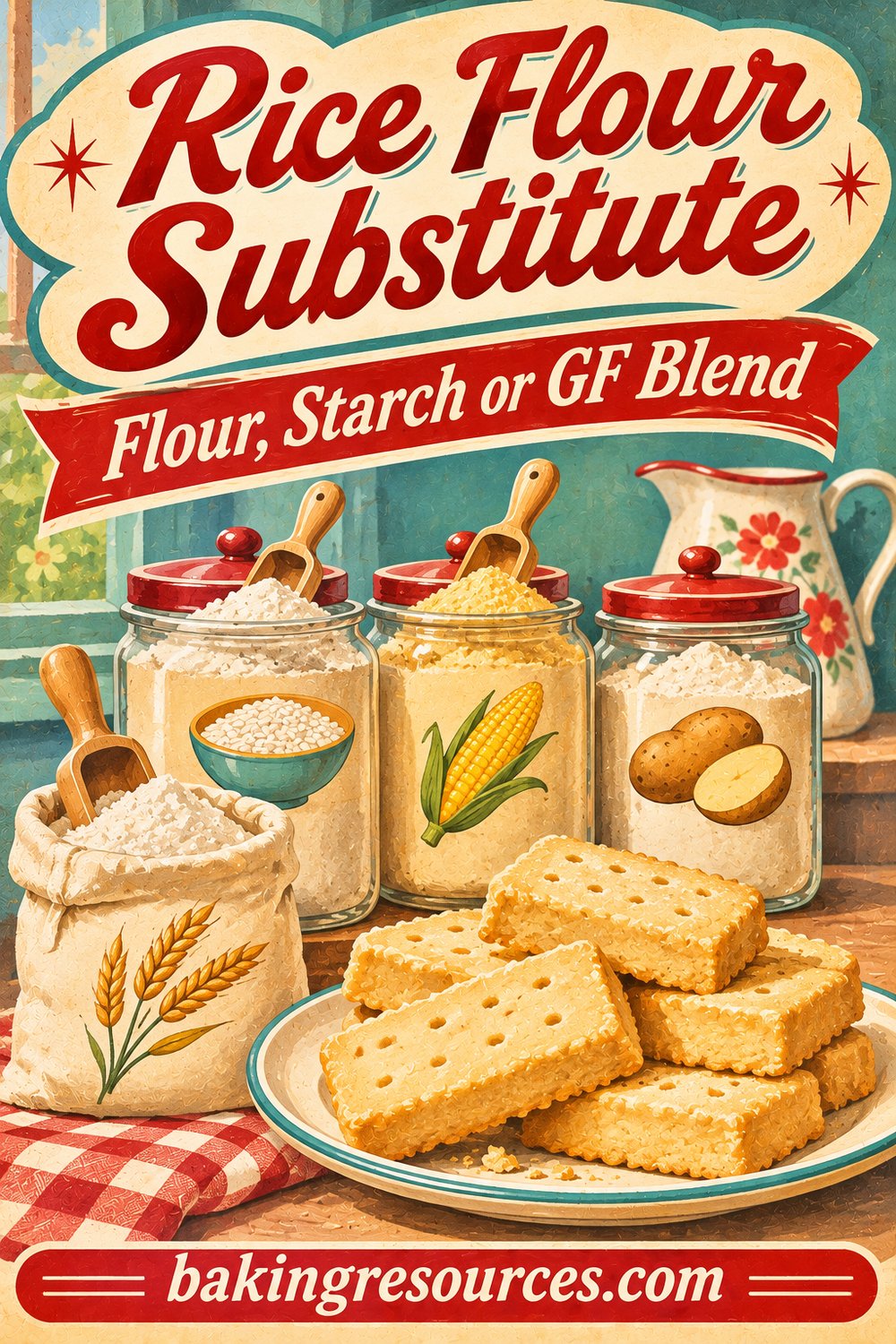
- Gluten-free swap: a gluten-free 1:1 blend, 1 cup for 1 cup.
- Crispy coatings: cornstarch, potato starch or tapioca starch, 1 cup for 1 cup.
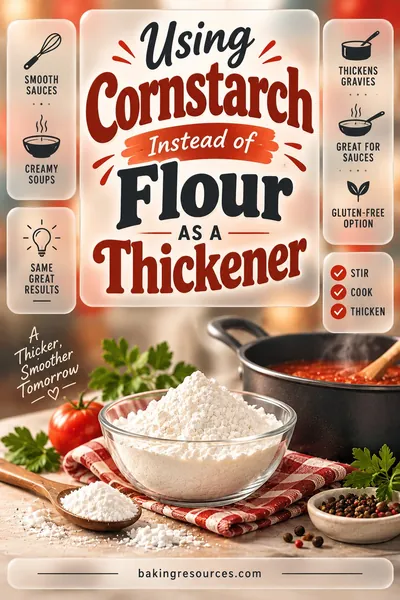
- Thickening: use 1 1/2 teaspoons cornstarch for 1 tablespoon rice flour.
- White rice flour weighs about 155 g per cup (5 1/2 oz), more than all-purpose flour at 125 g per cup.
- Sweet (glutinous) rice flour is different from regular rice flour, and has no perfect swap.
What is the best substitute for rice flour?
The best substitute for rice flour is all-purpose flour, used 1 for 1 by volume (1 cup, about 125 g, for 1 cup of rice flour). It works in cookies, shortbread, cakes, batters and coatings. If you need a gluten-free swap, use a gluten-free 1:1 baking blend instead.
The right swap depends on what the rice flour is doing in your recipe. Rice flour is fine, white and dry. It makes baked goods sandy and crisp, and it makes fried food stay crunchy. Use the calculator above to pick the best match for your use.
Here is a quick map of the options:
| Swap | Amount for 1 cup rice flour | Gluten free? | Best for |
|---|---|---|---|
| All-purpose flour | 1 cup (125 g) | No | Cookies, cakes, coatings |
| Gluten-free 1:1 blend | 1 cup | Yes, if labeled | Any baking |
| Cornstarch | 1 cup for coatings, 1/4 cup in baking mixes | Yes | Crisp coatings, soft crumb |
| Potato starch | 1 cup for coatings, 1/4 cup in baking mixes | Yes | Crisp coatings, tender cakes |
| Tapioca starch | 1 cup for coatings, 1/4 cup in baking mixes | Yes | Chewy, crisp edges |
| Oat flour | 1 cup | Only if certified | Cookies, muffins |
For grams, many conversions are on the ingredient weight chart, and the baking substitutions tool covers many other swaps.
What can you use instead of rice flour in baking?
In baking, use all-purpose flour 1 for 1, or a gluten-free blend if you need gluten free. Starches such as cornstarch or potato starch are best as part of the mix, about 1/4 of the amount, not as the whole swap.
Why not use a starch alone? Rice flour has some protein and some fiber, so it has body. Pure starch has none, and the dough can turn out gummy or crumble. A mix of three parts flour and one part starch gives you a texture that is close to rice flour.
- Shortbread. Rice flour gives the sandy, crumbly bite. All-purpose flour makes it a bit more tender-chewy. Mixing 3/4 cup flour with 1/4 cup cornstarch gets closer. See our shortbread cookies recipe for the standard flour amounts.
- Cakes and muffins. Use all-purpose flour, or a gluten-free blend. Oat flour also works well in muffins.
- Cookies. All-purpose flour works. Chill the dough if it spreads more than usual.
- Bread. Rice flour is a small ingredient in many gluten-free breads. Swap with a gluten-free blend, and check the gluten-free baking substitutions guide.
Weights matter here. White rice flour is heavier than all-purpose flour, about 155 g per cup compared with 125 g. If your recipe lists grams, weigh the swap rather than using a cup. The grams to cups converter helps. See how to measure flour for the spoon and level method.
What is a good rice flour substitute for frying or a crispy coating?
For a crispy coating, use cornstarch, potato starch or tapioca starch 1 for 1 by volume, or a mix of 3/4 cup all-purpose flour and 1/4 cup cornstarch. Rice flour fries up very crisp because it absorbs little oil, and these swaps do the same.
How they differ in the pan:
- Cornstarch: light, very crisp, pale gold. The most common swap.
- Potato starch: shatter-crisp and light, but browns fast.
- Tapioca starch: crisp with a slight chew, stays crisp longer.
- All-purpose flour: darker and a little softer. Add cornstarch for crunch.
Pat the food dry, press the coating on well, and fry at 350°F to 375°F (175°C to 190°C). If the oil is cooler, the coating soaks it up and turns greasy. If you are cooking in the oven or an air fryer, the air fryer conversion guide helps with time and temperature. Check our cornstarch substitute page if you are out of that too.
What can you use instead of rice flour to thicken a sauce?
To thicken a sauce, use 1 tablespoon of all-purpose flour for each 1 tablespoon of rice flour, or half as much cornstarch (1 1/2 teaspoons). Whisk it into cold liquid first so it does not clump, then simmer.
| Instead of 1 tablespoon rice flour | Use | How |
|---|---|---|
| All-purpose flour | 1 tablespoon | Simmer 2 to 3 minutes |
| Cornstarch | 1 1/2 teaspoons | Mix with cold water, simmer until clear |
| Potato starch | 1 1/2 teaspoons | Add at the end, do not boil hard |
| Tapioca starch | 1 tablespoon | Heat until glossy, do not overcook |
| Gluten-free 1:1 blend | 1 tablespoon | Whisk into cold liquid, simmer |
These amounts are a safe start. Sauces vary with the pan and the heat, so add a little at a time and wait a minute before adding more. More options are in cornstarch instead of flour, arrowroot substitute and potato starch substitute.
Is rice flour gluten free, and what gluten-free swaps work?
Yes, rice flour is naturally gluten free, because rice does not contain gluten. If you need gluten free for celiac disease, check that the package says gluten free, since flour can pick up gluten from shared equipment.
When you need a gluten-free swap, use a gluten-free 1:1 baking blend, or mix a starch such as cornstarch with another gluten-free flour. Almond flour and coconut flour can work in some recipes, but they behave very differently. Coconut flour absorbs a lot of liquid, so you cannot swap it 1 for 1. See almond flour substitute and coconut flour substitute before you try it.
Gluten-free doughs often need a little xanthan gum to hold together. If your blend does not have it, see our xanthan gum substitute page. The grams for popular blends are in gluten-free flour in grams.
What is a substitute for sweet (glutinous) rice flour?
Sweet rice flour, also called glutinous rice flour or mochiko, has no perfect substitute, because its sticky, chewy texture comes from a starch that other flours lack. For a chewy result, tapioca starch is the closest swap, used 1 for 1 by volume.
Regular white rice flour and sweet rice flour are different products, even though both come from rice and neither has gluten. Glutinous rice does not mean it contains gluten. Regular rice flour will not make mochi or chewy rice cakes. If a recipe specifies sweet rice flour, look for it in the baking aisle or an Asian grocery store.
What is the difference between white and brown rice flour?
White rice flour is milled from polished rice, so it is smooth, mild and light. Brown rice flour is milled from whole-grain rice, so it is a little grittier, nuttier and slightly denser. You can swap them 1 for 1 by volume in most recipes, but brown rice flour makes baked goods a little heavier.
Brown rice flour also goes rancid faster because of the natural oils in the bran. Store it in the fridge or freezer, as described in how to store flour. For a wider look at flour types, see types of flour.
Can you make rice flour at home?
Yes. Grind uncooked white rice in a high-speed blender or a clean spice grinder until it is a fine powder, then sift it. This takes about 3 to 5 minutes in a strong blender.
- Use dry, uncooked white rice. Long or short grain both work.
- Blend in small batches, in short bursts, so the blender does not overheat.
- Sift through a fine mesh sieve. Put the coarse bits back into the blender and grind again.
- Let the flour cool and settle before measuring. See how to sift flour.
Home-ground rice flour is often a little grainier than store-bought, which is milled finer. That is fine for coatings and shortbread, but it can make cakes gritty. A coffee-grinder style grinder usually gives a finer result than a blender.
Worked example: swapping in a recipe that calls for rice flour
Say a shortbread recipe asks for 1 1/2 cups (about 190 g) of all-purpose flour and 1/2 cup (about 80 g) rice flour, and you have no rice flour. Here is the swap.
- Replace the 1/2 cup of rice flour with 1/2 cup all-purpose flour (62 g). Now you have 2 cups total, about 250 g.
- For a sandier texture, take out 2 tablespoons of that flour and add 2 tablespoons cornstarch.
- Mix the dough just until it comes together, and chill it for 20 to 30 minutes before baking.
The shortbread will taste the same but have a slightly less sandy bite. If you need it gluten free, replace all 2 cups with a gluten-free 1:1 blend.
What mistakes should you avoid when swapping rice flour?
The common mistakes are swapping a starch alone, mixing up sweet and regular rice flour, and measuring by cup when the recipe lists grams. Each one changes the texture of the finished food.
- Using pure starch as the only flour. You get gummy or crumbly results.
- Using sweet rice flour for regular. The dough turns sticky and gummy.
- Not weighing. Rice flour is heavier than all-purpose flour. Use a scale. See kitchen scale vs measuring cups.
- Skipping the gluten-free check. If you bake for someone with celiac disease, read every label.
- Stirring starch straight into hot liquid. It clumps. Mix with cold liquid first.
Quick reference: rice flour substitutes
| Use | Best swap | Amount |
|---|---|---|
| Baking | All-purpose flour | 1 cup (125 g) for 1 cup rice flour |
| Gluten-free baking | Gluten-free 1:1 blend | 1 cup for 1 cup |
| Crispy coating | Cornstarch | 1 cup for 1 cup |
| Thickening | Cornstarch | 1 1/2 teaspoons for 1 tablespoon |
| Sweet rice flour | Tapioca starch | 1 cup for 1 cup |
| Sandy shortbread | 3/4 cup flour + 1/4 cup cornstarch | For 1 cup rice flour |
Frequently asked questions
What is the best substitute for rice flour?
All-purpose flour, 1 for 1 by volume (1 cup, about 125 g). For gluten free, use a gluten-free 1:1 blend. For frying, cornstarch or potato starch work well.
Can I use cornstarch instead of rice flour?
For coatings, yes, 1 for 1 by volume. For thickening, use half as much. In baking, do not use it alone, since it makes the texture gummy. Use 1/4 cornstarch and 3/4 flour.
Can I use all-purpose flour instead of rice flour?
Yes, in most recipes. Use 1 cup (125 g) for 1 cup of rice flour. The result will be a little less sandy and a little more tender-chewy.
Is rice flour the same as cornstarch?
No. Rice flour is made from ground rice and has some protein and fiber. Cornstarch is a pure starch from corn. They overlap in thickening and coatings, but not in baking.
Is rice flour gluten free?
Yes, rice is naturally gluten free. Look for a gluten-free label if you need to avoid gluten, since flour can pick up traces during processing.
What can I use instead of glutinous rice flour?
Tapioca starch is the closest swap for a chewy texture, used 1 for 1. Regular rice flour will not make the same sticky, chewy result.
Can you make rice flour at home?
Yes. Grind uncooked white rice in a high-speed blender or spice grinder, then sift. Re-grind any coarse bits so the flour is fine.
How much does a cup of rice flour weigh?
White rice flour weighs about 155 g per cup (5 1/2 oz), which is more than all-purpose flour at 125 g per cup. Weigh it if your recipe lists grams.