
Xanthan Gum Substitute: What to Use and How Much

The best xanthan gum substitute is psyllium husk powder, used at twice the amount: 2 teaspoons of psyllium for every 1 teaspoon of xanthan gum. Guar gum is the easiest one-for-one swap, and ground flax or chia mixed with a little water works in a pinch at 2 teaspoons per teaspoon of gum. All of them do the same job, which is holding a gluten-free crumb together so it doesn't crumble.
The right pick depends on what you are baking. Bread wants a stretchy binder, while cookies barely need one at all. Choose your amount and your swap in the calculator below and it works out the exact teaspoons, then read on for how much binder each kind of bake needs per cup of flour.
Free calculator
Xanthan gum substitute calculator
Pick how much xanthan gum your recipe calls for and the binder you have, and you get the exact amount to use.
More free baking tools



What xanthan gum actually does
In regular baking, gluten is the stretchy net that traps air and holds a crumb together. Gluten-free flours like rice, sorghum and tapioca don't form that net. Without help, a gluten-free cake crumbles the second you slice it, and bread dough can't hold the gas the yeast makes.
Xanthan gum fills that gap. It is a powder made by fermenting sugar, and a tiny amount turns thick and gummy when it meets liquid. That gel coats the flour, adds stretch, keeps moisture in and helps the bake hold its shape. It also thickens sauces and keeps dressings from separating.
A good substitute needs to do the same thing: absorb water and form a sticky gel. That is why the best swaps are all things that turn gel-like when wet, such as psyllium, guar gum, flax, chia and gelatin. Starches like cornstarch thicken, but they don't bind a crumb, so they are not a real stand-in for baking.
How much binder per cup of gluten-free flour
Before you swap anything, check how much xanthan gum your bake actually needs. The amount rises with how much structure the recipe asks for. These are standard starting amounts per 1 cup of gluten-free flour, with the matching amount of each main substitute.
| What you are baking | Xanthan gum | Guar gum | Psyllium husk powder | Ground flax or chia |
|---|---|---|---|---|
| Cookies | 1/4 tsp | 1/4 tsp | 1/2 tsp | 1/2 tsp + 1 tsp water |
| Cakes and pancakes | 1/2 tsp | 1/2 tsp | 1 tsp | 1 tsp + 2 tsp water |
| Pie crust | 1/2 tsp | 1/2 tsp | 1 tsp | 1 tsp + 2 tsp water |
| Muffins and quick breads | 3/4 tsp | 3/4 tsp | 1 1/2 tsp | 1 1/2 tsp + 1 tbsp water |
| Yeast bread and pizza dough | 1 to 1 1/2 tsp | 1 to 1 1/2 tsp | 2 to 3 tsp | 2 to 3 tsp + double the water |
One big thing to check first: many store-bought gluten-free blends already contain xanthan gum. Read the label. If it lists xanthan or guar gum, you usually don't need to add any binder at all, and adding more can make the bake gummy.
For help building your own blend, our guide to gluten-free flour in grams lists the weights of rice flour, tapioca and other starches, and gluten-free baking substitutions covers flour swaps beyond the binder.
 Baking guideGluten Free Flour in Grams: Rice, Tapioca and Starch WeightsSee the chart →
 Baking guideGluten Free Baking Substitutions: Flours and BindersPick a substitute →
The best xanthan gum substitutes, compared
| Swap | For 1 tsp xanthan gum | Best in | Watch out for |
|---|---|---|---|
| Psyllium husk powder | 2 tsp | Yeast bread, pizza, rolls | Can tint the crumb a little purple or gray-brown |
| Guar gum | 1 tsp | Cakes, muffins, cookies, cold sauces | Too much makes a heavy, stringy crumb |
| Ground flaxseed | 2 tsp + 4 tsp hot water | Muffins, quick breads, cookies | Nutty flavor and brown flecks |
| Ground chia seed | 2 tsp + 4 tsp water | Muffins, pancakes, cookies | Dark specks unless you use white chia |
| Unflavored gelatin | 2 tsp | Cakes, bread, cookies | Not vegetarian |
| Egg white | 1 large egg white | Cakes, quick breads | Adds liquid; trim 2 tbsp elsewhere |
| Leave it out | Nothing | Cookies and brownies only | Slightly more crumbly |
Psyllium husk: the best swap for bread
Psyllium husk powder comes from the seed coat of a plant in the plantain family. It soaks up a huge amount of water and turns into a flexible gel that acts a lot like gluten. That stretch is why gluten-free bread made with psyllium can be shaped, scored and baked into a real loaf with an open crumb, something xanthan gum alone struggles to do.
Use 2 teaspoons of psyllium husk powder for every teaspoon of xanthan gum. Because it is so thirsty, your dough may need a few extra tablespoons of water. A psyllium dough should feel soft and a bit sticky, more like a thick paste than a regular bread dough.
Buy the fine powder, not the whole husks, for baking. Whole husks don't blend in as smoothly; if that is all you have, grind them fine in a spice grinder first. Some brands turn the crumb slightly purple or gray, which is harmless. If you run out of psyllium itself, our page on the psyllium husk substitute options covers what to use instead.
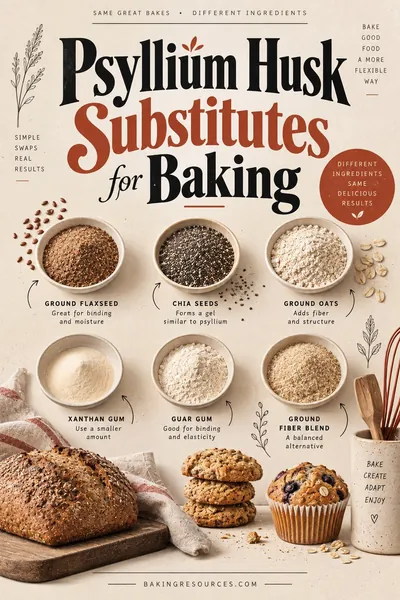 Baking guidePsyllium Husk Substitutes for Baking and Exact RatesGet the swap chart →
Guar gum: the closest one-for-one swap
Guar gum comes from the guar bean and works almost exactly like xanthan gum, so you can swap it 1 to 1. It shines in cakes, muffins and anything cold, like ice cream or a no-bake filling. In yeast bread, some bakers add a little extra, up to 1 1/2 teaspoons for each teaspoon of xanthan, because guar is slightly less strong in warm, risen doughs.
Measure carefully. Guar gum is powerful, and too much gives a heavy, stringy or slimy texture. Level the spoon with a knife, and whisk the gum into the dry ingredients before any liquid goes in so it doesn't form clumps.
Ground flax and chia: pantry fixes
Ground flaxseed and ground chia both form a sticky gel when soaked, which is the same trick behind a flax egg. For each teaspoon of xanthan gum, stir 2 teaspoons of ground seed into 4 teaspoons of hot water and let it sit about 5 minutes until it turns thick and goopy, then add it with the wet ingredients.
These work best in hearty bakes like muffins, banana bread, oatmeal cookies and pancakes, where a nutty flavor and a few flecks blend right in. They are not strong enough for a tall loaf of yeast bread on their own. Grind whole seeds first; whole seeds won't release their gel. Our flaxseed substitute page has more on how flax behaves in baking.
 Baking guideFlaxseed Substitutes for Baking: 7 Swaps That BindShow me the ratios →
Gelatin and egg whites
Unflavored gelatin
Gelatin adds stretch and helps hold moisture. Use 2 teaspoons of unflavored powdered gelatin for each teaspoon of xanthan gum. Sprinkle it over 2 tablespoons of the recipe's cool liquid, let it sit 5 minutes to soften, then warm it gently until it dissolves before mixing it in. Gelatin is made from animal collagen, so skip it for vegetarian or vegan guests.
Egg whites
Egg whites set into a firm protein structure as they bake, so they can stand in for xanthan gum in cakes and quick breads. Use 1 large egg white for each teaspoon of gum, and since a large white is about 2 tablespoons of liquid, cut 2 tablespoons of milk or water from the recipe. Our guide to what eggs do in baking explains why they bind so well. If you need an egg-free version, see the vegan egg white substitute options.
 Baking guideWhat Do Eggs Do in Baking? Structure, Lift and RichnessRead it next →
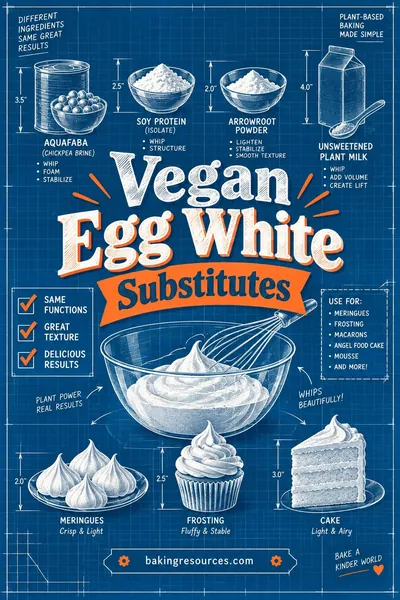 Baking guideVegan Egg White Replacer: Aquafaba Ratios That WorkWhat can I use? →
Sauces, gravy and holiday baking
Thanksgiving and Christmas are when a lot of home cooks bake gluten-free for the first time, for a guest or a family member. The holiday table brings a few special cases.
Gravy and sauces. Xanthan gum thickens with just a pinch, around 1/8 to 1/4 teaspoon per cup of liquid. If you don't have it, cornstarch is the easy swap for gravy: whisk 1 to 2 tablespoons with cold water into a slurry for each cup of liquid, then simmer until thick. Arrowroot works the same way and stays clear. See the cornstarch substitute and arrowroot substitute guides for more thickeners.
 Baking guideCornstarch Substitute: 9 Swaps and When to Use EachFind my swap →
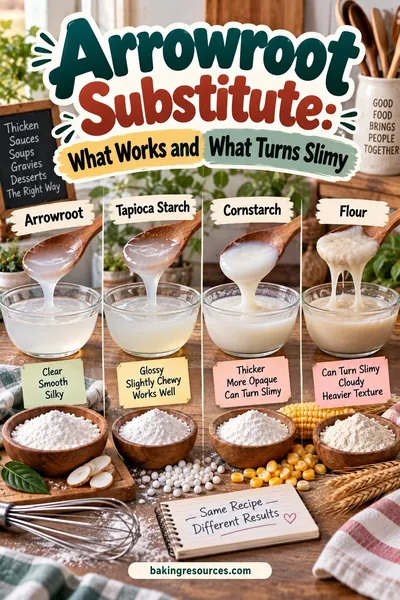 Baking guideArrowroot Substitute: What Works and What Turns SlimySee the swaps →
Pie crust. Gluten-free pie dough cracks easily. Use 1/2 teaspoon of guar gum or 1 teaspoon of psyllium powder per cup of flour, and chill the dough well before rolling. Blind baking helps keep the bottom crisp under a pumpkin filling; our steps on how to blind bake a pie crust work for gluten-free dough too.
 Baking guideHow to Blind Bake a Pie Crust Without a Soggy BottomSee how it's done →
Dinner rolls and stuffing bread. Psyllium is the winner here, since it gives rolls a soft pull-apart texture that xanthan gum can't match.
Worked example: swapping the gum in a gluten-free loaf
Say a gluten-free sandwich bread calls for 3 cups of gluten-free flour (with no gum in the blend) and 1 tablespoon of xanthan gum, which is 3 teaspoons, or 1 teaspoon per cup.
- Pick the swap. For bread, psyllium husk powder is the best choice.
- Do the math. 3 teaspoons of xanthan times 2 is 6 teaspoons, or 2 tablespoons, of psyllium powder.
- Add it to the dry mix. Whisk the psyllium into the flour, yeast and salt so it spreads evenly.
- Adjust the water. Add the water from the recipe, then 2 to 3 more tablespoons if the dough feels stiff. It should be soft and a little sticky.
- Rest it. Let the dough sit 10 minutes so the psyllium can fully hydrate before you shape it.
Bake as directed and check for an internal temperature of about 205 to 210°F, since gluten-free bread needs to be fully baked through to avoid a damp center.
Mistakes and troubleshooting
- Bread is gummy inside. Too much binder, or the loaf was underbaked. Cut the gum or psyllium by a quarter and bake to at least 205°F. Our guide on why bread turns out gummy covers more causes.
- Cake crumbles when you slice it. Not enough binder. Check the table above and add a little more next time.
- Stringy or slimy texture. Too much guar gum. It is stronger than it looks, so level your spoon.
- Lumps of gel in the batter. The gum went straight into liquid. Always whisk it into the dry ingredients first.
- Doubled up by accident. Your flour blend already had xanthan in it. Read the label before adding any.
- Flax batter is too thick. The seeds kept soaking. Add a splash of milk or water to loosen it.
 Baking guideWhy Is My Bread Gummy Inside? Causes and Real FixesFix it next time →
Questions people ask
Can I bake gluten-free without xanthan gum?
Yes, for some bakes. Cookies and brownies hold together fine without any binder because they are dense and short. Cakes, muffins and especially bread need something to replace gluten, or they crumble. In those, swap in psyllium husk powder, guar gum, ground flax or chia, gelatin or egg whites at the amounts in the charts above.
How much psyllium husk replaces 1 teaspoon of xanthan gum?
Use 2 teaspoons of psyllium husk powder for every 1 teaspoon of xanthan gum. Psyllium is very thirsty, so add 2 to 3 extra tablespoons of water to bread dough if it feels stiff, then let it rest about 10 minutes before shaping. Use the fine powder, or grind whole husks first so they blend in smoothly.
Is guar gum the same as xanthan gum?
They are different ingredients that do nearly the same job. Xanthan gum is made by fermenting sugar, and guar gum comes from a bean. You can swap them 1 to 1 in most baking. Guar gum does especially well in cold foods like ice cream, while xanthan gum holds up a little better in warm, risen bread doughs.
Can I use cornstarch instead of xanthan gum?
Only for thickening. Cornstarch will thicken gravy, pie filling or a sauce, but it does not bind a gluten-free crumb the way xanthan gum does. For baking, choose a gel-forming swap like psyllium, guar gum, flax or chia. For gravy, use 1 to 2 tablespoons of cornstarch in a cold-water slurry per cup of liquid.
Do I need xanthan gum if my flour blend already has it?
No. Many gluten-free 1-to-1 blends already include xanthan gum or guar gum, and adding more can make the bake heavy and gummy. Check the ingredient list on the bag. If a binder is listed, follow the recipe without any extra gum. If it isn't, add the amount in the chart for your type of bake.
What is the best vegan xanthan gum substitute?
Psyllium husk powder and guar gum are both plant-based and work best. Ground flax or chia mixed with water is another good vegan option for muffins, pancakes and cookies. Skip gelatin and egg whites, since both come from animals. For bread, psyllium gives the most bread-like stretch of any vegan binder.