Arrowroot Substitute: What to Use Instead, Job by Job

The quick answer: tapioca starch and potato starch replace arrowroot 1 tablespoon for 1 tablespoon, and cornstarch does too, as long as you bring the mixture to a boil instead of pulling it off the heat early. If you have none of those, 2 tablespoons of all-purpose flour thickens the same amount of liquid and gives you a cloudy result instead of a clear one.
That covers the amount. Picking the right arrowroot substitute is a separate question, because arrowroot is not a generic starch. It has four behaviors that no other pantry starch combines, and whichever one your recipe was leaning on is the one your swap has to reproduce.
Working with an odd amount? Our free baking substitutions finder scales any of these swaps to the exact quantity your recipe calls for.
Updated September 2026
The four things arrowroot does that other starches do not
Read this section before the chart. Every substitution decision below comes out of it.
1. It sets below a boil. Arrowroot granules swell and thicken somewhere around 140 to 160°F, well under the temperature cornstarch needs. A sauce goes from watery to coating in the time it takes to reach a bare simmer. That is why arrowroot recipes almost always say to add it at the end and take the pan off the burner.
2. It breaks down under prolonged heat. The same low set temperature is a liability. Hold arrowroot at a hard boil, or keep a filling bubbling for twenty minutes, and the swollen granules rupture and the gel thins back out. There is no recovering it by cooking longer. Cooking longer is the problem.
3. It goes slimy with dairy. Arrowroot in milk, cream, or a custard base produces a slippery, faintly ropey mouthfeel that people describe as slimy or snotty. It is not spoilage and it is not your technique. Arrowroot's paste is naturally long and cohesive rather than short and clean, and the milk proteins and fat exaggerate that. This is the single most common reason someone goes looking for a substitute in the first place.
4. It survives the freezer. Arrowroot gels hold together through freezing and thawing far better than cornstarch gels, which break and weep water. A make-ahead fruit sauce or a freezer pie thickened with arrowroot comes back close to how it went in.
There is a fifth property worth naming, which is shine. Arrowroot sets clearer and glossier than almost anything else, which is why glazes and fruit toppings use it. Clarity is easy to match though, since tapioca and potato starch are both clear. The four above are the ones that trip people up.
Arrowroot substitute chart: every swap per tablespoon
Every amount below replaces 1 tablespoon of arrowroot. The last four columns tell you which of arrowroot's behaviors the substitute keeps and which it drops.
| Substitute | Amount | Sets below a boil | Survives a long bake | Safe with dairy | Freezes and thaws |
|---|---|---|---|---|---|
| Tapioca starch | 1 tbsp | Partly, wants a short simmer | Fair, gets stringy if pushed | Yes | Excellent |
| Potato starch | 1 tbsp | Yes, the closest match | No, thins if boiled | Yes | Fair |
| Cornstarch | 1 tbsp | No, needs a full boil | Yes | Yes, this is its home ground | Poor, weeps after thawing |
| Instant ClearJel | 1 tbsp | Yes, needs no heat at all | Excellent | Yes | Excellent |
| Sweet rice flour (mochiko) | 1 tbsp | No | Excellent | Yes | Excellent |
| White rice flour | 2 tbsp | No | Good | Yes | Good |
| All-purpose flour | 2 tbsp | No, needs 2 to 3 minutes of cooking | Excellent | Yes | Fair |
| Xanthan gum | 1/8 to 1/4 tsp | Yes, no heat needed | Excellent | Yes | Excellent |
Three notes before you pick a row.
Nothing in that table matches arrowroot on all four counts. Instant ClearJel comes closest and is the least likely thing to be in your cupboard. Every other choice is a trade, so choose based on which property your recipe actually needs rather than on which starch is nearest the front of the shelf.
Tapioca starch and tapioca flour are the same product. Instant tapioca, the small pearls sold for pudding, is not. Pearls work in a pie if you grind them fine first and let the filling rest fifteen minutes before it goes in the oven.
Xanthan gum is far stronger than any starch here and gives a slick, artificial texture if you overshoot. Start at 1/8 teaspoon per tablespoon of arrowroot, whisk hard, and wait two full minutes before deciding whether it needs more.
Substituting for the low-temperature set
This is arrowroot's headline trick, and it is the one people notice losing.
If your recipe says to stir the arrowroot in off the heat, or to add it at the very end and pull the pan immediately, the recipe was built around a starch that thickens before the liquid boils. Delicate fruit is the usual reason. Boiling raspberries for a minute to satisfy a cornstarch is enough to turn them from fruit into jam.
Potato starch is the true match. It sets around 150°F and behaves almost identically off the heat. Swap it in tablespoon for tablespoon and change nothing else about the method. Our potato starch substitute guide runs the same comparison from the other side if potato starch is the box you are trying to replace.
Instant ClearJel is the other match, and it needs no heat at all. Whisk it with the sugar, stir it into cold or barely warm fruit, and it thickens as you mix. Note the word instant. Regular ClearJel is a different product and does need cooking.
Cornstarch is the swap that fails quietly. Use it at 1:1 and follow the original off-the-heat instruction and you get a sauce that looks slightly thicker in the pan and turns to liquid in the bowl. Cornstarch begins working around 180°F but does not reach full strength until the liquid genuinely bubbles. If you are swapping cornstarch in, you have to change the method too: bring the mixture to a boil, hold it there for about a minute, then take it off. Whether that is acceptable depends entirely on what the heat does to the rest of the recipe.
Substituting for a long bake, where arrowroot is the weak one
Now flip it. Sometimes people replace arrowroot not because they ran out but because it let them down in a pie that baked for an hour.
Arrowroot in a filling that spends 45 to 60 minutes in a hot oven can loosen. The gel forms early, the filling looks set at the halfway mark, and then the prolonged heat shears the swollen granules apart and the slice runs.
For anything with a long bake time, the ranking is:
- Instant ClearJel, at 1:1. It is what commercial bakeries and home canners use for exactly this reason, and it holds through heat and acid both.
- Cornstarch, at 1:1. It wants the heat and it holds. The one thing to check is acid: cornstarch weakens in cherry, cranberry, rhubarb, and heavily lemoned fillings, which is where arrowroot was better.
- Sweet rice flour, at 1:1. Extremely stable and completely opaque, so keep it for fillings nobody sees.
- All-purpose flour, at 2 tablespoons per tablespoon of arrowroot. Bulletproof under heat, cloudy in the bowl, and it needs a couple of minutes of cooking to lose the raw taste.
Tapioca sits in the middle. It handles a normal pie bake, and it turns stringy and elastic if the filling boils hard for a long stretch.
Substituting when there is dairy in the pan
If you searched for an arrowroot substitute because your pudding came out slippery, this is your section, and the answer is short.
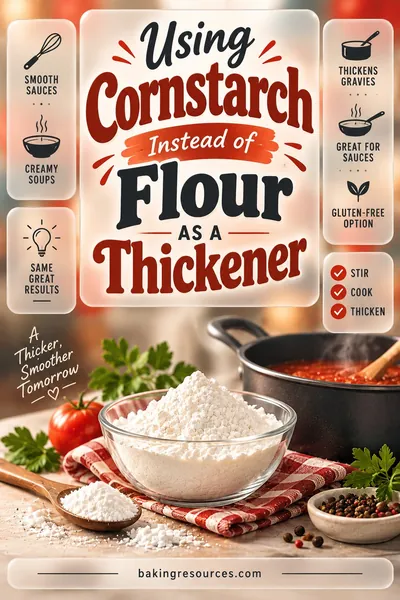
Use cornstarch, 1 tablespoon for 1 tablespoon, and bring it to a boil.
Cornstarch and dairy is one of the great pairings in the kitchen. Cornstarch forms a short, clean gel that sets firm as it cools, which is precisely what a pastry cream, a cream pie, or a stovetop pudding needs. It slices, it holds a spoon shape, and it has no slick aftertaste.
Flour also works in dairy and is the traditional choice in some custard recipes, at 2 tablespoons per tablespoon of arrowroot, cooked out for two or three minutes.
What you should not do is reach for another root starch hoping it fixes the problem. Potato starch is better than arrowroot with milk but still on the slippery side of the family, and tapioca gives a stretchy, slightly bouncy set that reads as odd in a custard. Cereal starches, meaning corn, wheat, and rice, are the ones that behave in dairy.
The same logic applies to dairy-free milks that behave like dairy. Full-fat coconut milk and canned oat cream both have enough fat and protein to bring out arrowroot's slick side, so cornstarch is the safer thickener there too.
Our cornstarch substitute guide covers the reverse trip, including exactly how much of each starch replaces a spoonful of cornstarch, so between the two pages you can convert in either direction.
Substituting in something that gets frozen
Freeze-thaw stability is the property people forget they were relying on until a make-ahead dessert weeps all over the plate.
- Tapioca starch, 1:1, is the best swap. It is the most freeze-thaw stable common starch and comes out of the freezer with its gel intact.
- Instant ClearJel, 1:1, is equally stable and clearer.
- Sweet rice flour, 1:1, is very stable but opaque.
- Cornstarch is the wrong answer here. Ice crystals break a cornstarch gel apart, and on thawing the water separates out, leaving a spongy filling sitting in a puddle. This is the one situation where cornstarch is a genuine downgrade from arrowroot rather than a sideways move.
Arrowroot flour vs arrowroot powder vs arrowroot starch
All three names describe the same thing, and the labeling is inconsistent purely because nobody standardized it.
Arrowroot is the starch extracted from the rhizome of Maranta arundinacea. The rhizomes are washed, pulped, and rinsed, and the starch settles out and is dried. There is no bran, no germ, and no protein worth counting, so calling it a flour is loose language rather than a different product. A bag marked arrowroot flour, arrowroot powder, or arrowroot starch will behave the same way in your pan.
| Label you might see | What it actually is | Use it the same way? |
|---|---|---|
| Arrowroot starch | Extracted arrowroot starch | Yes |
| Arrowroot powder | Extracted arrowroot starch | Yes |
| Arrowroot flour | Extracted arrowroot starch | Yes |
| Tapioca labeled "arrowroot" | Cassava starch, sold under the arrowroot name in some markets | Close, but it is tapioca |
| Kudzu or kuzu starch | A different plant entirely | No, different set and different amount |
Two cautions are worth carrying.
Some products sold as arrowroot are cassava. In parts of the Caribbean and Southeast Asia the word arrowroot is applied loosely, and what is in the bag is tapioca. Practically this is a soft landing, since tapioca is one of the recommended substitutes anyway, but it explains why a bag you bought abroad behaves stretchier than the one at home.
Kudzu is not arrowroot. Kuzu, used in Japanese cooking, sets firmer and is usually used in smaller amounts. Do not treat the two as interchangeable.
Unlike flour and potato, where the flour version and the starch version are genuinely different ingredients, arrowroot has no equivalent trap. There is no such thing as whole arrowroot flour on a supermarket shelf. If you want that particular mistake, it lives with potato flour and potato starch, and our potato starch substitute guide has the comparison.
Arrowroot in a gluten-free flour blend
Thickening gets all the attention, but a lot of home bakers meet arrowroot as a listed percentage in a gluten-free blend rather than as a spoonful in a saucepan. Its job there is structural, and a thickening substitute is not automatically a blend substitute.
In a blend, arrowroot does three things. It dilutes the rice flour so the finished crumb is not gritty. It adds crispness and a light, short bite, especially in cookies and crackers. And it browns readily, so a blend carrying arrowroot gives a better crust color than one built on rice flour alone. It typically sits at 15 to 25 percent of a blend by weight.
If you are out, swap by weight, not by volume:
- Tapioca starch, gram for gram, is the closest structural match. Expect a slightly chewier, stretchier result and a bit more browning. If your blend already contains tapioca, just increase it by the missing amount.
- Cornstarch, gram for gram, gives a finer, softer crumb and a little less crispness. It is the better pick for cakes and muffins, the weaker pick for crackers and shortbread.
- Potato starch, gram for gram, brings more moisture retention, which helps a gluten-free bread stay soft on day two and makes a cookie slightly cakier.
Do not replace arrowroot with more rice flour. That is the mistake that produces sandy gluten-free baking. A starch and a flour are different structural components, and swapping one for the other changes the whole balance of the blend. Our gluten-free baking substitutions guide goes into blend percentages and binder rates properly.
One measurement note. Starches differ in bulk density, so a blend built by cups drifts every time you change one component. Cornstarch weighs 128 g per cup on our ingredient weights chart, and arrowroot scoops lighter than that, so a cup-for-cup swap quietly changes the ratio. Weigh gluten-free blends. This is the place where volume measuring does the most damage.
Arrowroot's other jobs, and whether the same swaps apply
Beyond thickening and blends, arrowroot turns up in three smaller roles.
Crisping a coating. A few tablespoons of arrowroot in a dredge or a shortbread gives a sandier, crisper bite because it adds starch and no protein. Cornstarch does the same job. Rice flour does it better than either for a fried coating.
Keeping powdered sugar from caking. If you grind your own confectioners' sugar, about 1 tablespoon of starch per cup keeps it loose. Arrowroot, cornstarch, and tapioca are interchangeable here.
Softening a crumb. Pulling a couple of tablespoons of flour out of a cup and putting starch in their place lowers the protein and gives a more tender crumb. Arrowroot works for this exactly as cornstarch does, and the swap between them is one to one. The sifting matters more than which starch you used, and the cake flour substitute page covers that method in full.
Worked example: a dairy-free coconut pudding that came out slippery
A stovetop coconut pudding: one 13.5 oz can of full-fat coconut milk, 1/3 cup sugar, a pinch of salt, vanilla, and 3 tablespoons of arrowroot, whisked in off the heat.
Made as written, this is the classic slimy failure. Coconut milk carries a lot of fat and enough protein to interact with arrowroot's long, cohesive gel, and the pudding comes out slick and stringy on the spoon rather than smooth and firm.
The fix is cornstarch at 3 tablespoons, with one method change.
- Whisk the cornstarch with the sugar and salt while everything is still dry, so the starch disperses instead of clumping.
- Whisk in about 1/2 cup of the cold coconut milk to make a smooth slurry.
- Heat the rest of the coconut milk to a bare simmer, then stream the slurry in while whisking.
- Bring the whole thing to an actual boil and hold it for 1 minute. This is the step that separates a set pudding from a thin one, and it is the opposite of what the arrowroot version told you to do.
- Take it off the heat, stir in the vanilla, and pour into cups. It will look loose while hot and set firm as it chills.
Outcome: a clean, firm, sliceable set with no slick aftertaste. The pudding is slightly more opaque than the arrowroot version would have been, which nobody notices in a coconut pudding.
If you want to keep the glossier look, tapioca starch at 3 tablespoons is the compromise. Simmer it briefly rather than boiling hard, and accept a slightly bouncier, more elastic set.
Worked example: a fruit glaze that has to go back in the oven
A tart glaze: 1 cup of fruit juice, 2 tablespoons sugar, and 1 tablespoon of arrowroot, brushed over fruit on a baked tart and then given ten minutes in a low oven to set.
Here arrowroot is the wrong tool for a different reason. The glaze sets beautifully on the stove and then loosens and runs during those ten minutes in the oven, because prolonged heat is arrowroot's weak point.
Swap to cornstarch at 1 tablespoon. Bring the juice and cornstarch to a boil for a minute, brush it on, and the glaze holds through the second heating without thinning. You lose a little of the mirror shine and gain a glaze that stays where you put it.
Or swap to instant ClearJel at 1 tablespoon and skip the second bake entirely, since it thickens cold.
Troubleshooting the swap
| What happened | Why | Fix |
|---|---|---|
| Sauce stayed thin | Cornstarch swapped in but added off the heat | Bring it to a full boil for 1 minute |
| Filling thinned back out | Potato starch or arrowroot boiled too long | Add these at the very end, off the heat |
| Pudding came out slippery | Arrowroot used with milk, cream, or coconut milk | Use cornstarch and boil it for a minute |
| Filling went cloudy | Flour or white rice flour used in a clear filling | Use tapioca, potato starch, or instant ClearJel |
| Filling turned stringy | Tapioca overheated | Pull it off as soon as it thickens |
| Frozen dessert wept on thawing | Cornstarch used in something that gets frozen | Use tapioca or instant ClearJel |
| Gluten-free bake turned gritty | Rice flour used to replace the arrowroot in a blend | Replace starch with starch, never with flour |
| Sauce turned slick and rubbery | Too much xanthan gum | Start at 1/8 tsp and wait 2 minutes before adding more |
Frequently asked questions
What is the best substitute for arrowroot?
Tapioca starch at 1:1 is the best all-around swap, because it is clear, freeze-thaw stable, and acid tolerant, which covers most of what arrowroot was doing. Use potato starch instead if the recipe depends on thickening below a boil, and cornstarch instead if there is dairy in the pan or the filling faces a long bake.
Can I use cornstarch instead of arrowroot?
Yes, tablespoon for tablespoon, but change the method. Arrowroot thickens below boiling and cornstarch does not reach full strength until the liquid actually bubbles. If you follow an arrowroot recipe's off-the-heat instruction with cornstarch, the sauce stays thin. Bring it to a boil for about a minute instead.
Is arrowroot flour the same as arrowroot powder?
Yes. Arrowroot flour, arrowroot powder, and arrowroot starch are three names for the same extracted starch, and the labeling varies by brand rather than by product. The one thing to watch is that some products sold as arrowroot in Caribbean and Southeast Asian markets are actually cassava, which is tapioca.
Why did my arrowroot sauce turn slimy?
Because there was dairy in it. Arrowroot forms a long, cohesive gel, and milk proteins and fat push that into a slippery, faintly ropey texture. It is a property of the starch, not a mistake in your technique. Use cornstarch for anything milk based, and for coconut milk and other high-fat plant creams too.
Can I use flour instead of arrowroot?
Yes, at 2 tablespoons of all-purpose flour per 1 tablespoon of arrowroot. Cook it for two to three minutes so the raw taste disappears. The trade-off is appearance: the result goes cloudy and matte instead of clear and glossy, so keep this swap for gravies, opaque fillings, and anything hidden under a crumble.
What can I use instead of arrowroot in a gluten-free flour blend?
Tapioca starch gram for gram is the closest match and gives a slightly chewier crumb with good browning. Cornstarch gram for gram gives a finer, softer crumb and suits cakes better than crackers. Do not add extra rice flour instead, because replacing a starch with a flour is what makes gluten-free baking gritty.
Does arrowroot freeze better than cornstarch?
Yes, by a wide margin. Cornstarch gels break down when frozen and weep water on thawing, leaving a spongy filling. Arrowroot holds together through a freeze-thaw cycle. If you are replacing arrowroot in something destined for the freezer, tapioca starch is the swap that keeps that advantage.
How much arrowroot thickens 1 cup of liquid?
About 1 tablespoon, or roughly 8 g, gives a light sauce consistency, and 2 tablespoons gives a thick, spoon-coating one. Starches vary in bulk density, so weighing is more reliable than scooping when you are converting between them. Our ingredient weights chart has the reference weights.
Related guides
- Cornstarch Substitute for the same comparison run in the opposite direction
- Potato Starch Substitute for the other low-temperature root starch
- Gluten Free Baking Substitutions for blend percentages and binder rates
- Cake Flour Substitute for the starch swap that softens all-purpose flour
- Ingredient Weights Chart for gram weights on every starch above
- Substitutions Finder to look up any swap with exact ratios