How to Store Flour

Move flour out of the paper bag into an airtight, opaque container and keep it somewhere cool and dark. That's the whole job for white flour. For whole wheat, rye, and any nut flour, put it in the fridge or freezer instead, because those spoil in months rather than years.
The reason for the split is worth understanding, because it explains every storage rule below. Flour goes rancid, not moldy. It's too dry to grow anything. What actually spoils is the oil in the wheat germ, which oxidizes and turns bitter. White flour has the germ milled out, so it lasts a year. Whole wheat keeps the germ, so it lasts one to three months at room temperature.
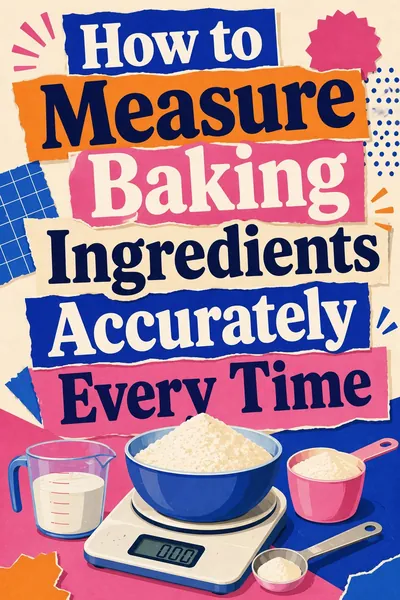
Storage changes how flour packs down, which changes how much a cup holds. Our free ingredient weights chart gives you the real number so a compacted container doesn't throw off your baking.
Updated September 2026
How long flour lasts, by type
The dividing line is whether the germ and bran are still in there. More oil means a shorter life, every time.
| Flour | Pantry, unopened | Pantry, opened | Fridge | Freezer |
|---|---|---|---|---|
| All-purpose, white | 12 months | 6 to 8 months | 1 year | 2 years |
| Bread flour | 12 months | 6 to 8 months | 1 year | 2 years |
| Cake flour | 12 months | 6 to 8 months | 1 year | 2 years |
| Self-rising flour | 6 months | 4 to 6 months | 9 months | 1 year |
| Whole wheat | 3 months | 1 to 3 months | 6 to 8 months | 1 year |
| White whole wheat | 3 months | 1 to 3 months | 6 to 8 months | 1 year |
| Rye | 3 months | 1 to 3 months | 6 months | 1 year |
| Spelt | 3 months | 2 to 3 months | 6 months | 1 year |
| Cornmeal, whole grain | 3 months | 2 to 3 months | 6 months | 1 year |
| Almond flour | 3 months, sealed | 1 month | 6 months | 1 year |
| Hazelnut, walnut, pecan flour | 2 months, sealed | 2 to 4 weeks | 3 to 4 months | 8 months |
| Coconut flour | 12 months | 6 months | 1 year | 18 months |
| Oat flour | 3 months | 2 to 3 months | 6 months | 1 year |
| Gluten-free all-purpose blend | 6 months | 3 to 6 months | 9 months | 1 year |
Two notes on that chart.
Self-rising flour has a shorter life than the numbers suggest. It isn't the flour that fails, it's the baking powder in it, which loses strength on the shelf whether or not the flour is fine. After six months, expect flat biscuits.
Nut flours are the most perishable thing in your pantry. Almond flour is close to 50% fat and it goes bitter fast. Walnut and pecan flours are worse. If you buy them, buy small and refrigerate on day one.
Coconut flour is the odd one out among the alternatives. It's low in oil and high in fiber, so it keeps like white flour. Its actual weakness is moisture, since it absorbs water from the air aggressively.
The differences between all these are covered in types of flour, including which ones swap for each other.
How to store flour so it stays good
Three requirements, in order of importance.
1. Airtight. Flour picks up moisture and odors from the air. Moisture leads to clumping and, at high enough humidity, mold. Odors are worse than people expect, because flour will take on the smell of onions, spices or anything else in the cupboard and carry it straight into your bread.
2. Opaque. Light accelerates the oxidation that turns the germ oil rancid. It's a smaller effect than heat, but it's free to avoid. If you use a clear canister because you like seeing the contents, keep it in a closed cupboard rather than on the counter.
3. Cool. Rancidity roughly doubles in speed for every 18F rise. A pantry at 70F is fine for white flour. A cupboard above the oven or next to the fridge coils is not.
The paper bag is the worst container
Once the bag is open, it's the worst option available. Rolling down the top and clipping it does not seal anything. Paper breathes, which is exactly what you don't want, and it's also the single easiest thing for pantry moths to chew through.
Flour bags are designed for shipping and shelf display, not storage. Transfer on the day you open it.
What to use instead
| Container | Airtight | Opaque | Notes |
|---|---|---|---|
| Food-grade plastic bucket with gasket lid | Yes | Yes | Best for 5 lb and up, cheap, stackable |
| Glass jar with clamp and rubber gasket | Yes | No | Excellent seal, keep in a dark cupboard |
| Plastic canister with silicone-sealed lid | Yes | Usually | The practical everyday choice |
| Heavy zip-top freezer bag, air pressed out | Mostly | No | Fine for the freezer, poor for the pantry |
| Vacuum sealed bag | Yes | No | Best for long storage, adds real months |
| Original paper bag, clipped | No | Yes | Don't |
A trick worth knowing: put the whole paper bag inside a large airtight container. You keep the printed expiration date and lot number, which matters if there's ever a recall, and you still get a real seal. It's how a lot of professional kitchens do it.
Whatever you use, label the container with the flour type and the date you opened it. Three white powders in matching canisters is a mistake everybody makes once. Bread flour and cake flour look identical and behave nothing alike.
Freezing flour, and how to do it right
Freezing is the single best thing you can do for whole wheat, rye and nut flours. It stops rancidity almost completely and, as a bonus, kills anything living in the bag.
How to do it:
- Put the flour in a heavy freezer bag or an airtight container. If you're using a bag, press the air out.
- Label it with the type and date.
- Freeze. Whole wheat keeps a year, white flour two.
The rule that matters most: let it come to room temperature before you open it. A cold container pulled out of the freezer and opened immediately pulls warm humid air onto cold flour, and that moisture condenses. You end up with damp flour, clumps, and eventually mold, which is the one thing dry flour was safe from.
Leave the sealed container on the counter for two to four hours, depending on size, then open it. A 5 lb bag needs closer to four.
If you bake often, keep a working canister in the pantry and the bulk supply in the freezer. Refill the canister from the freezer stock every couple of weeks. That way you're not warming and re-freezing the whole lot every time you want a cup.
Freezing does not damage flour. Gluten proteins, starch and leavening all survive it intact. Frozen and thawed flour bakes exactly the same as fresh.
Weevils and pantry moths
This is the part people are usually here for.
The eggs come home in the bag. This is the thing nobody tells you. Flour weevils and Indian meal moths lay eggs in grain at the mill, in the warehouse, or in the store. The eggs are microscopic and completely invisible in the flour. Your kitchen being clean has nothing to do with it, and neither does the store being nice.
The eggs hatch when it's warm enough. That's why an infestation appears out of nowhere in July from a bag you bought in March.
What they look like
Flour weevils, more accurately confused flour beetles, are reddish-brown, about 1/8 inch long, and they move fast when you disturb the flour. You'll usually see them on the surface or on the container walls. Actual weevils with the long snout are a grain pest and turn up in rice and whole kernels more often than in flour.
Indian meal moths are the bigger problem. The adults are small, about 1/2 inch, with wings that are pale near the head and coppery brown at the tips. What you'll actually notice first are the larvae, which are cream colored caterpillars about 1/2 inch long, and the webbing. Silky clumps and threads in the corners of the container or under the lid rim are the sign. Flour that looks like it has cobwebs in it has meal moth larvae.
The 48-hour freeze that prevents all of it
Freeze every new bag of flour, cornmeal, rice, oats, nuts and dried fruit for 48 hours when you bring it home. That kills eggs and larvae at every stage. Then transfer to your airtight container as usual.
It costs you nothing except freezer space for two days, and it is the only prevention that reliably works, because the problem arrives with the product rather than developing in your pantry. Four days is safer if your freezer runs warm or the bag is large.
Some sources suggest a bay leaf in the container. It has a mild repellent effect on adults and no effect on eggs already in the flour. Harmless to try, not a substitute for the freeze.
What to do if you already have them
- Throw out the infested flour. Don't try to sift them out. Where you can see beetles there are eggs you can't.
- Check every other dry good in the pantry. Meal moths spread. Look at rice, oats, cereal, pasta, pet food, birdseed, dried fruit, nuts, spices and chocolate. Anything in cardboard or paper is suspect. Anything in a sealed glass or hard plastic container with a gasket is almost certainly fine, which is the argument for those containers all over again.
- Empty the pantry completely and vacuum every shelf, corner and crack, plus the underside of the shelf lips and the screw holes in shelf supports. Meal moth larvae crawl surprisingly far to pupate, including onto ceilings.
- Wipe the shelves with hot soapy water, then with a vinegar solution. Let it dry fully.
- Throw the vacuum bag out, outside the house.
- Put everything back in sealed containers. Not clipped bags. This is the step that stops it recurring.
- Hang pheromone moth traps if it was meal moths. They catch males and break the breeding cycle, and they also tell you whether you actually got it all.
Expect to see the occasional moth for two or three weeks afterward as stragglers pupate. If you're still seeing them after a month, something was missed, usually an unopened box you assumed was safe.
How to tell if flour has gone bad
Smell it first. This is the reliable test and it comes before everything else. Fresh flour smells like almost nothing, maybe faintly sweet or nutty for whole wheat. Rancid flour smells sour, musty, or like old crayons, oil paint or stale nuts. If it smells wrong, it is wrong.
The other checks, in order:
- Look for clumps that don't break up. Soft clumps that crumble under a finger are just compaction. Hard clumps that stay hard mean moisture got in.
- Look for color change. Whole wheat that has darkened or gone gray is old. White flour turning yellow is oxidation.
- Look for movement. Tap the surface and watch for 15 seconds.
- Taste a pinch, last. Rancid flour tastes bitter and lingers unpleasantly. Only do this if the smell was ambiguous.
Is old flour dangerous, or just bad tasting?
Mostly just bad tasting, and here's the honest version.
Rancid flour is not going to make you sick. Oxidized fats taste and smell terrible long before they reach a quantity that would harm you, and you'd struggle to eat enough of it. What rancid flour will do is ruin whatever you bake with it. The bitterness carries straight through the oven, and there's no rescuing it with sugar or vanilla. Throw it out because of the wasted butter and eggs, not because it's a health risk.
Two cases are genuinely different.
Visible mold or a damp musty smell. Wet flour can grow mold, and some molds produce mycotoxins that heat does not destroy. Any flour that has been damp goes in the trash without a taste test.
Raw flour of any age. Flour is a raw agricultural product and has been linked to E. coli and Salmonella outbreaks in the US. That's a reason not to eat raw dough or batter, fresh flour included, and it has nothing to do with storage. The FDA's guidance on this is straightforward: don't taste raw dough. If you want edible cookie dough, heat-treat the flour first at 350F for about 5 minutes, or to 160F internal.
Bugs, for what it's worth, are unpleasant rather than dangerous. Generations of people have eaten weevily flour without harm. Throw it out anyway.
Measuring flour after storage
Stored flour settles. A canister that's been sitting for a month has flour packed noticeably tighter at the bottom than it was going in, and a scooped cup from that layer can weigh 150 g or more against the 125 g the recipe expects.
That's a 20% error from nothing but sitting still.
The fix, if you measure by volume: stir the flour in the container with a fork or a whisk before you measure. Ten seconds is enough. Then spoon it lightly into the measuring cup and level it with the flat back of a knife. Never dip the cup into the container. Full method in how to measure flour.
The better fix: weigh it. All-purpose flour is 125 g per cup spoon-and-level, 145 g scooped, 115 g sifted. Bread flour is 127 g and cake flour is 114 g. A scale doesn't care how packed the flour got, which is the entire point.
Worked example: the cost of a settled canister
A bread recipe calls for 4 cups of all-purpose flour, meaning 4 x 125 g = 500 g, against 1 1/2 cups of water at 236 g per cup = 354 g. That's a 71% hydration dough, a normal soft sandwich loaf.
Scoop those four cups straight from a settled canister at 150 g per cup and you get 600 g of flour against the same 354 g of water. Hydration drops to 59%.
That dough will be stiff, hard to knead, slow to rise and dense once baked. Nothing in the recipe changed. The flour just sat in a container for a month, and you scooped instead of stirring first.
Once the loaf is out of the oven, keeping it good is its own problem, and the rules are almost the opposite of flour storage. See how to store baked goods, where the enemy is staling rather than rancidity.
Frequently asked questions
Does flour actually go bad?
Yes, but it goes rancid rather than moldy. The oil in the wheat germ oxidizes and turns bitter, which is why whole wheat lasts one to three months at room temperature while white flour lasts six to twelve. Dry flour is too dry to grow mold unless it gets wet.
How long does flour last after the expiration date?
The date on the bag is a best-by date, not a safety date. Unopened white flour stored cool and dry is usually fine for three to six months past it. Whole wheat is not, and should be judged by smell rather than by the printed date.
Can you freeze flour?
Yes, and it's the best way to store whole wheat, rye and nut flours. Seal it airtight, and let the container come fully to room temperature before opening so condensation doesn't form on the cold flour. Freezing does not affect how flour bakes.
What's the best container for flour?
Airtight and opaque, with a gasket seal. A food-grade plastic bucket with a sealing lid is the cheapest good option for bulk, and a canister with a silicone-sealed lid works for everyday use. Clear glass is fine if you keep it in a dark cupboard.
Where do flour weevils come from?
The eggs come in with the flour from the mill or the warehouse, and they're invisible until they hatch. It has nothing to do with how clean your kitchen is. Freezing every new bag for 48 hours kills the eggs and prevents the whole problem.
Is it safe to eat flour with weevils in it?
It won't hurt you, but throw it out anyway. Where you can see adult beetles there are eggs and larvae you can't see, and the flour will have an off flavor. Check every other dry good in the pantry at the same time.
Should flour be stored in the fridge or the pantry?
White flour belongs in the pantry, cool and dark, in an airtight container. Whole wheat, rye and nut flours belong in the fridge or freezer, because their oil content cuts shelf life to a few months at room temperature.
Does flour need to be at room temperature for baking?
For most baking, no. Yeast doughs are the exception, since cold flour lowers the dough temperature and slows the rise. If you're baking bread with freezer flour, measure it out an hour ahead or use slightly warmer water to compensate.