How to Measure Baking Ingredients

Buy a kitchen scale and weigh everything. That single change fixes more baking problems than any other upgrade, because volume measuring of flour varies by up to 25 percent between two people using the exact same cup.
If you're staying with cups for now, the rules that matter are: spoon and level dry ingredients instead of scooping, pack brown sugar and nothing else, read liquids at eye level in a spouted cup, and level your measuring spoons with a straight edge.
Everything below is the per-ingredient version of those rules, with the actual gram weights so you can check yourself.
Want the number for a specific ingredient right now? The free ingredient weights chart has the whole pantry in grams, cups and ounces.
Updated August 2026
A note on numbers. This page gives you gram weights, volumes, temperatures and ratios, not dollar figures. Flour, scales and equipment are priced by your retailer and your region, and we do not set any of it. Every number here is one you can weigh, not one you pay.
The 25 percent problem, in real numbers
Here's the measurement that makes the case for a scale better than any argument.
One cup of all-purpose flour weighs:
| How you filled the cup | Weight | Compared to spoon and level |
|---|---|---|
| Sifted, then spooned in | 115 g | 8% light |
| Stirred, spooned in, leveled | 125 g | the reference |
| Cup dipped straight into the bag | 145 g | 16% heavy |
Lightest to heaviest is a 26 percent spread, and every one of those is somebody honestly measuring "one cup of flour."
Now run it through a recipe. A pound cake or a batch of cookies calling for 3 cups of flour becomes:
| Method | 3 cups weighs | Difference from intended |
|---|---|---|
| Sifted | 345 g | 30 g short |
| Spoon and level | 375 g | the recipe as written |
| Scoop and sweep | 435 g | 60 g extra |
Sixty grams is almost half an extra cup of flour in a recipe that asked for three. The gap between the lightest and heaviest version is 90 g, which is roughly three-quarters of a cup.
That's not a rounding error. It's a different recipe. Cookies that spread into a single sheet at 345 g come out as domed, cakey pucks at 435 g, and nothing about the ingredient list changed.
A scale removes the variable completely. 375 g is 375 g whether you're rushing, whether the bag is old, whether the kitchen is humid. There's no technique left to get wrong.
How to measure baking ingredients by type
Different ingredients fail in different ways. This is the whole method in one table, and the sections after it explain the reasoning.
| Ingredient | Method | Weight per cup | The mistake to avoid |
|---|---|---|---|
| All-purpose flour | Stir, spoon in, level | 125 g | Scooping the cup through the bag (145 g) |
| Bread flour | Stir, spoon in, level | 127 g | Assuming it matches AP by volume |
| Cake flour | Sift, spoon in, level | 114 g | Packing it, it compresses easily |
| Granulated sugar | Scoop and level | 200 g | Nothing much, it's forgiving |
| Brown sugar | Pack firmly, level | 213 g | Not packing it, which loses 25% |
| Powdered sugar | Sift, spoon in, level | 120 g | Measuring lumpy, unsifted sugar |
| Cocoa powder | Sift, spoon in, level | 85 g | Scooping, it packs hard and clumps |
| Cornstarch | Spoon in, level | 128 g | Heaping the spoon for small amounts |
| Butter | Read the wrapper marks | 227 g (1 cup) | Guessing at a half-used stick |
| Honey, molasses, syrup | Oiled cup, or weigh it | 340 g (honey) | Leaving 10% behind in the cup |
| Water, milk, oil | Spouted cup, eye level | 236 g (water) | Reading it from above |
| Baking soda, powder, salt | Level the spoon | see below | Heaping the spoon |
Print that or bookmark it. The full ingredient weights chart has another forty ingredients on the same basis.
Flour: the one that ruins bakes
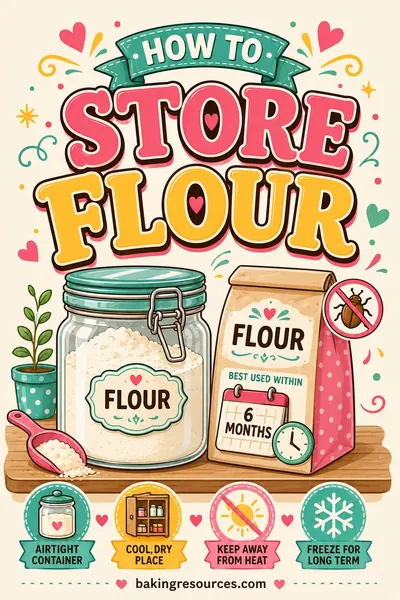
Stir the flour in the bag with a fork first. Flour settles under its own weight and from vibration, and that step alone is worth 5 to 10 g per cup.
Then spoon it lightly into a dry measuring cup until it mounds over the rim, and level across the top with the flat back of a knife in one pass. Don't tap the cup, don't shake it, don't press.
That's 125 g for all-purpose. Our complete guide to measuring flour covers how to tell which method a given recipe assumed, which matters more than the number itself.
Brown sugar: the one thing you actually pack
Brown sugar is the exception to every rule above. Press it firmly into the cup with your fingers or the back of a spoon, level the top, and it should hold the shape of the cup when you turn it out.
Why this one is different: brown sugar is granulated sugar coated in molasses. The molasses makes the crystals sticky, so they bridge and trap air pockets instead of settling. An unpacked cup is mostly gaps. Packed, it's 213 g. Loose, you'll get somewhere around 145 to 160 g, which is a 25 to 30 percent shortfall.
That shortfall shows up as pale, dry, crumbly cookies with no chew, because you also lost the moisture the molasses carries.
Every US recipe that says "brown sugar" means packed, even when it doesn't say so. If a recipe wants it loose it will say "lightly packed" or give grams.
Powdered sugar: sift, then spoon
Powdered sugar clumps in the bag because the cornstarch in it grabs moisture. A lumpy cup measures short, and the lumps survive into your frosting as gritty specks.
Sift it, then spoon and level. One cup is 120 g.
For icing especially, weigh it. Frosting is a ratio game, and 20 g of extra sugar is the difference between spreadable and stiff.
Cocoa powder: the worst offender for its size
Cocoa is light, fluffy and packs harder than almost anything else in the pantry. A cup of cocoa is only 85 g, so a small packing error is a large percentage error.
Sift or whisk it, spoon it into the cup, level it. For the 1/4 cup and 3 tbsp amounts most recipes use, weigh it if you can. One tablespoon of cocoa is about 5 g, and heaping that spoon gets you closer to 8 g, which is 60 percent more chocolate flavor and 60 percent more of the dry, drying starch that comes with it.
Butter: use the wrapper, not a cup
Never press butter into a measuring cup. Air pockets are invisible and unavoidable, and you'll be off by a tablespoon or more.
The numbers you need:
- 1 stick = 113 g = 1/2 cup = 8 tablespoons = 4 oz
- 1 cup = 227 g = 2 sticks = 16 tablespoons
- 1 tablespoon = about 14 g
US butter wrappers are printed with tablespoon marks. Cut on the line. For European butter that comes in 250 g blocks with no marks, weigh it or measure the block and cut proportionally.
The butter converter handles sticks, cups, grams and tablespoons in both directions, including the awkward "I need 6 tablespoons and I have most of a stick left" case.
Sticky liquids: oil the cup or weigh it
Honey, molasses, corn syrup, maple syrup and peanut butter all cling. Pour a cup of honey into a bowl and 10 to 15 g stays in the cup, which is a real loss on an ingredient that's often the only sweetener in the recipe.
Two fixes, in order of preference:
- Weigh it. Put the bowl on the scale, tare, and pour honey in until you hit 340 g for a cup. Nothing to transfer, nothing left behind, no cup to wash.
- Oil the cup. Spray or wipe the measuring cup with a neutral oil first, then pour. The honey slides out in one piece. If the recipe already contains oil or melted butter, measure that first in the same cup and the residue does the job for you.
A third trick works when the recipe has both: measure the fat first, then the sticky thing in the same unwashed cup.
Leaveners and salt: level, never heap
This is the smallest measurement in the recipe and one of the easiest to get badly wrong.
A level teaspoon of baking soda is about 4.6 g. A generously heaped one can hit 7 g or more. That's 50 percent extra in the ingredient with the least tolerance for error.
Too much baking soda gives you a soapy, metallic taste, a coarse open crumb, and excessive browning. Too much baking powder makes batter rise fast and then collapse, which is a common reason a cake sinks in the middle.
The method: dip the spoon into the container so it overfills, then scrape across the top with the straight back of a knife. One pass. Don't shake the spoon to level it, because that settles the powder and gives you slightly more than level.
Same for salt, with one extra warning: kosher salt and table salt are not interchangeable by volume. Kosher salt crystals are much larger, so a teaspoon holds far less salt. Our kosher salt vs table salt guide has the conversion by brand.
Dry vs liquid measuring cups: same volume, different job
Here's the part that confuses people, so let's settle it.
A 1-cup dry measure and a 1-cup liquid measure hold exactly the same volume. Both are 8 fluid ounces, both are 236.588 ml. Nobody is cheating you.
The difference is entirely about whether you can read them accurately.
| Dry measuring cups | Liquid measuring cups | |
|---|---|---|
| Shape | Nested cups, flat rim, filled to the top | Spouted pitcher, lines below the rim |
| How you read it | Level across the rim with a straight edge | Eye level, read the meniscus at the line |
| Good for | Flour, sugar, cocoa, oats, chocolate chips | Water, milk, oil, buttermilk, melted butter |
| Fails at | Liquids, because you can't fill to the brim and carry it | Dry goods, because you can't level them |
Why a liquid cup fails for flour: the measuring line sits below the rim, so there's nothing to scrape against. You have to eyeball the flour against a line on a curved wall, from an angle. Testing this gives errors of 15 to 25 g per cup, in either direction depending on how you're standing.
Why a dry cup fails for milk: to get an accurate cup you'd have to fill it to the absolute brim, and then you have to carry a brimming cup across the kitchen. You will spill it, and you'll compensate by underfilling.
Read liquid cups at eye level. Set the cup on the counter and crouch. Reading from above makes you overfill, sometimes by a full tablespoon, because you're looking at the liquid surface at an angle instead of straight on. Read the bottom of the curve, which is where the number is calibrated.
One shortcut that dodges all of this: liquids in baking are usually close enough to water in density that weighing works well. A cup of water is 236 g. A cup of milk is about 242 g. A cup of oil is about 218 g. Put the bowl on the scale and pour.
Measuring spoons: leveled, not heaped
Measuring spoons carry the ingredients where percentage errors hurt most, and they're the ones people are laziest with.
| Level measure | Weight (approximate) | Heaped, the same spoon |
|---|---|---|
| 1 tsp baking soda | 4.6 g | up to 7 g |
| 1 tsp baking powder | 4.0 g | up to 6 g |
| 1 tsp table salt | 6.0 g | up to 9 g |
| 1 tbsp cocoa powder | 5.3 g | up to 8 g |
| 1 tbsp cornstarch | 8.0 g | up to 12 g |
| 1 tbsp flour | 7.8 g | up to 11 g |
Three teaspoons make a tablespoon, and sixteen tablespoons make a cup, so a tablespoon is 1/16 of a cup. Those relationships are constant for every ingredient, since they're volume facts. The tablespoons to cups chart has the full set including the awkward thirds.
Two habits worth building:
- Never measure over the mixing bowl. If the spoon overflows, the excess lands in your batter and you can't get it back. Measure over the sink, over the counter, or over the container it came from.
- Buy the narrow oval spoons. The round ones don't fit in spice jars, so you end up pouring into the spoon, which almost guarantees a heap.
Worked example: the same cookie dough, measured two ways
Take a standard drop cookie: 2 cups flour, 1 cup packed brown sugar, 1/2 cup granulated sugar, 1 cup butter, 1 tsp baking soda.
Baker A weighs. Baker B measures by volume in a hurry: scoops the flour, tips the brown sugar in loose, and heaps the baking soda.
| Ingredient | Baker A (weighed) | Baker B (rushed volume) | Gap |
|---|---|---|---|
| Flour | 250 g | 290 g | +40 g |
| Brown sugar | 213 g | 155 g | -58 g |
| Granulated sugar | 100 g | 100 g | 0 |
| Butter | 227 g | 227 g | 0 |
| Baking soda | 4.6 g | 6.8 g | +2.2 g |
| Total dough | 794 g | 779 g |
The totals are nearly identical, which is exactly why this is hard to catch. But look at the ratios.
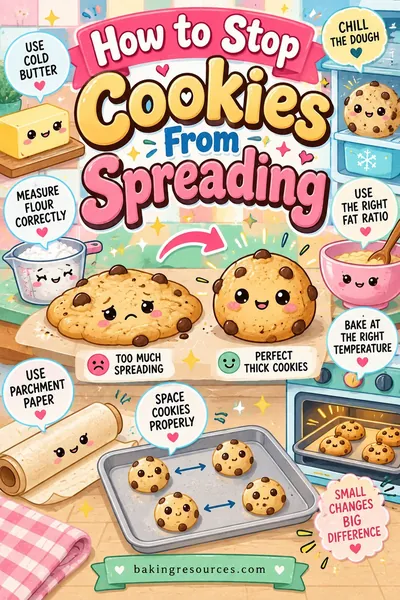
Baker B's dough has 16 percent more flour and 27 percent less brown sugar. Sugar is what makes cookies spread and stay chewy, and brown sugar carries moisture. Flour is what holds them together.
Baker B gets pale, cakey, dry cookies that don't spread, and no obvious reason why, since the recipe was followed. Add the heaped baking soda and there's a faint soapy note and over-browned bottoms too.
That's four separate defects from three careless measurements, and it's the single most common story behind "I followed the recipe and it didn't work." The why are my cookies flat guide covers the opposite failure, which usually starts the same way.
What you gain, in plain terms
You stop losing ingredients and time. A failed cake costs you a full set of ingredients plus an hour of your evening. A basic scale is cheaper than a couple of those, so it pays for itself almost immediately and then keeps paying.
One bowl instead of six cups. Bowl on the scale, tare, add flour, tare, add sugar, tare, add cocoa. Nothing to wash.
Repeatability. When a bake goes right, you can do it again. When it goes wrong, you know the measuring wasn't the variable, which is the only way to actually improve.
Scaling becomes arithmetic. Two-thirds of 250 g is 167 g. Two-thirds of 2 cups is a negotiation.
Look for a scale with 1 g resolution, a 5 kg capacity, an easy tare button, and an auto-off longer than 60 seconds. The rest is preference. The cheapest model meeting that spec is accurate well past what baking needs, and paying more buys you a nicer housing rather than a better measurement.
If you're converting a cup-based recipe to grams to get started, our grams to cups converter does it per ingredient rather than with a single wrong number for everything.
Frequently asked questions
Do I really need a kitchen scale to bake?
No, but it's the cheapest fix for the most common problem. Volume measuring of flour varies by up to 26 percent between methods, and that's the source of most unexplained dry cakes and flat cookies. If you're staying with cups, stirring the flour and spooning it in instead of scooping gets you most of the way there.
How do I measure flour without a scale?
Stir the flour in its container, spoon it lightly into a dry measuring cup without pressing, and level the top with a straight edge in one pass. That's 125 g per cup. Hold back the last two tablespoons and add them only if the dough looks loose, since you can always add flour but never remove it.
Should brown sugar be packed or loose?
Packed, firmly, unless the recipe specifically says lightly packed. A packed cup is 213 g. Loose, the molasses-coated crystals bridge and trap air, and you'll get 145 to 160 g instead. That missing 25 percent shows up as pale, dry cookies with no chew.
Can I use a liquid measuring cup for flour?
You can, but it's the least accurate option. Liquid cups have the measuring line below the rim, so there's no edge to level against and you're eyeballing flour against a curved wall. Errors of 15 to 25 g per cup are normal. Use nested dry cups you can scrape flat, or weigh it.
How do I measure honey without losing half of it in the cup?
Weigh it directly into the mixing bowl, since a cup of honey is 340 g. If you're measuring by volume, coat the cup with a neutral oil first and the honey slides right out. If the recipe also calls for oil or melted butter, measure that in the same cup first and the residue does the work.
How much butter is in a stick?
One US stick is 113 g, which is 1/2 cup, 8 tablespoons, or 4 ounces by weight. Two sticks make a cup at 227 g. The wrapper is printed with tablespoon marks, so cut on the line rather than pressing butter into a measuring cup.
Does a heaped teaspoon of baking soda matter?
Yes, more than almost any other measuring error. A level teaspoon is about 4.6 g and a heaped one can reach 7 g, which is 50 percent extra in the ingredient with the least tolerance. The result is a soapy, metallic taste, a coarse crumb, and over-browning. Level every spoon with a straight edge.
Are dry and liquid measuring cups actually different sizes?
No. A 1-cup dry measure and a 1-cup liquid measure both hold 236.588 ml. The difference is readability. Dry cups fill to a flat rim you can level; liquid cups have a spout and a line you read at eye level. Each one is unreadable for the other's job, which is why the results differ even though the volumes don't.
Related guides: Ingredient weights chart | Grams to cups converter | How to measure flour | Butter converter | Baking conversion chart | Kosher salt vs table salt