Why Are My Cookies Flat?

Nine times out of ten it's the butter. If your butter was warmer than about 70°F when you creamed it, the fat had already started to melt, it couldn't hold any air, and the dough had nothing holding it up in the oven.
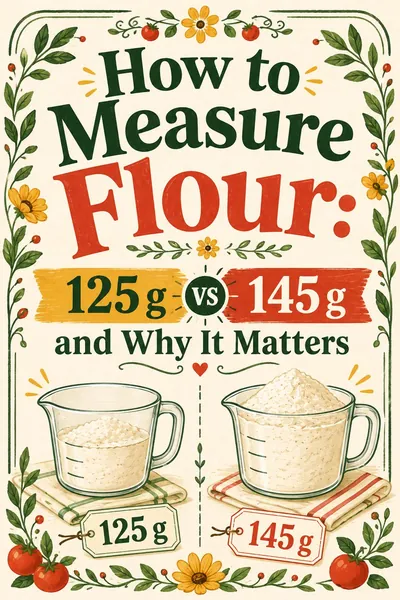
The second most common cause is flour: you measured less than the recipe writer did. A cup of all-purpose flour is 125 g if you spoon and level it and 145 g if you scoop the cup straight into the bag. Twenty grams a cup adds up fast, and a dough that's short on flour spreads.
Everything else on the list matters, but those two account for most flat cookies.
Want to stop guessing? Our free grams to cups converter turns any recipe's cup measurements into weights so your flour is the same every single time.
Updated August 2026
Why are my cookies flat? The 8 causes, ranked by how often they're the culprit
| # | Cause | How common | Quick fix |
|---|---|---|---|
| 1 | Butter too warm or melted | Very common | Cream at 65 to 67°F, not "soft" |
| 2 | Too little flour (measuring mismatch) | Very common | Weigh it: 125 g per cup |
| 3 | Dough not chilled | Common | 30 to 60 min in the fridge |
| 4 | Hot or dark pan | Common | Cool the pan, use light aluminum |
| 5 | Greased pan instead of parchment | Common | Parchment, never grease |
| 6 | Old baking soda or powder | Occasional | Test it, replace every 6 months |
| 7 | Too much sugar | Occasional | Weigh: 200 g granulated per cup |
| 8 | Overmixing after the flour goes in | Occasional | Mix to just-combined |
Work down that list in order. The fix for one is often the fix for all of them, because most flat-cookie problems come back to the same thing: the dough was too soft and too loose when it hit the heat.
Cause 1: your butter was too warm (this is the big one)
Here's the mechanism, because once you understand it you'll never make this mistake again.
Creaming isn't mixing. Creaming is mechanical aeration. When you beat sugar into butter, the sharp edges of the sugar crystals cut through the semi-solid fat and drag air pockets in behind them. A network of butterfat crystals holds those pockets in place, the way a foam holds bubbles.
Every one of those air pockets becomes a place where steam and leavening gas can expand in the oven. That's your lift.
Butter above roughly 70°F has begun to melt and has no crystal structure left to hold air. You can beat it for ten minutes and it will not get lighter or paler, because the air escapes as fast as you put it in. There's nothing there to trap it.
The dough looks fine. It even feels fine. Then it hits a 375°F oven, the remaining fat liquefies immediately, and the whole thing runs outward across the sheet before the egg proteins and starches have set. Flat, greasy, crisp at the edges, translucent in the middle.
What properly softened butter actually looks like
Real "room temperature" butter is 65 to 67°F, which is cooler than most kitchens. It's a narrow window, and it is not the same as "not cold."
Three checks, in increasing order of reliability:
- The bend test. A stick should bend without cracking or smearing.
- The thumbprint. Press down. You want a clean dent with a defined edge. If your thumb sinks in or the surface looks shiny and wet, it's too warm.
- The thermometer. Read the center of the stick. 65 to 67°F. This is the only one that can't lie to you.
If your butter is already too soft, chill it for 5 to 10 minutes and re-check. If any of it actually turned to liquid, the crystal structure is gone for good and it won't cream properly again. Start over with a fresh stick and save the melted one for brownies. Our full guide on how to soften butter has seven methods ranked by speed and by how likely each one is to overshoot.
And know your numbers while you're at it: 1 cup of butter is 227 g, and 1 stick is 113 g. Recipes that call for "2 sticks" and recipes that call for "1 cup" are asking for the same thing.
Cause 2: too little flour, which is really a measuring mismatch
This is the one nobody tells you about, and it's the reason the same recipe works for one person and fails for another.
There's no standard way to measure a cup of flour. The three common methods give three different weights:
| Method | What you do | Weight per cup |
|---|---|---|
| Sifted, then spooned | Sift first, spoon into the cup, level | 115 g |
| Spoon and level | Spoon flour into the cup, level with a knife | 125 g |
| Scoop and sweep | Dip the cup into the bag, sweep off the top | 145 g |
Scoop and sweep packs about 20 g more per cup than spoon and level. That's a 16% difference, and against sifted flour it's a 26% difference.
Now think about what happens when the recipe writer scooped and swept, and you spooned and leveled. You put in less flour than the recipe was built around. Less flour means a wetter, looser dough with less structure. And a looser dough spreads.
The reverse mismatch gives you the opposite problem: dry, cakey, domed cookies that never spread at all. Both failures come from the same missing information.
Weighing ends the argument permanently. A recipe that gives grams tells you exactly what its author meant. A recipe that gives cups is making a guess about how you hold a measuring cup. Run any cup-based recipe through our grams to cups converter once, write the grams in the margin, and you never have to think about it again. The full ingredient weights chart covers everything else on your counter.
Cause 3: you skipped the chill
Chilled dough spreads less for two reasons, and only one of them is the obvious one.
The obvious one: cold fat takes longer to melt in the oven, which buys time for the egg and starch structure to set before the cookie can run.
The less obvious one: during a rest in the fridge, the flour fully hydrates. Dry starch and protein absorb the liquid that's sitting free in the dough. Free liquid thins a dough. Bound liquid doesn't. A dough that's rested overnight is measurably stiffer than the same dough was an hour earlier, even at the same temperature.
30 minutes is the minimum. 60 minutes is better. 24 hours is genuinely a different cookie, with deeper color and more caramel flavor from the extra time the sugars and proteins spend reacting.
If you're in a hurry, portion the dough into balls first and freeze them for 15 minutes. Small pieces chill much faster than a bowl. You can bake straight from frozen, just add 2 minutes. Rolled dough is the exception, and how long sugar cookie dough needs in the fridge covers the slab method.
Cause 4: a hot pan or a dark pan
Putting dough on a sheet that just came out of the oven starts melting the butter before the cookie is anywhere near the heat. By the time it's in the oven, the bottom has already spread.
Run the pan under cold water and dry it, or keep three sheets in rotation so there's always a cool one.
Pan color matters more than people expect. Dark, nonstick-coated sheets absorb radiant heat and run 15 to 25°F hotter at the surface than a light aluminum sheet at the same oven setting. Hotter surface, faster fat melt, more spread, and dark bottoms too.
Light-colored heavy aluminum half sheets are the right tool. If dark pans are what you have, drop the oven 15°F and check early. Our oven temperature converter handles the math if your recipe is in Celsius or gas marks.
Cause 5: you greased the pan
Greasing gives the melting dough a slick surface to slide across. You're adding fat to a problem caused by fat.
Use parchment paper. It grips slightly, releases cleanly, and adds a thin insulating layer between the dough and the metal. A silicone mat works too, though mats insulate more and can leave you with paler bottoms, so add a minute or two.
Bare pan is better than greased pan, if those are your only options.
Cause 6: your leavening is dead
Baking soda and baking powder both lose strength on the shelf. Powder is worse, because the acid and base are already sitting together in the can waiting for humidity to set them off.
Test them in 30 seconds:
- Baking soda: 1/4 tsp in 2 tbsp of white vinegar. It should fizz hard, immediately.
- Baking powder: 1/2 tsp in 1/4 cup of hot water. Same thing, vigorous bubbling right away.
A lazy trickle means replace it. Buy small containers and write the open date on the lid with a marker. Six months is a reasonable working life once opened.
Dead leavening doesn't only cost you rise. Baking soda also raises the dough's pH, which speeds browning and helps the cookie set faster. Weak soda means a slower set, which means more time to spread. If you're out entirely, the baking powder substitute guide covers what actually works in a pinch and what doesn't.
Cause 7: too much sugar
Sugar melts. Once it's liquid it thins the dough, and there's nothing you can do about it mid-bake.
The weights that matter: granulated sugar is 200 g per cup, and packed brown sugar is 213 g per cup. Brown sugar is packed, so an unpacked cup can be 40 g light, which throws off both the sweetness and the moisture.
Two sugars behave differently here. Granulated sugar promotes spread. Brown sugar is slightly acidic and holds moisture, so it sets faster and spreads a little less. Shifting the ratio 2 tbsp toward brown sugar gives you a noticeably thicker cookie with a chewier center.
If you're out of brown sugar, don't just swap in white. The brown sugar substitute guide has the molasses ratio that keeps the texture right.
Cause 8: overmixing after the flour goes in
Once flour meets liquid, gluten starts forming. A little gluten is good, because it gives the cookie something to hold onto. Too much makes the dough elastic and tough, and heavy beating also knocks out the air you worked to cream in.
Mix on low, and stop the second you can't see dry flour. Fold the chips in by hand with a spatula. Thirty seconds too long here undoes four minutes of careful creaming.
Diagnostic table: match your symptom to the cause
| What you're seeing | Most likely cause | The fix |
|---|---|---|
| Thin, greasy, spread into one sheet | Butter melted or over 75°F | Re-cream at 65°F, chill dough 1 hour |
| Flat but not greasy, crisp edges, hollow middle | Too little flour | Weigh flour at 125 g/cup |
| Puffed in the oven, then collapsed flat | Overcreamed, or too much leavening | Cream 3 to 4 min max, check leavening amount |
| Spread only on the second and third batches | Hot pan reused | Cool pans between batches |
| Dark bottoms plus heavy spread | Dark pan, or oven running hot | Light pan, drop 15°F, use an oven thermometer |
| Flat with a lacy, holey texture | Too much sugar, or too much butter | Weigh sugar at 200 g/cup and butter at 227 g/cup |
| Flat and pale, no rise at all | Dead baking soda or powder | Vinegar or hot-water test, then replace |
| Flat and tough or rubbery | Overmixed after adding flour | Mix to just-combined, fold chips by hand |
| Uneven: some flat, some fine | Uneven dough balls, or a hot spot | Portion by weight, rotate the pan halfway |
Worked example: a standard chocolate chip recipe, measured two ways
Take a classic recipe: 2 1/4 cups all-purpose flour, 1 cup butter, 3/4 cup granulated sugar, 3/4 cup packed brown sugar, 1 tsp baking soda. Bake at 375°F for 9 to 11 minutes.
Here's what those cups actually weigh, depending on who's holding the cup.
If the recipe author scooped and swept: 2.25 cups × 145 g = 326 g of flour
If you spoon and level: 2.25 cups × 125 g = 281 g of flour
You are 45 g short, which is 14% of the flour in the recipe and works out to about 1/3 cup. That's not a rounding error. That's a meaningfully wetter dough, and it will spread.
Now stack the butter problem on top. Say your kitchen is 74°F and the butter sat out for two hours, so it creamed at about 73°F instead of 66°F. You lost most of the aeration too.
Two independent problems, both pushing the same direction. This is why flat cookies feel so random: they're usually two or three small misses compounding, not one big one.
The fixed version, in grams:
- Flour: 281 g (2 1/4 cups spoon-and-level, weighed)
- Butter: 227 g at 65 to 67°F
- Granulated sugar: 150 g (3/4 cup)
- Brown sugar: 160 g (3/4 cup packed)
- Baking soda: 1 tsp, tested in vinegar first
- Chill the portioned dough 45 minutes
- Bake on parchment, light aluminum pan, 375°F, 10 minutes
Same recipe. Same oven. A completely different cookie, because now every number means one specific thing.
How to rescue dough you've already made
Don't throw it out. Flat-prone dough is fixable, and boxed dough is no different: cake mix cookies uses the same fat and egg balance to keep them thick.
- Chill it hard first. One hour in the fridge, or 20 minutes in the freezer. Sometimes this alone is enough, especially if warm butter was the only problem.
- Bake one test cookie. One. This is the single most useful habit in cookie baking. You get all the information for the cost of thirty seconds of dough.
- If the test spreads, add flour. Work in 2 tbsp (about 16 g) at a time, mixing on low just until it disappears. Chill again and test another. Two additions is usually plenty. More than three and the texture starts going cakey.
- If it's greasy as well as flat, add flour plus 1 tbsp of cornstarch. Cornstarch absorbs free liquid and softens the crumb without adding gluten. The cornstarch substitute guide covers what to use if you're out.
- Portion smaller and space wider. Smaller balls spread proportionally less and set faster, and wide spacing stops merged cookies even if there's still some spread.
How to rescue a batch mid-bake
You can save cookies that are already spreading, if you catch them in the first few minutes.
Scoot them. At the 4 to 5 minute mark, pull the sheet. Take a round cookie cutter or a wide glass a little bigger than the cookie, drop it over the spreading edge, and swirl it in a quick circle. The soft edge gathers back toward the center. Do all of them, get the pan back in fast, and finish the bake. The cookies come out round and thicker.
Or pull early and let carryover finish them. Cookies keep cooking on a hot pan for 3 to 4 minutes after they leave the oven. Pull at the point where the edges are set but the centers still look underdone, and let them firm up on the sheet.
For the batches still waiting: put the bowl back in the fridge, swap in a cool pan, and drop the oven 15°F.
When flat is actually correct
Not every flat cookie is a failure. Some are supposed to be flat, and the same physics that ruins a chocolate chip cookie is exactly what makes these work.
Lace cookies are mostly sugar, butter and a little oat or nut flour, with barely enough structure to hold together. They spread into thin, holey, caramelized discs on purpose. If yours come out thick, they're wrong.
Tuiles are thin enough to drape over a rolling pin while still warm and set into a curve. Melted butter, low flour, spread deliberately thin.
Florentines, brandy snaps and pizzelle are all in the same family: high sugar, low flour, and a snap that only exists because the cookie is thin.
The tell is the recipe itself. If it uses melted butter, has more sugar than flour by weight, and tells you to leave three inches between portions, spreading is the plan. If it tells you to cream softened butter and chill the dough, it isn't.
Frequently asked questions
Why do my chocolate chip cookies come out flat but taste fine?
Flavor and structure are separate problems. The butter, sugar and vanilla still taste right even when the fat melted before creaming, so a flat cookie usually tastes fine and just has the wrong texture. Start with butter temperature at 65 to 67°F, then weigh your flour at 125 g per cup.
Does chilling cookie dough really stop spreading?
Yes, and it does two things at once. Cold fat melts more slowly in the oven, which gives the egg and starch structure time to set, and the rest lets the flour fully absorb the free liquid so the dough is genuinely stiffer. Thirty minutes helps, an hour is better, and overnight also deepens the flavor.
Can I add more flour to fix cookies spreading too much?
You can, in 2 tbsp increments, mixing just until the flour disappears. Chill and bake one test cookie after each addition. Past about three additions the cookie turns cakey and dry, so if you're still spreading at that point the problem is the butter, not the flour.
Why did only my second batch of cookies go flat?
Almost certainly a hot pan. Dough placed on a sheet that just came out of the oven starts melting before it reaches the heat. Keep two or three sheets in rotation, or run the used one under cold water and dry it before you portion again.
Should I use parchment paper or grease the pan for cookies?
Parchment, always. Greasing adds fat to a surface the dough is already trying to slide across, which makes spreading worse. Parchment grips slightly, releases cleanly and insulates the bottom a little, and a bare pan beats a greased one if that's your only choice.
How much does 1 cup of flour weigh for cookies?
125 g if you spoon it into the cup and level it, which is the US convention most recipe writers use. Scoop and sweep runs closer to 145 g, and sifted flour is about 115 g. That 30 g range across methods is enough to change how a cookie behaves, which is why weighing wins.
Can old baking soda cause flat cookies?
It can. Weak soda costs you lift, and it also fails to raise the dough's pH, which slows browning and delays the point where the cookie sets. Test 1/4 tsp in 2 tbsp of vinegar: a hard immediate fizz means it's fine, a slow trickle means replace it.
Does butter type matter for cookie spread?
Yes. European-style butters run 82 to 84% fat versus about 80% for standard US butter, so they have less water and spread slightly less. Whipped or tub butter has air and often water beaten into it and should never be substituted by volume. Stick butter, unsalted, at 227 g per cup is the reliable baseline.
Related guides: How to soften butter | Baking powder substitute | Brown sugar substitute | Grams to cups converter | Ingredient weights chart