How to Make Cookies Chewy (or Crispy, If That's Your Side)

Chewy cookies come from holding moisture in and limiting spread. Swap some granulated sugar for brown, add one extra egg yolk, use melted-then-cooled butter, use bread flour instead of all-purpose, and pull the tray when the centers still look underdone. Any one of those pushes chewy. Three or four together and you've changed the cookie completely.
Crispy is the exact same list, reversed. More granulated sugar, whole eggs or fewer yolks, creamed cold butter, lower-protein flour, thinner portions and a longer bake at a lower temperature. Crisp is a dry cookie, and drying is a time-and-temperature job.
Nothing here needs a new recipe. These are adjustments to the one you already use.
Since every one of these levers is a ratio change, weighing beats measuring. Our free grams to cups converter turns your recipe into grams so the swaps land where you meant them to.
Updated August 2026
How to make cookies chewy: the 8 levers at a glance
| Lever | Pushes chewy | Pushes crisp | Why |
|---|---|---|---|
| Sugar type | More brown sugar | More granulated sugar | Molasses in brown sugar is hygroscopic and holds water; granulated dries and recrystallizes |
| Fat state | Melted, then cooled | Cold, creamed | Melted butter makes a denser, wetter dough; creamed butter aerates and spreads thin |
| Fat type | Butter, higher fat % | Part shortening or more butter overall | More free fat means more spread and a drier crumb |
| Flour protein | Bread flour, 12 to 14% | Cake or all-purpose, 8 to 11% | More protein means more gluten holding water and structure, so less spread |
| Egg ratio | Extra yolk, no extra white | Whole egg or extra white | Yolk is fat and emulsifier; white is mostly water that bakes off, leaving crispness |
| Leavening | Less baking soda, some baking powder | More baking soda | Soda raises pH, which speeds browning and spread; powder lifts without spreading |
| Time and temp | Higher temp, shorter time | Lower temp, longer time | Fast bake sets the edge while the center stays moist; slow bake dries all the way through |
| Pan and portion | Light pan, tall thick scoops | Dark pan, flattened portions | Dark metal conducts more heat into the base; thin dough dries edge to edge |
Pick two or three, not all eight at once. Changing everything gives you a cookie you can't diagnose.
The brown sugar mechanism, explained properly
Brown sugar is the single most effective chewy lever, and the reason is chemistry rather than flavor.
Brown sugar is granulated sugar with molasses added back, roughly 3.5% by weight for light brown and 6.5% for dark. Molasses is hygroscopic, which means it actively pulls water out of the surrounding air and holds onto it. In a cookie, that molasses keeps water bound inside the crumb instead of letting it bake off or evaporate afterward. The cookie stays soft on day one and, more noticeably, on day three.
Molasses is also acidic, around pH 5. That matters two ways. It reacts with baking soda for lift, and it lowers the dough's overall pH, which slows the Maillard browning reactions a touch and delays the point at which the cookie sets. Slower setting means a chewier interior.
Granulated sugar does the opposite. It dissolves in the dough's water during baking, thins the batter so it flows, and then recrystallizes as the cookie cools into a hard, snappy structure. That crystallization is why a high-granulated cookie goes crisp as it cools even if it looked soft coming out.
The weights matter here because brown and white sugar do not measure the same:
- Granulated sugar: 200 g per cup
- Packed brown sugar: 213 g per cup
- Powdered sugar: 120 g per cup
Swapping cup for cup adds 13 g of sugar per cup as well as changing the type. If you're doing a like-for-like test, weigh it.
Out of brown sugar mid-bake? Our brown sugar substitute guide covers the molasses-and-white-sugar rebuild, which works because it recreates the exact thing that's doing the work.
Fat: melted versus creamed changes the cookie more than the recipe does
Creaming beats air into solid butter. The sugar crystals cut channels through the fat and air lodges in them, and that aerated network is what gives a cookie lift and a lighter, cakier crumb. Full detail on doing it right is in our guide to creaming butter and sugar.
Melted butter can't hold air at all. There's no crystal structure left. So a melted-butter dough is denser and wetter, the flour hydrates faster because the water is free rather than locked in an emulsion, and the finished cookie is chewy rather than airy.
Three practical points:
Cool melted butter to about 90°F before mixing. Hot butter will start cooking the eggs and will melt the sugar into syrup, and you'll get a greasy dough that spreads badly.
Melted butter needs a rest. Give a melted-butter dough at least 30 minutes before baking. The flour needs time to take up the free water, and without it the cookie spreads like a puddle.
Butter is 227 g per cup, 113 g per stick. Softened, melted and cold butter all weigh the same, so weight is the one measurement that doesn't lie to you about butter.
If your cookies are spreading no matter what you do, the fat's temperature is nearly always the culprit. Our flat cookie diagnostic walks the causes in order.
Flour protein: the bread flour swap
Flour protein becomes gluten when it meets water and gets mixed. More gluten means more elastic structure, which does two useful things for a chewy cookie: it physically resists spread, and it holds onto water that would otherwise cook off.
| Flour | Protein | Grams per cup | Effect on cookies |
|---|---|---|---|
| Cake flour | 7 to 9% | 114 | Tender, cakey, spreads readily |
| All-purpose | 10 to 12% | 125 | The neutral baseline |
| Bread flour | 12 to 14% | 127 | Chewier, taller, less spread |
Swapping bread flour for all-purpose one-for-one is the easiest structural change you can make. In a recipe calling for 2 1/4 cups all-purpose (281 g), 2 1/4 cups bread flour is 286 g, so the weight barely moves. The protein does.
A half-and-half split is a good first test if you don't want the full effect. Our types of flour guide has the full protein table if you're working with something less common.
Do not over-mix once the flour goes in, even for chewy cookies. There's a difference between gluten that develops during hydration and gluten you've beaten into a tough network. Mix to just-combined and let time do the rest.
Eggs: the extra yolk trick
An egg is roughly 75% water. The white is almost all of that water plus protein, and the yolk is fat, emulsifiers and much less water.
Add an extra yolk and you add fat and lecithin without adding water that will steam off. The result is a richer, denser, chewier cookie that stays soft longer, because the emulsifier keeps the fat and water phases together instead of letting them separate as the cookie cools.
Add an extra white and you add water and protein. The water evaporates, the protein sets firm, and you get a drier, crisper, slightly puffier cookie. This is why meringue-adjacent things are brittle.
The standard chewy adjustment for a two-dozen batch is one whole egg plus one yolk instead of two whole eggs. You lose about 33 g of white, so the dough is stiffer. Expect slightly less spread as a bonus.
Leavening, temperature and pan color
Baking soda versus powder. Soda is alkaline. It raises the dough's pH, and higher pH speeds up Maillard browning and weakens gluten, both of which encourage spread. That's great for a thin, crisp, deeply browned cookie. For chewy, back the soda off and let a little baking powder do the lifting, since powder is pH-neutral and gives lift without the spread.
Bake temperature. Chewy wants a hot, fast bake: 375°F for 9 to 11 minutes rather than 350°F for 14. The high heat sets the outside quickly and the center never gets long enough to dry. Crisp wants the opposite: 325°F for 16 to 20 minutes, which is essentially a slow dehydration.
Underbaking, done right. Pull chewy cookies when the edges are set and browned but the centers still look glossy and underdone. They will look wrong. They finish on the hot pan for another 3 to 5 minutes through carryover heat, and the middle sets into exactly the texture you wanted. Move them to a rack immediately if you want them softer still.
Pan color. Dark and nonstick pans absorb more radiant heat and run 10 to 15°F hotter at the surface. Bottoms brown faster and get crisper. Light-colored aluminum sheets are the chewy choice. If dark pans are what you have, drop the oven 15°F and check early. Our oven temperature converter is there if your recipe is in Celsius.
What chilling dough actually does
Chilling gets treated as one thing. It's three, and they run on different clocks.
It limits spread. Cold fat takes longer to melt in the oven, which buys time for the egg proteins and starches to set before the cookie can flow outward. This works within 30 to 60 minutes and it's the biggest immediate benefit.
It hydrates the flour. Free water in the dough gets absorbed by the starch and protein, so the dough goes from soft and sticky to genuinely stiff. This is a slow process, mostly done by 4 hours, still improving at 12.
It deepens flavor. Over 24 to 72 hours, enzymes break some starch down into simpler sugars and some protein into amino acids, both of which feed browning reactions in the oven. A 72-hour dough tastes noticeably more caramel and toffee than the same dough baked fresh. This is the part people notice at bake sales.
Practical schedule: 30 minutes if you're in a hurry, overnight for the sweet spot, 72 hours if you're chasing flavor. Past about four days the dough starts to gray from oxidation and the leavening loses power.
Chilled dough bakes differently, so add 1 to 2 minutes to the bake time and don't judge doneness by the clock.
A worked example: converting a standard recipe to chewy
Here's a typical drop cookie recipe and the chewy version of it, side by side.
The original
- 2 1/4 cups all-purpose flour (281 g)
- 1 cup granulated sugar (200 g)
- 1/2 cup packed brown sugar (107 g)
- 1 cup butter, softened (227 g)
- 2 whole eggs
- 1 tsp baking soda
- Bake 350°F, 13 minutes
The chewy conversion
- 2 1/4 cups bread flour (286 g), up 5 g and up about 2% protein
- 1/2 cup granulated sugar (100 g), down 100 g
- 1 cup packed brown sugar (213 g), up 106 g
- 1 cup butter, melted and cooled to 90°F (227 g), same weight
- 1 whole egg plus 1 yolk, roughly 33 g less water
- 1/2 tsp baking soda plus 1/2 tsp baking powder
- Rest the dough 30 minutes minimum, overnight preferred
- Bake 375°F, 10 minutes, pull while the centers look wet
Total sugar barely changed: 307 g before, 313 g after. What changed is that 68% of the sugar is now brown instead of 35%, which is where the moisture retention comes from. Everything else stacks on top of that.
Run it the other way for crisp: all granulated sugar, two whole eggs, creamed cold butter, all-purpose or half cake flour, full teaspoon of soda, flatten the portions, and bake at 325°F for 18 minutes.
Why your cookies came out cakey instead
Cakey is its own failure mode, and it's usually one of four things:
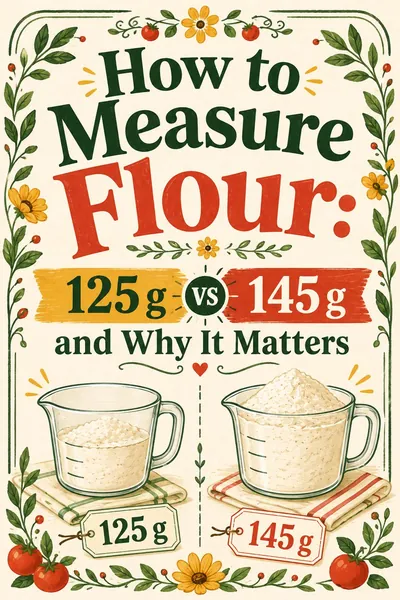
- Too much flour. Scooping the cup into the bag gives about 145 g instead of 125 g. Three cups measured that way is 60 g of extra flour, which is most of a half cup.
- Too much creaming. Ten minutes of creaming builds a foam, and a foam bakes into cake. Two to three minutes is plenty.
- Too much baking powder. Powder lifts vertically. That's cake behavior.
- Not enough sugar or fat. Both work as tenderizers and both encourage spread. A lean dough puffs instead of flowing.
Cakey and chewy are opposite ends of the same dial, so the fixes above are the chewy levers applied a little harder.
Frequently asked questions
Does brown sugar really make cookies chewier?
Yes, and it's the most reliable single change you can make. The molasses in brown sugar is hygroscopic, so it binds water inside the cookie instead of letting it evaporate, and that bound water is what chewiness actually is. Going from a 2:1 white-to-brown ratio to a 1:2 ratio is enough to notice on the first batch.
Should I use bread flour or all-purpose for chewy cookies?
Bread flour, at 127 g per cup versus 125 g for all-purpose. The extra 2 to 3% protein builds more gluten, which holds water and resists spread, so the cookie bakes taller and chews rather than crumbles. Swap one for one by volume or weight, since the densities are nearly identical.
Why do my cookies get hard the day after baking?
Two causes, usually together: too much granulated sugar, which recrystallizes as it cools, and overbaking by two or three minutes. Shift some sugar to brown, pull the tray while the centers still look underdone, and store the cookies airtight with one slice of sandwich bread to hand moisture back to them. If you are baking weeks ahead instead, which Christmas cookies freeze well covers the types that survive it.
How long should I chill cookie dough?
Thirty minutes controls spread, overnight gives you the full hydration benefit, and 24 to 72 hours develops noticeably deeper caramel flavor. Anything past four days risks the dough graying and the leavening weakening. Add a minute or two to your bake time for cold dough.
Can I use melted butter instead of softened butter in any cookie recipe?
In drop cookies, yes, and it pushes them chewier. Cool the butter to about 90°F first and rest the dough at least 30 minutes so the flour can absorb the free water, or the cookies will spread thin. Don't swap melted for creamed in a recipe that depends on aeration for lift, like a cakey cookie or a shortbread.
What makes cookies crispy all the way through?
Low and slow. Use all granulated sugar, whole eggs or an extra white, portion the dough thin, and bake at 325°F for 16 to 20 minutes so the moisture leaves before the color goes too far. A dark pan helps, and letting the cookies cool completely on the sheet finishes the drying.
Does an extra egg yolk really change the texture?
It does. A yolk adds fat and lecithin without adding much water, so the dough is richer and the finished cookie is denser and stays soft longer. The usual swap is one whole egg plus one yolk in place of two whole eggs, which removes roughly 33 g of water from the dough.
Why are my cookies chewy in the middle but hard at the edges?
That's a heat distribution issue, not a formula one. A dark or thin pan browns the perimeter far ahead of the center, and so does an oven running hot. Switch to a light-colored heavy aluminum sheet, check your oven with a separate thermometer, and rotate the tray halfway through the bake.
Related guides: Why are my cookies flat? | How to cream butter and sugar | Brown sugar substitute | Types of flour | Grams to cups converter