How to Freeze Cookie Dough

Portion the dough into balls, freeze them on a sheet pan until solid, about 1 to 2 hours, then transfer the frozen balls to a zip-top bag. Bake straight from frozen and add 2 to 4 minutes to the recipe time.
The order matters more than anything else here. If you skip the sheet pan and put the balls straight into a bag, they touch, they fuse as they freeze, and you get one frozen lump that you have to thaw entirely to break apart. That defeats the whole point.
Done properly, you get individual dough balls you can grab three at a time on a Tuesday night, and cookies that are actually better than fresh dough gives you, because the extra hydration time deepens flavor and cuts spread.
Not sure how much time to add for your cookie size? Our free baking time calculator adjusts the numbers for portion size and oven temperature.
Updated September 2026
How to freeze cookie dough: the flash freeze method
Five steps, and step two is the entire technique.
- Portion the dough as if you were baking now. Use a cookie scoop for consistency. A 1.5 tablespoon scoop gives roughly 30 g balls, which is a standard medium cookie.
- Freeze the portions on a lined sheet pan, not touching. One to two hours until rock solid. This is the flash freeze, and it is the whole trick.
- Transfer to a zip-top freezer bag or airtight container. Now they can touch, because a frozen surface will not fuse to another frozen surface.
- Press the air out of the bag. Air is what causes freezer burn. Squeeze it flat or use a straw to draw the last of it out.
- Label with the cookie type, the date, and the baking temperature and time. Future you will not remember any of it.
The reason flash freezing works is that dough freezes from the outside in. On a sheet pan, each ball freezes independently and forms a solid shell. Piled in a bag, the soft outer surfaces of neighboring balls merge into one mass before either one solidifies, and butter and sugar make that bond genuinely strong.
Line the sheet pan with parchment, not just for cleanup. Frozen dough sticks to bare metal hard enough that you can crack a ball trying to pry it off.
Space them about half an inch apart. They do not spread while freezing, so you can fit a lot on one pan. If you are freezing several dozen, stack two lined pans in the freezer with the balls on both.
You do not need a full 2 hours if the freezer is cold and the balls are small. Check at 60 minutes by pressing one. If it does not dent, it is ready to bag.
Baking from frozen: the time chart
Bake from frozen. Do not thaw. That is the recommendation for almost every drop cookie, and it is not just about convenience.
Frozen dough spreads less because the butter has to melt before the cookie can flatten, which gives the flour and egg time to set some structure first. Thawed dough spreads more, and fully thawed room-temperature dough spreads the most of all. If your cookies already come out thin, frozen dough is a fix on its own, and our guide to why cookies come out flat covers the other causes.
The honest tradeoff: thawed dough gives you a slightly wider, chewier cookie with crisper edges. Frozen gives you a taller, softer, more domed one. Neither is wrong, they are just different cookies. Pick the one that matches your target texture, chewy or crispy.
| Portion size | Weight | Fresh time at 350F | From frozen | Adjustment |
|---|---|---|---|---|
| Small, 1 tbsp scoop | About 20 g | 8 to 10 min | 10 to 12 min | Add 1 to 2 min |
| Medium, 1.5 tbsp scoop | About 30 g | 10 to 12 min | 12 to 15 min | Add 2 to 3 min |
| Large, 3 tbsp scoop | About 60 g | 12 to 14 min | 15 to 19 min | Add 3 to 5 min |
| Extra large, 1/4 cup | About 85 g | 14 to 16 min | 19 to 23 min | Add 5 to 7 min, and drop the oven to 325F |
Worked example. Your recipe says 11 minutes at 350F for a 1.5 tablespoon scoop. From frozen, set the timer for 13 minutes and start checking at 12. The cue is the same one you use for fresh dough: edges set and lightly golden, centers still looking slightly underdone and puffy. They finish on the hot pan for another 2 minutes after they come out.
The bigger the portion, the bigger the adjustment, and the more likely you need a temperature drop too. An 85 g frozen ball at 350F browns on the outside before the center thaws. Dropping to 325F and going longer gets you an evenly baked cookie.
If your dough has been in the freezer under 30 minutes and is only firm rather than solid, bake at the fresh time plus 1 minute. Partly frozen dough behaves close to chilled dough.
Which doughs freeze well and which do not
Not everything survives the freezer equally. The pattern is straightforward: the more water in the dough and the more its structure depends on trapped air, the worse it freezes.
| Dough type | Freezes | Method | Notes |
|---|---|---|---|
| Drop cookies, chocolate chip, oatmeal, peanut butter | Excellent | Portioned balls, flash frozen | The best case. Bake straight from frozen. |
| Slice and bake logs, shortbread, icebox | Excellent | Wrapped log, sliced frozen or slightly softened | Firm doughs slice cleanly while cold |
| Cut-out and sugar cookie dough | Very good | Flat discs, or pre-cut shapes flash frozen | Discs need thawing to roll. Pre-cut shapes bake from frozen. |
| Bar doughs, brownie and blondie batter | Good | Freeze in the pan or as a flat block | Thaw in the fridge overnight before baking |
| Gingerbread and molasses doughs | Very good | Flat discs | Spices deepen, these often improve |
| Very wet batters, tuile, lace, florentine | Poor | Not recommended | High sugar and liquid separate on thawing |
| Meringue based, macaron, amaretti | Poor | Not recommended | Whipped whites collapse and never recover |
| Doughs with fresh fruit pieces | Fair | Freeze fast, bake from frozen | Fruit releases water on thaw and makes the dough soggy |
The failure mode for wet and meringue doughs is the same. Water forms ice crystals, those crystals rupture the structure holding air or emulsion together, and thawing gives you a separated puddle. You cannot whip it back.
If a dough contains cream cheese, it freezes fine but may look slightly grainy after thawing. Beat it briefly before baking and it comes back together.
Slice and bake logs
Logs are the most efficient way to freeze firm doughs, since one wrapped cylinder takes less space than 30 individual balls.
Shape it snugly. Roll the dough into a log on a sheet of parchment, then use a ruler or a bench scraper to compress it as you roll so there are no air gaps. Air pockets become crumbly holes when you slice.
Wrap in two layers. Parchment or plastic wrap first, tight against the dough, then foil or a freezer bag over it. The first layer keeps the shape and blocks air, the second blocks freezer odors and light.
The flat side problem. A soft log resting on a freezer shelf develops a flat bottom, and every slice comes out as a D instead of a circle. Two fixes: freeze the log inside an empty paper towel tube cut lengthwise, which cradles it round, or lay it flat and rotate it a quarter turn every 20 minutes for the first hour until it firms up. The paper towel tube works better and takes no attention.
Slicing. Take the log out and let it sit for 5 to 10 minutes if it is very hard, then use a thin sharp knife and rotate the log a quarter turn after every few slices so you do not flatten the bottom edge. Aim for 1/4 to 3/8 inch thick.
Slices bake nearly at the fresh time, adding only 1 to 2 minutes, since they are thin and heat penetrates quickly.
Storage times, labeling, and freezer burn
| Item | Freezer life for best quality | Still safe past that |
|---|---|---|
| Portioned raw dough balls | 3 months | Yes, up to about 6 months, with flavor loss |
| Slice and bake logs | 3 months | Yes, watch for freezer burn on cut ends |
| Cut-out dough discs | 2 to 3 months | Yes |
| Baked cookies | 2 to 3 months | Yes |
| Doughs containing fresh fruit | 1 month | Quality drops fast |
These are quality windows, not safety deadlines. Dough held at 0F is safe indefinitely. What degrades is flavor and texture, mostly through moisture loss and fat oxidation, and the butter in cookie dough will start tasting stale and slightly cardboard-like after several months.
Label everything. Write the cookie type, the date frozen, and the baking instructions directly on the bag with a permanent marker. Undated bags become mystery dough, and mystery dough gets thrown out or, worse, baked at the wrong temperature. "Choc chip, 9/2/26, 350F 13 min from frozen" takes six seconds to write and removes all the guesswork.
Freezer burn is dehydration, not spoilage. Cold dry freezer air pulls moisture out of any exposed surface, and that water leaves as vapor, moves to the coldest spot in the package, and refreezes as those white ice crystals you see on the bag. The dough underneath goes dry, grayish, and tastes flat.
Air is the entire cause, so the prevention is entirely about excluding it:
- Press every bit of air out of the bag before sealing.
- Double wrap logs and discs.
- Use freezer bags, which are thicker and less permeable than sandwich bags.
- Fill containers to the top, or press plastic wrap directly onto the dough surface.
- Keep the freezer at 0F or below, and avoid the door shelf where temperature swings most.
A frost-free freezer runs a defrost cycle that briefly warms the compartment, which makes freezer burn worse over time. It is a good reason to use the dough within the quality window rather than treating the freezer as permanent.
Freezing baked cookies instead
Sometimes baked is the better choice. Bake the whole batch, cool completely, then freeze the finished cookies in an airtight container with parchment between the layers.
Freeze baked when:
- You want them ready with zero oven time. Thaw 20 to 30 minutes on the counter and they are done.
- The cookie is delicate or fussy, like a macaron or a filled thumbprint, and the dough would not survive freezing.
- You are making holiday tins and want to assemble them all at once. Start from the list of Christmas cookies that freeze well.
- The cookie has a decorated finish you would rather do once.
Freeze dough when:
- You want the smell and texture of a fresh-baked cookie, which is the main reason to do this at all.
- You want to bake two cookies rather than twenty.
- The recipe benefits from a long rest, which most chocolate chip doughs do.
Cool baked cookies completely before freezing. Even slightly warm cookies release steam inside the container, that steam condenses and refreezes, and you get soggy tops. Frosted or glazed cookies should be frozen uncovered for an hour to set the surface before stacking.
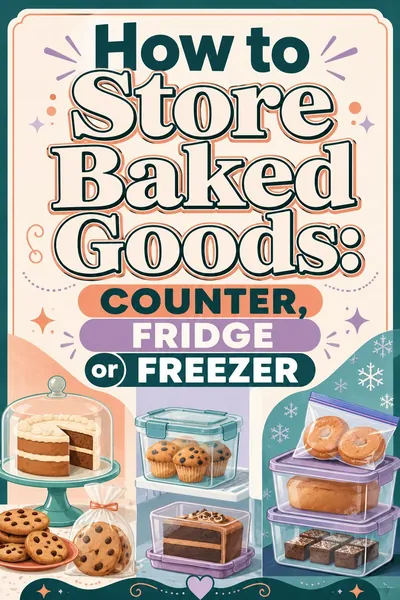
Thaw baked cookies at room temperature still sealed in the container, so condensation forms on the outside of the container rather than on the cookies. Then refresh them for 3 to 4 minutes in a 300F oven if you want the just-baked texture back. Our guide on storing baked goods covers the room-temperature and refrigerator rules for everything else you bake.
Frequently asked questions
Do I need to thaw frozen cookie dough before baking?
No, and for drop cookies you should not. Bake straight from frozen and add 2 to 4 minutes. Thawing makes the dough spread more, which gives you thinner cookies, so freezing and baking from solid is actually a way to control spread.
How long does cookie dough last in the freezer?
Three months for best quality, and it stays safe well beyond that at 0F. After three months the butter starts to taste stale and the dough may pick up freezer odors, so label the bag with the date and work through the older bags first.
Can you freeze cookie dough with eggs in it?
Yes. Raw egg freezes fine inside a dough, since the fat, sugar, and flour protect it from the texture problems eggs get when frozen alone. There is no additional food safety concern beyond the usual advice not to eat raw dough.
Why did my frozen cookie dough balls fuse together?
They were bagged before they were solid. Soft dough surfaces bond to each other as they freeze into one block. Freeze them spaced apart on a sheet pan for 1 to 2 hours first, then bag them once they are hard enough that pressing one leaves no dent.
Can I freeze cookie dough in the mixing bowl?
You can, but you will have to thaw the entire batch to portion it, which means one bowl of dough instead of grab-and-bake convenience. If you are short on time, press the dough flat into a bag instead of a ball, since a half-inch slab thaws in about an hour compared to several for a lump.
Should I flatten the dough balls before freezing?
Only if your recipe calls for flattened cookies, like peanut butter or snickerdoodles. Flattening before freezing gives you a thinner cookie with more spread. For most drop cookies, leave them as balls, since the tall shape is part of why frozen dough bakes up thicker.
Can I refreeze cookie dough that thawed?
If it thawed in the refrigerator and stayed cold, yes, though the texture suffers a little each cycle. If it sat at room temperature for more than about 2 hours, bake it now rather than refreezing. Dough that has gone soft and warm has already lost the structural benefit freezing gave it.
Does frozen dough need a different oven temperature?
Not for small and medium cookies, where adding time is enough. For extra large portions of 60 g and up, drop the oven 25F to 325F and extend the time, otherwise the outside browns while the center is still frozen. The bigger the ball, the more the temperature matters.