
How Long to Bake Sugar Cookies at 350°F, by Type and Size

Bake sugar cookies at 350°F for 8 to 10 minutes when they are rolled cut-outs about 1/4 inch thick. Thin 1/8 inch cut-outs need just 6 to 8 minutes, and soft drop cookies scooped with 2 tablespoons of dough need 10 to 12. The cookies are ready when the edges are set and the centers look puffy and matte, not wet.
The type of cookie and how big or thick you make it change the clock more than anything else. Pick both in the calculator below and it gives you the minutes, plus what the cookies should look like when it is time to pull the pan.
Free calculator
Sugar cookie bake time calculator
Pick your kind of sugar cookie and how thick or big you made them to see the bake time at 350°F.
More free baking tools



Sugar cookie bake times at a glance
Almost every sugar cookie recipe bakes at 350°F, so the only real question is minutes. That number comes down to two things: what kind of sugar cookie you are making, and how thick or big each one is. Here is the full chart.
| Cookie type | Thin or small | Medium | Thick or large |
|---|---|---|---|
| Cut-out (rolled) | 1/8 inch: 6 to 8 min | 1/4 inch: 8 to 10 min | 3/8 inch: 10 to 12 min |
| Drop (scooped) | 1 tbsp: 8 to 10 min | 2 tbsp: 10 to 12 min | 3 tbsp: 12 to 14 min |
| Slice-and-bake | 1/4 inch: 8 to 10 min | 3/8 inch: 10 to 12 min | 1/2 inch: 12 to 14 min |
Start checking at the low end of each range. Ovens run hot or cold, pans vary, and sugar cookies have a small window between soft and crunchy. Writing down the time that works in your own oven saves guesswork next batch.
Why 350°F is the standard
Sugar cookies are mostly butter, sugar and flour, with very little to hide behind. You want the edges to set before the butter melts all the way and the dough spreads, but you also want the centers cooked through before the outside browns. At 350°F, those two things happen at about the same pace.
Some recipes use 375°F for drop cookies. The hotter oven sets the edges faster, so the cookies spread less and get slightly crisper rims. If you go that route, take about 1 to 2 minutes off the times above and watch closely. Going below 350°F tends to give pale, flat cookies that spread before they set.
A quick oven check helps here. If your cookies brown on the bottom long before the times above, the oven may run hot, or the heat may come mostly from below. Our page on getting even baking in your oven shows how to test for hot spots.
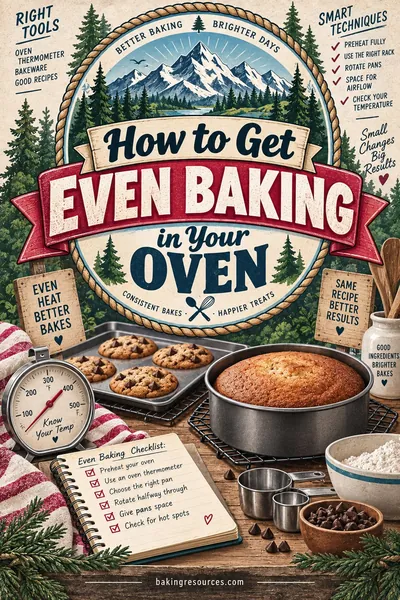 Baking guideHow to Get Even Baking in Your Oven: Fix Hot SpotsShow me how →
Cut-out sugar cookies: thickness sets the clock
For rolled cookies, the size of the cutter matters much less than how thick you roll the dough. A small star and a big tree rolled to the same 1/4 inch thickness bake in nearly the same time, because heat moves in from the top and bottom, not just the edges. That is why it pays to roll evenly.
- 1/8 inch gives thin, crisp cookies that snap. They are great for sandwich cookies and dunking, but they break easily under heavy icing.
- 1/4 inch is the go-to for decorated cookies. Sturdy edges, soft middles, and they hold royal icing well.
- 3/8 inch gives thick, soft, bakery-style cut-outs. Keep the tops pale and pull them as soon as the edges set.
Cut-out dough bakes best when it is cold, so the shapes keep their sharp lines. How long that takes, and why, is on our page about how long to chill sugar cookie dough. Once cut, a quick 10 minutes in the freezer on the pan helps the edges stay crisp.
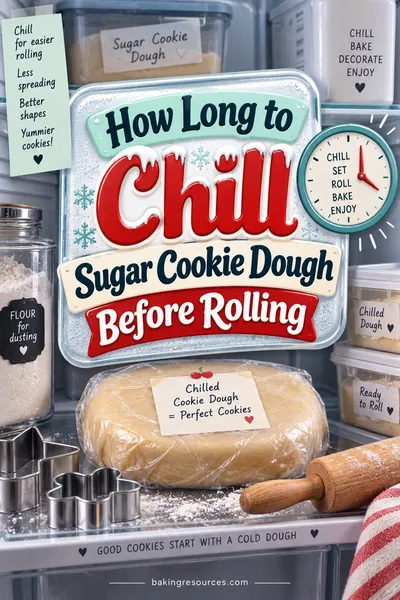 Baking guideHow Long to Chill Sugar Cookie Dough Before RollingRead the dough guide →
Try to put same-size shapes on the same pan. A tray of tiny stars mixed with big snowmen will have the stars overbaked before the snowmen are ready.
Drop sugar cookies: scoop size sets the clock
Drop cookies are softer and puffier. Their time depends on how much dough goes into each one. A cookie scoop makes this easy, because every cookie comes out the same size and they all finish together.
A 1 tablespoon scoop makes a ball about 1 1/4 inches wide that bakes into a 2 1/2 inch cookie. A 2 tablespoon scoop is the classic size. A 3 tablespoon scoop makes big, soft cookies that need a few extra minutes and a little more space on the pan.
Drop sugar cookies should come out looking a touch underdone in the center. They keep cooking on the hot pan for 3 to 5 minutes. If you wait until the middle looks fully done in the oven, they will cool into hard disks. If yours spread into thin puddles, our guide on how to stop cookies from spreading explains why.
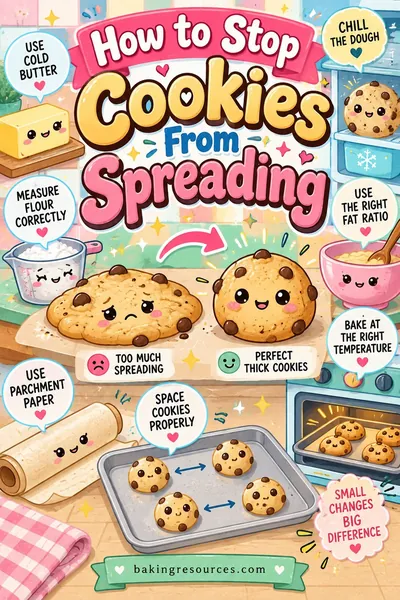 Baking guideHow to Stop Cookies From Spreading: 7 Dough LeversRead the step by step →
Keep the dough balls round and the same height. A flattened ball bakes faster than a tall one, even with the same amount of dough, because the heat has less distance to travel to the center. If you like to press the tops with a sugared glass, do it to every cookie on the pan so they all finish together.
Slice-and-bake sugar cookies
Slice-and-bake dough is shaped into a log, chilled until firm, then sliced into rounds. The log needs at least 2 hours in the fridge so it slices cleanly. Thickness is again what sets the time, and it is easy to control with a ruler and a sharp knife.
These logs are handy for holiday baking because you can roll the outside in colored sugar or sprinkles before slicing. The coating toasts a little in the oven, so do not let the edges go past light golden. A log straight from the freezer can be sliced after 10 minutes on the counter and needs about 1 to 2 extra minutes in the oven. For wrapping and timing, see how to freeze cookie dough.
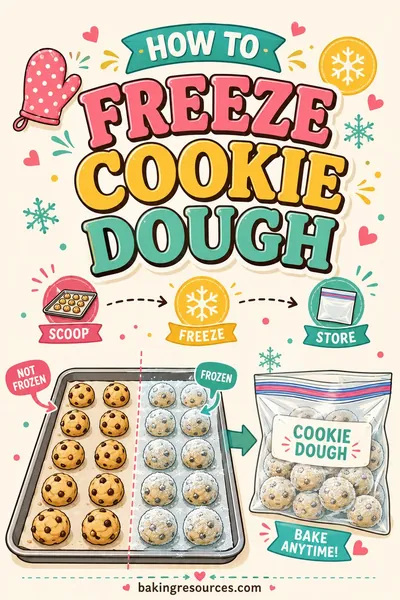 Baking guideHow to Freeze Cookie Dough: Flash Freeze, Then Bag ItGet the proofing tips →
Things that change the bake time
The chart assumes light-colored metal sheet pans, parchment, the middle rack and dough that starts cold. Change any of those and the clock moves.
| What changed | What happens | What to do |
|---|---|---|
| Dark nonstick pan | Bottoms brown faster | Check 1 to 2 minutes early |
| Insulated or doubled pans | Bottoms stay pale | Add 1 to 2 minutes |
| Silicone mat instead of parchment | Slightly paler bottoms, a bit more spread | Add up to 1 minute |
| Convection setting | Faster, more even browning | Lower to 325°F and check early |
| Frozen dough or frozen cut-outs | Center takes longer | Add 1 to 2 minutes |
| Two pans in the oven at once | Uneven heat | Swap and turn pans halfway |
| High altitude | More spread, faster drying | Raise heat 15 to 25°F, shorten time |
The pan question is a bigger deal than most people think. The page on why cookies burn on the bottom goes through pans, racks and liners. If you bake up in the mountains, the high altitude baking chart lists the changes by elevation.
 Baking guideWhy Are My Cookies Burnt on the Bottom? 7 Real FixesFind out why →
 Baking guideHigh Altitude Baking Adjustments: The Chart by ElevationLearn more →
Worked example: Christmas cut-outs for decorating
Say you are making a big batch of tree, star and gingerbread-man shapes to decorate with royal icing at a Christmas party. Here is how the timing plays out.
- Roll the chilled dough to 1/4 inch between two sheets of parchment. Use rolling pin guides or two stacked rulers for even thickness.
- Cut the shapes and set them 1 inch apart on parchment-lined light metal pans, grouping similar sizes on each pan.
- Freeze the pans for 10 minutes while the oven heats to 350°F.
- Bake one pan at a time on the middle rack. Check at 8 minutes. The edges should be set and barely golden at the very rim, and the tops should look dry.
- Most pans will be ready at 9 minutes. Let them sit on the pan 5 minutes, then move them to a rack.
- Cool them completely, about 1 hour, before icing.
For the decorating stage, our guides to royal icing consistency and how long royal icing takes to dry will help you plan the night.
 Baking guideRoyal Icing Consistency: Piping, Flood and 10-Second IcingSee the chart →
 Baking guideHow Long Does Royal Icing Take to Dry and Harden?Read it next →
Mistakes that throw off the timing
- Waiting for color. Soft sugar cookies should stay pale. If the whole top is golden, they are overbaked and will turn crunchy. Our list of reliable signs cookies are done covers what to look for besides color.
- Uneven rolling. Thin edges burn while a thick middle stays raw. Use guides.
- Mixed sizes on one pan. Small shapes finish first. Bake them separately.
- Warm pans. Putting dough on a pan straight out of the oven starts the spread early. Cool pans between batches or rotate two or three.
- Leaving them on the pan too long. Cookies keep baking on hot metal. Move them to a rack after about 5 minutes.
- Too much flour from rolling. Extra flour makes cookies dry and harder. If yours come out like rocks, see why cookies turn hard.
 Baking guideHow to Tell When Cookies Are Done: 5 Reliable SignsCheck if it's done →
 Baking guideWhy Are My Cookies Hard? 7 Causes and How to Fix ThemFix it next time →
Baking big holiday batches
Christmas cookie season usually means several dozen cookies at once, for trays, tins, teachers and cookie swaps. Timing is easier when you set up a rhythm.
- Work with three pans: one in the oven, one cooling, one being loaded.
- Set a timer for the low end of the range every single time, even after the first pan comes out right. Oven heat drifts during a long session.
- Bake plain cut-outs a day or two ahead of decorating, and store them airtight once fully cool.
- For a cookie exchange, stick to one thickness for all your shapes so every tray matches.
Do you want soft sugar cookies for the kids and crisp ones for dunking in cocoa? You can get both from one dough by changing thickness and time. Our page on chewy vs crispy cookies explains the other levers you can pull.
Questions people ask
How long do you bake sugar cookies at 350°F?
Most sugar cookies bake in 8 to 12 minutes at 350°F. Rolled cut-outs 1/4 inch thick take 8 to 10 minutes, thin 1/8 inch cut-outs take 6 to 8, and 2 tablespoon drop cookies take 10 to 12. Start checking at the low end, and pull them when the edges are set and the centers look matte.
Should sugar cookies be brown on the bottom?
Only lightly. A soft sugar cookie should have a pale golden bottom and edges that are just barely tinted. Deep brown bottoms mean the pan was dark, the rack was too low, or they baked too long. Lift one cookie with a spatula near the end of the bake time to check before pulling the whole pan.
Why are my sugar cookies still raw in the middle?
Usually the dough was rolled thicker than the recipe expected, or the cookies came out of the oven too soon. Thick 3/8 inch cut-outs need 10 to 12 minutes. Also remember that a slightly soft center firms up on the hot pan for a few minutes. If it still looks wet and glossy after cooling, add a minute next time.
Can I bake sugar cookies at 375°F instead?
Yes. A 375°F oven sets the edges faster, so the cookies spread a little less and get crisper rims. Take about 1 to 2 minutes off the 350°F times and watch closely, since the edges can brown quickly. For pale, soft cut-outs to decorate, 350°F gives you a wider window.
How long should sugar cookies cool before decorating?
Let them sit on the baking pan for about 5 minutes, then move them to a wire rack until they are completely cool, usually about 1 hour. Icing a warm cookie makes royal icing or frosting melt and slide. For best results, many bakers decorate the next day after storing the plain cookies airtight.
Do I need to change the bake time for frozen cut-out cookies?
Yes, add about 1 to 2 minutes. You can bake cut-outs straight from the freezer with no thawing, and the cold dough actually helps them keep sharp edges. Keep the oven at 350°F and use the same done signs: set edges and tops that look dry rather than shiny.
How do I keep baked sugar cookies soft?
Pull them while the centers still look a little puffy and pale, then let them finish on the hot pan for about 5 minutes. Once they are completely cool, store them in an airtight container at room temperature. A thicker roll, around 1/4 to 3/8 inch, also stays softer than thin cookies. Overbaking by even 1 or 2 minutes is the most common reason soft cookies turn crisp.