Why Are My Cookies Burnt on the Bottom?

Almost always the pan, the rack, or the oven itself. A dark nonstick sheet runs 15 to 25°F hotter at the surface than a light aluminum one at the same setting, the bottom rack sits in direct line of the lower element, and most home ovens are off by 25 to 50°F from what the dial says.
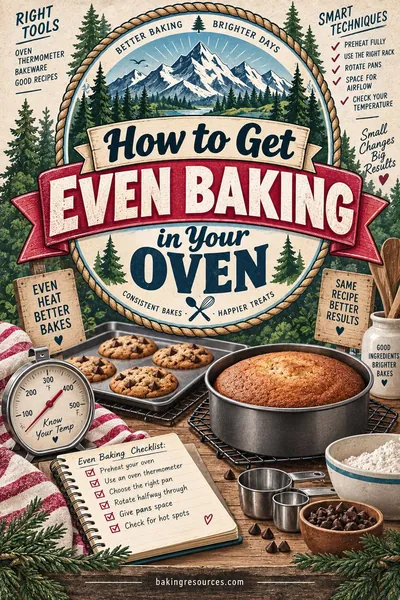
Fix those three and the problem usually disappears in one batch: light heavy-gauge aluminum sheet, parchment on top, middle rack, and an oven thermometer telling you the truth about the temperature.
If the bottoms still darken faster than the tops, the dough itself is the next suspect. Molasses, honey and heavy brown sugar all brown at lower temperatures than white sugar does.
Check what your oven is actually doing first: our free oven temperature converter covers Fahrenheit, Celsius, gas marks and the convection adjustment, which is where a lot of burnt bottoms start.
Updated September 2026
Why are my cookies burnt on the bottom? The 7 causes, ranked
| # | Cause | How common | The fix |
|---|---|---|---|
| 1 | Dark or nonstick pan | Very common | Light aluminum, or drop 15 to 25°F |
| 2 | Rack too low | Very common | Middle or upper middle rack |
| 3 | Oven runs hot | Common | Oven thermometer, then correct the dial |
| 4 | No parchment, or a greased pan | Common | Parchment on every bake |
| 5 | Dough high in molasses, honey or soda | Occasional | Lower the oven 25°F, shorten the bake |
| 6 | Thin, warped or reused hot pans | Occasional | Heavy gauge, cool between batches |
| 7 | Wrong temperature for the cookie | Occasional | Match temperature to thickness |
The first four are equipment and setup. They're free to fix and they solve most cases. The last three are worth checking only after you've ruled the first four out.
Cause 1: your cookie sheet is dark
This is the single biggest lever, and most people never think about it.
Dark surfaces absorb radiant heat. Light, shiny surfaces reflect it. A black nonstick sheet soaks up infrared energy from the oven walls and element and passes it straight into the bottom of your dough, while a bare aluminum sheet bounces a good share of it back.
The gap runs 15 to 25°F at the pan surface at the same oven setting. On a 10 minute bake, that's the difference between golden and scorched, because browning speeds up sharply as temperature climbs.
| Sheet type | Bottom heat | What to do |
|---|---|---|
| Light heavy-gauge aluminum | Baseline, the target | Nothing, this is the right tool |
| Aluminized steel, light | Close to baseline | Nothing |
| Dark nonstick | 15 to 25°F hotter | Drop the oven 15 to 25°F, check 2 min early |
| Thin dark steel, warped | Hottest and uneven | Replace it, or double-pan |
| Insulated (double wall) | 10 to 20°F cooler | Add 1 to 2 min, expect pale bottoms |
| Glass or stoneware | Slower to heat, holds it longer | Pull earlier, carryover is strong |
If a dark sheet is what you own, the double-pan trick works: stack your sheet on top of a second empty sheet. The air gap between them acts like an insulated pan and takes the edge off the bottom heat completely.
Cause 2: the rack is too low
Ovens are not evenly heated. In a standard electric oven, the lower element does most of the work and sits just under the oven floor. Anything on the bottom rack is exposed to it directly, plus the reflected heat coming off the floor.
Bake cookies on the middle or upper middle rack. In a five-slot oven, that's slot 3 counting from the bottom, or slot 4 for a thick cookie you want browned on top.
If you bake two sheets at once, they will not come out the same. The lower sheet browns underneath, the upper sheet browns on top. Swap them top for bottom and rotate each one front to back at the halfway mark. That's two moves in one motion and it evens out both problems.
Gas ovens behave differently again. The burner is at the bottom and the heat rises in a strong convection current, so the top of a gas oven is often the hotter zone and the bottom rack is the burn zone by a wider margin. Middle rack, always.
Cause 3: your oven is not the temperature it says
Oven thermostats drift. A dial that reads 350°F can be delivering anywhere from 315 to 400°F, and a swing of 25°F either side of the setpoint through the heating cycle is normal even in a well calibrated oven.
Buy a standalone oven thermometer and hang it in the middle of the oven. Preheat for a full 20 minutes, not until the beep. The beep usually fires when the air hits temperature, which is well before the oven walls and racks have caught up, and the walls are what deliver the radiant heat that browns your cookie bottoms.
Then do this:
- Read the thermometer after 20 minutes at a 350°F setting.
- Write down the difference. If it reads 385, your oven runs 35°F hot.
- Set the dial 35°F lower for every bake from now on, or recalibrate it if your oven has that option in its settings menu.
- Check again in three months. Drift comes back.
Two other oven habits that burn bottoms: preheating with a baking stone or steel on the lower rack, which turns the whole bottom of the oven into a radiator, and using a "bottom heat" or "pizza" setting without realizing it. Pull the stone out for cookies, and check which element your oven is actually running.
Cause 4: bare pan, or worse, a greased one
Parchment paper does two useful things at once. It puts a thin insulating layer between the dough and the hot metal, and it stops the sugars in the dough from sticking and scorching against the pan surface.
Greasing does the opposite of what people expect. A film of oil or butter conducts heat efficiently, gets hotter than the dough around it, and fries the underside of the cookie. It also encourages spread, which thins the cookie and speeds the burn. That's covered in more detail in why are my cookies flat.
Silicone mats insulate more than parchment does, so they solve burnt bottoms well. The trade is paler, softer undersides and a bake time 1 to 2 minutes longer. If you want browned but not burnt, parchment is the better middle ground.
Never bake on foil. It's a poor insulator, it reflects unevenly where it creases, and the shiny side reflects while the dull side absorbs.
Cause 5: the dough browns faster than white sugar dough
Sometimes the setup is fine and the recipe is just fast to brown. Different sugars and a different pH change the temperature at which color develops.
Sugars that brown early:
- Molasses contains invert sugars that color well below the temperature plain sucrose caramelizes at. Gingerbread and molasses cookies scorch underneath faster than any other dough. House panels sit in the oven longer still, and gingerbread house panel proportions covers the thickness that survives it.
- Honey and corn syrup behave the same way. Honey is 340 g per cup and mostly fructose and glucose, both of which brown ahead of sucrose.
- Brown sugar is sucrose with molasses in it, at 213 g per packed cup, so an all-brown-sugar cookie darkens sooner than an all-white one.
Baking soda does it too. Soda raises the pH of the dough, and the Maillard reaction runs much faster in alkaline conditions. A recipe with a full teaspoon of soda browns visibly quicker than the same recipe with baking powder. That's a feature in a chocolate chip cookie and a problem on a dark pan. The baking soda vs baking powder guide explains the tradeoff.
Dairy and eggs add protein, and Maillard needs protein as well as sugar. A cookie enriched with milk or extra yolk colors faster than a lean one.
For any of these doughs, drop the oven 25°F and extend the bake. You're trading speed for control, and control is what you want.
Cause 6: thin, warped or still-hot pans
A cheap thin sheet has almost no thermal mass, so it spikes to oven temperature immediately and transmits every fluctuation straight into the dough. A heavy-gauge sheet evens those swings out.
Warping is worse than thinness. A warped pan touches the rack in some places and lifts away in others, so heat transfer varies across the same tray. That's the classic "three cookies burnt, five fine" pattern. A pan that has popped and buckled in the oven is telling you it's too thin for the job.
Reused hot pans cause a different version of the problem. Dough placed on a sheet that just came out of the oven starts cooking before it goes back in, and the bottom gets a head start it never loses. Keep three sheets in rotation, or run the used one under cold water and dry it before you portion again.
Cause 7: the temperature doesn't match the cookie
There's a real tradeoff here, and knowing which side you're on tells you which way to move.
Hotter and shorter (375 to 400°F) sets the outside fast and leaves the middle soft. Good for thick cookies you want chewy in the center. Risky on a dark pan, because the bottom is the part in direct contact.
Cooler and longer (325 to 350°F) dries the cookie more evenly and browns it gently. Good for thin cookies, shortbread and anything with molasses. But a long bake on a dark pan on a low rack gives the bottom more total time to darken, so cooler is not automatically safer.
| Cookie | Temperature | Notes |
|---|---|---|
| Standard drop cookie, 45 g portions | 350 to 375°F | 375 for chewy centers, 350 for even color |
| Thick bakery-style, 85 g portions | 350°F | Higher heat burns the base before the middle sets |
| Thin, crisp or lace | 325 to 350°F | Low and slow, they scorch fast |
| Molasses, gingerbread, honey | 325 to 350°F | Brown early, watch the last 3 minutes |
| Shortbread | 300 to 325°F | Almost all butter and flour, browns slowly on purpose |
| Cut-out sugar cookies | 350°F | Thin and flat, so the base is exposed |
Our baking time calculator adjusts times when you change temperature or portion size, so you're not guessing at the new number.
Worked example: how a 375°F bake becomes a 425°F bake
Here's how three small problems stack into burnt bottoms with nobody doing anything obviously wrong.
The setup:
- Recipe says 375°F for 10 to 12 minutes
- Oven thermometer reads 400°F at a 375°F setting, so the oven runs 25°F hot
- Dark nonstick sheet, worth another 20°F at the surface
- Bottom rack, in direct line of the lower element, worth roughly another 10 to 15°F of bottom heat
The total: the underside of that cookie is seeing an effective 420 to 440°F while the recipe was written for 375°F. That's 50 to 65°F over, and browning is not linear. At that gap, the color you expected at 11 minutes arrives at about 7, and by 10 minutes the base is past golden and into bitter.
The tops look fine, because they're only exposed to hot air. The bottoms are in contact with hot metal. Conduction beats convection every time, which is why the failure is one-sided.
The corrected setup:
- Dial set to 350°F, which delivers a true 375°F in this oven
- Light aluminum half sheet, parchment lined
- Middle rack, one tray at a time
- Portions at 45 g, spaced 2 inches apart
- Bake 10 minutes, rotating front to back at 6
- Pull when the edges are set and the centers still look slightly underdone
Same recipe. Same cookie. Golden underneath.
If you change only one thing, change the pan. A light heavy-gauge sheet on its own removes about a third of the excess in that example.
How to tell if it's the oven or the dough
Run this test once and you'll know for good.
- Portion one tray of cookies as usual.
- Put six on parchment on a light sheet and six on parchment on your dark sheet.
- Bake them one after the other, same rack, same temperature, same time.
- Compare the bottoms.
If the light-sheet cookies are fine, it was the pan. If both are burnt, it's the oven temperature or the dough. Then repeat the test with the oven dropped 25°F. If that fixes it, your thermostat is off. If it doesn't, the recipe is a fast-browning one and needs a lower temperature and a longer bake.
How to rescue cookies that are already burnt
Salvage is possible if the damage is limited to the surface.
- Grate the bottoms. Run a microplane or the fine side of a box grater flat across the underside. It takes off the dark layer in seconds and leaves a clean surface. This is a genuinely standard bakery fix.
- Sand with a serrated knife. For a thicker burnt layer, hold the cookie flat and shave with a light sawing motion.
- Cool them off the pan immediately. A hot pan keeps cooking the base for 3 to 4 minutes after the oven, so move the whole batch to a rack the moment you see trouble.
- Know when to stop. If the burnt layer is more than about 1/16 inch, or the cookie smells acrid rather than toasty, the bitterness has gone into the crumb and grating won't reach it.
Once they're rescued, store them properly so they don't go soft against each other. Our guide on how to store baked goods covers container choice and how long each type actually keeps.
Burnt on the bottom but raw on top
This specific pattern points at conduction, not oven temperature. The heat is arriving from below far faster than from above, which means one of three things:
- The pan is dark or the rack is low. Both send more heat into the base than the top gets.
- The cookies are too thick for the temperature. A 85 g portion at 400°F cannot cook through before the base burns. Drop to 350°F and add 4 to 5 minutes.
- The dough went in frozen. A frozen center takes so long to come up to temperature that the base is overcooked by the time it does. Let frozen dough sit out 15 to 20 minutes first. The freezing cookie dough guide has the timings for bake-from-frozen.
If the tops need color and the bottoms don't, move the tray to the upper rack for the last 2 minutes rather than turning on the broiler. Broilers are far too aggressive for cookies.
What about convection
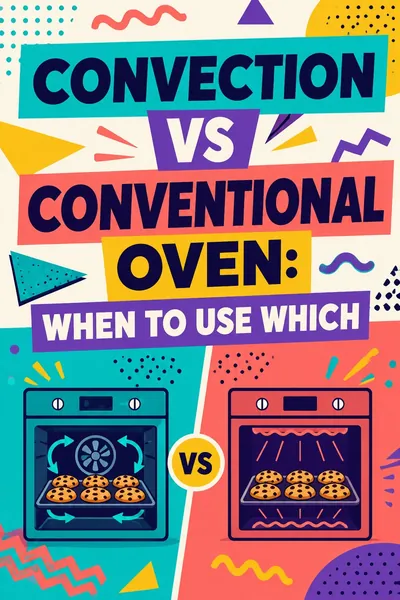
Convection helps here more often than it hurts, because the moving air spreads heat evenly and reduces the share coming from radiant bottom heat. Bottoms brown more gently and the whole tray colors uniformly.
The rule is to drop the temperature 25°F from the conventional setting and start checking 2 to 3 minutes early. A recipe calling for 375°F conventional becomes 350°F convection.
Two cautions. Some ovens run the fan alongside a bottom-heat-only element, which makes things worse rather than better, so check your manual. And a strong fan can push light cookies around on the sheet or dry the tops. Convection vs conventional oven covers which settings suit which bakes.
Frequently asked questions
What rack should I bake cookies on?
The middle rack, or upper middle if you want more color on top. In a five-slot oven that's position 3 or 4 counting from the bottom. The bottom rack sits in direct line of the lower element and is the most common cause of scorched undersides.
Do dark cookie sheets really burn cookies?
Yes, measurably. Dark surfaces absorb radiant heat instead of reflecting it, so a dark nonstick sheet runs 15 to 25°F hotter at the surface than light aluminum at the same oven setting. Either switch to light heavy-gauge aluminum or drop the oven 15 to 25°F and check two minutes early.
Why are my cookies burnt on the bottom but not cooked in the middle?
Heat is reaching the base by conduction much faster than it reaches the center. Usually that means a dark pan, a low rack, an oven running hot, or portions too thick for the temperature. Lower the oven 25°F, move to the middle rack, and give the cookies more time.
Does parchment paper stop cookies burning on the bottom?
It helps a lot. Parchment adds a thin insulating layer between dough and metal and stops sugars scorching against the pan. It won't fully rescue a dark pan on a bottom rack in an oven running 40°F hot, but it's the cheapest single improvement you can make.
Should I use a silicone mat instead of parchment?
A mat insulates more, so it's the better choice if burnt bottoms are your recurring problem. Expect paler, softer undersides and add 1 to 2 minutes to the bake. If you want a crisp golden base, parchment gives you more browning without the scorch.
How do I know if my oven runs hot?
Hang a standalone oven thermometer in the middle of the oven, preheat for a full 20 minutes, and read it. Anything more than 15°F off the dial is worth correcting on every bake. Home ovens commonly drift 25 to 50°F, and the built-in sensor is usually the last thing to tell you.
Why do my molasses and gingerbread cookies always burn underneath?
Molasses contains invert sugars that brown at lower temperatures than plain white sugar, so those doughs color while the rest of the cookie is still catching up. Bake them at 325 to 350°F rather than 375°F, use a light pan, and watch the final three minutes closely.
Can I fix cookies that are already burnt on the bottom?
If the burnt layer is thin, run a microplane or the fine side of a box grater flat across the underside and it comes right off. Past about 1/16 inch the bitterness has soaked into the crumb and no amount of grating will help. Move the batch off the hot pan immediately either way, because it keeps cooking for another 3 to 4 minutes.
Related guides: How to tell when cookies are done | Why are my cookies not spreading | Convection vs conventional oven | Oven temperature converter | Baking time calculator