How to Soften Butter Without Melting It

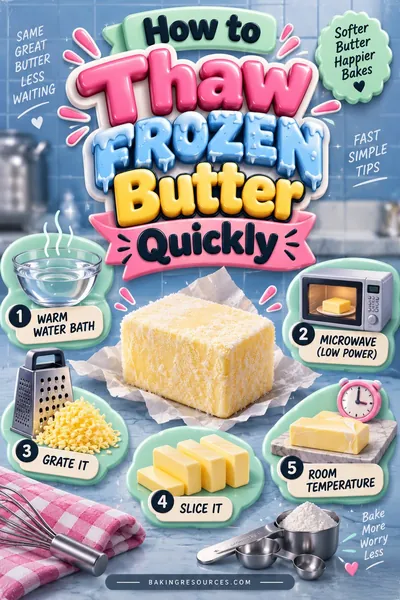
Cut the cold stick into 1/2-inch cubes and spread them on a plate. In 15 to 20 minutes they're ready, because small pieces have far more surface area than one solid brick.
If you need it faster, put the wrapped-and-unwrapped stick between two sheets of parchment and roll it flat with a rolling pin. Thin butter warms in about 5 minutes and it never gets close to melting.
Need to convert sticks to cups or grams while you're at it? Our free butter converter handles every unit US recipes throw at you.
Updated August 2026
"Room temperature" is a real number, not a vibe
Here's the part almost every article skips, and it's the reason your cookies spread flat.
Properly softened butter is 65 to 67°F. That's it. Not "not cold." Not "left out a while." A specific, narrow, six-degree window that happens to sit well below what most kitchens actually are.
If your kitchen is 74°F, butter left on the counter for two hours is not at room temperature in the baking sense. It's at 74°F, which is too warm, and it will fail you.
Why the window is so narrow
Butter is roughly 80 to 82% fat, 16 to 18% water, and a little milk solid. That fat isn't one substance. It's a mix of different fatty acids with different melting points, arranged in a crystal lattice.
At 65 to 67°F, enough of those crystals are still solid to hold shape, but the whole structure is pliable. That's the magic state.
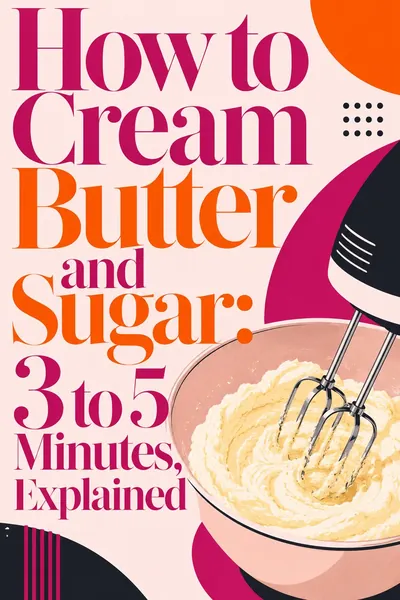
Creaming works by mechanical aeration. When you beat sugar into butter, the sharp edges of the sugar crystals cut through the semi-solid fat and drag air pockets in behind them. The fat crystal network holds those pockets in place, like bubbles trapped in a foam. Every one of them becomes a place where steam and leavening gas can expand in the oven.
Above about 70°F, the crystal lattice starts falling apart. The butter looks fine, maybe a little shiny. But there's no structure left to trap air. You can beat it for ten minutes and it will not get lighter or paler, because the air just escapes.
That's why over-soft butter gives you flat, greasy cookies and dense, tight cakes. It never had the air in it to begin with.
How to soften butter: 7 methods ranked by speed and risk
| Method | Time | Risk of melting | Best for |
|---|---|---|---|
| Cube it | 15 to 20 min | Very low | The default. Zero effort, zero risk |
| Rolling pin flatten | 5 min | Very low | The fastest safe method. Creaming, cookies |
| Grate frozen butter | 5 to 10 min | Very low | When you forgot entirely and have 10 minutes |
| Warm glass over the stick | 5 to 10 min | Low | One stick, no equipment, hands-off |
| Sealed bag in warm water | 8 to 10 min | Medium | Multiple sticks at once |
| Oven with the light on | 10 to 15 min | Medium | Cold winter kitchens |
| Microwave, low power | 20 to 40 sec | High | Emergencies only. See the warning |
1. Cube it (the default)
Unwrap the stick and cut it into 1/2-inch cubes. Spread them out on a plate so they aren't touching. Wait 15 to 20 minutes in a 70°F kitchen, a bit longer in a cold one.
A whole stick has to warm from the outside in through a solid inch of fat. Cubes have maybe eight times the exposed surface and no center to speak of. That's the entire trick.
2. The rolling pin flatten (fastest safe method)
Unwrap the stick, lay it between two sheets of parchment or inside a zip bag, and roll it out to about 1/4 inch thick. Whack it a few times with the pin first if it's fridge-hard.
Thin butter equilibrates with the room almost immediately. Five minutes, sometimes less. The physical working also warms it slightly on its own.
This is the method to use when you're standing in the kitchen at 6pm with cold butter and a plan.
3. Grate frozen butter
Take butter straight from the freezer, hold it by the wrapper, and run it down the large holes of a box grater onto a plate. You get a pile of butter shreds that come to temperature in 5 to 10 minutes.
Counterintuitive but true: frozen butter grates cleanly, refrigerator-cold butter smears and clogs the grater.
4. Warm glass over the stick
Fill a drinking glass with very hot tap water, let it sit for a minute, dump the water, dry the glass, then invert it over the stick of butter on a plate.
The glass traps a small pocket of warm, humid air. Five to ten minutes and the stick is soft all the way through. It's gentle because the glass cools as it works, so there's a built-in ceiling on the heat.
5. Sealed bag in a warm water bath
Put the butter in a zip bag, press the air out, seal it completely, and submerge it in a bowl of water at about 95 to 100°F. Not hot water. Bath water.
Eight to ten minutes. Good for softening three or four sticks at once when you're making a big batch.
The failure mode is water temperature. If you use hot tap water at 120°F the outside melts before the inside catches up.
6. Oven with the light on
The bulb in an oven keeps the closed cavity around 85 to 100°F. Put the plate of cubed butter in, leave the oven off, turn the light on, and check at 10 minutes.
Great in a January kitchen. Two risks worth naming: LED oven lights produce almost no heat and won't do anything, and forgetting the butter is in there is genuinely easy.
7. The microwave (and how to do it least badly)
This is the method most likely to ruin your butter, and it's the one everybody reaches for.
Microwaves heat unevenly. They find the water and the warmer spots and hammer them, so you get a stick that's liquid in the middle and cold on the ends. The melted part is already past saving, and stirring it back together doesn't undo it.
If you're going to do it anyway:
- Set the power to 20 to 30%, not full. This is the whole thing. On a 1000-watt microwave, that's the difference between softening and melting.
- Cut the stick into cubes first and spread them out.
- Go in 5-second bursts. Not 15. Not 30.
- Rotate the plate and flip the cubes between bursts.
- Stop the moment the outside looks glossy. Glossy means melting has started.
- Let it rest 2 minutes. Carryover warming will finish the job.
Total time is usually 20 to 40 seconds of actual microwave. Yes, that's more attention than just cubing it and waiting. That's the point.
The temperature test: three ways to check
Don't guess. Butter that looks right and butter that is right are different things.
The thumbprint test
Press your thumb gently into the surface. You want a clean dent that holds its shape, with your finger stopping at the surface rather than sinking in.
- Thumb won't dent it: still too cold.
- Clean dent, finger stays on top: perfect.
- Thumb sinks in, butter squishes around it, surface looks greasy: too warm. Refrigerate 10 minutes.
The bend test
Pick up a piece and bend it. Correctly softened butter bends smoothly without cracking and without looking oily.
- Snaps or cracks: too cold.
- Bends and leaves a shine on your fingers: too warm.
The thermometer
An instant-read thermometer in the center of the stick removes all doubt. 65 to 67°F. Push the probe in from the end so you're reading the core, not the surface.
This feels fussy for exactly one baking session, and then you learn what 66°F butter feels like and you never need the thermometer again. That's the real value of it.
What to do if you overshoot
You looked away and now the butter has a puddle.
If it's just soft and shiny but still holding shape: put it in the fridge for 5 to 10 minutes, then check with the thumbprint test. It comes right back. No harm done.
If part of it has actually gone liquid: here's the honest answer nobody wants. Butter that fully melts and then re-solidifies is not the same butter. When the fat melts, the crystal lattice dissolves. When it cools again, it recrystallizes into a different structure with larger, coarser crystals and the water separates and redistributes.
That butter is fine to eat, fine to cook with, fine in anything that calls for melted butter. It is not fine for creaming. It will not hold air properly no matter how long you beat it, and no amount of chilling rebuilds the original structure.
So for a creamed recipe, start over with a fresh stick. Use the melted butter for brownies tomorrow. Losing 4 ounces of butter is cheaper than losing a batch of cookies plus the sugar, eggs, flour, and an hour.
When you actually want cold butter instead
"Softer is better" is a genuine misconception, and it wrecks more pastry than it saves.
For a whole category of baking, solid cold butter is the entire technique. Softened butter ruins these outright.
- Pie crust
- Biscuits
- Scones
- Puff pastry, rough puff, croissants
- Streusel and crumble toppings
- Shortcakes
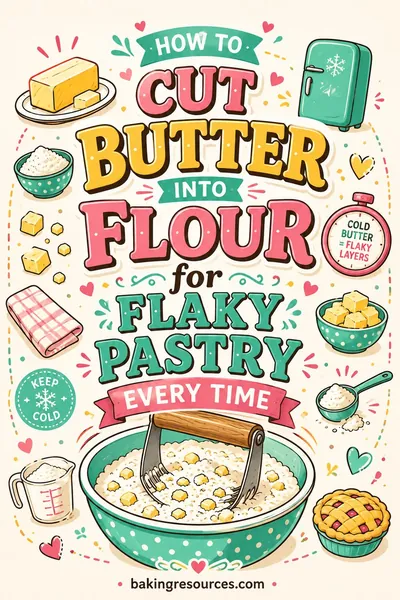
Here's why. In these doughs you cut cold butter into the flour so it stays in discrete pieces, from pea-sized down to flat flakes. Those pieces don't blend in. They sit there, coated in flour, keeping their shape right up until they hit the oven.
Then the water inside the butter, that 16 to 18%, flashes to steam. Each piece pushes the dough apart from the inside and leaves a void. Hundreds of those voids stacked up is what "flaky" means.
Softened butter can't do that. It coats the flour evenly and blends in, which blocks gluten development and gives you a crumbly, sandy, short texture instead of layers. Good in shortbread. Wrong in a pie crust.
Target for laminated and cut-in doughs: 40°F or colder. Some bakers freeze the butter and grate it in. Some chill the bowl and the flour too. In a warm kitchen, put the whole bowl back in the fridge for 15 minutes partway through.
If you took butter out for cookies and then changed your mind about what you're baking, put it back. Cold is easy to get; softened butter can't be un-softened.
When melted butter is correct
A third state, deliberately used.
Brownies. You don't want air in a fudgy brownie. Aeration makes them cakey. Melted butter gives you the dense, glossy, slightly chewy texture people are actually after, and the melted fat coats the flour to keep them tender.
Quick breads and muffins made by the muffin method. Banana bread, corn muffins, most loaf cakes. The wet ingredients get whisked together and folded into the dry in about twelve seconds. Melted butter mixes in instantly and the lift comes from baking soda or powder, not from creamed air.
Chewy cookies. This one is a real technique, not a shortcut. Melted butter lets the sugar dissolve more completely, and dissolved sugar holds onto moisture. You get a denser, chewier cookie with a shinier crackled top. Creamed butter gives you a cakier, lighter cookie. Neither is wrong, they're just two different cookies.
The rule underneath all of it: creamed butter for lift, melted butter for chew, cold butter for flake. Pick the one that matches the texture you want, and then hit its temperature.
Salted vs unsalted, and butter measurements
The salted butter conversion
US salted butter runs about 1.6 to 1.7% salt by weight, which works out to roughly 1/4 to 1/3 teaspoon of salt per stick.
To use salted butter in a recipe that calls for unsalted, reduce the recipe's salt by 1/4 teaspoon per stick. With two sticks, cut 1/2 teaspoon.
Baking recipes call for unsalted for a practical reason, not a snobbish one: salt levels vary by brand, so unsalted is the only way a recipe author can control the seasoning. Salted butter also tends to be older on the shelf, since salt is a preservative.
For anything where butter is the flavor, like shortbread or buttercream, use unsalted and add the salt yourself.
Butter measurement chart
| Butter | Sticks | Tablespoons | Cups | Ounces | Grams |
|---|---|---|---|---|---|
| 1 tbsp | 1/8 | 1 | 1/16 | 0.5 oz | 14 g |
| 1/4 stick | 1/4 | 2 | 1/8 | 1 oz | 28 g |
| 1/2 stick | 1/2 | 4 | 1/4 | 2 oz | 57 g |
| 1 stick | 1 | 8 | 1/2 | 4 oz | 113 g |
| 1 1/2 sticks | 1 1/2 | 12 | 3/4 | 6 oz | 170 g |
| 2 sticks | 2 | 16 | 1 | 8 oz | 227 g |
| 4 sticks (1 lb) | 4 | 32 | 2 | 16 oz | 454 g |
Two gotchas worth knowing. West Coast butter sticks are short and fat rather than long and thin, so the tablespoon marks on the wrapper are spaced differently but the weight is identical. And European butter often comes in 250 g blocks with no markings at all, which is 8.8 oz, or a little more than two US sticks.
Weighing butter is faster than measuring it and it's exact. For everything else you'd normally scoop, our ingredient weights chart has the gram equivalents.
Worked example: 1 cup of softened butter for cookies
Your recipe calls for 1 cup of softened butter. It's 5:40pm, the butter is in the fridge at 38°F, and you want cookies tonight.
Step 1: get the amount right. 1 cup = 2 sticks = 16 tbsp = 8 oz = 227 g. Pull two full sticks.
Step 2: pick the method. You need this in under 10 minutes, so it's the rolling pin. Unwrap both sticks, lay them side by side between two sheets of parchment, and roll to about 1/4 inch. Give them a few firm whacks first to break the initial hardness.
Step 3: wait 5 minutes. Leave the flattened butter on the counter, still in the parchment. Set a timer, because "I'll just check in a minute" is how butter ends up at 74°F.
Checkpoint A, the bend test. Peel back the parchment and lift a corner. It should bend without cracking. If it snaps, give it 3 more minutes.
Checkpoint B, the thumbprint. Press down. Clean dent, finger doesn't sink. If your thumb goes through and the surface looks wet, it's over 70°F. Fold the parchment back over and put the whole thing in the fridge for 5 minutes.
Checkpoint C, the thermometer. Fold the butter into a thick pile and read the center. 65 to 67°F. If it reads 69°F or higher, chill it briefly and re-check.
Step 4: cream it. Break the butter into chunks, drop it in the mixer bowl with the sugar, and beat on medium for 3 to 4 minutes. You're looking for a visible change: the mixture goes from yellow to pale, almost off-white, and roughly doubles in volume. That color change is the air going in. If it stays yellow and dense after four minutes, your butter was too warm.
Total elapsed time: about 12 minutes, including the checks. Compare that to the microwave, which takes 40 seconds and fails maybe one time in three.
Two more things worth having at room temperature before you start creaming: your eggs and your dairy. Cold eggs added to creamed butter can seize the mixture and knock the air back out. Set them in warm water for 5 minutes while the butter softens. If a recipe wants a dairy addition you're short on, our heavy cream substitute guide covers the swaps, and if your brown sugar has turned into a brick, the brown sugar substitute guide has the fix for that too.
Frequently asked questions
How do you soften butter quickly without a microwave?
Flatten the stick to 1/4 inch between two sheets of parchment with a rolling pin. It's ready in about 5 minutes and there's almost no chance of melting, because thin butter warms evenly instead of from the outside in. Grating frozen butter on a box grater is nearly as fast.
How can I soften butter in 5 minutes?
The rolling pin flatten and the frozen-butter grating trick both get you there. Both work by massively increasing surface area, which is the only thing that actually speeds up warming. Adding heat speeds up melting, which is a different and worse outcome.
What temperature is room temperature butter?
65 to 67°F, which is cooler than most kitchens. Butter above about 70°F has begun to melt and can no longer hold air when creamed. This is why the counter method needs a timer rather than an afternoon.
Can I soften butter in the microwave?
You can, at 20 to 30% power in 5-second bursts with a flip between each one, but it's the method most likely to ruin the butter. Microwaves heat unevenly and melt the center before the ends are soft. If you only have one stick left, don't risk it.
Why do my cookies spread flat?
The most common cause is butter that was too warm when you creamed it. Melted or near-melted butter has no crystal structure to hold air, so the dough has nothing supporting it and it spreads before it sets. Chilling the finished dough for 30 minutes helps, but starting at 65°F helps more.
Can I use melted butter instead of softened butter?
Only if the recipe is built for it. In brownies, quick breads, and chewy cookies, melted butter is correct and often better. In creamed recipes like layer cakes, pound cake, and classic drop cookies, melted butter gives you a dense, greasy result because the aeration step can't happen.
How do I fix butter that got too soft?
If it's soft and shiny but still holds its shape, chill it 5 to 10 minutes and re-test with your thumb. If any of it actually turned liquid, the fat crystals have changed permanently and it won't cream properly again. Save it for a melted-butter recipe and start over with a fresh stick.
Is salted butter okay for baking?
It's fine for most things as long as you adjust. Cut the recipe's added salt by 1/4 teaspoon per stick of salted butter. Stick with unsalted for buttercream, shortbread, and anything where the butter is the main flavor, since brand-to-brand salt levels vary too much to control.
Related guides: Brown sugar substitute | Heavy cream substitute | Butter converter tool | Ingredient weights chart