How to Thaw Frozen Butter Quickly Without Melting It

The fastest safe answer to how to thaw frozen butter quickly is to grate it on the large holes of a box grater, which takes about 2 minutes a stick and skips thawing entirely. The shreds come to fridge temperature in 5 minutes and to room temperature in about 15.
If you need a whole soft stick instead of shreds, use the microwave at 30% power in 20 second turns, flipping the stick each time. Three or four turns gets a 113 g stick from freezer-hard to workable without a melted corner anywhere.
And if you have twenty minutes and no equipment: seal the wrapped stick in a zip bag, drop it in a bowl of cool tap water, and leave it. Cool water moves heat about twenty times faster than still air does.
Converting sticks to cups or grams for the recipe? Our free butter converter handles every unit US recipes use, including the metric block sizes.
Updated September 2026
How to thaw frozen butter quickly: 6 methods compared
All timings start with a standard 113 g stick straight out of a 0°F freezer.
| Method | To fridge-cold (40°F) | To soft (65°F) | Risk of melting | Best for |
|---|---|---|---|---|
| Grate on a box grater | Immediate | 10 to 15 min | None | Pastry, biscuits, scones, creaming |
| Microwave, 30% power | 1 to 2 min | 2 to 3 min | Medium | When you need one soft stick now |
| Sealed bag, cool water | 15 to 20 min | 35 to 45 min | None | Several sticks at once |
| Sealed bag, warm water | 8 to 12 min | 20 to 25 min | Low | One or two sticks, hands-off |
| Cubed on a plate | 20 to 25 min | 40 to 50 min | None | The no-equipment default |
| Whole stick on the counter | 55 to 70 min | 2 1/2 to 3 hours | None | Planning ahead by an hour |
| Fridge overnight | 6 to 8 hours | Never gets there | None | Tomorrow's baking |
Two of those rows deserve to be crossed off most lists. A whole stick on the counter is not a method, it is a wait, and the fridge is not thawing so much as relocating.
Why frozen butter is slower than it looks
Butter is about 80 to 82% fat, 16 to 18% water and 1 to 2% milk solids. That water fraction is the reason a frozen stick feels so stubborn.
Warming ice from 0°F to the freezing point takes very little energy. Turning it into liquid water takes an enormous amount, and the temperature does not budge while that is happening. So a frozen stick climbs quickly to about 32°F, stalls there while its ice melts, then climbs again.
Here is what that costs, for one 113 g stick going from 0°F to 40°F:
| Where the energy goes | Amount |
|---|---|
| Warming the ice fraction to 32°F | about 750 joules |
| Melting 20 g of ice | about 6,700 joules |
| Warming that water to 40°F | about 370 joules |
| Warming 93 g of fat through the whole range | about 4,100 joules |
| Total | about 12,000 joules |
More than half of the energy goes into melting 20 g of ice. That is the whole story of why frozen butter is not just "colder butter."
It also explains why surface area beats heat every time. Cutting the stick into cubes or grating it does not add a single joule, but it gives all that energy far more places to enter at once, which is the same principle behind every method in the chart above.
Method 1: grate it, and skip thawing altogether
Hold the frozen stick by its wrapper, peel back an inch at a time, and run it down the large holes of a box grater onto a plate.
Why frozen is better than fridge-cold here: frozen butter shatters into clean shreds. Refrigerator butter smears and packs the holes solid. This is one of the rare cases where the more frozen thing is easier to work with.
What it is perfect for. Pie crust, biscuits, scones and any laminated dough. Grated butter goes straight into the flour with no thawing at all, and the shreds are already close to the pea-sized pieces you were going to cut in anyway. Our guide on how to cut butter into flour covers what size those pieces should be and why.
What it is also good for. Creaming. Spread the shreds on a plate and they hit 65°F in 10 to 15 minutes in a normal kitchen, which is faster than any water bath.
One practical tip: hold the wrapper, not the butter. Bare fingers on frozen butter melt the surface and then the grater clogs.
Method 2: the microwave, done properly
The microwave gets a bad name here because most people use it at full power, which melts the corners and edges long before the core is anywhere near soft.
The sequence that works:
- Unwrap the stick and set it on a plate.
- 30% power, 20 seconds.
- Flip it onto a different face. Another 20 seconds.
- Repeat until you have turned all four long faces, about 80 seconds total.
- Press it. If it still resists, go 15 more seconds and check again.
Three or four turns takes a 113 g stick to roughly fridge temperature. Two or three more takes it to soft. Rotating is what makes it work: a microwave field is uneven, and turning the stick keeps any one face from cooking.
The math checks out too. That stick needs about 12,000 joules to reach 40°F. A 1,000 watt microwave at 30% delivers about 300 joules a second, so roughly 40 seconds of pure energy. Real ovens waste some, so 60 to 90 seconds is what actually happens.
If your microwave has no power setting, run it at full power in 8 second bursts with a flip between each. Same principle, more attention required.
If you overshoot and part of it melts, chill the whole thing for 10 minutes and stir it back together, or accept it and use it in something that wants melted butter. Butter that has melted and re-set has lost its whipping structure and will not cream properly, which our guide on creaming butter and sugar explains in detail.
Method 3: water baths
Water conducts heat roughly twenty times better than still air, so a water bath beats the counter by a wide margin without ever getting hot enough to melt anything.
Cool water, the safe one. Leave the stick in its wrapper, put it in a zip bag, press the air out and seal it. Submerge in a bowl of cool tap water, about 60 to 70°F. Fridge-cold in 15 to 20 minutes, soft in 35 to 45. It cannot melt because the water never gets close to 90°F.
Warm water, the faster one. Same setup, water at about 100°F, which is a comfortable bath temperature. Fridge-cold in 8 to 12 minutes, soft in 20 to 25. Change the water once when it goes cold.
What not to do: never put unwrapped butter directly in water. Water gets into the butter, milk solids leach out into the bowl, and the butter that comes out behaves differently in a batter. The bag is not optional.
For several sticks at once, this is the best method on the list. Four sticks in four bags in one big bowl take barely longer than one, because the water carries plenty of heat.
Method 4: cube it and wait
The no-equipment default, and the one that never goes wrong.
Set the frozen stick on a cutting board and let it sit for 10 minutes so the knife will go through it. Then cut it into 1/2 inch cubes and spread them on a plate without touching each other.
A 113 g stick makes about 24 cubes. Each cube has roughly eight times the surface area per gram that the whole stick had, so the pile comes to 65°F in 40 to 50 minutes rather than three hours.
The rolling pin variation. Once the stick has tempered for 10 minutes, lay it between two sheets of parchment and roll it to 1/4 inch thick. Do not attempt this on a fully frozen stick, since it shatters rather than flattening. Total time from frozen is about 20 minutes, and the flattened sheet is the fastest route to genuinely uniform temperature.
For the fine detail of the last stretch, from cold to correctly softened, our guide on how to soften butter has the thumbprint test, the bend test and the seven methods that start from fridge-cold.
What temperature you are actually aiming for
"Thawed" is not one target. It depends entirely on what the butter is about to do.
| The butter's job | Target temperature | How it should feel |
|---|---|---|
| Pie crust, biscuits, laminated dough | 40 to 50°F | Hard. Grated or cubed, still cold to the touch |
| Croissant butter block for rolling | 55 to 60°F | Pliable like modeling clay, bends without cracking |
| Creaming for cookies and cakes | 65 to 67°F | Holds a thumbprint, does not smear or dent deeply |
| Frosting and buttercream | 65 to 70°F | Same as creaming, no warmer |
| Melted butter recipes | 90 to 110°F | Fully liquid, then cooled before eggs go in |
The creaming window is narrower than most people think. Butter at 60°F will not hold air, and butter at 72°F has started to lose its structure and produces flat, greasy cookies. Our guide on why cookies spread flat traces most of that problem straight back to butter that was 5 degrees too warm.
Recipes that call for melted butter are the easy case: melt straight from frozen over low heat, or in the microwave at 50% power in 30 second bursts. There is no reason to thaw first. If browning is the goal, how to brown butter covers the timing, and yes, frozen butter browns perfectly well once it has melted.
Worked example: three frozen sticks, soft in 45 minutes
The situation. A recipe wants 1 1/2 cups of softened butter, which is three sticks (340 g). Everything is frozen solid. You have 45 minutes.
Step 1. Do not thaw whole sticks. Three whole sticks on the counter is a 3 hour job. The plan has to increase surface area.
Step 2. Microwave, staged. Run each stick at 30% power for 20 seconds a face, four faces. That is 80 seconds a stick, 4 minutes for all three. They come out around 38 to 42°F, cold but no longer rock hard.
Step 3. Cube. Cut each stick into 1/2 inch cubes, about 24 per stick, and spread all 72 across two plates so nothing touches. This takes 3 minutes.
Step 4. Wait 20 minutes in a 70°F kitchen. Cubes that started near 40°F reach 63 to 66°F in that window.
Step 5. Check, do not assume. Press a cube. It should hold a clear thumbprint and keep its shape. A thermometer pushed into the middle of a cube should read 65 to 67°F.
Total: about 27 minutes, with 18 in hand. If the kitchen is cold, add 10 minutes rather than adding heat.
Worked example: pie crust from frozen butter
The situation. A double crust needs 1 cup (227 g) of very cold butter, cut into the flour. Two sticks are in the freezer.
The answer is that you do not thaw them at all. Frozen is not a problem here, it is an advantage. Cold butter pieces are what make a flaky crust: they melt in the oven, leave gaps, and steam pushes those gaps into layers.
The method. Grate both frozen sticks on the large holes straight into the flour, tossing every 30 seconds so the shreds stay separate. Two sticks take about 4 minutes. Then work quickly, because a shred has a lot of surface area and warms fast.
The check. The butter should still read under 50°F when the water goes in. If your kitchen is warm, put the bowl of flour and grated butter in the freezer for 10 minutes before you continue. Our guide on why pie crust turns tough covers what happens next, which is mostly about not overworking it.
Freezing butter in the first place
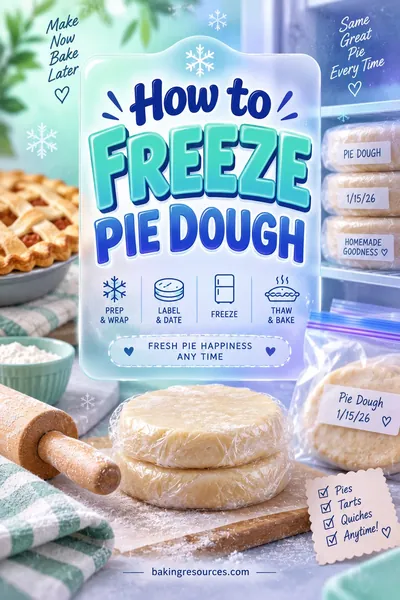
Butter freezes better than almost anything else in a baker's kitchen, which is why buying it when it is cheap and freezing it makes sense.
- Unsalted keeps about 4 months at 0°F with good flavor, and stays safe well beyond that.
- Salted keeps 6 to 9 months, since salt slows the oxidation that eventually makes butter taste stale.
- Wrap it twice. Butter takes on freezer odors readily because fat absorbs aromas. Keep the original wrapper, then add a zip bag or foil.
- Freeze in usable units. Whole sticks, or pre-cut cubes in a bag, or pre-grated shreds spread on a tray then bagged once solid. Pre-grated is the single best prep for pastry season.
- Refreezing is fine if the butter never went above about 60°F. It may weep slightly on the second thaw, which matters for spreading and not at all for baking.
For guidance on how long dairy keeps at each temperature, the USDA cold food storage chart is the authority worth bookmarking.
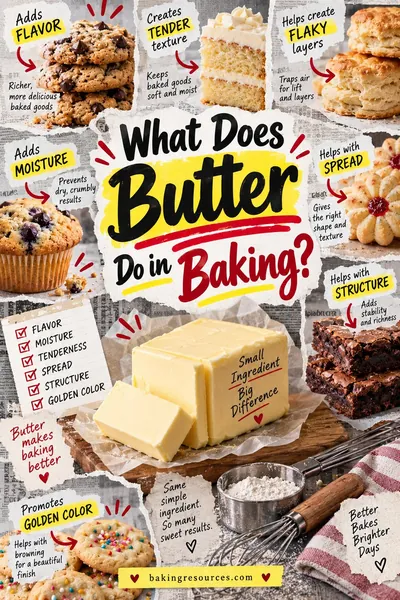
Butter left on the counter is a common question and the honest answer is that it depends on your kitchen. Wrapped, salted butter in a cool room is stable for a day or two. In a warm kitchen, or with unsalted butter, keep it to a few hours and return it to the fridge. Our guide on what butter does in baking covers why its water content matters so much to the finished crumb.
Frequently asked questions
How long does it take to thaw frozen butter?
A whole stick takes 55 to 70 minutes on the counter to reach fridge temperature and 2 1/2 to 3 hours to reach 65°F. Cubing it cuts that to 40 to 50 minutes, a sealed bag in cool water to 35 to 45 minutes, and the microwave at 30% power to under 3 minutes.
Can you thaw butter in the microwave without melting it?
Yes, at 30% power in 20 second turns, flipping the stick onto a fresh face each time. Full power is what melts the corners, because the microwave field hits the edges and ends hardest. Four turns gets a stick to fridge-cold, six or seven to soft.
Can I use frozen butter straight from the freezer?
For pie crust, biscuits, scones and any laminated dough, yes, and grated frozen butter is often better than cold butter. For creaming into cookies or cakes it will not work, since butter can only trap air in the 65 to 67°F window. For melted butter recipes, melt it straight from frozen.
Is it safe to thaw butter on the counter?
Yes for a few hours. Butter has low water content and, if salted, extra protection, so it is far more forgiving than milk or cream. Keep it wrapped, keep it out of the sun, and put it back in the fridge once you are done rather than leaving it out all day in a warm kitchen.
How do I thaw butter fast without a microwave?
Seal the wrapped stick in a zip bag and drop it in a bowl of water at about 100°F. Fridge-cold in 8 to 12 minutes and soft in 20 to 25. Grating the frozen stick is faster still if shreds work for what you are making.
Why does my butter melt on the outside and stay frozen inside?
Because heat has to travel through an inch of fat to reach the center, and because melting the ice inside absorbs a huge amount of energy without raising the temperature. Any method that adds heat faster than it can spread will overshoot the surface. Increase surface area instead: cube it, grate it, or flatten it.
Can you refreeze butter after thawing?
Yes, as long as it stayed below about 60°F and never melted. It may release a few drops of moisture on the second thaw and feel slightly grainier spread on toast, but it performs the same in a batter. Butter that fully melted and re-set has lost its air-holding structure and should be used in melted-butter recipes.
Does frozen butter cream properly once thawed?
Yes, provided it was thawed rather than melted. Freezing does not damage butter's crystal structure. Melting does, and butter that melted and re-solidified will not hold air in a mixer no matter how long you beat it.
Related guides: How to soften butter | How to cut butter into flour | How to cream butter and sugar | What does butter do in baking | Butter converter