
Easy Shortbread Cookies Recipe

This shortbread cookies recipe is just butter, sugar, flour, a little salt and vanilla, and that's the whole secret. Lots of butter, no egg and no baking powder give you a cookie that's crisp at the edge, sandy and tender in the middle, and tastes like pure butter. Bake it low and slow at 325°F so it stays pale and doesn't brown.
Plan on about 2 hours start to finish, but only about 30 minutes of that is you actually doing something. The rest is a short chill, the bake and cooling.
One batch makes about 36 cookies with a 2 inch round cutter, 16 bars in an 8 x 8 inch pan, or 12 classic wedges in a 9 inch round pan. Pick your shape in the card below and it'll swap the bake time and scale every amount for you.
Recipe card
Shortbread Cookies recipe
Pick your cookie shape and how many you need. Every amount, the bake time and your start time update for you.




What makes shortbread so buttery and crumbly?
It's all in the ratio. Old Scottish shortbread follows a simple rule: about 1 part sugar, 2 parts butter and 3 parts flour by weight. This recipe sits close to that, with a touch less flour so the cookies stay extra tender.
The "short" in shortbread means crumbly, not small. With this much butter coating the flour, the gluten (the stretchy protein that makes bread chewy) can't build up much. So instead of a bendy cookie, you get one that snaps cleanly and then melts in your mouth.
There's also no egg and no leavening. Nothing puffs the dough up, so your cookies keep their shape and come out flat, firm and tidy. That makes shortbread one of the easiest holiday cookies to get right.
Which butter should you use for shortbread?
Since butter is basically the main flavor here, use one you like the taste of. A good grocery-store unsalted butter works great. European-style butter (the kind with a little more fat) makes the cookies even richer and a bit more tender.
Got salted butter? You can totally use it. Just leave out the 1/2 teaspoon of salt. Our guide to salted vs unsalted butter has the exact swap if you want to be precise.
 Baking guideSalted vs Unsalted Butter: How to Swap in Any RecipeGet the details →
The butter should be soft, not melted. It should dent easily when you press it but still hold its shape. Melted or greasy butter makes shortbread dense and oily. If yours is still fridge-hard, here are a few quick ways to soften butter without nuking it into a puddle.
 Baking guideHow to Soften Butter: 7 Fast Methods That Won't Melt ItSee how long it keeps →
Why weigh the flour?
Honestly, this is the one place a kitchen scale really pays off. Shortbread has so few ingredients that a little extra flour throws the whole thing off. Too much and the dough cracks and the cookies taste dry and dusty. Too little and they spread and turn greasy.
The card uses 125 grams per cup, which is what you get when you spoon flour into the cup and level it off. Scooping straight from the bag can pack in 20% more. If you don't have a scale, here's how to measure flour with cups so it comes out right.
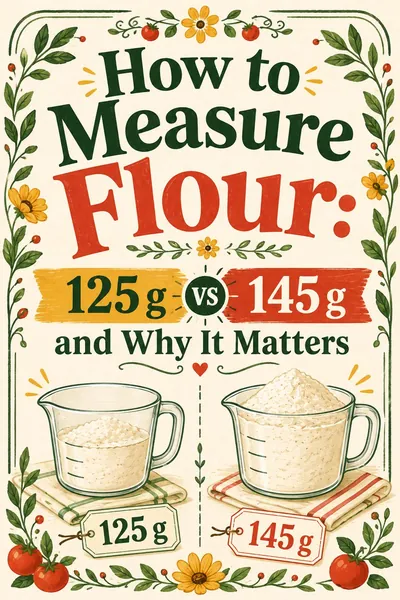 Baking guideHow to Measure Flour: 125 g vs 145 g and Why It MattersSee how it's done →
Do you have to chill shortbread dough?
A 30 minute chill is worth it. It firms the butter so cut cookies keep crisp edges and pan shortbread bakes up even. It also gives the flour a little time to soak up moisture, which helps the texture.
You don't need to chill it for hours, though. If the dough gets rock hard in the fridge, let it sit on the counter for 10 minutes before rolling so it doesn't crack.
Cut cookies, bars or wedges: which shape should you make?
Same dough, three classic looks. Here's how they compare.
| Shape | How many | Bake at 325°F | Good to know |
|---|---|---|---|
| 2 inch rounds, rolled 1/4 inch thick | About 36 | 15 to 18 min per tray | Best for cookie tins and gift boxes. Reroll scraps once. |
| 8 x 8 inch pan, cut into bars | 16 bars | 30 to 40 min | Easiest option. No rolling, just press and bake. |
| 9 inch round pan, cut into wedges | 12 wedges | 30 to 40 min | The traditional "petticoat tail" look. Crimp the edge with a fork. |
For pan shortbread, prick the dough all over with a fork before baking. It looks pretty, and it lets steam out so the middle doesn't bubble up. Then cut it while it's still warm. Once it cools, it gets too crisp to cut cleanly and tends to shatter.
How do you tell when shortbread is done?
Good shortbread is pale. You're looking for edges that are just turning light golden, with a center that looks dry and matte instead of shiny. The bottoms should be a light sandy gold when you peek under one.
If you wait until the whole top is brown, you've gone too far and the cookies will taste toasty instead of buttery. Pull them at the first sign of color around the edges. They firm up a lot as they cool, so don't worry if they still feel a little soft in the oven.
Easy ways to change up the flavor
Once you've made the plain version, it's fun to play. These swaps all work without changing the rest of the recipe:
- Brown sugar shortbread. Swap the white sugar for 1/2 cup packed brown sugar (107 g) for a caramel-y flavor. The cookies will be a bit softer and darker.
- Extra melt-away texture. Replace 1/4 cup of the flour with 1/4 cup cornstarch. The cookies get even more tender and sandy.
- Lemon or orange. Rub 1 tablespoon of finely grated zest into the sugar before you add the butter.
- Chocolate-dipped. Dip half of each cooled cookie in melted chocolate and let it set on parchment.
- Holiday sprinkles. Stir 1/3 cup of red and green sprinkles (the little round nonpareils bleed less than long jimmies) into the dough at the end.
- Powdered sugar version. Use 1 cup powdered sugar (120 g) instead of granulated for a smoother, finer crumb.
Common shortbread mistakes (and easy fixes)
| What happened | Why | Fix |
|---|---|---|
| Cookies spread and look greasy | Butter was too warm or melted, or the dough wasn't chilled | Use soft but cool butter, and chill the shapes 30 minutes before baking. |
| Dough cracks when you roll it | Too much flour, or the dough is too cold | Weigh the flour. Let cold dough sit out 10 minutes before rolling. |
| Cookies taste dry or floury | Flour was packed into the cup | Spoon and level, or weigh it at 125 g per cup. |
| Tops are brown and the flavor is toasty | Oven too hot or baked too long | Bake at 325°F and pull them when only the edges are light gold. |
| Pan shortbread crumbles when you cut it | Cut after it cooled | Cut into bars or wedges within a few minutes of leaving the oven. |
| Cookies are tough | Mixed too long after adding flour, or scraps rerolled many times | Mix just until the dough comes together, and reroll scraps only once. |
Can you make shortbread ahead of time?
Yes, and it's one of the best cookies for it. Shortbread actually tastes a little better on day two, once the butter flavor settles in.
- Dough: Wrap it as a flat disc and keep it in the fridge up to 3 days, or freeze it up to 3 months. Thaw frozen dough overnight in the fridge before rolling.
- Slice-and-bake logs: Roll the dough into a 2 inch log, wrap it, and chill or freeze it. Slice 1/4 inch rounds straight from the fridge and bake. From frozen, add a minute or two.
- Baked cookies: Freeze them in an airtight container with parchment between layers for up to 3 months. They thaw in about 30 minutes on the counter.
If you're doing a big holiday bake, our list of Christmas cookies that freeze well can help you plan the rest of the tray.
 Baking guideChristmas Cookies That Freeze Well and How to Do ItGet the storage times →
How long does shortbread last?
Stored airtight at room temperature, shortbread stays crisp and fresh for about 2 weeks. That's a lot longer than most cookies, since there's no egg or milk in the dough. Keep it away from softer cookies in the same tin, though, or it'll pick up their moisture and lose its snap.
Is shortbread good for gifting?
It's about as good as gift cookies get. Shortbread is sturdy, it ships well, it keeps for weeks and it doesn't need frosting. Stack the rounds in a tall tin or a cellophane sleeve tied with ribbon, and tuck a square of parchment between every few cookies.
For a pretty mixed tin, pair shortbread with something piped and swirly like these Danish butter cookies, plus something chewy and spiced. The mix of shapes and textures makes even a simple tin look like it came from a bakery.
Questions people ask
What is the ratio for shortbread cookies?
Classic shortbread uses about 1 part sugar, 2 parts butter and 3 parts flour by weight. This recipe uses 100 g sugar, 227 g butter and 281 g flour, a touch less flour than the strict rule, which keeps the cookies extra tender while still letting them hold their shape.
Why is my shortbread hard instead of crumbly?
Hard shortbread usually comes from too much flour or too much mixing. Scooping flour straight from the bag packs in extra, so spoon and level it or weigh it. Once the flour goes in, mix only until the dough clumps together. Overbaking also hardens it, so pull the cookies when just the edges are light gold.
Can I use powdered sugar in shortbread?
Yes. Swap the 1/2 cup granulated sugar for 1 cup powdered sugar (120 g). The cookies come out smoother and a little more melt-in-your-mouth, with a finer crumb. Granulated sugar gives a slightly crisper, sandier bite. Both are traditional, so it really comes down to which texture you like.
What temperature do you bake shortbread at?
Bake shortbread at 325°F. The lower heat lets the cookies cook through and turn crisp without browning, so they keep that pale color and pure butter flavor. Cut cookies take 15 to 18 minutes and pan shortbread takes 30 to 40 minutes, depending on the pan and how thick the dough is.
Do you need to chill shortbread dough?
A 30 minute chill helps a lot. It firms up the butter so cut cookies keep sharp edges and pan shortbread bakes evenly without spreading. You don't need to chill it for hours. If the dough gets very hard in the fridge, let it sit out 10 minutes before rolling so it doesn't crack.
How long does homemade shortbread last?
Shortbread keeps about 2 weeks in an airtight container at room temperature, and up to 3 months in the freezer. It lasts longer than most cookies because the dough has no egg or milk. Store it on its own, away from soft cookies, so it stays crisp.