How to Store Chocolate

Store chocolate at 60 to 68°F, below about 55 percent humidity, wrapped airtight, in the dark, and away from anything with a smell. That's the whole rule. A cool cupboard away from the stove beats the refrigerator almost every time, because the refrigerator is cold, damp, and full of odors, and chocolate objects to all three.
The white film people worry about is bloom, and it's a storage symptom, not spoilage. Fat bloom is cocoa butter that partly melted and reset on the surface. Sugar bloom is moisture that dissolved surface sugar and left crystals behind when it evaporated. Both are cosmetic, both are avoidable, and the way you avoid them is by keeping the temperature steady rather than by keeping it cold.
Chocolate storage is a temperature job, and packaging and recipes flip between Fahrenheit and Celsius without warning. Our free oven temperature converter turns any number into the others so you're aiming at the temperature the source actually meant.
Updated September 2026
How to store chocolate: four rules that cover every type
| Rule | The target | Why it matters |
|---|---|---|
| Temperature | Steady 60 to 68°F (16 to 20°C) | Cocoa butter starts softening near 82°F and melts near 93°F |
| Humidity | Under 50 to 55 percent | Water on the surface dissolves sugar and causes sugar bloom |
| Air and light | Airtight, opaque, dark | Fat oxidizes, and UV light drives off aroma compounds |
| Neighbors | Nothing aromatic within reach | Cocoa butter absorbs odors from the air around it |
Notice that "cold" is not on the list. Steady beats cold. A cupboard that sits at 70°F all week does far less damage than a shelf that swings from 62°F at night to 80°F in the afternoon sun, because every swing past the softening point partly melts the cocoa butter and lets it recrystallize into the dull, streaky forms that read as bloom.
The temperatures that matter, in order:
- Around 82°F: cocoa butter starts to soften and the surface goes slightly tacky. Bloom risk begins here.
- Around 93 to 94°F: properly tempered cocoa butter melts. Body heat is right in this zone, which is why chocolate melts in your hand.
- Around 97°F: the stable but ugly crystal form melts. Chocolate that has bloomed and reset sits here, and it's why bloomed chocolate feels waxy rather than snappy.
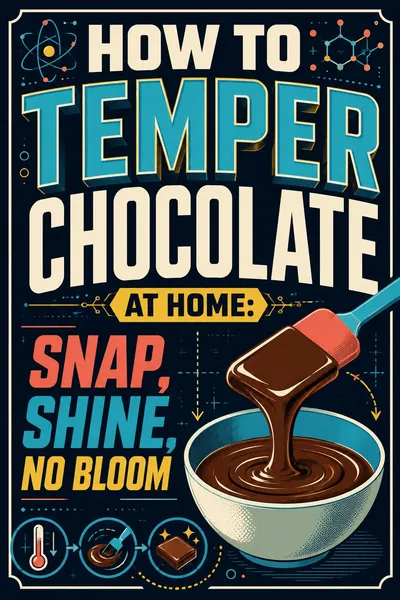
Our guide to tempering chocolate has the full crystal chart and the repair method for anything that has already bloomed.
Where to store it, ranked
1. A cool, dark cupboard. The winner in most homes. Pick the cupboard farthest from the oven, the dishwasher and the refrigerator's exhaust vent, all of which throw heat. An interior wall beats an exterior wall in summer. This is where your chocolate should live.
2. A cool pantry or basement. Better still if it holds a steady temperature. Check the humidity, since basements often run damp, and damp is the sugar bloom problem.
3. A wine refrigerator or a cellar set to 60 to 65°F. If you have one, it's close to ideal. Chocolate keeps for a very long time in these conditions.
4. The kitchen refrigerator. A last resort, and only with the wrapping protocol below.
5. The freezer. For long term storage of large amounts only, and only with the same protocol plus a slow thaw.
Never store chocolate: above the stove, on top of the refrigerator, in a sunlit window, in the car, or next to the coffee, spices, garlic or onions. That last one is not a joke. Cocoa butter is a fat, fats absorb volatile aroma compounds, and chocolate stored beside coffee tastes like coffee within a week.
How to wrap it
Air and moisture are the two enemies once temperature is handled.
- Keep it in the original wrapper if it's unopened. Manufacturers wrap in foil and paper for a reason, and it's better than anything most of us have in the drawer.
- Once opened, press the foil back flat against the cut face. Air on the exposed surface is what stales it.
- Add a second layer. Plastic wrap tight against the bar, then a zip top bag or an airtight container with the air pushed out.
- For chips and callets, decant into a jar. A glass jar with a gasket lid works beautifully. Squeeze the bag closed with a clip and it will go stale and pick up freezer smells within a couple of months.
- Add a note with the date. Chocolate does not rot, it fades, and fading is hard to notice without a reference point.
Opaque containers beat clear ones because light degrades the aroma. If your only option is a glass jar, put the jar in a dark cupboard.
Shelf life by type
Cocoa solids and sugar are shelf stable. The clock is set by fat and by dairy, so the more milk in the bar, the shorter the life.
| Type | Unopened, stored well | Opened and rewrapped | What fades first |
|---|---|---|---|
| Unsweetened baking chocolate | 2 to 3 years | 1 to 2 years | Aroma, then a flat cardboard note |
| Dark, 60 to 85 percent | About 2 years | 1 year or more | Fruit and floral top notes |
| Semisweet and bittersweet chips | About 2 years | 1 year | Snap and aroma |
| Milk chocolate | About 1 year | 8 to 10 months | Dairy fat goes stale and slightly soapy |
| White chocolate | 8 to 12 months | 6 to 8 months | Milk fat, fastest of all to turn |
| Cocoa powder | 2 to 3 years | 1 to 2 years | Color and bloom of aroma |
| Filled or ganache center chocolates | 2 to 4 weeks | Same | Water in the filling limits everything |
The pattern: more milk means less time. White chocolate has no cocoa solids at all, which means none of the natural antioxidants that come with them, so it goes stale first. Candy melts keep longer for the same reasons they taste different, which candy melts and white chocolate compared sets out. Dark chocolate at 70 percent and above is close to indestructible in a cool cupboard.
Anything with a soft center follows the filling's clock, not the chocolate's. A ganache truffle is a dairy product with a shell, and our ganache ratio guide covers how the cream to chocolate proportion changes its keeping time.
Our roundup of types of chocolate for baking explains the cocoa solids and sugar math behind these categories.
The refrigerator, and how to do it without ruining anything
Sometimes there's no cool cupboard. A kitchen sitting at 85°F in August will bloom every bar you own. In that case the refrigerator is the lesser problem, and the trick is controlling condensation.
The danger is not the cold. It's the moment you take the chocolate out. A cold bar in a warm kitchen pulls water out of the air onto its surface within seconds. That water dissolves surface sugar, then evaporates and leaves gritty sugar crystals behind. That's sugar bloom, and it's the gritty, sandy one.
The refrigerator protocol:
- Wrap the chocolate tightly in plastic, pressed flat against the surface.
- Put the wrapped chocolate in an airtight container or a heavy zip top bag, and push all the air out.
- Store it in the least humid part of the refrigerator, usually a door shelf or a crisper drawer, and keep it far from anything cut, cooked or pungent.
- To take it out: move the sealed container to the counter and leave it sealed for a full 2 to 3 hours. Let the whole package come to room temperature before you break the seal. Condensation forms on the outside of the container instead of on the chocolate.
- Only then unwrap.
Skip step 4 and you will get sugar bloom every single time, so it's the step that matters.
Freezing chocolate
Freezing works for long term storage of large quantities. It's not for the bar you plan to eat this month.
Do it this way:
- Wrap in plastic, then foil, then seal in a freezer bag with the air pressed out. Three layers.
- Freeze flat, away from the door where the temperature swings.
- Thaw in stages. Move the sealed package from the freezer to the refrigerator for 24 hours, then from the refrigerator to the counter for 2 to 3 hours, still sealed. Two slow steps, no shortcuts.
Well wrapped chocolate holds quality in the freezer for about a year for dark and 6 to 8 months for milk and white.
One warning. Frozen and thawed chocolate is usually out of temper even when it looks fine. That's harmless for baking, since you're going to melt it anyway, but it means you can't dip strawberries in it straight from the block and expect a clean snap. Re-temper it first.
The same slow, sealed thaw rule applies to finished baked goods, which our guide to storing baked goods covers by type.
A worked example: one 12 ounce bag of chips, three ways
Say you buy a standard 12 oz bag of semisweet chips. That's 340 g, and at 170 g per cup it's about 2 cups, which is exactly one batch of cookies with a little left over.
Option A, the bag with a clip, in the cupboard beside the stove. The clip lets air in, the stove side runs 8 to 10°F warmer than the rest of the kitchen, and by month three the chips have a dull gray cast and taste flat. Still usable in a bake, noticeably worse.
Option B, a gasket jar in a cool interior cupboard. Airtight, dark, steady at about 66°F. At month twelve they still snap, still smell like chocolate when you open the jar, and the surface is glossy. This is the version worth copying.
Option C, the bag inside a freezer bag, in the freezer. Fine at month twelve, but you have to plan a 24 hour refrigerator step plus a 3 hour counter step every time you want cookies, and the chips are out of temper afterward. Right for a bulk buy, wrong for the everyday bag.
The only difference between A and B is one jar and thirty seconds of decanting. The result is a full year of good chocolate instead of three months.
Storing chocolate you have already worked with
Melted chocolate. Let it set in a thin layer on parchment, break it up, and store it like any other chocolate. Do not pour it into a container while liquid and refrigerate it, because it sets in an uncontrolled way and traps condensation. Reheating leftovers is fine for baking, and our guide to melting chocolate has the temperature ceilings, 120°F for dark and 110°F for milk and white.
Tempered chocolate and finished dipped items. Cool, dry, 60 to 68°F, away from the refrigerator. Refrigerating tempered work is the fastest way to undo the shine you just spent an hour creating.
Ganache. It has cream in it, so it's a refrigerator item. Press plastic directly onto the surface, refrigerate, and use within about a week. Bring it back to spreadable at room temperature rather than in a microwave.
Cocoa powder. Airtight jar, cool cupboard, and keep it away from moisture. A wet spoon in the cocoa is how you get hard clumps. It doesn't spoil so much as lose aroma, and the color stays long after the smell has gone. The difference between the two main kinds is covered in Dutch process versus natural cocoa.
Chopped chocolate. Every cut face is new surface area exposed to air, so chop it the day you plan to use it rather than in advance.
If it has already bloomed
Bloomed chocolate is safe. Fat bloom looks like a soft gray haze or pale streaks and feels waxy. Sugar bloom feels sandy and gritty. Neither is mold and neither is dangerous.
What to do with it:
- Bake with it. Melted into a batter, ganache or brownie, bloomed chocolate is indistinguishable from fresh.
- Re-temper it. Melting fully and re-tempering resets the crystal structure and brings back the snap and shine.
- Don't try to buff it off. It's not on the surface, it's in it.
The only real spoilage signs are a rancid, crayon like smell from oxidized fat, actual fuzzy mold on a filled chocolate, or an off flavor that stays with you. Those go in the trash. A gray film does not.
FAQ
Does chocolate go bad?
Not in the way milk does. Solid chocolate has almost no water, so bacteria and mold have nothing to live on. What happens instead is that the fat slowly oxidizes and the aroma fades, so old chocolate tastes flat and dusty rather than dangerous. Filled chocolates with cream or fruit centers are the exception and do genuinely spoil.
Can I store chocolate in the fridge?
You can, and in a hot kitchen it beats the alternative, but you have to seal it in an airtight container and let that container come fully to room temperature over 2 to 3 hours before opening. Skip that and condensation lands on the chocolate and causes sugar bloom.
Why did my chocolate turn white?
Almost certainly bloom. If the film is waxy and streaky, it's fat bloom from the chocolate getting warm enough to soften and then resetting. If it feels gritty and sandy, it's sugar bloom from moisture, usually condensation off a cold surface. Both are harmless and both melt away in a batter.
What is the ideal temperature for storing chocolate?
A steady 60 to 68°F, which is 16 to 20°C. Steadiness matters as much as the number, because repeated swings past about 82°F soften the cocoa butter and let it recrystallize badly. Keep the humidity under 55 percent alongside it.
How long do chocolate chips last?
Unopened and stored well, a bag of semisweet chips holds up for about 2 years. Once opened and moved to an airtight jar in a cool cupboard, count on a year of good quality. Milk and white chips run shorter, closer to 8 to 12 months, because the milk fat stales faster.
Can chocolate absorb smells from other foods?
Yes, and quickly. Cocoa butter takes up volatile aroma compounds from the air, so chocolate stored near coffee, spices, onions or a strong cheese picks up those notes within days. Airtight wrapping and a dedicated shelf solve it.
Should I store baking chocolate differently from eating chocolate?
The conditions are identical. The only practical difference is that baking chocolate gets melted, so bloom and lost temper don't matter, while eating chocolate needs to stay glossy and snappy. That means you can be more relaxed about the freezer for baking stock and stricter about steady room temperature for the good bar.