How to Store Frosting

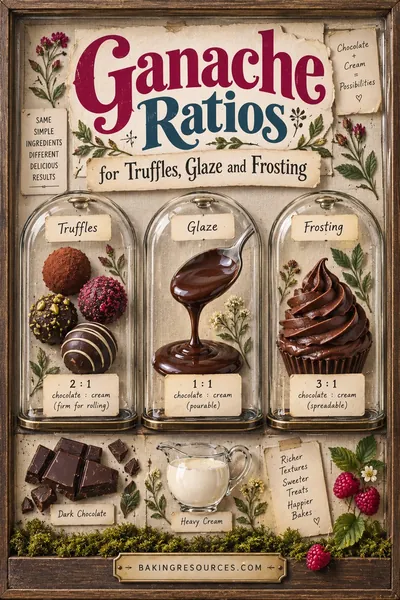
Put it in an airtight container with plastic wrap pressed directly onto the surface. American, Swiss and Italian meringue buttercream keep about 3 days at cool room temperature, about a week in the fridge, and up to 3 months frozen. Ganache keeps about two weeks refrigerated.
Cream cheese frosting and whipped cream frosting are the two exceptions, and they are not optional exceptions. Both go straight to the fridge, both are best used within 3 to 4 days, and neither should sit on a counter.
The part almost nobody gets right is bringing it back. Cold buttercream has to return fully to room temperature and then be rewhipped, and it will look curdled and broken partway through that rewhip. Keep going. It comes back.
Work out how much you need in the first place with our free frosting calculator, which splits the total by job so you know what is genuinely leftover.
Updated September 2026
How to store frosting by type: the full chart
Not all frosting is the same food. Buttercream is mostly fat and sugar, which is a hostile place for bacteria. Cream cheese frosting and whipped cream contain a lot of fresh dairy, which is not.
| Frosting | Cool room temp | Refrigerated | Frozen | Notes |
|---|---|---|---|---|
| American buttercream | 3 days | 1 week | 3 months | The most forgiving of the lot |
| Swiss meringue buttercream | 2 days | 1 week | 3 months | Rewhip is essential after chilling |
| Italian meringue buttercream | 2 days | 1 week | 3 months | The most heat stable, still needs a rewhip |
| French buttercream | Not advised | 4 to 5 days | 2 months | Egg yolk base, treat it as perishable |
| German buttercream | Not advised | 3 to 4 days | 1 month | Custard base, perishable |
| Cream cheese frosting | No | 3 to 4 days | 1 month | Texture softens after freezing |
| Whipped cream frosting | No | 1 to 2 days | Not recommended | Weeps as it thaws |
| Chocolate ganache | 2 days | 2 weeks | 3 months | Reheat gently to bring back the shine |
| Royal icing | 2 weeks, covered | 1 month | Not needed | Separates on standing, stir it back |
| Cooked flour (ermine) frosting | No | 3 days | 1 month | Custard base, perishable |
"Cool room temperature" means under about 70°F. In a warm kitchen in August, none of the room temperature figures apply and everything goes in the fridge. Royal icing is the exception in that table because it is supposed to harden, and how long royal icing takes to set hard covers that timeline.
For the food safety line on dairy-based frostings, the USDA's cold food storage chart is the reference to trust rather than a recipe blog.
Why buttercream keeps and cream cheese frosting does not
This is worth understanding once, because then you never have to memorize the chart.
American buttercream is roughly 1 part butter to 2 parts powdered sugar by weight. Sugar at that concentration ties up nearly all the free water in the mix, so there is not enough available moisture for bacteria to grow in. Butter is around 80% fat and 16% water, and that water is trapped in droplets inside the fat.
Cream cheese is about 55% water, and none of it is locked up. Adding it to a frosting drops the sugar concentration and hands bacteria the water they were missing. It is dairy, so it behaves like dairy.
Whipped cream is worse still: mostly water, aerated, unstable, and it starts to weep within hours.
That single difference explains every row in the chart above. Frostings built on butter and sugar are shelf-stable-ish. Frostings built on fresh dairy are not.
Containers, and the two mistakes people make
Mistake one: leaving air on the surface. A skin forms on exposed buttercream within a few hours in the fridge, and that skin never fully redisperses. You get little dry flecks through the finished coat.
Press a sheet of plastic wrap flat onto the surface of the frosting, all the way to the container walls, before you put the lid on. This is the same trick that keeps a skin off custard, for the same reason.
Mistake two: an open container in the fridge. Butter is a sponge for smells. Buttercream left uncovered next to last night's garlic will taste of it by morning, and there is no fixing it. Airtight means airtight: a lidded plastic container, a glass container with a gasket, or a zip-top bag with the air pressed out.
A few practical notes:
- Do not store frosting in a piping bag for more than a few hours. The bag is not airtight at the tip, the frosting warms unevenly in your hand, and the fat starts separating at the point where you squeezed it.
- Zip-top bags freeze better than tubs because you can flatten them, which speeds both freezing and thawing and saves freezer space.
- Label with the type and the date. Frozen white buttercream and frozen white ermine frosting look identical, and they do not behave identically.
- Portion before you freeze. Freezing 5 cups in one block means thawing 5 cups when you only want 1.
Refrigerating frosting, and the rewhip that brings it back
Cold butter is hard. That is the whole problem, and the whole solution.
Frosting straight from the fridge is unspreadable, and if you try to force it you will tear the cake. Trying to soften it by beating it while it is still cold gives you a curdled mess, because you are whipping solid butter chunks into a soft base.
The sequence that works:
- Take the container out and leave it sealed on the counter. This takes 2 to 4 hours for a 4 cup batch, longer than anyone expects. It is not ready when the outside is soft.
- Check the center with a finger. You want it uniformly soft, at about 68 to 72°F throughout.
- Scrape it into a mixer bowl and beat on low to medium, not high.
- It will look grainy, then split, then curdled. This is the stage where people panic and throw it out.
- Keep beating. Somewhere between 3 and 8 minutes it pulls together and turns smooth and glossy again.
- If it is still stubborn, warm the outside of the bowl with a hot towel for 20 seconds and keep going.
The split happens because the fat and the water phase separated at different rates as everything came back to temperature. Beating re-emulsifies them. It is a mechanical problem with a mechanical fix, and adding more sugar does not solve it.
If it will not come together after 10 minutes of beating, it is genuinely too cold. Take out about half a cup, microwave it for 8 seconds until it is just liquid at the edges, and beat that back into the main batch. The why is my frosting runny guide covers the opposite problem, which is frosting that has gone too far the other way.
Do not speed it up in the microwave
Microwaving a whole tub of buttercream melts the outside while the middle is still refrigerator-cold. Now you have liquid fat and solid fat in the same bowl, and no amount of beating fixes that cleanly. Time is the only good method, and the fix above is a last resort on a portion, not the whole batch.
Freezing frosting properly
Frozen buttercream is genuinely as good as fresh, which is not true of many make-ahead shortcuts.
Going in:
- Portion into the amounts you will actually use. A cup per bag is a useful unit.
- Press the air out of zip-top bags and flatten them to about half an inch thick.
- Double-bag, or put the flat bags into a rigid container. Freezers are full of sharp corners.
- Label with type, date and quantity.
- Lay flat to freeze, then stack once solid.
Coming out:
- Move the bag to the fridge overnight. Thawing on the counter from frozen leaves the outside warm for hours while the middle is still ice.
- Then counter for 2 to 4 hours to reach room temperature.
- Rewhip as described above.
Buttercream that was frozen almost always looks worse coming out than refrigerated buttercream does. It separates more dramatically. It also recovers completely, so judge it after the rewhip and not before.
Colored frosting freezes fine, but expect the color to look slightly deeper after thawing, because color continues developing for the first 12 to 24 hours after mixing anyway. If you need an exact color match to something you already made, mix a fresh batch instead of trying to match a thawed one.
Worked example: making frosting on Wednesday for a Saturday cake
Here is a full timeline with real quantities, for a 9 inch two-layer cake.
The requirement. A 9 inch two-layer cake needs about 4.5 to 5 cups of American buttercream for a crumb coat, filling, a full outside coat and a simple border. That is roughly 1,150 g.
The batch math. A standard American buttercream made with 227 g of butter (1 cup, or 2 sticks) and 480 g of powdered sugar (4 cups) yields about 3 cups. So you need one and two thirds batches. Round up to a double batch and make 6 cups: 454 g butter, 960 g powdered sugar, 60 g milk, 8 g vanilla, 2 g salt.
The extra cup is not waste. Running out with one bare side to go, at 9pm on a Friday, is a genuinely bad evening.
Wednesday. Make the 6 cups. Divide: 5 cups into a lidded container for the cake, 1 cup into a zip-top bag for the freezer as insurance. Plastic wrap pressed on the surface of the container, lid on, into the fridge.
Friday, 4pm. Take the 5 cup container out of the fridge and leave it sealed on the counter.
Friday, 8pm. It has been out four hours and is soft through the middle. Rewhip on medium for 5 minutes. It splits at minute 2 and comes back by minute 4.
Friday, 8:20pm. Crumb coat the cake, 20 minutes in the fridge, then the final coat. The crumb coat method is what makes this work in one evening.
Saturday. Cake sits at cool room temperature under a dome. An American buttercream coat actually protects the crumb underneath from drying out, which is why a frosted cake keeps better than an unfrosted one.
Total active time on Friday: about 40 minutes, because the frosting was already made. That is the whole point of storing it.
Storing a frosted cake is a different question
Frosting in a tub and frosting on a cake follow different rules, because now you are also protecting the cake.
- Buttercream-frosted cake: cool room temperature, under a dome or cake box, for up to 2 to 3 days. The fridge dries out cake crumb faster than the counter does.
- Cream cheese or whipped cream frosted cake: refrigerate, always. Take it out 1 to 2 hours before serving so the crumb is not cold and tight.
- Cut cake: press plastic wrap against the cut face. That exposed crumb dries within hours.
- Refrigerated cake: box it or dome it. An uncovered cake in the fridge dries and picks up smells at the same time.
Our guide on how to store baked goods has the full item-by-item table, including why the refrigerator is the worst place for most of them.
How long leftover frosting really lasts, and how to tell
The dates in the chart are quality dates for buttercream, not safety cliffs. What actually goes wrong first is texture and taste.
Signs it is past its best:
- A hard, waxy skin that will not beat back in.
- Visible weeping, a puddle of clear liquid in the container.
- A stale or "fridge" smell, which means it was not airtight.
- Any off, sour or yeasty smell in a cream cheese or custard-based frosting. That one is a safety signal, and the answer is to throw it away.
- Sugar that has recrystallized into a gritty texture, which happens in old American buttercream and is not fixable.
When in doubt on a dairy-based frosting, throw it out. A batch of cream cheese frosting costs a block of cream cheese. Serving a questionable one to a room of people costs a great deal more.
Getting the quantity right so there is less to store
The most reliable way to avoid a fridge full of leftover frosting is to make close to the right amount in the first place.
The reason people miss is that published charts say "4 to 5 cups for a 9 inch cake" without telling you which jobs they counted. Crumb coat, filling, outside coat and piping are four separate quantities, and piping is by far the most variable.
Some anchors worth remembering:
- A 9 inch two-layer cake: about 4.5 to 5 cups with a simple border, closer to 4 without one, past 6 with heavy piping over the whole surface.
- 12 cupcakes, knife-spread: about 1.5 cups.
- 12 cupcakes, tall piped swirl: about 3 cups. That doubling is the single most common frosting miscalculation there is.
- One batch of American buttercream (227 g butter, 480 g powdered sugar): about 3 cups. Enough for a 6 or 8 inch two-layer cake, short on a 9 inch.
The frosting calculator breaks your specific cake down job by job and hands back a scaled ingredient list, so you can see whether one batch actually covers it before you start. The how to make buttercream guide compares the five styles if you have not decided which one you are making yet.
Frequently asked questions
Can you freeze buttercream frosting?
Yes, and it holds up well for up to 3 months. Flatten it in a double zip-top bag with the air pressed out, thaw overnight in the fridge, bring it to room temperature over 2 to 4 hours, then rewhip. It looks separated coming out and comes back completely once beaten.
How long does frosting last in the fridge?
American, Swiss and Italian meringue buttercream keep about a week. Cream cheese frosting, French and German buttercream and other custard or dairy-heavy frostings keep 3 to 5 days. Ganache is the outlier at about two weeks. Airtight storage with wrap on the surface is what makes those numbers real.
Does cream cheese frosting need to be refrigerated?
Yes. Cream cheese is around 55% water and it lowers the sugar concentration enough that the frosting behaves like fresh dairy. Refrigerate it in an airtight container, use it within 3 to 4 days, and refrigerate any cake it is on.
Why did my buttercream curdle when I rewhipped it?
Because part of it was still cold. The fat and water phases warmed at different rates and separated, and the curdled look is that split. Keep beating on medium for 3 to 8 minutes and it re-emulsifies. If it will not, warm half a cup for 8 seconds and beat that back in.
Can I leave buttercream out overnight?
American buttercream is fine at cool room temperature, under 70°F, for 2 to 3 days in an airtight container, so one night is not a problem. Meringue buttercreams are fine for about 2 days. Do not do this with cream cheese, whipped cream, or any custard-based frosting.
How do I store frosting without it forming a skin?
Press plastic wrap flat against the entire surface, right out to the walls of the container, then put the lid on. Air contact is what dries the top layer, and once a skin has formed it never fully beats back in. The same trick works on ganache and on custard.
Can I refreeze frosting that has already been thawed?
You can with buttercream, though quality drops a little each cycle as the emulsion is stressed. Do not refreeze cream cheese, whipped cream or custard-based frostings at all. The better habit is to portion into single-use amounts before the first freeze so the question never comes up.
Should frosting be room temperature before frosting a cake?
Yes, ideally around 68 to 72°F. Cold frosting tears the crumb and will not smooth out. Frosting that is too warm slides off the sides and loses any piped detail. If the kitchen is hot, chill the frosting for 10 minutes and rewhip briefly rather than fighting it.
Related guides: Frosting calculator | How to make buttercream | Why is my frosting runny | How to frost a cake | How to store baked goods