How to Make Whipped Cream

Cold is everything. Cold cream, a cold bowl, and cold beaters will get you to soft peaks in about two minutes, and skipping any one of the three is the reason most batches stay soupy.
Fat globules only hold air when they are firm. At refrigerator temperature the fat inside each globule is partly crystallized, so the globules snag on each other and build a mesh around every air bubble. Warm that cream to room temperature and the fat turns liquid, the globules slide past each other, and the foam falls apart as fast as you whip it.
So the whole method is short: chill the bowl and beaters for 15 minutes, pour in cream that is 36% fat or higher straight from the fridge, and whip on medium-high until the peak on your whisk does what your recipe needs.
Working out how much whipped cream a cake actually needs? Our free frosting calculator gives you the finished volume for your pan size, and cream roughly doubles, so you can halve that number to know how much to buy.
Updated August 2026
How to make whipped cream, step by step
- Put the bowl and beaters in the freezer for 15 minutes. Metal is best because it holds cold. Glass works. Skip plastic, which insulates and scratches.
- Keep the cream in the fridge until the second you pour it. You want it at 35 to 40F. Above about 50F it will not hold a peak reliably.
- Pour in the cream and start on low for 30 seconds, until it looks foamy and slightly thickened.
- Raise to medium-high, not maximum. Medium-high builds smaller bubbles that stay put. Full speed gets you to butter faster than you can react.
- Add sugar and flavoring at soft peaks, once the cream leaves a faint trail behind the beaters.
- Stop and check with the whisk every 15 seconds from that point on. The window between medium peaks and grainy is about 20 seconds with a stand mixer.
- Stop one notch softer than you want if you are going to pipe it, because the piping bag firms it up further.
Timing for 1 cup of cold cream: about 4 to 6 minutes with a hand whisk, 2 to 3 minutes with a hand mixer, and 90 seconds to 2 minutes with a stand mixer on medium-high.
Why cold cream whips and warm cream does not
Cream is fat globules floating in water. Each globule is a droplet of butterfat inside a thin membrane, and its behavior depends entirely on how solid that butterfat is.
Between 35 and 40F, roughly half the butterfat inside each globule is crystallized. Those crystals poke through the membrane. When you whip, the globules collide, the crystals catch, and the globules partly fuse into chains. That process is called partial coalescence, and those chains are what wrap around air bubbles and lock them in place. The result is a foam stiff enough to stand on a spoon.
Warm the cream to 68F and almost all of that fat is liquid. The globules bounce off each other instead of catching. You can whip warm cream for ten minutes and get nothing but froth that collapses.
Three practical consequences:
- A warm kitchen shortens your working time. In a 78F room, chill the bowl twice as long and work faster.
- Cream that sat on the counter for an hour goes back in the fridge for 30 minutes before you try again. It is not ruined.
- If a batch stalls halfway, put the whole bowl in the freezer for 10 minutes and restart. This rescues more batches than any additive.
Heavy cream vs whipping cream vs half and half
The single number that decides whether cream will whip is butterfat percentage. Under about 30% there are not enough fat globules to build a network, no matter how cold or how long you beat.
| Product | Butterfat | Will it whip? | Best use |
|---|---|---|---|
| Half and half | 10.5 to 18% | No | Coffee and sauces. It foams, then collapses back to liquid within a minute. |
| Light cream, table cream | 18 to 30% | No | Pouring over fruit or coffee. Not enough fat for a stable foam. |
| Whipping cream, light whipping | 30 to 35% | Yes, softly | Soft dollops eaten within an hour. Lower volume, weeps sooner. |
| Heavy cream, heavy whipping cream | 36% and up | Yes, best | Piping, frosting, anything that has to hold its shape. |
| Manufacturing cream | 40% | Yes, very fast | Bakery use. Over-whips in seconds. |
| UK double cream | 48% | Yes | Whips in under a minute. Watch it closely. |
| UK single cream | 18% | No | The British equivalent of light cream. |
Say it plainly: half and half will not whip. It has about a third of the fat it needs. Adding gelatin will thicken it into a soft pudding, but you will not get peaks, and no amount of chilling changes that. If half and half is what is in the fridge, our guide to a heavy cream substitute covers what does and does not work in its place.
In the US, the FDA standard of identity sets heavy cream at 36% milkfat minimum and light whipping cream at 30 to 36%, which is why the label wording actually tells you something. "Heavy whipping cream" and "heavy cream" are the same product.
One more label check: ultra-pasteurized cream whips a little slower and holds slightly less air than regular pasteurized. It still works fine. Give it an extra 30 seconds and do not panic when it seems slow to thicken.
The four stages of whipped cream
Check every stage the same way. Stop the mixer, lift the whisk out, and turn it upright. The bowl looks nearly identical at soft, medium and stiff, so the whisk is your only honest gauge.
| Stage | What the whisk shows | What it is for |
|---|---|---|
| Soft peaks | The peak flops over completely and melts back into the surface. Cream still pours slowly. | Folding into mousse, spooning over pie, serving in a bowl at the table. |
| Medium peaks | The peak curls over about halfway, like a soft wave. Holds a shape but stays glossy. | Layering cakes, filling pavlova, folding into anything you do not want deflated. |
| Stiff peaks | The peak stands straight up with a small hook at the tip. Surface looks matte. | Piping rosettes, frosting a cake, anything that has to sit upright. |
| Over-whipped | Grainy, dull, slightly yellow. Clumps cling to the whisk and watery liquid pools at the bottom. | Nothing. Fix it, or keep going and make butter. |
Over-whipping is not a slow slide. The chains of fat globules keep fusing, and once they fuse fully they squeeze the water out. That is butter and buttermilk. Perfect to grainy takes roughly 15 to 25 seconds on a stand mixer, which is why you check with the whisk rather than the clock.
How to fix over-whipped cream
Fold in 1 to 2 tablespoons of cold unwhipped cream per cup by hand with a spatula, and grainy cream comes back smooth.
The fresh cream brings in liquid fat globules that have not fused yet, and they lubricate the clumps back into a smooth emulsion. Do it with a spatula, never the mixer, and stop the moment the graininess disappears.
This works up to a point. If liquid has genuinely puddled at the bottom of the bowl and the mass has turned yellow, you have made butter, and folding cream into butter gets you soft butter. Drain it, salt it, and put it on toast.
Why powdered sugar works better than granulated
Powdered sugar in the US is about 3% cornstarch by weight, added to keep it from caking in the box. That cornstarch is doing you a favor. It absorbs the free water that seeps out of a cream foam over time, so the whipped cream stays smooth instead of going watery underneath.
Granulated sugar has two problems here. The crystals are large enough that they take several minutes to dissolve in cold cream, so early on the texture is faintly gritty. And it brings no starch, so it does nothing to slow weeping.
By weight, a cup of powdered sugar is 120 g, so a tablespoon is about 7.5 g. Granulated is 200 g per cup, or 12.5 g per tablespoon. If you swap one for the other spoon for spoon, powdered sugar gives you noticeably less sweetness, so go by weight when sweetness matters.
Sensible sweetening rates per 1 cup of cream:
- Barely sweet, for rich desserts: 1 tablespoon powdered sugar, about 7 g
- Standard: 2 tablespoons, about 15 g
- Dessert-forward, for plain fruit or unsweetened cake: 3 tablespoons, about 22 g
That top rate is about 9% of the cream's weight. Past roughly 15% the sugar starts to thin the foam, because it pulls water out of the protein network.
When to add the sugar
Add sugar and vanilla at soft peaks, once the beaters leave a trail. Sugar dumped in at the very start dissolves into the liquid, thickens it, and slows the point at which fat globules start catching on each other. You lose a little volume and add 30 to 60 seconds to your whipping time.
Flavoring rates per cup of cream: 1/2 to 1 teaspoon vanilla extract, 2 tablespoons sifted cocoa powder (about 11 g, since cocoa is 85 g per cup), a teaspoon of instant espresso powder, or the zest of half a lemon. Keep liquid additions like liqueur to 1 tablespoon per cup, and add them at soft peaks so you can whip the extra liquid back out.
Sift any powder before it goes in. Cocoa and freeze-dried fruit powders lump in cold cream, and you cannot beat the lumps out without over-whipping everything around them.
Stabilized whipped cream: what actually holds
Plain sweetened whipped cream on a cake starts weeping in about 2 to 4 hours in the fridge. If the cake has to sit through a party, a car ride, or overnight, you need a stabilizer. Here is what each one really buys you.
| Stabilizer | Amount per 1 cup cream | Holds for | Trade-off |
|---|---|---|---|
| Powdered sugar alone | 2 to 3 tablespoons | 4 to 6 hours chilled | Easiest. Barely changes the flavor. Not enough for overnight. |
| Cornstarch | 1 to 2 teaspoons, whisked into the sugar | 8 to 12 hours chilled | Free and reliable. A faint starchy note above 2 teaspoons. |
| Nonfat dry milk powder | 1 to 2 tablespoons, whisked into the sugar | 12 to 24 hours chilled | Adds body and a mild dairy sweetness. Sift it or it clumps. |
| Mascarpone or cream cheese | 1/4 cup, beaten smooth first | 24 to 48 hours chilled | Excellent for piping. Slightly tangy, noticeably richer, holds edges beautifully. |
| Powdered gelatin | 1 teaspoon (about 3 g) bloomed in 1 tablespoon cold water | 48 to 72 hours chilled | The strongest. Fussy: the melted gelatin has to be lukewarm, not hot, or it strings. |
How to use the gelatin version, since it is the one people get wrong: sprinkle the gelatin over cold water in a small bowl and let it sit 5 minutes until it looks like applesauce. Microwave it 8 to 10 seconds until clear, then let it cool until it is barely warm to the touch. Whip the cream to soft peaks, then pour the gelatin in a thin stream with the mixer running. Hot gelatin hitting cold cream sets instantly into rubbery threads you cannot beat out.
Cornstarch and milk powder go in dry, whisked into the sugar first so they disperse instead of clumping. Mascarpone gets beaten smooth on its own, then the cold cream is added to it and the whole thing whipped together.
None of these make whipped cream shelf-stable. All of them still need refrigeration, and none survive hours in a warm room.
How much whipped cream will 1 cup of cream make?
Cream roughly doubles. One cup of liquid heavy cream gives you about 2 cups of whipped cream at medium peaks, and a little more than 2 at stiff peaks because you have beaten in more air.
That is the number people get backwards at the store. A half pint container of heavy cream is 1 cup, which gives 2 cups whipped. A pint is 2 cups, which gives about 4 cups whipped.
Weight is easier than volume when you scale. A cup of heavy cream weighs about 238 g, close enough to water's 236 g per cup that you can plan with either.
Worked example: whipped cream frosting for an 8 inch layer cake
Say you have a two-layer 8 inch round cake, 12 servings, and you want whipped cream instead of buttercream.
- Find the frosting volume. A two-layer 8 inch round needs about 4 cups of frosting for the filling, a thin crumb coat, and the top and sides. Our frosting calculator gives the number for your exact pan, and the cake servings calculator confirms how many slices you are covering.
- Halve it to get liquid cream. 4 cups whipped divided by 2 equals 2 cups of heavy cream, which is exactly one pint. About 476 g on a scale.
- Sugar. At 3 tablespoons of powdered sugar per cup, that is 6 tablespoons, or about 45 g. Against 476 g of cream that is 9.5% sugar, which reads as clearly sweet but not cloying.
- Stabilizer. The cake has to sit overnight, so use gelatin: 2 teaspoons (6 g) bloomed in 2 tablespoons of cold water, melted, cooled to lukewarm.
- Buy a little extra. Get 2 1/2 cups of cream, not 2. Scrapings, the spatula and the bowl eat about 10%, and running short on the last quarter of a cake is miserable.
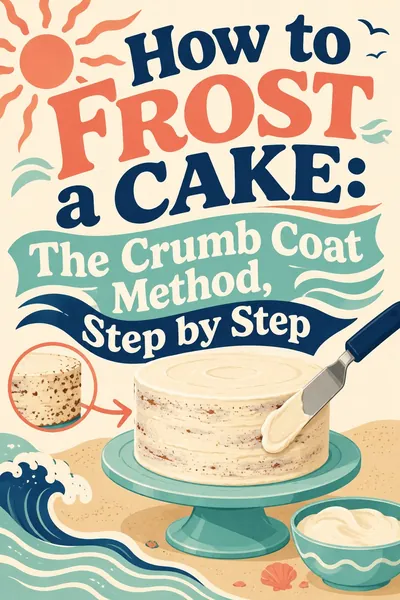
Two more things this example depends on. Chill the finished cake before you frost it, because whipped cream slumps on anything warmer than about 70F. And crumb coat first, chill 20 minutes, then do the final coat, since whipped cream drags crumbs badly across a bare cake.
Frequently asked questions
Can you whip half and half?
No. Half and half is 10.5 to 18% butterfat and needs at least 30% to build a stable foam. It thickens into a froth and then collapses back into liquid within a minute or two. Chilling it harder does not change the fat content.
Why won't my heavy cream whip?
Temperature first, then the label. Cream above about 50F will not hold peaks, so chill the cream, bowl and beaters and start over. If it is genuinely cold and still refusing, check the carton for ultra-pasteurized (slower but fine) and for a fat percentage under 30%, which will never work.
How do you fix over-whipped cream?
Fold in 1 to 2 tablespoons of cold unwhipped cream per cup with a spatula, by hand, until the graininess smooths out. If the cream has separated into yellow solids and watery liquid you have made butter, and that is not reversible.
How long does whipped cream last in the fridge?
Plain sweetened whipped cream holds 2 to 4 hours before it starts weeping. Powdered sugar buys 4 to 6 hours, cornstarch 8 to 12, milk powder up to a day, mascarpone up to two days, and gelatin two to three days. Keep it covered and cold the whole time.
Should I use powdered sugar or granulated in whipped cream?
Powdered, for two reasons. It dissolves instantly in cold cream so there is no grit, and the 3% cornstarch it contains absorbs the water that would otherwise weep out. Granulated works in a pinch if you add it at soft peaks and whip an extra minute.
How much whipped cream does 1 pint of heavy cream make?
About 4 cups. A pint is 2 cups of liquid cream, and cream roughly doubles in volume as you beat air into it. That is enough to frost a two-layer 8 inch cake with a little to spare.
Can you make whipped cream by hand?
Yes, and it gives you far more control. A cup of cold cream takes 4 to 6 minutes with a balloon whisk in a chilled metal bowl. The upside is that hand whisking is almost impossible to overdo, because you feel the cream stiffen well before it breaks.
Can you freeze whipped cream?
Yes, in dollops. Pipe mounds onto a lined sheet, freeze until solid, then bag them and use within a month straight from the freezer on hot drinks or pie. Do not freeze it in a tub and thaw it, because it separates into grainy liquid as it thaws.
Related guides: Frosting calculator | Cake servings calculator | Heavy cream substitute | How to frost a cake | How to whip egg whites | How to fold ingredients