How to Make Whipped Cream Without Heavy Cream

Here's the short version of how to make whipped cream without heavy cream: chill a can of evaporated milk until ice crystals form at the edges, then beat it for 3 to 5 minutes and it triples in volume. Full-fat coconut cream, chilled overnight and scooped solids only, whips to soft peaks and holds far longer. Whole milk will whip if you set it with gelatin first, and mascarpone or cream cheese thinned with milk gives you a thick, pipeable topping in about a minute.
What will not work is milk with melted butter stirred in. It hits the fat number on paper, but the butterfat is no longer suspended in microscopic globules, so it seizes into flecks instead of building a foam. There is no way around that one.
Not sure which swap suits your recipe? Our free baking substitutions finder gives exact ratios for cream, milk and butter, and it tells you when a swap simply will not do the job.
Updated September 2026
How to make whipped cream without heavy cream: fat percentage decides everything
Whipping works because fat globules link up around air bubbles and hold them. Below roughly 30% fat, there are not enough globules to build that scaffolding, and the foam collapses as fast as you make it.
| Dairy | Fat, roughly | Will it whip? |
|---|---|---|
| Whole milk | 3.25% | No, not without gelatin |
| Evaporated milk | About 8% | A temporary foam only, and only ice cold |
| Half and half | About 12% | No |
| Light cream | 18 to 30% | No, or barely and it splits |
| Whipping cream | 30 to 35% | Yes, soft and light |
| Heavy cream | 36% and up | Yes, the standard |
| Coconut cream, solid part | High enough | Yes, to soft peaks |
| Mascarpone | Around 40% | Yes, and fast. Watch for over-beating |
That table explains the two most common kitchen disappointments in one glance. Half and half never whips no matter how long you beat it. And a carton labeled "whipping cream" rather than "heavy whipping cream" is still 30% or more, so if that's what you have, you already have whippable cream. Check the label before you go looking for a workaround.
Our heavy cream substitute guide covers the swaps that work in batters, sauces and ganache, where the fat does not need to whip at all.
Method 1: chilled evaporated milk
This is the oldest trick in the book, and the ingredient is a pantry staple most kitchens already have. Evaporated milk is whole milk with about 60% of the water removed, so the protein is concentrated even though the fat is only around 8%. Get it cold enough and the proteins do the aerating that fat normally would.
What you need: one 12 oz can of evaporated milk, 2 tablespoons powdered sugar, 1/2 teaspoon vanilla, 1 teaspoon lemon juice.
- Put the unopened can in the freezer for 30 to 45 minutes. You want ice crystals at the edges but a liquid center.
- Chill the bowl and the beaters at the same time. This matters more here than with real cream.
- Pour the cold milk into the cold bowl and beat on high for 3 minutes. It will look like nothing is happening for the first 90 seconds. Keep going.
- Add the lemon juice and beat 1 to 2 minutes more. The acid firms the proteins and buys you time.
- Beat in the sugar and vanilla for another 30 seconds.
Yield: one 12 oz can gives you about 4 cups of foam, roughly triple the volume you started with. Real cream only doubles.
The catch, and it's a real one: this foam starts weeping in 20 to 30 minutes and is gone within an hour. It's for a dessert going straight to the table, not for piping a cake at noon and serving at six. Our substitutions tool lists evaporated milk as a non-whipper for exactly this reason: it will not stand in for heavy cream where the cream has to hold.
To make it last: bloom 1 teaspoon of unflavored gelatin in 1 tablespoon cold water, melt it, cool it to lukewarm, and drizzle it in during the final 30 seconds of beating. That takes it from one hour to about a day in the refrigerator.
Method 2: full-fat coconut cream
The best dairy-free option, and the only plant-based one that behaves like real cream without help.
What you need: one 14 oz can of full-fat coconut cream (or full-fat coconut milk), 2 to 3 tablespoons powdered sugar, 1/2 teaspoon vanilla.
- Refrigerate the can upright for at least 12 hours. Do not shake it.
- Open it without tipping it. Scoop out only the thick white solids and leave the watery layer behind. Save that water for smoothies or oatmeal.
- Beat the solids for 1 to 2 minutes until smooth and fluffy.
- Add the sugar and vanilla, beat 30 seconds more.
Yield: a 14 oz can gives about 1 1/4 to 1 1/2 cups of whipped topping, depending on how much solid cream separated out.
Notes from doing it: the brand matters more than the technique. Some cans separate cleanly and give you three quarters of a can of solids. Others emulsify so well they barely separate at all, and you get a scant half cup. Light coconut milk does not work, period.
It holds soft peaks in the fridge for 3 to 4 days and firms up as it chills, so stir it briefly before using. The coconut flavor is permanent, which rules it out for delicate desserts but suits chocolate, banana, lime and anything tropical. Our vegan cream substitutes guide ranks the other plant options honestly, including which oat-based whipping bases actually reach 30% fat.
Method 3: whole milk set with gelatin
This is the one that surprises people. Milk at 3.25% fat has nowhere near enough fat to build a foam, but gelatin builds the scaffolding for it.
What you need: 1 cup cold whole milk, 1 teaspoon unflavored gelatin, 1 tablespoon cold water, 2 tablespoons powdered sugar, 1/2 teaspoon vanilla.
- Sprinkle the gelatin over the cold water in a small bowl and let it swell for 5 minutes.
- Warm 1/4 cup of the milk gently, stir in the bloomed gelatin until it dissolves completely, then stir that back into the remaining 3/4 cup cold milk.
- Chill the mixture until it's very cold and just starting to thicken, about 20 to 30 minutes. Do not let it set solid.
- Beat on high for 4 to 6 minutes. It goes from thin, to frothy, to genuinely thick.
- Add the sugar and vanilla at the end.
Yield: 1 cup of milk gives about 2 to 2 1/2 cups of topping.
It's lighter and less rich than cream, closer to a mousse than to whipped cream, and it sets firmer in the fridge. That firmness is useful: it pipes cleanly and it holds on a cake overnight. It's also the best option if what you have in the house is a gallon of milk and nothing else.
Nonfat dry milk version: whisk 1/2 cup ice water with 1/2 cup nonfat dry milk powder, beat 3 to 4 minutes to soft peaks, add 1 teaspoon lemon juice and 1/4 cup powdered sugar and beat 2 minutes more. Same principle, more protein, no gelatin. It's very light and it weeps after about an hour.
Method 4: mascarpone or cream cheese thinned with milk
Fast, thick, and stable for days. This is the one to use if you need to frost something.
| Base | Milk to add | Beat time | Result |
|---|---|---|---|
| 1 cup mascarpone | 2 to 4 tbsp | 60 to 90 sec | Rich, holds piped shapes |
| 8 oz cream cheese, softened | 1/4 to 1/3 cup | 2 min | Tangy, very stable, frosting-like |
| 1 cup Greek yogurt, full fat | None | 1 min, folded | Tart and thick, no real volume gain |
Mascarpone runs around 40% fat, which is why it whips at all. Beat it cold but not fridge-hard, add the milk in a thin stream, and stop the moment it holds a peak. Over-beaten mascarpone splits into a grainy mess, and unlike cream you cannot rescue it by folding in more liquid.
Sweeten with powdered sugar rather than granulated. The cornstarch in powdered sugar is a mild stabilizer, and granulated sugar stays gritty in a cold mix. If you want the frosting math for a full cake, our frosting calculator sizes the batch to your pan, and how to make buttercream covers the richer options.
Method 5: aquafaba, for a vegan foam
The liquid from a can of unsalted chickpeas whips into a genuine foam because of its dissolved protein and starch. It's the only plant-based swap that aerates the way egg white does.
- Drain one 15 oz can and keep the liquid, about 1/2 to 3/4 cup.
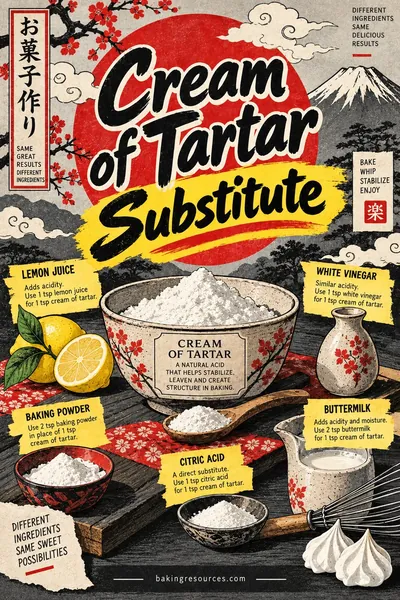
- Beat with 1/8 teaspoon cream of tartar for 3 to 5 minutes to soft peaks.
- Add 3 tablespoons powdered sugar gradually and beat to stiff peaks, 2 to 3 minutes more.
It's fat-free, so it tastes light and slightly sweet rather than creamy, and it's closer to marshmallow fluff than to whipped cream. It weeps within a couple of hours. Fold in 2 tablespoons of melted coconut oil at the end for body and it holds much better. Our vegan egg white replacer guide has the full aquafaba ratios.
Worked example: topping a 9-inch pie and a two-layer cake
The job: a 9-inch pie needs about 2 cups of whipped topping for a generous swirled layer. A two-layer 9-inch cake, filled and covered lightly, needs about 4 to 5 cups.
Starting from evaporated milk. One 12 oz can triples to about 4 cups. So one can covers the pie with a cup and a half to spare, and one can just about covers the cake. Add the gelatin if the cake is being assembled more than an hour ahead, which it always is.
Starting from coconut cream. A 14 oz can yields 1 1/4 to 1 1/2 cups. The pie needs two cans, and the layer cake needs four. This is the method's real weakness: yield. Chill the cans the night before and open one extra, because a poorly separated can leaves you half a cup short.
Starting from milk and gelatin. One cup of milk gives 2 to 2 1/2 cups. So 1 cup of milk for the pie, 2 cups for the cake. Double the gelatin to 2 teaspoons for the 2-cup batch, and bloom it in 2 tablespoons of water.
Cross-checking against real cream: 1 cup of heavy cream whips to about 2 cups. So the pie would take 1 cup of cream and the cake 2 to 2 1/2 cups. Use that as your yardstick when a recipe gives you a cream quantity and you're swapping in something else. Our cups to milliliters converter handles it if your recipe is metric.
Stabilizers, ranked by how long they hold
Every method above except coconut cream needs help if it's sitting more than an hour. Here's what each stabilizer does per 1 cup of liquid base.
| Stabilizer | Amount | Holds for | Trade-off |
|---|---|---|---|
| Unflavored gelatin | 1 tsp, bloomed in 1 tbsp water | 24 to 48 hours | Firmer, slightly bouncy texture |
| Cream cheese | 2 tbsp, beaten smooth first | 2 to 3 days | Tangy, noticeably denser |
| Powdered sugar | 2 to 3 tbsp | 2 to 4 hours | The cornstarch does the work. Mild help only |
| Cornstarch | 1 tsp, sifted in | 3 to 5 hours | Can taste chalky if you overdo it |
| Nonfat dry milk powder | 2 tbsp | 4 to 6 hours | Adds protein and a faint milky note |
| Lemon juice | 1 tsp | 1 to 2 hours | Firms protein foams. Adds tartness |
Gelatin is the strongest by a wide margin. Melt it, cool it to lukewarm, and add it while beating on medium. Pour it in hot and it cooks the base; pour it in cold and it sets into rubbery threads you can see.
The mistakes that ruin these
Everything must be cold. Bowl, beaters, base. Metal bowls chill better than glass. Fifteen minutes in the freezer is enough. Warm equipment is the single most common failure with the evaporated milk method.
Don't add sugar too early. Sugar dissolved into a thin base weighs it down and slows aeration. Wait until the foam has structure.
Stop at the right moment. Over-beaten foam turns grainy, and unlike real cream you often can't fix it. If real whipped cream goes grainy, a few tablespoons of fresh liquid cream folded in by hand brings it back. That rescue does not work on evaporated milk or coconut cream.
Watch out for sweetened condensed milk. It's not evaporated milk. The cans sit side by side and look almost identical. Condensed milk is loaded with sugar and will not whip. Read the label twice.
Use the right speed. High speed for the whole run on thin bases like evaporated milk and gelatin milk. Medium for mascarpone, which goes from perfect to broken in seconds.
If you want the full technique for the real thing, how to make whipped cream covers cold cream, peak stages and the fixes for over-whipping.
Frequently asked questions
Can you make whipped cream with regular milk?
Not by beating it alone. Whole milk is about 3.25% fat, well below the 30% needed to build a foam. Set 1 cup of cold milk with 1 teaspoon of bloomed gelatin, chill it until it thickens, and it whips to 2 or more cups of a light, mousse-like topping.
Does evaporated milk really whip?
It does, but only ice cold and only briefly. Freeze the can 30 to 45 minutes, beat for 3 to 5 minutes with a teaspoon of lemon juice, and it triples in volume. Without gelatin it starts weeping in about half an hour, so make it right before serving.
Can I whip half and half?
No. Half and half is around 12% fat, less than half of what's needed. You can beat it for twenty minutes and get nothing but bubbles. Add gelatin and treat it like the milk method, or use it in a sauce where it doesn't need to hold air.
Why won't milk and melted butter whip?
The fat percentage looks right, but the butterfat is in large melted blobs rather than the tiny emulsified globules that natural cream contains. Those globules are what link up around air bubbles. Milk plus butter is excellent in batters, ganache and sauces, and useless as a topping.
What's the best dairy-free whipped cream?
Full-fat coconut cream, chilled overnight with only the solids scooped out. It whips to soft peaks, holds 3 to 4 days, and needs no stabilizer. The coconut flavor is unavoidable, so it suits chocolate and fruit desserts better than a plain vanilla sponge.
How much whipped topping do I get from one can?
A 12 oz can of evaporated milk triples to about 4 cups. A 14 oz can of coconut cream gives 1 1/4 to 1 1/2 cups. One cup of whole milk with gelatin gives 2 to 2 1/2 cups. For comparison, 1 cup of heavy cream doubles to 2 cups.
Can I freeze homemade whipped topping?
Coconut and cream cheese versions freeze reasonably well as piped dollops on a lined tray, then transfer to a bag. The evaporated milk and gelatin versions separate on thawing. Pipe them into portions and use them straight from the freezer as a semi-frozen topping instead.
Which substitute holds up on a cake overnight?
Cream cheese or mascarpone thinned with milk, or the gelatin milk method. Both hold their shape in the refrigerator for a day or more. If the frosting is looking loose whatever you use, why frosting goes runny covers the usual causes and fixes.
Related guides: How to make whipped cream | Heavy cream substitute | Vegan cream substitutes | Frosting calculator | Baking substitutions finder