How to Make Buttercream

There are five kinds of buttercream, and they are genuinely different products rather than variations on one recipe. American is powdered sugar beaten into butter. Swiss and Italian are meringue based. French uses egg yolks. German is built on cooked custard.
Pick by what the frosting has to do, not by which one sounds fancier. If it needs to hold sharp piped detail in a warm room, you want Italian. If it needs to be done in six minutes for a kid's birthday, American is the correct answer and nobody should feel bad about it.
The one variable that decides success in all five is butter temperature, around 65 to 68F. Too warm and it soups. Too cold and it curdles. Both look like disasters and both fix themselves with more whipping.
Not sure how much to make? Our free frosting calculator gives you the batch size for your pan and layer count in one step.
Updated September 2026
How to make buttercream: the five styles compared
Read this table by the last two columns first. Decide what the frosting has to do, then work backward to the method.
| Style | Base | Sweetness | Heat stability | Difficulty | Texture | Best for |
|---|---|---|---|---|---|---|
| American | Butter plus powdered sugar | Very sweet | Poor to fair, softens fast above 75F | Easiest, 10 minutes | Dense, slightly gritty unless handled well | Weeknight cakes, cupcakes, kids' parties, crusting decorations |
| Swiss meringue | Whites and sugar heated, then whipped, then butter | Mild | Good | Moderate | Silky, light, glossy | Wedding and layer cakes, smooth finishes, anything filled |
| Italian meringue | Hot sugar syrup poured into whipping whites, then butter | Mild | Best of the five | Hardest, needs a thermometer | Marshmallowy, very stable, holds edges | Piping in warm rooms, tall tiered cakes, summer events |
| French | Hot sugar syrup into whipping yolks, then butter | Medium, rich | Fair | Hard | Rich, dense, custardy, pale yellow | Rich fillings, coffee and chocolate cakes, small cakes |
| German | Pastry cream whipped with butter | Least sweet | Fair to good | Moderate, two stages | Pudding-like, soft, spoonable | Filling layers, cream puff style desserts, people who hate sweet frosting |
A quick way to remember the family tree: American has no eggs. Swiss and Italian use whites. French uses yolks. German uses a whole cooked custard, which is yolks plus starch plus milk.
Two of these are meringue buttercreams and get lumped together constantly, but the difference is real. Swiss heats whites and sugar together over water. Italian whips the whites raw and cooks them with a boiling syrup. Italian ends up hotter, which means a more thoroughly cooked and more stable foam.
American buttercream, honestly
American buttercream is butter beaten with powdered sugar, usually with a splash of milk or cream and some vanilla. It takes about ten minutes and it is the sweetest of the five by a wide margin, because sugar is doing all the structural work.
The complaint people have is grit. That grit is undissolved powdered sugar, not butter, and it comes from two things.
First, powdered sugar clumps. It compacts in the bag and those little compressed nuggets do not break apart in the mixer, they just get coated in fat and stay. Sifting fixes this and it is the single highest value 90 seconds in the whole process. Sift it, do not skip it.
Second, powdered sugar needs liquid to dissolve, and butter is fat, not liquid. Adding 2 to 3 tablespoons of milk, cream, or even water per pound of powdered sugar gives the crystals something to actually dissolve into. This is why "add a splash of liquid" shows up in every good version.
Two more things that help:
- Beat the butter alone for 3 to 5 minutes first, until it is pale and visibly increased in volume. You are whipping air in, and air is what keeps American buttercream from tasting like sweet grease. This is the same technique used in creaming butter and sugar for cookies.
- Add a pinch of salt. A quarter teaspoon per pound of sugar cuts the sweetness noticeably. Salt is not a flavor here, it is a sweetness brake.
American buttercream also crusts, meaning the surface dries to a light shell. That is useful for the paper towel smoothing trick and for stacking, and it is something the meringue buttercreams do not do.
Swiss and Italian: why you heat the whites
Both meringue buttercreams heat the egg whites, and there are two separate reasons, which is why the target temperatures matter.
Dissolving the sugar. Granulated sugar will not dissolve into cold egg white in a mixer. Heat plus agitation dissolves it completely, which is exactly why meringue buttercreams are silky and American buttercream can be gritty. Same problem, different solution.
Food safety. Egg whites pasteurize with time at temperature. Both methods get the whites hot enough to be safe for the people eating the cake.
For Swiss, whisk the whites and granulated sugar in a bowl over simmering water until they reach 160 to 165F. The practical test if you have no thermometer: rub a bit between two fingers and feel for grains. Smooth means the sugar is dissolved. Then whip to a stiff, glossy meringue and let the bowl cool to about 80F before the butter goes in.
For Italian, cook the sugar with a little water to 235 to 245F, soft ball stage, while the whites whip to soft peaks. Then pour the syrup down the side of the bowl in a thin steady stream with the mixer running. Pouring onto the whisk flings molten sugar onto the sides of the bowl where it hardens and is gone from your frosting. Down the side of the bowl, always.
The syrup temperature is not a suggestion. Under 235F leaves too much water and the buttercream stays loose. Over 250F starts caramelizing and the buttercream goes stiff and slightly toffee flavored.
Then, for both, you add softened butter a tablespoon at a time with the mixer running. This is where people panic, which brings us to the next part.
The soupy stage and the curdled stage
Every meringue buttercream goes ugly before it goes beautiful. Both failures are temperature problems, and both fix themselves.
Soupy and thin means it is too warm. Either the meringue was still hot when the butter went in, or the butter was too soft to begin with, or the kitchen is 80F. The butter has melted instead of emulsifying. Put the whole bowl in the fridge for 15 to 20 minutes, then whip again. It comes together.
Curdled, split, or looking like cottage cheese means it is too cold. The butter is in stiff lumps that will not blend into the meringue. Keep whipping. Give it a full 5 minutes on medium before you do anything else, because friction warms the bowl and it usually resolves on its own. If it does not, warm the outside of the bowl with a hot towel for 20 seconds, or melt about 2 tablespoons of the mixture and drizzle it back in while whipping.
Neither of these is ruined. Meringue buttercream is one of the most forgiving things in a kitchen because you can heat it, cool it, and rewhip it repeatedly. If it goes wrong in a way you cannot place, our guide to why frosting turns out runny walks through the causes in more detail.
The one genuine failure is a broken emulsion that stays broken after both fixes, and even then the fallback is to warm it fully to liquid, chill it back to about 68F, and rewhip.
Butter temperature decides everything
If you fix one variable, fix this one. Butter should be 65 to 68F when it goes into any buttercream. That is cool room temperature, not warm.
The finger test: press the stick. It should dent under gentle pressure but hold its shape and leave no grease on your finger. If your fingertip sinks straight through, it is too warm and the frosting will not hold structure.
Butter is a fat crystal network holding water and milk solids. Between about 60 and 70F those crystals are plastic, which means they deform and trap air without collapsing. Above 72F they melt out and the emulsion breaks. Below 60F they are rigid and will not incorporate.
Most kitchens are warmer than people think, and butter left out overnight in a 76F room is well past usable. Our guide on how to soften butter covers the fast methods, including the ones that do not accidentally melt the edges.
For the meringue types there is a second temperature: the meringue itself needs to be down to about 80F before butter goes in. A bowl that still feels warm on the outside of your wrist is too warm.
Ratios, not recipes
Recipes lock you into one batch size. Ratios by weight let you make exactly what you need. Every number below is parts by weight, so 1 part can be 100 g or 3 oz or anything else.
| Style | Butter | Sugar | Egg | Other | Typical single batch |
|---|---|---|---|---|---|
| American | 1 | 2 powdered | none | 2 to 3 tbsp liquid per 450 g sugar | 227 g butter, 454 g powdered sugar |
| Swiss meringue | 3 | 2 granulated | 1 white | pinch salt | 340 g butter, 200 g sugar, 100 g whites |
| Italian meringue | 3 | 2 granulated | 1 white | 60 g water for the syrup | 340 g butter, 200 g sugar, 100 g whites |
| French | 3 | 2 granulated | 1 yolk | 60 g water for the syrup | 340 g butter, 200 g sugar, 100 g yolks |
| German | 2 | 1 granulated | 1 yolk | plus 4 parts milk, 0.5 part cornstarch | 340 g butter, 500 g pastry cream |
A large egg out of the shell runs about 50 g, roughly 33 g white and 17 g yolk. So 100 g of whites is about 3 large eggs, and 100 g of yolks is about 6 large eggs. Weigh them, because egg size varies far more than the carton label suggests.
Worked example. You want a Swiss meringue buttercream at 1.5 times the standard batch for a taller cake. Multiply each number by 1.5: butter 340 x 1.5 = 510 g, sugar 200 x 1.5 = 300 g, whites 100 x 1.5 = 150 g, which is about 4 to 5 large egg whites. The syrup, heating, and whipping temperatures stay exactly the same, because temperature does not scale. Only the time to reach 160 to 165F goes up, by roughly a third.
That last point is the one that trips people scaling frosting. Volume scales, temperature targets never do. Our recipe scaler does the multiplication for you and keeps the fractions clean.
How much buttercream do you actually need
Making too little is worse than making too much, because a half-crumb-coated cake sitting on the counter while you start a second batch is a bad afternoon.
| Cake | Purpose | Buttercream needed |
|---|---|---|
| 8 inch, 2 layers | Fill, crumb coat, smooth finish | 4 cups, about 900 g |
| 8 inch, 3 layers | Fill, crumb coat, smooth finish | 5 to 6 cups, about 1,150 to 1,350 g |
| 9 inch, 2 layers | Fill, crumb coat, smooth finish | 5 cups, about 1,150 g |
| 9x13 sheet | Top only, swirled | 3 cups, about 680 g |
| 24 cupcakes | Spread flat with a spatula | 2 to 3 cups |
| 24 cupcakes | Tall piped swirls | 4 to 5 cups |
| Any cake | Piped borders and flowers on top | Add 1 to 1.5 cups to the numbers above |
Add roughly 25 percent if you are new to smoothing, because practice runs get scraped off and rebuilt. That scraped frosting is reusable, but you need enough in the bowl to keep working.
If you are sizing the cake itself rather than the frosting, our cake servings guide covers how many slices each pan actually yields, which is a different number from what most party planning charts claim.
Coloring and flavoring without breaking it
Use gel color, not liquid. Liquid food coloring is water plus dye. Buttercream is a fat emulsion. Adding a tablespoon of water to a fat emulsion thins it, and in meringue buttercreams it can break the emulsion outright. Gel color is concentrated enough that you need drops instead of teaspoons, so the added water is negligible.
Oil-based candy colors are the opposite problem. They work in chocolate but they will slacken meringue buttercream because you are adding free oil to a system that has all the fat it can hold.
Deep colors need time, not more dye. Red and black develop over 2 to 4 hours. Color to slightly less than your target, cover the bowl, wait, then check. Dumping in more dye to force it right now gives you a bitter frosting that tastes like the dye bottle.
Flavoring amounts per standard batch:
- Vanilla extract: 1 to 2 teaspoons. Alcohol based extracts are fine at this volume.
- Melted chocolate: 115 to 170 g, cooled to about 90F first. Hot chocolate melts the butter, cold chocolate seizes into flecks.
- Cocoa powder: 30 to 55 g sifted, which is roughly a third to two thirds of a cup at 85 g per cup. Add a splash of liquid with it, since cocoa is a drying ingredient.
- Fruit: use freeze-dried fruit ground to powder, 20 to 30 g. Fresh puree is mostly water and will thin the frosting.
- Citrus: zest only, plus a half teaspoon of juice at most. Juice is water and acid, and acid can curdle a meringue buttercream.
- Salt: 1/4 to 1/2 teaspoon, dissolved in the liquid first so you get no crunchy pockets.
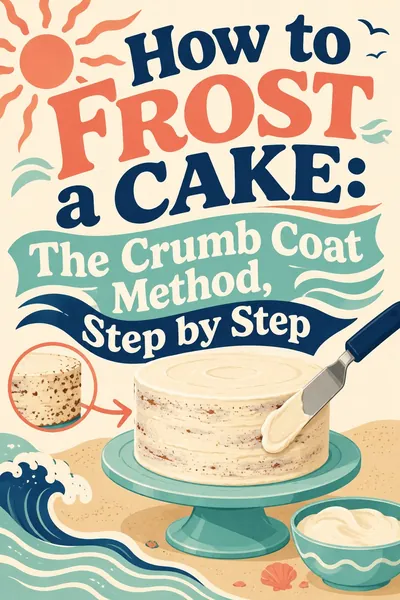
Once it is mixed and colored, getting it onto the cake is its own skill. Our guide to frosting a cake covers crumb coating, chilling between passes, and the bench scraper technique that produces flat sides.
Which one should you actually make
If the cake is being eaten within a few hours in an air-conditioned room and you have ten minutes, make American. Sift the sugar and add the splash of milk and it is genuinely good.
If you want something that tastes like frosting instead of sugar, make Swiss. It is the best effort-to-result ratio of the five and it handles being made a day ahead.
If the cake is going outdoors in July or has to be stacked in tiers, make Italian. The extra thermometer step buys real structural stability.
If you hate sweet frosting, make German. It reads as barely sweet, and it is the natural pairing with dense chocolate or coffee cakes.
French is the specialist. It is rich enough that a thin layer is plenty, and it is the one that sits closest to plain butter in flavor.
Frequently asked questions
Why is my buttercream grainy?
In American buttercream, grit is undissolved powdered sugar. Sift it before adding, add 2 to 3 tablespoons of milk or cream per 450 g of sugar, and beat for a full 3 to 5 minutes. In meringue buttercreams, graininess means the sugar never dissolved in the whites, so next time heat to 160 to 165F and check by rubbing a drop between your fingers.
Can I make buttercream ahead of time?
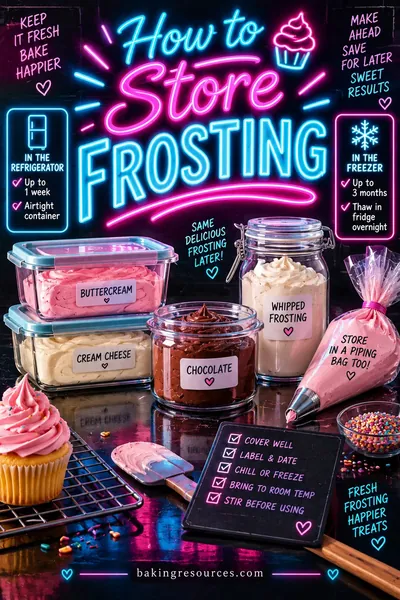
Yes, and meringue buttercreams actually improve with a rest. Refrigerate up to a week or freeze up to three months in an airtight container. Bring it back to 68F on the counter, which takes 2 to 4 hours from cold, then rewhip for 5 minutes. It will look separated at first and then come back together.
Does buttercream need to be refrigerated?
A frosted cake is safe at cool room temperature for 2 to 3 days for American, Swiss, and Italian, since sugar and fat are both preservative. German buttercream contains milk and eggs in a custard, so refrigerate it. Any buttercream in a room above 75F should go in the fridge regardless of type.
Why did my buttercream curdle when I added the butter?
The mixture was too cold. Cold butter will not emulsify into meringue, so it stays in visible lumps. Keep the mixer running on medium for a full 5 minutes before intervening, since friction warms the bowl. If it is still split, warm the outside of the bowl with a hot towel for 20 seconds and keep whipping.
What is the most stable buttercream for hot weather?
Italian meringue, by a clear margin. The hot syrup produces the most thoroughly cooked and stable foam of the five. If you must use American in heat, replace a quarter of the butter with high ratio shortening, which stays solid at higher temperatures, though it costs you some flavor.
How do I make buttercream less sweet?
Switch styles rather than fighting the recipe. Swiss uses roughly half the sugar per unit of butter that American does, and German uses less again. If you have to stay with American, add 1/2 teaspoon of salt and a tablespoon of lemon juice or sour cream per batch to cut it.
Can I use salted butter in buttercream?
Yes. Salted butter runs about 1.6 percent salt, which is roughly 3.5 g per 227 g cup, so just leave out the added salt. The flavor is fine and in American buttercream the extra salt genuinely helps. Use unsalted only if you want precise control, which matters more in the meringue types.
How long should I whip buttercream?
American needs 3 to 5 minutes on the butter alone, then 3 to 4 minutes after the sugar. Meringue buttercreams need the butter added over 3 to 5 minutes, then 5 to 10 minutes more on medium to become silky. Finish any of them with 2 minutes on the lowest speed with the paddle, which pushes out air bubbles and gives you a smoother finish on the cake.