How to Freeze Cake

Here's how to freeze cake so it comes out of the freezer moist instead of dry: cool the layers until they're barely warm, wrap each one tightly in plastic wrap, add a layer of foil, and get them into a freezer running at 0°F on the same day you bake. Then thaw them still wrapped, on the counter, and do not unwrap until they're at room temperature.
That last step is the one almost everyone skips, and it's the one that decides the outcome. Unwrapping a frozen cake lets condensation form on the surface instead of inside the wrapping where it belongs.
Updated September 2026
Freezing works best when you bake the right number of layers in the first place. Our free cake servings calculator shows how many servings each pan size gives, so you can plan the make-ahead bake instead of freezing whatever happens to be left.
How to freeze cake layers, step by step
Seven steps. Steps 2 and 6 are where cakes get ruined.
1. Get the layers out of the pans cleanly. Ten to fifteen minutes in the pan, then turn out onto a rack and peel the parchment off right away. If your layers keep tearing on the way out, how to line a cake pan fixes that permanently.
2. Cool to barely warm, not stone cold. This is the trick that separates a good frozen cake from a dry one. A cake that is still slightly warm, somewhere around 85 to 95°F at the center, still has surface moisture that will get sealed inside the wrapping. A cake cooled for four hours on a rack has already given that moisture to the room. An 8 inch layer hits that window about 60 minutes out of the oven in a 70°F kitchen. Our guide to how to cool a cake has the full temperature timeline.
3. Level it now if you're going to. Frozen cake is hard to trim without cracking. Warm cake is hard to trim without tearing. Just-cooled cake slices cleanly with a serrated knife, so do it before it's wrapped.
4. Wrap in plastic, tight and complete. Press the plastic against the top, the bottom, and all the way around the side. No gaps. Two full wraps around is better than one. Air is what causes freezer burn, and freezer burn is just moisture that left the cake and refroze on the wrapper.
5. Add foil or a freezer bag. Heavy duty foil molded to the shape, or a zip-top freezer bag with the air pressed out. Two layers is not overkill. It's the difference between a cake that tastes fresh at eight weeks and a cake that tastes like the freezer at three.
6. Label with the cake type and the date. Everything in foil looks identical at week six, and you will not remember which one had the citrus zest.
7. Freeze flat and fast. Lay the layers on a flat shelf, not stacked, for the first few hours. Fast freezing makes smaller ice crystals, and smaller crystals do less damage to the crumb. Once they're solid you can stack them.
Why a wrapped cake thaws moist and a bare one thaws dry
The whole system depends on one idea: the water needs to stay in the package.
When a cake freezes, some of the water in the crumb turns to ice. Some of that ice slowly sublimates, meaning it goes straight from ice to vapor without melting first. If the vapor can reach a colder surface, it refreezes there as frost. That frost is your cake's moisture sitting on the wrapper instead of in the crumb, and that's the dry, papery texture people call freezer burn.
Two tight layers of wrapping slow sublimation down to almost nothing, because the vapor cannot get anywhere. A single loose layer does not.
Thawing runs the same physics in reverse. Room air holds a lot of water vapor. Put a frozen cake in that air uncovered, and vapor condenses on the cold surface as liquid water. That's the wet, sticky top that people mistake for the cake sweating out its own moisture. Thaw it inside the wrapping and the condensation forms on the outside of the plastic instead, which is exactly where you want it.
There's a second benefit that surprises people the first time. A cake that thaws inside its wrapping reabsorbs the small amount of moisture that migrated to the surface during freezing, so it can come out slightly moister than it went in.
Freezer times by cake type
All of these assume proper double wrapping at 0°F. Cake stays safe indefinitely at that temperature, so these are quality windows and not safety limits.
| Cake | Freezer window | Wrap method | Thaw |
|---|---|---|---|
| Unfrosted layers, 6 to 10 inch | 3 months | Plastic, then foil, each layer separate | 2 to 3 hours on the counter, wrapped |
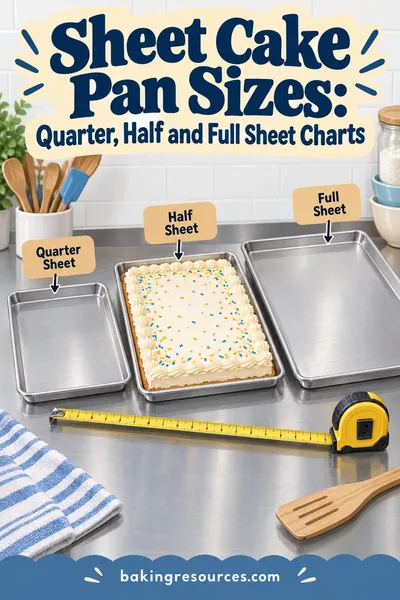
| Sheet cake, unfrosted, in the pan | 3 months | Plastic against the surface, then foil over the pan | 3 to 4 hours, wrapped |
| Pound cake or loaf cake | 3 months | Plastic, then foil, whole or halved | 3 to 4 hours, wrapped |
| Frosted cake, buttercream | 2 months | Freeze uncovered 1 hour, then plastic and foil | Overnight in the fridge, then 2 hours out |
| Frosted cake, cream cheese frosting | 1 month | Same, but keep it colder on both ends | Overnight in the fridge, then 1 hour out |
| Cheesecake | 2 months | Chill fully first, then plastic and foil | Overnight in the fridge, no counter stage |
| Cupcakes, unfrosted | 2 months | Airtight container, single layer | 20 to 30 minutes, covered |
| Cupcakes, frosted | 1 month | Freeze solid on a tray, then box them | 1 hour in the fridge, then 30 minutes out |
| Cake with fresh fruit filling | Not recommended | The fruit weeps on thaw and soaks the crumb | Assemble after thawing instead |
| Angel food or chiffon | 2 months | Container, not wrap. It crushes easily | 2 hours at room temperature, covered |
Two notes on that table. Cream cheese frosting has a shorter window than buttercream because it holds more free water, so it forms bigger ice crystals and separates more on thaw. And whipped cream frosting is missing on purpose: it collapses on thawing unless it's been stabilized, and even then it's a compromise.
A worked example: a birthday cake baked five days early
Say you want a two layer 8 inch cake for a Saturday party, and Monday evening is when you actually have time.
Monday, 7:00 pm. Bake two 8 inch rounds. Out of the oven, 10 minutes in the pans, then onto racks with the parchment peeled off.
Monday, 8:00 pm. The layers are at about 90°F, which is the wrap-now window. Level both tops with a serrated knife while they're easy to cut. Wrap each layer in two full turns of plastic, then a sheet of foil. Label them. Into the freezer, laid flat with space around them.
Saturday, 8:00 am. Take both layers out, still fully wrapped, and set them on the counter. Do not touch them.
Saturday, 10:30 am. They're at room temperature. Now unwrap. The tops will be slightly tacky, which is normal and actually helps the crumb coat grip.
Saturday, 10:45 am. Fill and frost. Frozen-then-thawed layers are firmer and denser than fresh ones, which makes them easier to stack without bulging. Working from cold is genuinely a professional habit, not a compromise. If you want the method, how to frost a cake covers the crumb coat and the chill between coats.
Total quality loss over five days: essentially none. Compare that to baking Friday night at 11:00 pm and frosting a slightly warm cake at midnight, which is how buttercream ends up sliding off the sides.
Should you freeze a cake frosted or unfrosted?
Unfrosted, almost every time. Bare layers freeze faster, wrap tighter, take up less room, and thaw in a fraction of the time. You also get to frost fresh, which is where most of the visual quality lives anyway.
Freeze it frosted when the cake is already assembled and you need to save it, or when you're transporting a decorated cake and want it rock solid for the drive. In that case:
- Put the finished cake on a flat tray, uncovered, in the freezer for one hour until the frosting is hard to the touch.
- Then wrap it in plastic and foil. Wrapping soft buttercream just prints the plastic pattern into it permanently.
- Thaw in the fridge overnight, still wrapped, then two hours on the counter before you unwrap.
Frosting behaves differently by type in the freezer. American buttercream, which is mostly butter and powdered sugar, freezes and thaws almost perfectly. Swiss and Italian meringue buttercreams freeze well but may need a brief re-whip if you're freezing the frosting on its own. Cream cheese frosting softens more on thaw. Ganache is excellent. Royal icing and fondant both go tacky and are better avoided, and storing fondant decorations covers where they should go instead. There's more detail in how to store frosting.
Thawing: the part people rush
| What you froze | Thaw method | Time | Do not |
|---|---|---|---|
| Single 8 inch layer | Counter, wrapped | 2 to 3 hours | Unwrap early |
| Two stacked layers, wrapped separately | Counter, wrapped | 3 hours | Stack them frozen and hope |
| Whole frosted cake | Fridge first, then counter | Overnight plus 2 hours | Go straight to the counter |
| Cheesecake | Fridge only | 8 to 12 hours | Use the counter at all |
| Cupcakes | Counter, covered | 20 to 30 minutes | Microwave them |
| A single slice | Counter, wrapped | 30 to 45 minutes | Bother with the fridge |
The fridge stage on a whole frosted cake looks wrong, because the fridge is where cake goes stale fastest. It's the right call anyway. A few hours of cold costs you less quality than a fast thaw that leaves the frosting sweating and the surface wet.
And skip the microwave for anything you plan to frost. It thaws unevenly, cooks the edges of the crumb, and leaves you with a layer that's warm in one spot and frozen in another.
What freezing does not fix
Freezing pauses a cake. It does not improve one.
A dry cake frozen on day two is a dry cake in March. If your layers are coming out dry to begin with, the cause is upstream: too much flour from scooping the cup, an oven running hot, or an overbake. Nothing in the freezer touches any of that.
Same story with structure. A layer that sank in the middle will still be sunk after thawing, and why did my cake sink is the place to start on that. A layer that stuck and tore coming out of the pan will still be torn, though a frozen layer is at least easier to patch with frosting.
The one thing freezing genuinely improves is handling. Cold cake crumbs less, cuts cleaner, and stacks straighter. Plenty of bakers freeze layers for two hours before assembly purely for that reason, with no intention of storing them at all.
Refreezing, and when it's a bad idea
You can refreeze cake that thawed in the fridge and stayed cold. Quality drops, because a second freeze means a second round of ice crystals, and the crumb gets noticeably coarser.
Do not refreeze a cake that sat at room temperature for hours, especially one with cream cheese frosting, custard filling, or whipped cream. The standard food safety rule applies: perishable items should not spend more than two hours total between 40°F and 140°F, and that clock is cumulative across every time it's been out.
A better habit is to portion before you freeze. Half a sheet cake wrapped as four separate blocks means you never thaw more than you'll eat, and refreezing stops being a question. For the counter and fridge side of the same problem, how to store cake covers the day to day rules, and how to store baked goods covers everything else on the cooling rack.
Frequently asked questions
Can you freeze cake with frosting on it?
Yes. Freeze the finished cake uncovered on a tray for about an hour until the frosting is firm, then wrap it in plastic and foil. Buttercream holds for about two months and cream cheese frosting for about one. Thaw overnight in the fridge with the wrapping still on, then give it two hours on the counter before unwrapping.
How long can you freeze cake before it goes bad?
At 0°F it stays safe indefinitely, so the limits are about quality. Unfrosted layers hold well for about three months, frosted cake for one to two months depending on the frosting, and cheesecake for about two months. Past those windows it's edible but the crumb gets dry and the flavor flattens.
Should you freeze cake warm or completely cold?
Barely warm, around 85 to 95°F at the center, which is roughly an hour out of the oven for an 8 inch layer. That timing seals a little surface moisture inside the wrapping. Wrapping a hot cake creates enough steam to make the surface gummy, and wrapping a cake that's been sitting for four hours means the moisture already left.
Why is my thawed cake wet on top?
You unwrapped it too early. Room air condenses on the cold surface as liquid water, which is why the top goes sticky. Leave the plastic and foil on until the cake is fully at room temperature, and the condensation forms harmlessly on the outside of the wrapping instead.
Can I freeze cake in the pan?
Yes, and it's the easiest option for a sheet cake. Press plastic wrap directly onto the cake surface, cover the whole pan in foil, and freeze. It takes up more freezer space than a wrapped slab, and you lose the use of the pan, but the cake keeps its shape perfectly and thaws in three to four hours.
Does freezing make cake dry?
Freezing does not, but bad wrapping does. Moisture leaves a poorly wrapped cake as vapor and refreezes on the wrapper as frost, which is the dry, papery texture people blame on the freezer itself. Two tight layers stop that almost completely.
Can I freeze cake batter instead of baked cake?
You can, though the results are less reliable than freezing baked layers. Chemical leaveners start reacting the moment they hit liquid, so a thawed batter has already spent some of its lift and rises less. Freezing the baked layers is the better plan in almost every case.
Related guides: How to store cake | How to cool a cake | How to frost a cake | Cake servings calculator