How to Store Cake

The short answer on how to store cake: keep it airtight at room temperature for two to three days, and only move it to the fridge if the frosting or filling actually needs refrigeration. Cold air is a cake's enemy. It speeds up the chemical process that dries out the crumb, so a plain cake in the fridge goes stale several times faster than the same cake sitting on your counter.
Past about three days, the freezer beats the fridge every time. The fridge is a compromise you accept for food safety, not a way to make cake last longer.
Updated September 2026
Your frosting decides your storage rules. Our free frosting calculator covers eight frosting types and how much each one takes, and the type you pick is the same thing that determines whether the cake sleeps on the counter or in the fridge.
How to store cake by frosting type
Frosting is the deciding factor, not the cake underneath it. A vanilla sponge is a vanilla sponge. What sits on top is what makes it a counter cake or a fridge cake.
| Frosting or filling | Counter | Fridge | Freezer | Why |
|---|---|---|---|---|
| No frosting, layers or sheet | 2 days | Not ideal | 3 months | Nothing perishable, but it dries fast uncovered |
| American buttercream | 2 to 3 days | 5 days | 2 months | Mostly fat and sugar, very little free water |
| Swiss meringue buttercream | 1 day | 5 days | 2 months | Cooked egg white, so shorter at room temperature |
| Italian meringue buttercream | 1 day | 5 days | 2 months | Most heat stable of the three, still egg based |
| Cream cheese frosting | 2 hours max | Required, 5 days | 1 month | Fresh dairy with enough water to grow bacteria |
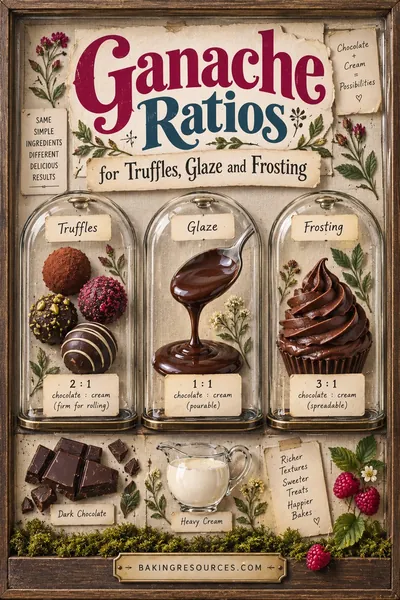
| Ganache | 2 days | 1 week | 2 months | High fat, high sugar, very stable |
| Stabilized whipped cream | 2 hours max | Required, 2 to 3 days | Not recommended | Collapses and weeps |
| Royal icing | 1 week | Not needed | Not recommended | Dries hard, that's the point |
| Rolled fondant | 3 to 4 days | Avoid | No | Condensation makes fondant sweat and go sticky |
| Custard, curd or pastry cream filling | 2 hours max | Required, 3 days | Not recommended | Egg and dairy, and it weeps on thawing |
| Fresh fruit filling or topping | 2 hours max | Required, 2 days | Not recommended | The fruit leaks into the crumb |
Two entries there catch people out. Fondant looks like the most shelf stable thing on the list, and it is, until you refrigerate it. Cold fondant pulls condensation out of the air the moment it comes back to room temperature, and a sweating fondant cake cannot be rescued. Loose pieces are easier to handle, and how to store fondant decorations covers the sealed room temperature setup that keeps them sharp. And royal icing is the opposite of everything else on this page: you want it to dry.
Does cake need to be refrigerated?
Only when something in it is perishable. That's the whole test.
The working food safety rule is the two hour rule. Perishable items should not sit between 40°F and 140°F for more than two hours total, or one hour if the room is above 90°F. That clock is cumulative, so a cheesecake that spent 90 minutes on the table at a party and then went back in the fridge has already used most of its budget.
Cream cheese frosting, custard fillings, curd, whipped cream, and anything with fresh fruit are all on that clock. A carrot cake or a red velvet with cream cheese frosting goes in the fridge, no exceptions.
American buttercream is genuinely different. It's mostly butter and powdered sugar, with so little free water that bacteria have nothing to work with. Sugar at that concentration ties up whatever water is there. That's why a plain buttercream cake is fine on the counter for a couple of days, and why bakery display cases full of buttercream cakes are not refrigerated.
If you have a fridge cake and you care about the texture, take it out 30 to 60 minutes before serving. Cold butter is hard and waxy on the tongue, and cold cake tastes drier than it is. Letting it come up to about 65 to 70°F brings the flavor back.
The counter method, done properly
Cool it completely first. A cake that goes under a dome while warm creates its own weather. The steam condenses on the inside of the cover and rains back down onto the surface, and you get a wet, gummy top. An 8 inch layer needs about 90 minutes to 2 hours to reach room temperature in a 70°F kitchen. How to cool a cake has the full timeline with center temperatures.
Airtight beats pretty. A gasket-sealed container outperforms a glass cake dome for anything you want to stay soft. Domes are fine for one day. Past that, the small air gap around the base lets moisture out steadily.
A frosted cake protects itself. The frosting layer is a moisture barrier. That's a real function, not just decoration, and it's why an unfrosted layer left uncovered dries within hours while a fully frosted cake is still fine the next day.
Keep it out of direct sun and away from the oven. A cake sitting in a warm patch of counter above a running dishwasher can easily hit the temperature where buttercream starts to soften and slump.
Cake carriers with a tall dome stop frosting from smearing against the lid. If condensation builds inside, wedge a folded paper towel under one edge to let a little air move.
Storing a cut cake, which is the hard case
A whole cake is sealed by its own crust and frosting. The moment you cut it, you've opened two flat faces of bare crumb straight to the air, and those faces dry out in under an hour.
Three ways to close it back up, best to worst:
- Press plastic wrap directly onto the cut faces. Contact wrap, not a loose tent. This is the single most effective fix and it takes ten seconds.
- Frost the cut faces. If you have frosting left, spread a thin layer over the exposed crumb. It seals as well as plastic and looks better.
- Push a slice of sandwich bread against the cut face. An old bakery trick that works because the bread gives up its moisture before the cake does. Swap the bread daily.
Then cover the whole thing. A cut cake under a dome with no contact wrap on the faces will be noticeably dry by the next morning.
Cupcakes have the opposite problem, since each one is already portioned and mostly sealed by its liner. Store them in a single layer in a tall airtight container so nothing touches the frosting.
A worked example: a Saturday party cake, Monday leftovers
Say you serve a two layer 8 inch cake with American buttercream on Saturday afternoon. The cake servings calculator puts an 8 inch round at around 12 to 14 party servings, and eight people showed up, so you have roughly a third of it left.
Saturday, 4:00 pm. Cake comes out. Total time at room temperature so far: about 45 minutes.
Saturday, 6:00 pm. Cut faces get a sheet of plastic pressed right onto the crumb. The cake goes into a carrier on the counter, not the fridge. It's buttercream, so the two hour clock does not apply.
Sunday. Still genuinely good. Buttercream cake on day two is arguably better than day one, since the crumb has had time to even out its moisture and the flavors have settled.
Monday morning. Day three. This is the decision point. If you'll finish it Monday, leave it out. If not, cut the rest into individual slices, wrap each one in plastic and then foil, and freeze. Individual slices thaw in 30 to 45 minutes on the counter, still wrapped.
What would have changed with cream cheese frosting? Everything. The cake would have needed to go back in the fridge by 6:00 pm at the latest, and the whole two hour budget would already have been spent by the time you cut the leftovers.
Total waste in the buttercream version: none. Total effort: about a minute of plastic wrap.
Storage windows by cake type
| Cake | Counter | Fridge | Freezer | Notes |
|---|---|---|---|---|
| Plain sponge or butter cake, unfrosted | 2 days | Skip it | 3 months | Wrap tightly, it has no frosting armor |
| Layer cake, buttercream | 2 to 3 days | 5 days | 2 months | Counter is better if you'll finish it |
| Carrot or red velvet, cream cheese | 2 hours | 5 days | 1 month | Fridge is mandatory |
| Cheesecake | 2 hours | 5 days | 2 months | Never a counter cake |
| Pound cake or loaf cake | 3 to 4 days | Skip it | 3 months | High fat, so it keeps longer than most |
| Angel food or chiffon | 2 days | Skip it | 2 months | Store in a container, it crushes under wrap |
| Fruitcake, alcohol soaked | Weeks to months | Not needed | 1 year | Sugar and alcohol do the preserving |
| Sheet cake in the pan | 2 to 3 days | Per the frosting | 3 months | Plastic pressed to the surface, foil over the pan |
| Cupcakes, unfrosted | 2 days | Skip it | 2 months | Airtight container |
| Cupcakes, frosted | 2 days | 3 days | 1 month | Single layer, tall box, nothing touching the tops |
Notice how many rows say "skip it" under fridge. That's not a typo. For anything without a perishable component, the fridge is the worst of the three options.
Why the fridge dries cake out
Cake goes stale through starch retrogradation. During baking, starch granules swell and soften as they absorb water. As the cake sits, those starch molecules slowly recrystallize and squeeze the water back out of their structure, and the crumb turns firm and dry.
That's not evaporation. The water is still in the cake, just in the wrong place.
Retrogradation runs fastest in the range just above freezing up to about 50°F, which is exactly the temperature band inside a refrigerator. Below about 0°F it essentially stops, because the water is frozen in place and the starch cannot reorganize. Room temperature is slower than the fridge but faster than the freezer.
That's the whole reason the storage advice looks the way it does: counter for the short term, freezer for the long term, and the fridge only when food safety forces your hand. If you're going past three days, how to freeze cake covers the wrapping and thawing method that keeps the crumb moist.
Can you bring a dry cake back?
Partly, and it depends on why it's dry.
If it's stale from retrogradation, gentle heat reverses some of it. Warming cake past about 140°F relaxes the recrystallized starch, which is why a slice warmed for 10 to 15 seconds in the microwave tastes fresh again. That trick works once per slice and it fades within about an hour, so warm it right before you eat it.
If it's dry because moisture actually left the cake, heat will not help. Brushing the cut surfaces with a simple syrup does, though. That's standard practice in bakeries for layers that were baked a day or more ahead, and it's the same reason a soaked fruitcake keeps for months. Building one around a nut allergy changes the crumb, and fruitcake without nuts covers the swaps that hold it together.
If it was dry the day it came out of the oven, storage was never the problem. That's usually too much flour from scooping the measuring cup, or an oven running hotter than the dial claims.
Containers, wraps and what actually works
Plastic wrap, pressed to the surface. The gold standard for unfrosted layers and cut faces. Contact matters more than the number of turns.
Heavy duty foil. Better than plastic at blocking light and smells, worse at making contact with an uneven surface. Use it as the outer layer, not the inner one.
Airtight containers with a gasket. The best all round choice for cupcakes, slices, and cut sheet cake.
Cake domes and carriers. Good for a frosted cake for one to two days, and the only sane option for something with piping you do not want to touch.
Bakery boxes. Cardboard breathes, so a boxed cake dries faster than a covered one. Fine for the drive home, not for overnight.
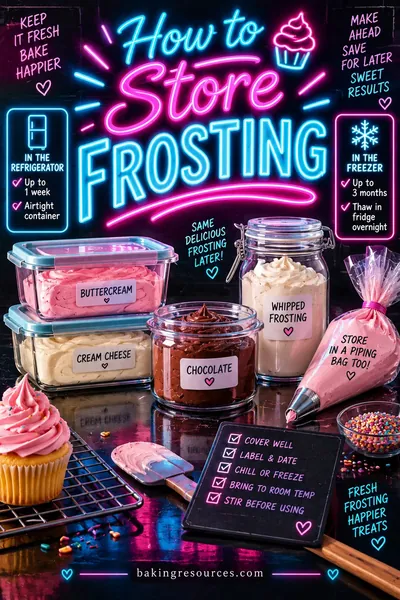
Never store cake next to strong smelling foods, especially in the fridge. Butter and cake crumb both absorb odors readily. The same is true of frosting, which is covered in how to store frosting.
For everything else that comes off the cooling rack, how to store baked goods has the wider chart covering bread, cookies, muffins and pies.
Frequently asked questions
How long does cake last at room temperature?
Two to three days for a buttercream frosted or unfrosted cake kept airtight, and about three to four days for a high fat pound cake. Anything with cream cheese frosting, custard, whipped cream, or fresh fruit is limited to two hours out of the fridge, cumulative.
Does buttercream cake need to be refrigerated?
No, if it's American buttercream made from butter and powdered sugar. There's so little free water in it that bacteria cannot grow, which is why bakery cases hold buttercream cakes unrefrigerated. Meringue buttercreams contain cooked egg white, so most bakers give those a single day at room temperature before refrigerating.
How do you keep a cut cake from drying out?
Press plastic wrap directly onto the exposed crumb faces, or spread a thin layer of leftover frosting over them. Then cover the whole cake. The cut face is the only part that dries quickly, since the frosting and crust seal everything else.
Can you leave a cake out overnight?
Yes for unfrosted, buttercream, ganache, or royal icing cakes, as long as it's covered. No for anything with cream cheese frosting, custard or curd filling, whipped cream, or fresh fruit, since those need to be back under 40°F within two hours.
How long does cheesecake last in the fridge?
About five days, covered. Cheesecake is essentially a baked custard, so it belongs in the fridge from the moment it finishes chilling and it never gets a counter stage. Take it out 20 to 30 minutes before serving so the texture softens.
Should I store cake in the fridge or the freezer?
Freezer, for anything you will not eat within about three days. The fridge sits right in the temperature band where cake goes stale fastest, while the freezer effectively pauses the process. Use the fridge only when the frosting or filling requires it for safety.
Why did my fondant cake get sticky in the fridge?
Condensation. Fondant is a sugar dough, and sugar is hygroscopic, so when a cold cake meets warm room air the moisture that condenses on the surface dissolves the top layer. If a fondant cake must be refrigerated for safety, bring it out in a sealed box and let it come to room temperature before opening the box. Dry fondant has the opposite failure, covered in rolling fondant without cracking.
Related guides: How to freeze cake | How to store baked goods | How to store frosting | Frosting calculator