Substitutes for Unsweetened Baking Chocolate That Work

The reliable swap for 1 ounce (28 g) of unsweetened baking chocolate is 3 tablespoons (16 g) of natural unsweetened cocoa powder plus 1 tablespoon (14 g) of melted butter, oil or shortening. Stir them together into a paste and use it wherever the recipe says melted unsweetened chocolate. No other adjustment is needed, and no sugar changes hands.
If all you have is semisweet, the swap is 1 3/4 ounces (50 g) of semisweet chocolate per ounce of unsweetened, minus 2 tablespoons (25 g) of the recipe's sugar. That one takes arithmetic, which is why the cocoa route is the default.
Need another swap while you are in there? Our free baking substitutions tool covers every common ingredient with the exact amounts and the adjustments each one needs.
Updated September 2026
Substitutes for unsweetened baking chocolate, ranked
Ranked by how close the result gets to the original, not by how convenient they are.
| Substitute | Per 1 oz (28 g) unsweetened | Sugar change | Verdict |
|---|---|---|---|
| Natural cocoa + fat | 3 tbsp cocoa (16 g) + 1 tbsp fat (14 g) | None | Best. Works everywhere |
| Dutch process cocoa + fat | 3 tbsp cocoa (16 g) + 1 tbsp fat (14 g) | None | Great, unless soda is the only leavener |
| Semisweet bar | 1 3/4 oz (50 g) | Cut 2 tbsp (25 g) | Very good in brownies and cake |
| Bittersweet bar, 70% | 1 1/2 oz (40 g) | Cut 1 tbsp (12 g) | Very good, deeper flavor |
| Semisweet chips | 1 3/4 oz (50 g) | Cut 2 tbsp (25 g) | Good, slightly waxier melt |
| Cocoa powder alone | 3 tbsp (16 g) | None | Only in already fat-rich batters |
| Cacao nibs, ground | Not recommended | None | Gritty, will not melt smooth |
| Carob | 3 tbsp + 2 tbsp fat | Cut 1 tbsp | Last resort. Tastes like carob |
| Hot cocoa mix | Do not | Unpredictable | Mostly sugar and milk powder |
Skip the last three unless you have no other option. The first five all produce something a guest would happily eat.
Why 3 tablespoons of cocoa plus 1 tablespoon of fat is the right answer
This swap looks like folklore. It is actually a fat-restoration formula, and the numbers line up almost exactly.
Unsweetened baking chocolate is pure chocolate liquor, which is nothing but ground cocoa beans. By weight it runs roughly 50 to 55% cocoa butter and 45 to 50% nonfat cocoa solids, with no sugar at all. So 28 g of it contains about 15 g of fat and 13 g of cocoa solids.
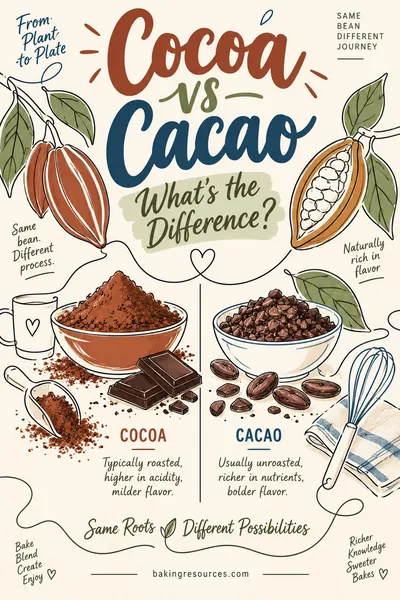
Cocoa powder is what is left when most of that cocoa butter is pressed out. Natural cocoa is about 10 to 12% fat, so 16 g of it gives you roughly 14 g of solids and only 1.8 g of fat.
| 1 oz unsweetened chocolate | 3 tbsp cocoa | 3 tbsp cocoa + 1 tbsp fat | |
|---|---|---|---|
| Total weight | 28 g | 16 g | 30 g |
| Cocoa solids | 13 g | 14 g | 14 g |
| Fat | 15 g | 1.8 g | 15.8 g |
| Sugar | 0 g | 0 g | 0 g |
The solids match. The fat does not, until you add the tablespoon back. That is the whole trick, and it explains the two things people get wrong with this swap:
- Skipping the fat gives you a drier, chalkier bake, because you quietly removed 15 g of fat per ounce from the recipe.
- Using high-fat cocoa (the 22 to 24% kind sold to pastry kitchens) means you only need about 2 teaspoons of added fat rather than a tablespoon. Check the nutrition panel: if a 6 g serving lists 1.5 g of fat, you have the high-fat kind.
Cocoa weights come straight from our ingredient weights chart: 1 cup of unsifted cocoa powder is 85 g, so a tablespoon is 5.31 g.
The full scaling table
Most recipes call for more than an ounce, and the tablespoon counts get awkward fast. Here they are already converted.
| Recipe calls for | Cocoa powder | Cocoa in cups | Added fat | Fat as butter |
|---|---|---|---|---|
| 1 oz (28 g) | 16 g | 3 tbsp | 14 g | 1 tbsp |
| 2 oz (57 g) | 32 g | 1/4 cup + 2 tbsp | 28 g | 2 tbsp |
| 3 oz (85 g) | 48 g | 1/2 cup + 1 tbsp | 43 g | 3 tbsp |
| 4 oz (113 g) | 64 g | 3/4 cup | 57 g | 4 tbsp (half a stick) |
| 6 oz (170 g) | 96 g | 1 cup + 2 tbsp | 85 g | 6 tbsp |
| 8 oz (227 g) | 128 g | 1 1/2 cups | 113 g | 8 tbsp (1 stick) |
The 8 oz row is worth remembering because it is so tidy: a full 8 ounce box of unsweetened baking chocolate equals 1 1/2 cups of cocoa powder plus one stick of butter. Boxes of baking chocolate are usually sold as eight 1 ounce squares, so the row also tells you what one whole box is worth.
Which fat to use
They are not identical, and the choice shows up in the finished texture.
Melted butter is the default and the best all-rounder. It brings 16 to 18% water with it, which is a small amount at this scale, and its flavor suits chocolate. Use it in brownies, cakes and cookies.
Neutral oil gives the fudgiest result, because oil stays liquid at room temperature while butter and shortening set firm. If your brownies always come out cakier than you want, oil is the fix. Our guide on why brownies turn out cakey covers the other half of that problem, which is usually the egg count.
Shortening or coconut oil sets firmest and is the right pick when the chocolate mixture needs to hold a shape at room temperature, like a poured glaze or a set topping. Coconut oil brings its own flavor, which either fits or does not.
A note on melting. You do not need to melt anything to make the paste if your fat is already liquid. Whisk the cocoa into warm melted fat until it is smooth, with no dry pockets. If the recipe wanted you to melt chocolate over a water bath, our guide on how to melt chocolate still applies to the bar-chocolate substitutes further down.
Dutch process cocoa: the one caveat
Unsweetened baking chocolate is acidic, sitting around pH 5 to 6, just like natural cocoa. That acidity is not just flavor. In a recipe leavened with baking soda and nothing else, the acid in the chocolate is what makes the soda work.
Dutch process cocoa has been treated with alkali and sits at pH 7 to 8, so it brings no acid to the party. Swap it in blind and a soda-only recipe rises less and can taste faintly soapy. Black cocoa pushes further again, as black cocoa powder compared with regular cocoa explains.
When Dutch process is completely fine:
- The recipe uses baking powder, which carries its own acid
- The recipe has buttermilk, sour cream, brown sugar or lemon juice in it
- The recipe uses no chemical leavening at all, which covers most fudgy brownies
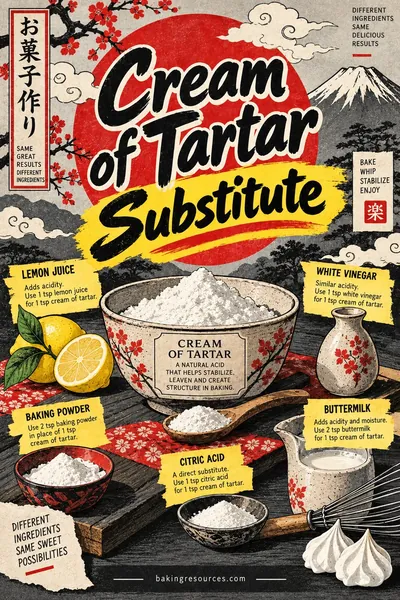
When to adjust: if baking soda is the only leavener and there is no acidic ingredient, either swap the soda for baking powder at 3 times the amount (so 1/2 teaspoon of soda becomes 1 1/2 teaspoons of powder, which is 6 g at 4 g per teaspoon), or add 1/8 teaspoon of cream of tartar per 3 tablespoons of Dutch cocoa to restore the acid. Our cream of tartar substitute guide has the alternatives if you have none, and Dutch process vs natural cocoa covers the flavor and color differences in full.
Using semisweet or bittersweet instead
This is the swap most people reach for, because a bag of chips is in every pantry. It works, and the math is simpler than it looks.
The idea: you need the same amount of pure cacao. A 55% semisweet bar is 55% cacao and about 45% sugar, so you need more of it to deliver the same cacao, and the extra sugar has to come out of the recipe.
The formula:
- Chocolate needed = 28 g divided by the cacao percentage
- Sugar to remove = that weight minus 28 g
| Chocolate you have | Per 1 oz unsweetened | Sugar to remove |
|---|---|---|
| 50% semisweet | 56 g (2 oz) | 28 g (2 tbsp + 1 tsp) |
| 55% semisweet | 51 g (1 3/4 oz) | 23 g (2 tbsp) |
| 60% bittersweet | 47 g (1 2/3 oz) | 19 g (1 1/2 tbsp) |
| 70% bittersweet | 40 g (1 1/2 oz) | 12 g (1 tbsp) |
| 85% dark | 33 g (1 1/6 oz) | 5 g (1 1/2 tsp) |
Granulated sugar is 12.5 g per tablespoon, which is where those tablespoon figures come from.
The good news about fat. Most semisweet chocolate runs 27 to 32% fat, so 50 g of it carries about 15 g of fat. That is almost exactly the 15 g in an ounce of unsweetened chocolate. This is why the sugar is the only thing you have to change: the fat sorts itself out.
Chips versus a bar. Chips contain stabilizers and less cocoa butter, so they hold their shape in the oven on purpose. Melted into a batter that is mostly fine, though the finished crumb can feel very slightly waxy. Chop a bar if you have one. If you are using chips, note that a standard 12 oz bag is 340 g and 1 cup of chips is 170 g.
The flavor difference is real but small. Bar chocolate brings vanilla and lecithin with it, so a brownie made from semisweet tastes rounder and a shade less bitter than one made from unsweetened plus sugar. Most people cannot pick it out in a blind taste. If you want the bitterness back, a 1/4 teaspoon of instant espresso powder does more than anything else on this list.
Worked example: a brownie recipe wanting 4 oz unsweetened
The recipe says: 4 oz unsweetened chocolate, 1 stick (113 g) butter, 1 cup (200 g) granulated sugar, 2 eggs, 1/2 cup (63 g) all-purpose flour.
Option A, the cocoa route. From the scaling table, 4 oz becomes 64 g of cocoa powder (3/4 cup) plus 57 g of fat (4 tablespoons).
- Melt the recipe's 113 g of butter, then add the extra 57 g. Total butter is now 170 g, which is 1 1/2 sticks.
- Whisk the 64 g of cocoa into the warm butter until smooth.
- Everything else stays exactly as written. Sugar stays at 200 g, flour at 63 g, eggs at 2.
- Expect a slightly cakier brownie. Swap the added 57 g of butter for oil if you want it fudgier.
Option B, the semisweet route. You have a 12 oz bag of 55% chips (340 g).
- 4 oz x 51 g = 204 g of chips, which is about 1 1/4 cups, leaving 136 g in the bag.
- Sugar comes down by 4 x 23 g = 92 g, so 200 g minus 92 g = 108 g of sugar, a little over 1/2 cup.
- Butter stays at 113 g. The chips already brought their own fat.
- Melt the chips with the butter, cool to below 110°F before the eggs go in, and carry on.
Which one to pick. Option A when you want the recipe to behave exactly as written. Option B when you want that glossy, crackly top, which comes from melted bar chocolate and sugar dissolving together and is genuinely hard to get from cocoa powder alone.
Worked example: a cake with only Dutch cocoa on hand
The recipe says: 2 oz unsweetened chocolate, 1 teaspoon baking soda, no other leavener, 1 cup buttermilk.
Two ounces becomes 32 g of Dutch cocoa plus 28 g of melted butter.
Now the acid check. The recipe has 1 cup of buttermilk in it, which is acidic enough on its own to activate 1 teaspoon of soda with room to spare. No adjustment needed. Bake it as written.
Change one thing and the answer flips: if that cup of buttermilk were whole milk, the recipe would be relying on the chocolate for acid, and Dutch cocoa would leave you with a flat, faintly soapy cake. In that case, replace the 1 teaspoon of soda with 1 teaspoon of soda's worth of powder, which is 3 teaspoons (12 g), or stir 1/4 teaspoon of cream of tartar into the dry ingredients.
What you cannot substitute your way out of
Some recipes are built on the physical behavior of melted chocolate, not just its flavor, and cocoa paste is not the same object.
- Anything that has to set hard at room temperature. Ganache, dipped coatings, shells. Cocoa powder plus butter never sets like cocoa butter does. Use real chocolate and follow the ganache ratio chart instead.
- A shiny, tempered finish. Tempering is a cocoa butter crystal structure, and it needs bar chocolate.
- Chocolate chunks in a cookie. Obviously, though it gets said less often than it should.
For everything else, which is to say brownies, cakes, cookies, frostings and puddings, cocoa plus fat is not a compromise. Plenty of well-known brownie recipes are written that way from the start.
Frequently asked questions
What can I use instead of 1 oz unsweetened baking chocolate?
Three tablespoons (16 g) of unsweetened cocoa powder plus 1 tablespoon (14 g) of melted butter, oil or shortening. Whisk them into a smooth paste and use it exactly where the melted chocolate would have gone. No sugar adjustment is needed, since unsweetened chocolate contains none.
Can I use cocoa powder instead of baking chocolate?
Yes, and it is the closest substitute there is, as long as you add the fat back. Cocoa powder alone is only about 11% fat while baking chocolate is over 50%, so cocoa on its own leaves the recipe short by roughly 15 g of fat per ounce swapped and bakes up dry.
How much semisweet chocolate replaces unsweetened?
About 1 3/4 ounces (50 g) of 55% semisweet per ounce of unsweetened, with 2 tablespoons (25 g) of sugar taken out of the recipe. For 70% bittersweet, use 1 1/2 ounces (40 g) and remove 1 tablespoon of sugar. The fat comes out about even, so butter and oil stay as written.
Is unsweetened chocolate the same as 100% cacao?
Yes. Unsweetened baking chocolate, baking chocolate, chocolate liquor and 100% cacao bars are the same product under different names: pure ground cocoa beans with nothing added. Bars sold as 100% cacao in the candy aisle work identically to squares sold in the baking aisle.
Can I use Dutch process cocoa as a substitute?
Yes, in most recipes. The exception is a recipe leavened by baking soda alone with no acidic ingredient, since unsweetened chocolate is acidic and Dutch cocoa is not. In that case add 1/8 teaspoon of cream of tartar per 3 tablespoons of cocoa, or replace the soda with three times as much baking powder.
What is the substitute for unsweetened chocolate in brownies?
The same 3 tablespoons of cocoa plus 1 tablespoon of fat per ounce, and use oil rather than butter for the added fat if you want the fudgy texture. Brownies made from cocoa run slightly cakier than brownies made from melted bar chocolate, so the oil is doing real work here.
Does the substitution change the bake time?
No. The batter has essentially the same weight, water content and fat content, so it sets on the same schedule at the same temperature. Bake as written and check for doneness the way the original recipe tells you to.
Can I use chocolate chips for unsweetened chocolate?
Yes, treating them like semisweet: 50 g of chips per ounce of unsweetened, minus 2 tablespoons of sugar. The stabilizers in chips make them melt a little thicker and can leave a faintly waxy feel in the crumb. A chopped bar is better if the choice is there.
Related guides: Dutch process vs natural cocoa | How to melt chocolate | Ganache ratio | Why are my brownies cakey | Baking substitutions