
Cocoa Powder Substitute: Swaps and Exact Amounts

The best cocoa powder substitute is unsweetened baking chocolate: use 1 ounce of chocolate for every 3 tablespoons of cocoa, and cut 1 tablespoon of butter or oil from the recipe for each ounce. If you just have the other kind of cocoa, Dutch-process and natural cocoa swap 1 for 1, with a small leavening tweak in some recipes. Carob powder and cacao powder also trade cup for cup.
The trickier part is getting the amounts right for odd measures like 1/3 cup or 3 tablespoons. Pick your amount and the swap you have in the calculator below and it works out the chocolate, the fat to trim and anything else that needs adjusting.
Free calculator
Cocoa powder substitute calculator
Pick how much cocoa powder your recipe calls for and what you have instead, and you get the exact amount plus any fat or sugar to trim.
More free baking tools



What cocoa powder does in a recipe
Cocoa powder is chocolate with most of the fat pressed out. What is left is a dry, intense powder that brings deep chocolate flavor without adding much fat or any sugar. That makes it different from bar chocolate in three ways that matter when you swap it.
- It acts a bit like flour. Cocoa is dry and soaks up liquid, so it adds body to a batter.
- It carries almost no fat. Bar chocolate is about half fat, so swapping it in means trimming butter or oil.
- It can be acidic or not. Natural cocoa is acidic and reacts with baking soda. Dutch-process cocoa has been treated to remove that acidity.
Keep those three jobs in mind and every swap below makes sense. Each one either matches the flavor and adjusts the fat, or matches the dry powder and adjusts the leavening.
Cocoa powder substitute chart
Here are the main swaps for the amounts recipes use most. Pick the column that matches your recipe.
| Swap | For 1 tbsp cocoa | For 1/4 cup | For 1/2 cup | For 1 cup |
|---|---|---|---|---|
| Unsweetened baking chocolate | 1/3 oz, cut fat 1 tsp | 1 1/3 oz, cut fat 1 1/3 tbsp | 2 2/3 oz, cut fat 2 2/3 tbsp | 5 1/3 oz, cut fat 5 1/3 tbsp |
| Dutch-process or natural cocoa (the other kind) | 1 tbsp | 1/4 cup | 1/2 cup | 1 cup |
| Cacao powder | 1 tbsp | 1/4 cup | 1/2 cup | 1 cup |
| Carob powder | 1 tbsp | 1/4 cup | 1/2 cup | 1 cup |
| Black cocoa + regular cocoa | 1 1/2 tsp of each | 2 tbsp of each | 1/4 cup of each | 1/2 cup of each |
| Semisweet or bittersweet chocolate | 2/3 oz | 2 2/3 oz | 5 1/3 oz | 10 2/3 oz |
For the semisweet swap, you also cut 1 tablespoon of fat and 2 tablespoons of sugar for every 2 ounces of chocolate. That one has its own section below, because it only works when the recipe has enough sugar to trim.
Baking chocolate instead of cocoa: the 3 plus 1 rule
The math behind this swap is simple. One ounce of unsweetened baking chocolate is roughly 3 tablespoons of cocoa powder plus 1 tablespoon of fat, which is the cocoa butter that was never pressed out. So when you replace 3 tablespoons of cocoa with 1 ounce of chocolate, you are also adding a tablespoon of fat. Taking 1 tablespoon of butter or oil out of the recipe keeps the balance where it was.
Melt the chocolate gently and let it cool a little before adding it, so it doesn't scramble the eggs or melt the butter you creamed. Stir it in with the wet ingredients, not the dry ones. Our guide on how to melt chocolate covers the microwave and double boiler methods so it doesn't seize.
 Baking guideHow to Melt Chocolate Without Seizing It (Full Guide)Read the step by step →
Expect a slightly fudgier, richer result. That works beautifully in brownies and chocolate cake, and a little less well in light cookies, which can spread more. If you need to go the other direction and replace baking chocolate with cocoa, the unsweetened baking chocolate substitute guide ranks those options.
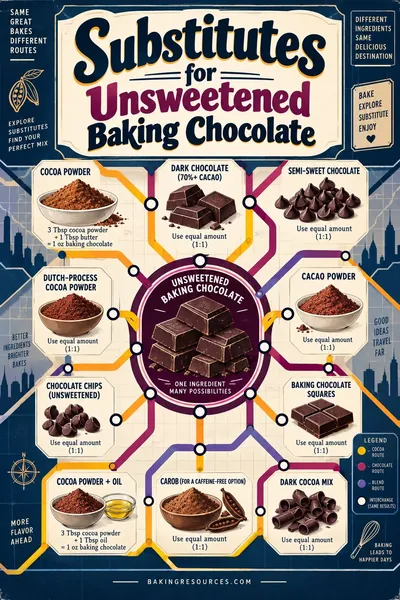 Baking guideSubstitutes for Unsweetened Baking Chocolate, RankedSee the swaps →
| Cocoa in recipe | Unsweetened chocolate | Butter or oil to remove |
|---|---|---|
| 3 tbsp | 1 oz | 1 tbsp |
| 1/4 cup (4 tbsp) | 1 1/3 oz | 1 1/3 tbsp |
| 1/3 cup (5 1/3 tbsp) | 1 3/4 oz | 1 3/4 tbsp |
| 1/2 cup (8 tbsp) | 2 2/3 oz | 2 2/3 tbsp |
| 3/4 cup (12 tbsp) | 4 oz | 4 tbsp (1/4 cup) |
| 1 cup (16 tbsp) | 5 1/3 oz | 5 1/3 tbsp |
Dutch-process and natural: swapping one for the other
If you have the "wrong" cocoa, you can still use it cup for cup for flavor. The difference is acidity. Natural cocoa is acidic, so recipes that use it often rely on baking soda, which needs an acid to make bubbles. Dutch-process cocoa is neutral, so recipes built on it usually lean on baking powder instead.
In recipes that use both baking soda and baking powder, a straight swap usually works fine. In recipes that use only one leavener, the swap can leave a cake flat or with a faint soapy taste. One well-known fix: when using natural cocoa in a recipe written for Dutch, add a pinch, about 1/8 teaspoon, of baking soda for every 3 tablespoons of cocoa.
For the full set of leavening fixes in both directions, plus how the color and flavor change, see our guide to Dutch-process vs natural cocoa. If the difference between baking soda and baking powder is new to you, baking soda vs baking powder explains why the acid matters.
 Baking guideDutch Process vs Natural Cocoa: How to Swap Them SafelySee the chart →
 Baking guideBaking Soda vs Baking Powder: The Difference, ExplainedTake a look →
Cacao, carob and black cocoa
Cacao powder
Cacao powder is made from beans processed at lower heat. It acts like natural cocoa, acid and all, so swap it 1 for 1 in recipes that use natural cocoa. It tastes a bit more bitter and fruity. Our page on cocoa vs cacao explains the difference in more detail.
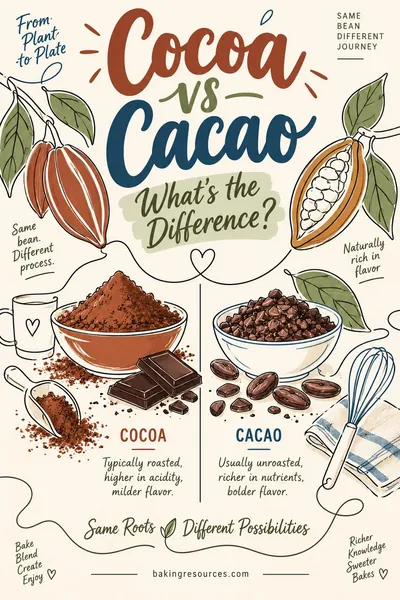 Baking guideCocoa vs Cacao: What's the Difference for Baking?Read it next →
Carob powder
Carob comes from the pod of the carob tree, not from cocoa beans. It has no caffeine and a naturally sweet, toasty taste that is chocolate-like but not the same. Use it 1 for 1, and feel free to trim the sugar a little, since carob is sweeter than cocoa. It is a good choice for anyone avoiding chocolate or caffeine.
Black cocoa
Black cocoa is a heavily Dutched cocoa with a deep, almost sandwich-cookie flavor and very dark color. It has very little fat, so using it alone can dry out a bake. Mix it half and half with regular cocoa. Our guide to black cocoa vs regular cocoa covers when an all-black swap can work.
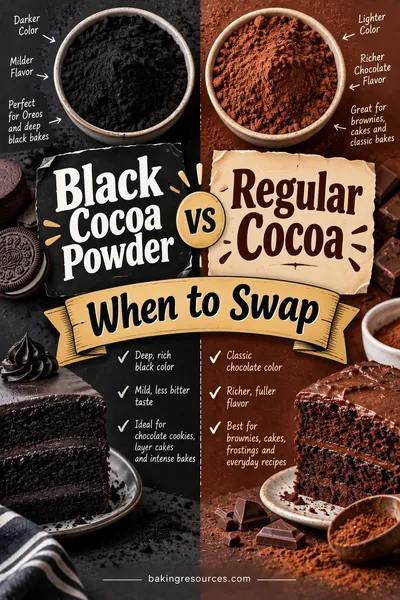 Baking guideBlack Cocoa Powder vs Regular Cocoa: When to SwapRead the guide →
Semisweet or bittersweet chocolate in a pinch
If all you have is a bag of chocolate chips or a semisweet bar, you can still make it work, as long as you cut sugar too. For every 3 tablespoons of cocoa, use 2 ounces of semisweet or bittersweet chocolate, then remove 1 tablespoon of fat and 2 tablespoons of sugar from the recipe.
This swap works best for small amounts, up to about 1/2 cup of cocoa. Beyond that, you end up removing so much sugar that the texture changes, since sugar also keeps cakes moist and tender. Chocolate chips also contain stabilizers that help them hold their shape, so they melt a little thicker than a bar. For more on how each kind behaves, see types of chocolate.
 Baking guideTypes of Chocolate for Baking and How They BehaveLearn more →
Worked example: brownies with baking chocolate
Say your brownie recipe calls for 1/2 cup cocoa powder, 1/2 cup (8 tablespoons) butter, 1 cup sugar, 2 eggs and 1/2 cup flour, and you only have unsweetened baking chocolate.
- Find the chocolate. 1/2 cup is 8 tablespoons. 8 divided by 3 is 2 2/3, so use 2 2/3 ounces of unsweetened chocolate.
- Trim the butter. Remove 1 tablespoon per ounce, so about 2 2/3 tablespoons. Rounding to 2 1/2 tablespoons is fine. Use about 5 1/2 tablespoons of butter.
- Melt together. Melt the chocolate and the reduced butter together, then let it cool for a few minutes.
- Keep the rest. Sugar, eggs and flour stay the same.
The brownies will come out a little fudgier and richer. Bake them the same way and start checking a couple of minutes early. If brownies tend to turn out more like cake for you, our guide on why brownies come out cakey covers the usual causes.
 Baking guideWhy Are My Brownies Cakey? Fix the Ratio, Get FudgySee what went wrong →
Measuring cocoa and chocolate for a swap
Cocoa is light and fluffy, so how you fill the cup changes how much you get. Spoon it into the measuring cup and level it with a knife rather than scooping, which packs it down. A level cup weighs roughly 85 grams, and a tablespoon is about 5 grams.
Baking chocolate is easiest by weight. Most bars are scored into 1 ounce or 1/2 ounce pieces, but brands vary, so check the label or use a kitchen scale for the odd amounts like 1 1/3 ounces. A little over or under won't hurt, since the fat trim is forgiving by a teaspoon or so.
Holiday baking with cocoa swaps
Winter is peak cocoa season, from hot cocoa to chocolate crinkle cookies, yule logs and chocolate sugar cookies for Christmas trays. A few tips for holiday swaps:
- Crinkle cookies: These need a dry, stiff dough to crack well. Stick with a cocoa-to-cocoa swap, or use baking chocolate and chill the dough longer, since the extra fat softens it.
- Chocolate cutout cookies: A mix of black cocoa and regular cocoa gives dramatic dark cookies that still taste rich.
- Homemade hot cocoa: Any unsweetened cocoa or cacao works. Whisk it into a little hot milk to make a paste first so it doesn't clump.
Baking ahead? Many chocolate cookies keep well in the freezer; see Christmas cookies that freeze well for the best picks.
 Baking guideChristmas Cookies That Freeze Well and How to Do ItSee how long it keeps →
Mistakes and troubleshooting
- Using hot cocoa mix. It is mostly sugar and milk powder with only a little cocoa. The bake turns out sweet, pale and weak. Skip it.
- Forgetting to trim the fat. Chocolate swapped in without cutting butter makes greasy brownies and cookies that spread flat.
- Cake rose poorly and tastes a little soapy. You swapped Dutch-process cocoa into a baking soda recipe. Next time, use natural cocoa or adjust the leavening.
- Bake turned out dry. Black cocoa used alone, or too much carob. Mix black cocoa with regular cocoa, and spoon carob lightly into the cup.
- Lumps of cocoa in the batter. Cocoa clumps easily. Whisk or strain it with the flour first.
Leftover chocolate from your swap? It keeps for months if you follow our tips on how to store chocolate.
 Baking guideHow to Store Chocolate So It Never Turns WhiteGet the storage times →
Questions people ask
How much baking chocolate replaces 1/4 cup of cocoa powder?
Use 1 1/3 ounces of unsweetened baking chocolate for 1/4 cup of cocoa powder, and remove about 1 1/3 tablespoons of butter or oil from the recipe. The rule behind it is 1 ounce of chocolate for every 3 tablespoons of cocoa, with 1 tablespoon less fat per ounce. Melt the chocolate and add it with the wet ingredients.
Can I use chocolate chips instead of cocoa powder?
Yes, in small amounts. Use 2 ounces of semisweet chips for every 3 tablespoons of cocoa, then cut 1 tablespoon of fat and 2 tablespoons of sugar from the recipe. Melt the chips gently first. This works best for up to 1/2 cup of cocoa, since larger swaps mean cutting so much sugar that the texture changes.
Can I substitute Dutch-process cocoa for natural cocoa?
Yes, cup for cup for flavor. The catch is leavening. Natural cocoa is acidic and pairs with baking soda, while Dutch cocoa is neutral. In recipes that use both soda and powder, the swap usually works. In recipes that use only one, the rise and flavor can change, so check the leavening fixes in our Dutch vs natural cocoa guide.
Is carob a good substitute for cocoa powder?
Carob swaps in 1 for 1 and works well in brownies, cookies and cakes. It is naturally sweeter and has no caffeine, so you can trim the recipe's sugar a little. The flavor is toasty and mild rather than true chocolate, so it is best for people who avoid chocolate or caffeine, not for anyone chasing a deep chocolate taste.
Can I use hot cocoa mix instead of cocoa powder?
It is not a good swap. Hot cocoa mix is mostly sugar and milk powder with only a small amount of cocoa, so it gives weak flavor, pale color and an overly sweet bake. If it is truly all you have, use it only in something forgiving like a simple drink or frosting, and cut the sugar in the recipe.
How much does a cup of cocoa powder weigh?
A cup of unsweetened cocoa powder weighs roughly 85 grams, or about 3 ounces, when spooned into the cup and leveled. One tablespoon is about 5 grams. Cocoa packs down easily, so scooping straight from the container can add a lot more. Weighing it gives the most even results, especially in cakes and cookies.