
How Much Batter per Cupcake: Fill Levels and Yields by Pan

A standard cupcake takes about 3 tablespoons of batter, which fills a lined cup about two-thirds full. A mini cupcake takes about 1 tablespoon, and a jumbo cupcake takes about 1/2 cup. At those amounts, one box of cake mix makes about 24 standard cupcakes, 72 minis or 9 jumbos, which is close to what most boxes promise.
Fill level changes everything: half full gives flat tops for tall frosting, and three-quarters full gives big bakery domes but fewer cupcakes. Pick your pan, how full you want each cup and how much batter you have in the calculator below, and it shows the amount per cup and how many cupcakes you will get.
Free calculator
Batter per cupcake calculator
Pick your pan, how full you want each cup and how much batter you have to see the amount per cupcake and how many you will get.
More free baking tools


Batter per cupcake at a glance
Here is the whole answer in one chart. Amounts are for lined cups in a typical pan, and the bake times are at 350°F. Your pan may hold a little more or less, so treat these as the center of a range.
| Pan | Half full | Two-thirds full (default) | Three-quarters full | Bake at 350°F |
|---|---|---|---|---|
| Mini (about 1 3/4 inches across) | 2 tsp | 1 tbsp | 4 tsp (1 tbsp + 1 tsp) | 10 to 14 minutes |
| Standard (about 2 3/4 inches across) | 2 tbsp | 3 tbsp | 1/4 cup | 18 to 22 minutes |
| Jumbo (about 3 1/2 inches across) | 1/3 cup | 1/2 cup | 2/3 cup | 22 to 28 minutes |
The middle column is the one to use most of the time. Three tablespoons in a standard liner is a scant 1/4 cup, so if you only have a 1/4 cup measure, fill it, then tip back about a tablespoon. For pan sizes, well depths and the less common mega and tulip pans, the jumbo, standard and mini cupcake pan guide has the full measurements.
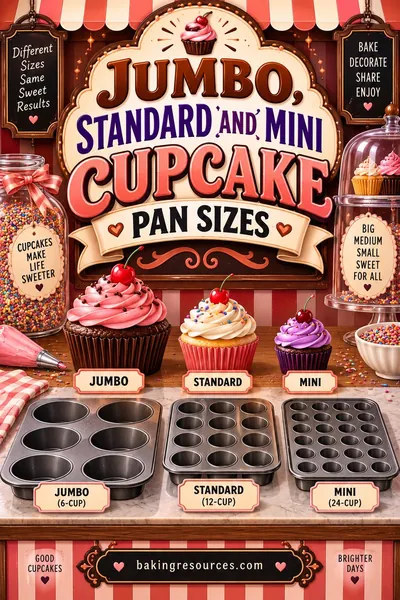 Baking guideJumbo, Standard and Mini Cupcake Pan Sizes and BatterFind my pan size →
Fill levels do not scale in a straight line, by the way. Cupcake cups are narrower at the bottom than the top, so filling a cup two-thirds of the way up uses less than two-thirds of its total volume. That is why a standard cup that holds about 1/2 cup to the rim only needs 3 tablespoons to look two-thirds full.
Why two-thirds full is the default
Almost every cupcake recipe says to fill the liners two-thirds full, and there is a good reason. Cake batter rises in the oven as the leavening makes gas and the steam expands, usually growing by about half or more before it sets. Starting at two-thirds leaves room for that rise, so the finished cupcake comes up roughly level with the top of the liner with a gentle dome.
That shape does three things well:
- It gives a good base for frosting. A gently rounded top holds a swirl of frosting without it sliding off.
- It bakes evenly. The batter is deep enough to stay moist in the middle but not so deep that the edges overbake before the center sets.
- It does not overflow. Even a batter with a little extra leavening has room to climb without spilling onto the pan.
If you only remember one thing from this page, make it this: about 3 tablespoons per standard cup, two-thirds full. Everything else is a variation for a specific look.
How full to fill for the look you want
Different fill levels give different shapes, and different batters behave differently too. Here is how to match the fill to the result.
| You want | Fill level | Standard cup | Best for |
|---|---|---|---|
| Flat tops | Half full | 2 tbsp | Tall piped frosting, fondant toppers, cupcake cakes where the tops must line up |
| Gentle dome, level with the liner | Two-thirds full | 3 tbsp | Everyday frosted cupcakes; the safe choice for any recipe |
| Big bakery dome | Three-quarters full | 1/4 cup | Thick batters, muffins, unfrosted or lightly glazed cupcakes |
| Filled center (jam, cream, ganache) | Two-thirds full | 3 tbsp | Core and fill after baking, so you need a full-height cupcake |
| Cheesecake cupcakes | Nearly full | About 1/4 cup over a crumb base | Cheesecake barely rises, so it can go higher |
Thin batters vs thick batters
Thin, pourable batters, like most box mixes and oil-based chocolate cakes, rise a lot and spread sideways once they reach the top of the cup. Keep those at two-thirds or a little under. Thick batters, like pound cake, carrot cake and most muffin batters, rise more upward than outward and hold a dome, so they can go to three-quarters.
Batters with lots of leavening
If a recipe uses a lot of baking powder or baking soda for the amount of flour, it will climb high. Fill those cups no more than two-thirds, or test one cupcake first before filling the whole pan.
Cupcakes with a filling baked inside
Some cupcakes have something baked into the middle: a spoonful of cheesecake batter, a cookie on the bottom, a dollop of jam or a chocolate truffle. Those extras take up room, so the batter has to make space for them. Fill the cup halfway with batter, about 2 tablespoons in a standard cup, add about 1 to 2 teaspoons of filling in the center, then cover with another tablespoon of batter. The total still lands near two-thirds full, and the filling stays hidden instead of bubbling over the top.
How many cupcakes a box of cake mix makes
A standard box of cake mix makes about 4 to 5 cups of batter once you add the eggs, oil and water, and about 4 1/2 cups is typical. Here is how far that goes in each pan at each fill level.
| Pan | Half full | Two-thirds full | Three-quarters full |
|---|---|---|---|
| Mini | About 108 | About 72 | About 54 |
| Standard | About 36 | About 24 | About 18 |
| Jumbo | About 13 | About 9 | About 6 |
Most boxes say "makes 24 cupcakes," which matches the two-thirds column for standard cups. If you fill to three-quarters for taller tops, expect closer to 18, and if you want 30 cupcakes from one box for a classroom, fill them a little over half full and plan on flatter tops.
Boxes have gotten a little smaller over the years, so your batter may come in under 4 1/2 cups. The easy check is to pour the mixed batter into a large measuring cup before you fill the pans. Our guide to how many cake mixes per pan size covers the same box in layer pans and sheet pans, and how many cake pops from one cake mix is useful if you want to turn extra batter into a second treat.
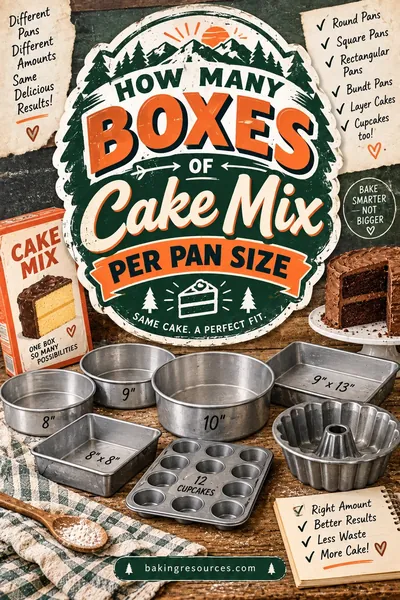 Baking guideHow Many Boxes of Cake Mix per Pan Size: Full ChartCheck the pan chart →
 Baking guideHow Many Cake Pops From One Cake Mix? Full Yield MathGet the measurements →
How many cupcakes a scratch cake recipe makes
Any cake recipe can become cupcakes. The only question is how much batter it makes. Most from-scratch recipes fall into one of these groups:
- A recipe written for 12 cupcakes usually makes about 2 1/4 to 3 cups of batter.
- A recipe for two 8-inch round layers usually makes about 4 to 5 cups.
- A recipe for two 9-inch layers or one 9x13 pan usually makes about 5 to 6 cups.
- A recipe for three 9-inch layers often makes 7 to 9 cups.
Then divide by the amount per cup. A 6-cup batter at 3 tablespoons per standard cupcake makes 6 x 16 tablespoons per cup = 96 tablespoons, divided by 3 = 32 cupcakes. At 1/4 cup each, the same batter makes 24.
The most reliable way is to mix the batter, pour it into a large measuring cup or weigh it, and divide. A standard two-thirds-full cupcake holds about 45 grams of a typical batter, since many cake batters weigh roughly 15 grams per tablespoon, give or take. If you would rather convert pan to pan by volume, the cake pan converter handles cake pans, and the cupcake numbers here fill in the rest.
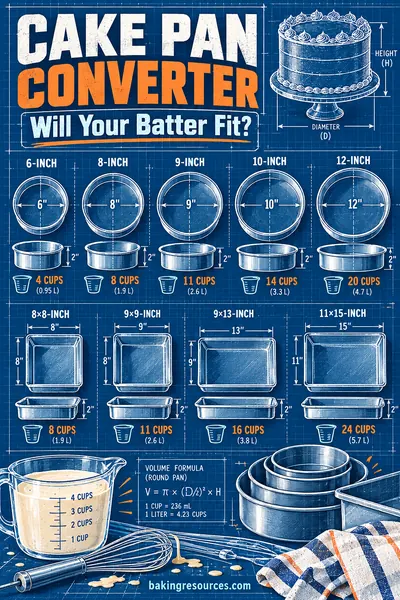 Free toolCake Pan Converter: Will Your Batter Fit?Use the free tool →
Recipes that are not good as cupcakes
Very delicate batters like angel food and chiffon depend on clinging to the sides of a tall ungreased pan, so they tend to shrink and collapse in paper liners. Dense, heavy batters like fruitcake bake fine as cupcakes but need lower heat and a longer time. Most butter cakes, oil cakes and box mixes convert easily.
Batter per cupcake by weight
If you have a kitchen scale, weighing batter is the most precise way to get identical cupcakes, and it works for any recipe. Most cake batters weigh somewhere around 14 to 16 grams per tablespoon. Light, airy batters come in lower, and dense ones like carrot cake or pound cake come in higher. Using about 15 grams per tablespoon as a working number:
- Mini, two-thirds full (1 tablespoon): about 15 grams per cup.
- Standard, two-thirds full (3 tablespoons): about 45 grams per cup.
- Standard, three-quarters full (1/4 cup): about 60 grams per cup.
- Jumbo, two-thirds full (1/2 cup): about 120 grams per cup.
The scale method that always works, whatever the batter:
- Weigh your empty mixing bowl before you start and write the number down.
- Mix the batter, then weigh the bowl again. Subtract the bowl to get the batter weight.
- Divide by the number of cupcakes you want. For example, 1,080 grams of batter divided by 24 cupcakes is 45 grams each.
- Set a lined pan on the scale, press tare, and fill each cup to that weight, pressing tare again between cups.
This is slower than a scoop for a single batch, but it is the best way to work out the right scoop size for a recipe you make often. Weigh one scoop of batter once, and you will know exactly how many cupcakes the recipe gives at that size. If you like working in grams, the ingredient weight chart helps convert the recipe itself.
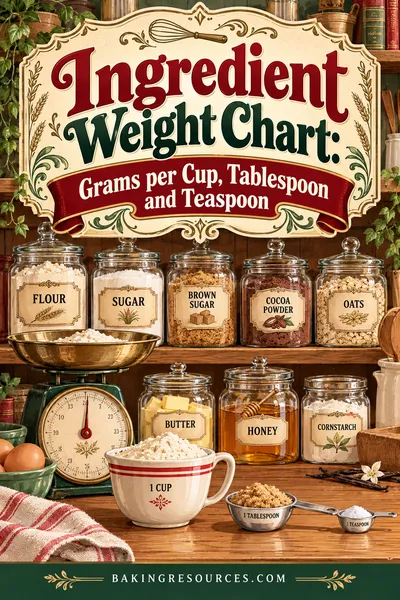 Free toolIngredient Weight Chart: Grams per Cup, Tablespoon and TeaspoonConvert it now →
Cupcakes vs muffins: different fill rules
Cupcake pans and muffin pans are the same pan, but cupcakes and muffins are filled differently because they are made to look different.
Cupcakes are small cakes. They usually have a fine, tender crumb and a smooth top that gets frosted. That is why the two-thirds rule exists: you want a gently rounded top that sits level with the liner.
Muffins are quick breads. The batter is thicker and lumpier, mixed only until the flour disappears, and the goal is a tall, craggy dome that rises well above the liner. Muffin recipes often say to fill the cups three-quarters full or even to the top, and many start the bake at a higher temperature to push the dome up fast before the crust sets. A thick muffin batter can do that without spilling, because it rises upward rather than running over the edge.
Problems start when the rules get swapped. A thin cupcake batter filled to the top like a muffin overflows, and a muffin batter filled only two-thirds full like a cupcake comes out short and squat. If you are not sure which you have, look at the batter. If it pours and levels itself in the bowl, treat it as cupcake batter. If it holds a mound on a spoon, treat it as muffin batter. Dry muffins are a different problem, usually overbaking or overmixing, and the guide on why muffins turn out dry covers it.
 Baking guideWhy Are My Muffins Dry? 6 Causes and the Fix for EachSee what went wrong →
Scoops and tools that portion batter evenly
Even cupcakes bake evenly, and nothing makes them even like a portion scoop. Scoops are numbered by how many level scoops fill a quart, so a bigger number means a smaller scoop. These are the useful ones for cupcakes:
- #16 scoop: 1/4 cup. Fills a standard cup three-quarters full.
- #20 scoop: about 3 1/4 tablespoons. The best match for standard cups at two-thirds.
- #30 scoop: about 2 tablespoons. Standard cups half full.
- #60 scoop: about 1 tablespoon. Mini cups two-thirds full.
- #8 scoop: 1/2 cup. Jumbo cups two-thirds full.
No scoop? Two other methods work well. A large zip-top bag with a corner snipped off lets you pipe batter into cups quickly and cleanly, especially for minis. Or use a 1/4 cup measure and a spatula: fill it, level it, and use about three-quarters of it for each standard cup.
Whatever you use, fill all the cups first, then go back and even them out by eye. A spoonful moved from a full cup to a short one saves you from a pan where the small cupcakes overbake before the big ones are done.
Worked example: one box mix for a class of 28
You need 28 cupcakes for a school party, and you have one box of cake mix. The box says 24. Can you stretch it?
- Measure the batter. After mixing, the batter comes to about 4 1/2 cups, which is 72 tablespoons.
- Divide by the number you need. 72 tablespoons / 28 cupcakes = about 2 1/2 tablespoons each.
- Check the fill level. 2 1/2 tablespoons sits between half full (2 tablespoons) and two-thirds full (3 tablespoons). That is fine. The tops will be a little flatter, which actually makes frosting easier for kids to eat neatly.
- Bake a bit shorter. Smaller cupcakes bake faster. Start checking at 16 minutes instead of 18.
If you also want a few extra for teachers or siblings, plan the count before you fill a single cup. Dividing the batter evenly from the start is much easier than scraping a spoonful from each filled cup later to make room for one more.
So yes, one box makes 28 slightly smaller cupcakes. If you need 36 or more, use two boxes rather than stretching one any further, because cupcakes filled less than half full come out thin and dry around the edges.
Frosting for 28 cupcakes is easy to work out from the frosting calculator, which covers both spread and piped tops.
 Free toolFrosting Calculator: How Much Frosting Do I Need?Run my numbers →
Worked example: a 2-layer recipe as standard and mini cupcakes
You have a favorite chocolate cake recipe written for two 9-inch layers, and you want 24 standard cupcakes plus some minis for a dessert table. The batter measures 5 1/2 cups.
- Standard cupcakes first. 24 cupcakes x 3 tablespoons = 72 tablespoons, which is 4 1/2 cups.
- What is left? 5 1/2 cups minus 4 1/2 cups = 1 cup, which is 16 tablespoons.
- Turn it into minis. At 1 tablespoon each, that makes 16 mini cupcakes.
- Bake separately. Bake the standard pans for 18 to 22 minutes and the mini pan for 10 to 14. Do not bake minis on the same timer as standards.
You end up with 24 standard and 16 mini cupcakes from one recipe. Oil-based chocolate batters are thin and rise well, so keep the standards at two-thirds full and no higher.
Bake times and how to tell cupcakes are done
Bake time follows the amount of batter. A fuller cup takes a little longer, an emptier one a little less. At 350°F in a light metal pan on the middle rack:
- Mini, about 1 tablespoon: 10 to 14 minutes. Check at 10.
- Standard, about 3 tablespoons: 18 to 22 minutes. Check at 17 or 18.
- Standard, 1/4 cup: add 1 to 3 minutes.
- Jumbo, about 1/2 cup: 22 to 28 minutes.
Cupcakes are done when the tops spring back when pressed lightly in the center, and a toothpick poked into the middle comes out clean or with a few moist crumbs, not wet batter. An instant-read thermometer in the center should read about 205 to 210°F for standard and jumbo cupcakes.
Dark or nonstick pans bake faster at the edges, so lower the oven by 25°F or start checking a few minutes early. Silicone pans tend to bake a little slower and brown less. The guide to silicone vs metal bakeware covers the difference, and which oven rack to use explains why cupcakes do best in the middle.
 Baking guideSilicone vs Metal Bakeware: Which One Bakes Better?Take a look →
 Baking guideWhich Oven Rack to Use for Baking: Top, Middle, LowRead it next →
Cupcake troubleshooting: overflowing, sinking, flat or uneven
Batter spilled over the top
The cups were too full for that batter. Thin batters and recipes with plenty of leavening need two-thirds or less. Also check that the batter was not overmixed, which can trap extra air.
Cupcakes sank in the middle
Usually underbaking, too much leavening, or too much batter in the cup so the center could not set before the structure gave out. Opening the oven door early can also drop them. The guide on why cakes sink in the middle covers each cause.
 Baking guideWhy Did My Cake Sink in the Middle? 6 Causes and FixesFind out why →
Flat, short cupcakes
The cups were under-filled, the leavening was old, or the batter sat too long before baking. Fill to two-thirds and get the pan in the oven soon after mixing.
Peaked or cracked tops
The oven was too hot or the batter was too thick and overfilled. Lower the heat to 325°F and fill a little less.
Uneven sizes in one pan
The cups got different amounts. Use a scoop, and even out the cups before baking. Uneven cups also bake unevenly, so the small ones dry out.
Dry, crumbly cupcakes
Usually overbaking, which happens fast with under-filled cups or minis. Cupcakes keep cooking for a minute or two in the hot pan, so pull them when a toothpick shows a few moist crumbs. Measuring flour by scooping instead of spooning and leveling also packs in extra flour and dries the crumb.
Greasy or soggy bottoms
Very oily batters can soak through thin paper liners, and cupcakes left to cool in the pan sit in their own steam. Use sturdier foil or grease-resistant liners for oil-based batters, and move the cupcakes to a rack within about 5 minutes.
Liners pulling away
Steam trapped as the cupcakes cool can make liners peel. Move cupcakes from the pan to a rack within a few minutes of baking. The guide on why cupcake liners peel has the full fix list.
Holiday cupcakes and make-ahead tips
Cupcakes are one of the easiest bakes for a busy holiday season. They travel well, need no slicing, and stretch to fit any crowd. A few tips for Christmas parties, cookie swaps and winter birthdays:
- Bake ahead and freeze unfrosted. Cool the cupcakes completely, wrap them tightly, and freeze in a sealed container for up to 2 months for best quality. Thaw them, still wrapped, at room temperature, then frost. The cake freezing guide has the wrapping steps.
- Plan frosting by the cupcake. A swirl of frosting on a standard cupcake uses about 2 to 3 tablespoons, so 24 cupcakes need about 3 to 4 1/2 cups. A tall bakery swirl takes closer to 1/4 cup each. The buttercream guide covers which frostings pipe best.
- Mind the frosting type. Cupcakes with plain buttercream can sit out at room temperature. Cupcakes with cream cheese frosting, whipped cream or a custard filling must be refrigerated and should not sit out more than 2 hours.
- Minis for dessert tables. When there are lots of holiday sweets, minis at 1 tablespoon of batter let people try one without committing to a full cupcake. One box of mix makes about 72.
- Festive liners need the same fill. Foil and printed holiday liners hold the same batter as plain ones. Just check that thin paper liners do not soak through with very oily batters.
Pull-apart cupcake cakes
A pull-apart cupcake cake, like a Christmas tree, wreath or snowman made of cupcakes pushed close together and frosted as one, needs flat, even tops so the frosting can bridge from one cupcake to the next. Fill the cups a little over half full, about 2 1/2 tablespoons in a standard cup, so they bake level rather than domed. A tree shape usually uses about 15 to 24 standard cupcakes, so one box of mix is often enough, with a few to spare for the tree trunk or for taste testing.
Unfrosted cupcakes keep 1 to 2 days at room temperature in an airtight container. The cake storage guide covers frosted cupcakes and longer storage.
Common mistakes with cupcake batter
- Filling to the top. Batter has to rise somewhere. Full cups give mushroom tops that fuse together and sink.
- Guessing by eye. Free-hand spooning gives cups that vary by a tablespoon or more. Use a scoop or a measure.
- Using a standard time for minis or jumbos. Minis can be overbaked in the time it takes to frost one standard cupcake. Set separate timers.
- Leaving empty cups in the pan. If you are a few cupcakes short of a full pan, pour a little water into the empty cups. This helps the pan heat evenly so the cupcakes next to the gaps do not overbake.
- Letting batter sit. Baking powder starts working as soon as it gets wet. If you have more batter than pans, refrigerate the rest and bake it as soon as a pan frees up, adding a minute or two to the bake.
- Forgetting the pan matters. Some pans labeled standard hold noticeably more or less than others. Fill one cup to the rim with water and measure it once, so you know what you are working with.
- Frosting warm cupcakes. Even a slightly warm cupcake melts buttercream. Cool them on a rack for at least an hour before frosting.
- Overmixing to get every lump out. Overmixed batter makes tough, tunneled cupcakes. Mix just until no dry flour shows.
Questions people ask
How much batter goes in a standard cupcake liner?
About 3 tablespoons of batter, which fills a standard liner about two-thirds full. That is a scant 1/4 cup. It gives a gently domed cupcake that rises to about the top of the liner, which is the best shape for frosting. A full 1/4 cup fills the liner about three-quarters full and gives a taller dome.
How full should I fill cupcake liners?
Fill cupcake liners two-thirds full for most recipes. Fill them half full if you want flat tops for tall frosting or decorations, and three-quarters full only for thick batters like muffins or pound cake, which dome rather than spread. Filling to the top almost always causes overflow and sunken centers.
How many cupcakes does a box of cake mix make?
A box of cake mix makes about 24 standard cupcakes filled two-thirds full, about 72 mini cupcakes at 1 tablespoon each, or about 9 jumbo cupcakes at 1/2 cup each. If you fill standard cups three-quarters full, expect about 18. Boxes vary a little in size, so measure the mixed batter if you need an exact count.
How much batter for a mini cupcake?
About 1 tablespoon of batter fills a mini cupcake liner two-thirds full. Use 2 teaspoons for flat tops or about 4 teaspoons for a bigger dome. A #60 portion scoop holds about 1 tablespoon and makes filling a 24-cup mini pan fast. Bake minis at 350°F for 10 to 14 minutes and start checking at 10.
How much batter for a jumbo cupcake?
About 1/2 cup of batter fills a jumbo cupcake cup two-thirds full. Use 1/3 cup for flatter tops or 2/3 cup for a tall bakery dome with a thick batter. Jumbo cupcakes bake at 350°F for about 22 to 28 minutes. If the center is still wet when the edges are done, lower the oven to 325°F and give them a few more minutes.
How many cupcakes does a 2-layer cake recipe make?
Most recipes for two 8 or 9-inch layers make about 4 to 6 cups of batter, which is about 21 to 32 standard cupcakes filled two-thirds full. At a full 1/4 cup per cupcake, the same batter makes about 16 to 24. Measure your batter in a large measuring cup, then divide by 3 tablespoons per cupcake for an exact count.
Why did my cupcakes overflow?
The cups were too full for that batter. Thin batters, box mixes and recipes with a lot of baking powder or soda rise and spread, so they need two-thirds full or less. Overmixing, which adds extra air, and an oven running too hot can make it worse. Fill to about 3 tablespoons per standard cup and check your oven temperature.
How many grams of batter per cupcake?
About 45 grams of batter for a standard cupcake filled two-thirds full, based on a typical cake batter weighing about 15 grams per tablespoon. Minis take about 15 grams and jumbos about 120 grams. Denser batters weigh a little more per spoonful. To be exact, weigh the whole batch of batter and divide it by the number of cupcakes you want.