
How Long Do Cupcakes Last? Times for Every Frosting

Unfrosted cupcakes and cupcakes with butter-and-sugar buttercream last about 2 days on the counter, about 3 days in the fridge once frosted, and 1 to 2 months in the freezer for the best quality. Cupcakes with cream cheese frosting, whipped cream, fresh fruit or a cream filling are different: they need the fridge and shouldn't sit out longer than 2 hours.
So the frosting, more than the cake, decides how long a cupcake keeps and where it belongs. Pick your cupcakes and the day you baked them in the calculator below, and it shows the last good day on the counter, in the fridge and in the freezer, so you know when to serve them and when to freeze the extras.
Free calculator
Cupcake storage calculator
Pick your cupcakes and the day you baked or bought them to see the last good day.
More free baking tools



Cupcake storage times at a glance
Here's the quick version. Times count from the day you baked the cupcakes. Counter times assume a cool room, under about 70°F, with the cupcakes in a closed container out of the sun.
| Cupcakes | Counter | Fridge | Freezer (best quality) |
|---|---|---|---|
| Unfrosted | Up to 2 days | Not ideal, they dry out | Up to 2 months |
| Buttercream (butter and sugar) | Up to 2 days | Up to 3 days | Up to 1 month |
| Cream cheese frosting | 2 hours max | Up to 3 days | Up to 1 month |
| Whipped cream frosting | 2 hours max | About 1 day | Not with the cream on |
| Cream or custard filled | 2 hours max | 1 to 2 days | Not once filled |
| Topped with fresh fruit | 2 hours max | 1 to 2 days | Freeze them plain |
| Store-bought, buttercream | Up to 2 days, or the label date | Up to 3 days | Up to 1 month |
When a cupcake fits two rows, use the shorter time. A buttercream cupcake with a strawberry on top is a fruit-topped cupcake, because the fruit is the part that spoils first. Pull the fruit off any leftovers and the rest can be treated as buttercream again, as long as it stayed cold.
The frosting decides where cupcakes go
The cake part of a cupcake is a lot like any butter or oil cake. It's fully baked, fairly sweet and holds its moisture well for a couple of days, so it's safe on the counter. What changes the rules is what goes on top or inside.
- Butter-and-sugar buttercream is very high in sugar, which holds water tightly so bacteria can't use it easily. It keeps at cool room temperature for about 2 days on a cupcake. The same goes for meringue buttercreams and cooked fudge frostings.
- Cream cheese frosting is mostly fresh cheese, which is perishable. It goes in the fridge, and it can't sit out more than 2 hours in total, or 1 hour if the room is above 90°F.
- Whipped cream is fresh dairy, and it also weeps and deflates within a day or so. Fridge only, and best eaten soon.
- Pastry cream, custard and pudding fillings are made with milk and eggs, which makes them some of the most perishable fillings in baking. Fridge only.
- Fresh fruit that has been cut or washed belongs in the fridge too, and its juice softens the frosting under it.
The 2 hour limit comes from food safety guidance about the danger zone, 40°F to 140°F, where bacteria grow fastest. Room temperature sits right in that range. It's the same limit that applies to cheesecake and pumpkin pie. If you're not sure which group your frosting falls in, how to store frosting lists every common type with its own times, and how to make buttercream explains the difference between the five main kinds.
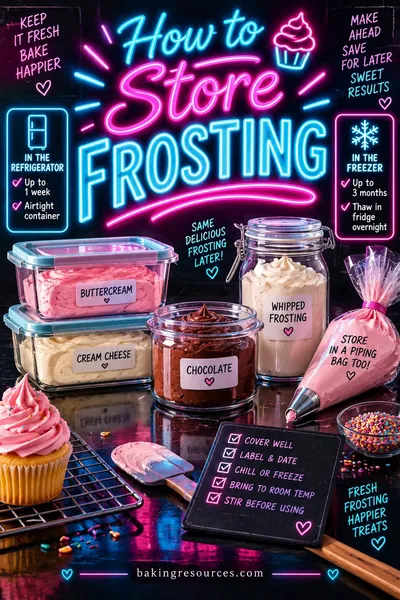 Baking guideHow to Store Frosting: Fridge, Freezer and CounterRead the storage guide →
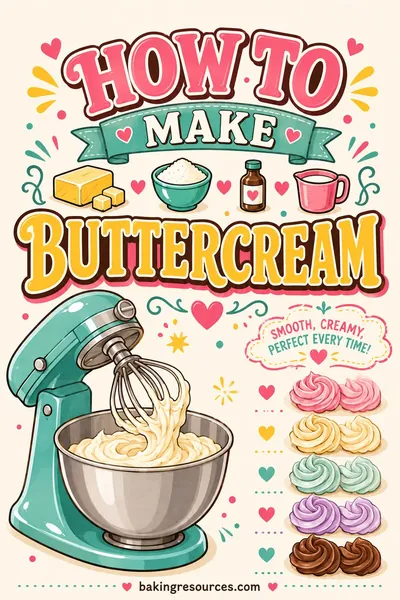 Baking guideHow to Make Buttercream: The 5 Types and When to Use EachSee how it's done →
How to store unfrosted cupcakes
Unfrosted cupcakes are the easiest to store, but they also dry out the fastest, because there's no frosting to seal the top. A few simple steps keep them soft.
- Take them out of the pan after about 5 minutes. Left in a hot pan, the bottoms keep steaming and the liners turn damp. Move them to a wire rack.
- Cool them completely. This takes about an hour. A cupcake that's still warm inside will steam up the container and the tops turn sticky.
- Store them in a single layer in an airtight container. A big plastic tub or a cake carrier works well. Don't stack them, since the tops are soft and stick together.
- Keep them on the counter. Up to 2 days in a cool spot away from the oven, the dishwasher and sunny windows.
- Freeze the rest. If you won't frost them within 2 days, freeze them now, while they're fresh. A cupcake frozen on day 1 thaws tasting better than one left out until day 3.
Sticky tops on the second day are normal. Sugar in the crust pulls moisture from the air and from inside the cupcake. It doesn't mean they've gone bad. If you lay a paper towel across the top of the container under the lid, it absorbs some of that moisture.
Why the liners pull away
Liners that peel away from the cake after storage are usually a moisture issue: steam trapped while cooling, or a humid kitchen. It's a looks problem only. Why cupcake liners peel explains the causes and how to keep them stuck on.
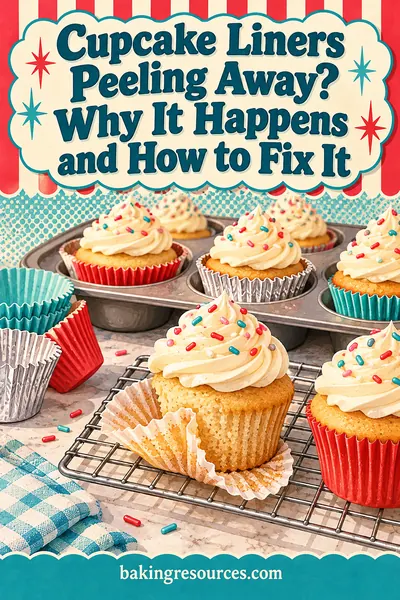 Baking guideCupcake Liners Peeling Away? Why It Happens and How to Fix ItFix it next time →
How to store frosted cupcakes
Frosting makes storage trickier, because a container lid can squash it. The goal is a closed container with plenty of headroom.
- Use a tall container. A cupcake carrier with inserts, a deep plastic tub, or a tall cake box all work. In a pinch, set the cupcakes in a deep baking dish and tent foil over the top with toothpicks holding it off the frosting.
- Let the frosting crust first. Buttercream forms a thin skin after about 30 minutes in the open. After that it smudges less when you cover it.
- Keep the room cool. The 2 day counter time for buttercream assumes a room under about 70°F. In a warm kitchen, buttercream softens, slides and can turn greasy. Move them to the fridge instead. On a hot day outside, keeping buttercream from melting has tips that work for cupcakes too.
- Don't store them frosted for too long. If the party is 3 days away, freeze the cupcakes unfrosted and frost them the day before. The cake tastes fresher and the frosting looks sharper.
 Baking guideHow to Keep Buttercream from Melting at Outdoor PartiesShow me how →
Fondant toppers and sugar decorations do best at room temperature, since fridge condensation makes them sticky and colors can bleed. If you've made decorations ahead, how to store fondant decorations covers keeping them crisp until you add them.
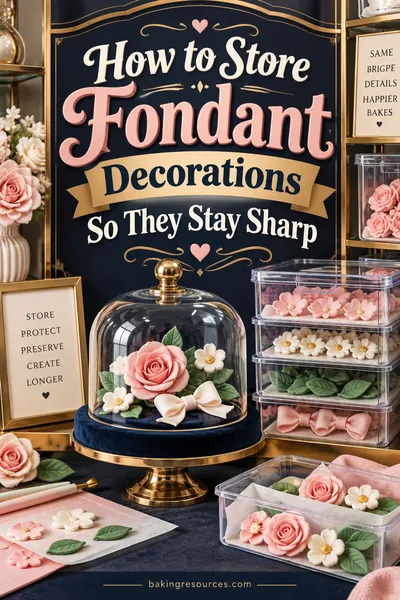 Baking guideHow to Store Fondant Decorations So They Stay SharpSee how long it keeps →
Storing cupcakes in the fridge
The fridge is a must for cream cheese frosting, whipped cream, fruit and cream fillings. For other cupcakes it's optional, and it has a downside: cold air dries out cake and firms up butter. A cupcake straight from the fridge can taste dense and dry, with a hard frosting.
Here's how to do it well:
- Chill them uncovered first, for about 20 to 30 minutes, until the frosting firms up. That way the wrap or lid won't stick.
- Cover them well. A closed container keeps them from drying out and keeps them from picking up smells. Frosting, especially cream cheese, absorbs odors from onions and leftovers.
- Bring buttercream cupcakes back to room temperature before serving. About 30 minutes on the counter softens the frosting and the cake. Cream cheese or whipped cream cupcakes can come out about 20 minutes ahead, and that time counts toward the 2 hours.
Hot cars and outdoor parties
Heat shortens every time on this page. When the air is above 90°F, perishable cupcakes get only 1 hour out of the fridge, not 2, and that includes the drive. A closed car in summer gets much hotter than the air outside, so cream cheese or whipped cream cupcakes should ride in a cooler with ice packs, and go straight into a fridge or back into the cooler when you arrive. Buttercream cupcakes are safe in the heat for longer, but the frosting melts, slides and turns greasy, so they need shade and a cool spot too. At an outdoor party, set out a few at a time and keep the rest in the cooler, rather than putting the whole batch in the sun.
Count fridge days from the day you baked the cupcakes, not the day you frosted them or moved them to the fridge. A buttercream cupcake baked Monday, kept on the counter Monday and Tuesday, then refrigerated, should still be eaten by Thursday.
Filled cupcakes
Filled cupcakes hide their filling, which is why they're easy to mishandle. A cupcake that looks like a plain buttercream cupcake can have pastry cream in the middle.
| Filling | Where to store | Fridge time | Can you freeze it filled? |
|---|---|---|---|
| Jam or fruit preserves | Counter, like the frosting on top | Same as the frosting | Yes, up to 1 month |
| Ganache made with cream | Fridge after 2 hours | Up to 3 days | Yes, up to 1 month |
| Buttercream or marshmallow fluff | Counter, like buttercream | Up to 3 days | Yes, up to 1 month |
| Lemon curd | Fridge after 2 hours | 1 to 2 days | Not recommended |
| Pastry cream or custard | Fridge after 2 hours | 1 to 2 days | Not recommended |
| Pudding or mousse | Fridge after 2 hours | 1 to 2 days | Not recommended |
Custard and curd fillings make the crumb around them soggy within a day or two, and they turn watery after freezing. The best plan is to bake and freeze the cupcakes plain, make the filling the day before, and fill and frost them on serving day. Label filled cupcakes at a party or in a shared fridge, so nobody leaves them out thinking they're plain.
How to freeze cupcakes
Cupcakes freeze very well, especially unfrosted. Freezer times here are for best quality. Cupcakes kept frozen solid at 0°F stay safe longer, but they slowly dry out and pick up freezer flavors.
Unfrosted cupcakes
- Cool them completely on a rack.
- Wrap each one in plastic wrap, or set them in a single layer in a freezer container.
- Put the wrapped cupcakes in a freezer bag, press out the air, and label it with the date.
- Thaw them on the counter, still wrapped, for about 1 hour. Condensation forms on the wrap instead of the cake.
Frosted cupcakes
- Freeze them unwrapped on a tray for about 1 hour, until the frosting is hard.
- Move them to a tall airtight container, with space between them so the frosting doesn't touch.
- Thaw them in the fridge overnight in the container, then bring buttercream ones to room temperature for about 30 minutes before serving. Taking them out of the container while frozen, before they thaw, keeps condensation off the frosting.
| What you freeze | Best quality | Thawing | Notes |
|---|---|---|---|
| Unfrosted cupcakes | Up to 2 months | Counter, about 1 hour, wrapped | The best way to work ahead |
| Buttercream frosted | Up to 1 month | Fridge overnight | Piping can soften a little at the edges |
| Cream cheese frosted | Up to 1 month | Fridge overnight | Frosting turns a bit softer after thawing |
| Whipped cream frosted | Not recommended | Not applicable | Cream turns watery and flat |
| Custard or curd filled | Not recommended | Not applicable | Filling weeps and the cake goes soggy |
| Frosting alone | Up to 3 months (buttercream) | Fridge overnight, then rewhip | Freeze in a bag with the air pressed out |
The same method works for whole layers, and how to freeze cake walks through wrapping larger cakes. Once thawed, eat cupcakes within the fridge or counter times for their type, and don't refreeze them.
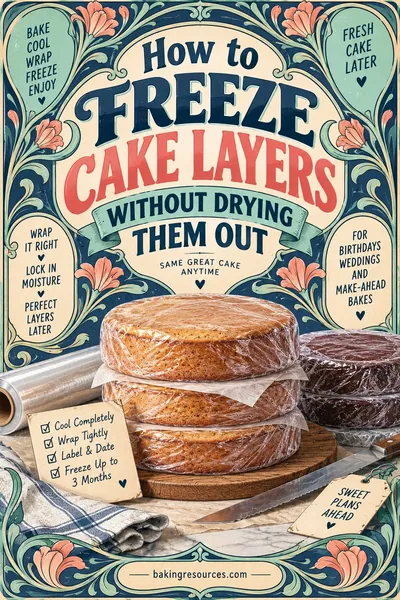 Baking guideHow to Freeze Cake Layers Without Drying Them OutGet the storage times →
Box mix, vegan and gluten-free cupcakes
The recipe behind the cupcake changes how fast it dries out, and sometimes how fast it molds, but the frosting rules stay the same for all of them.
- Box mix cupcakes. Most mixes call for oil, so they stay soft a little longer than butter-only scratch cupcakes. Baked, they follow the same 2 day counter time. An unopened box of mix keeps until the date printed on it.
- Vegan cupcakes. With no eggs or dairy in the cake, the cake part keeps about the same as a regular cupcake. Vegan buttercream made with plant butter and powdered sugar behaves like regular buttercream. Frostings made with coconut cream or a dairy-free cream cheese still belong in the fridge, since they're moist and perishable once opened.
- Gluten-free cupcakes. These tend to dry out and turn crumbly faster, often by the second day, because rice and other gluten-free flours firm up as they cool. They freeze very well, though, so freezing on day 1 is the best way to work ahead.
- Cupcakes with fruit or vegetables in the batter. Banana, carrot, zucchini or pumpkin cupcakes are moister, and that extra moisture means they can mold sooner on the counter, especially in a warm kitchen. Keep them to the 2 day counter time, or move them to the fridge after the first day if the room is warm. Most of these get cream cheese frosting anyway, which puts them in the fridge.
Cupcakes for school events and lunch boxes
For a classroom party or a bake sale table that sits out for hours with no fridge nearby, choose buttercream cupcakes. They hold up at room temperature, and you don't have to worry about the 2 hour clock. Cream cheese and whipped cream cupcakes need a cooler with ice packs and someone keeping track of time. For a lunch box, a plain or buttercream cupcake is fine without an ice pack until lunchtime. A frozen unfrosted cupcake packed in the morning thaws by noon and helps keep the rest of the lunch cold.
Store-bought cupcakes
Cupcakes from a grocery bakery or a cupcake shop are usually made with a firm, sweet buttercream or a whipped icing. Many grocery cupcakes are sold at room temperature in a clear plastic clamshell. Follow what the label says. If it says to refrigerate, do that. If there's no instruction and the frosting is buttercream, they can stay at room temperature for about 2 days, or until the label date if that comes sooner.
Some grocery "whipped" frostings are shelf-stable whipped toppings rather than real cream, and some are real cream. If the label lists cream or says keep refrigerated, treat them like whipped cream cupcakes. Anything with cream cheese frosting goes in the fridge, store-bought or not.
You usually don't know exactly when store-bought cupcakes were baked, so count from the day you bought them, and lean toward eating them sooner. For a party, buy them the day before or the day of, not three days ahead.
How to tell if cupcakes have gone bad
A stale cupcake and a spoiled cupcake look different. Stale is about texture. Spoiled means throw it out.
Throw them out if you see
- Mold. Fuzzy spots in any color, often on the sides near the liner, on the bottom, or on fruit and frosting. Mold can hide under a liner, so peel one back to check. If one cupcake in a container is moldy, throw out the others that touched it.
- A sour or off smell. Especially from cream cheese frosting, whipped cream or fillings. Fresh frosting smells sweet and buttery.
- Frosting that has separated into a watery or oily layer, or whipped cream that has turned to liquid.
- A slimy or wet feel on the frosting or around fruit.
- A filling that smells sour or looks watery when you cut a cupcake open.
- Time is up. Cream cheese, whipped cream, fruit or custard cupcakes that sat out more than 2 hours, or any cupcakes past their fridge time.
Signs that are only about quality
- A dry, crumbly cake or a firm, chewy top.
- Liners pulling away from the sides.
- Buttercream that has formed a crust or lost its shine.
- Sprinkles that have bled color into the frosting.
A cupcake that's dry but otherwise fine can be saved. Warm it for 5 to 10 seconds in the microwave, split it and fill it with jam, or crumble it into a trifle with fresh whipped cream and fruit. If you're getting dry cupcakes often, the cause is usually in the baking rather than the storage, and why muffins turn out dry covers the same causes, since cupcakes and muffins fail in the same ways.
 Baking guideWhy Are My Muffins Dry? 6 Causes and the Fix for EachFind out why →
Don't taste a cupcake to check whether it's safe. The bacteria that cause food poisoning often don't change the smell or look of food. If it's past its time or was left out too long, throw it out.
Why cupcakes dry out faster than a whole cake
A cupcake has a lot of outside compared with its inside. Every cupcake has a top crust, a side surface and a bottom, and most of its crumb sits close to the edge. A big layer cake, by comparison, has a large, protected center. That's why a whole buttercream cake can keep on the counter for 2 to 3 days while an unfrosted cupcake starts to taste dry by day 2.
A few things help cupcakes stay moist longer:
- Don't overbake. Pull them when a toothpick comes out with a few moist crumbs. Even one or two extra minutes dries out a small cupcake.
- Use an oil-based recipe if you need to bake ahead. Oil stays liquid at room temperature, so the crumb feels softer for longer than with butter alone.
- Frost them sooner. Frosting acts like a lid and slows down drying.
- Brush with syrup. A light brush of sugar syrup on the tops before frosting adds moisture. Simple syrup for cake gives the ratio.
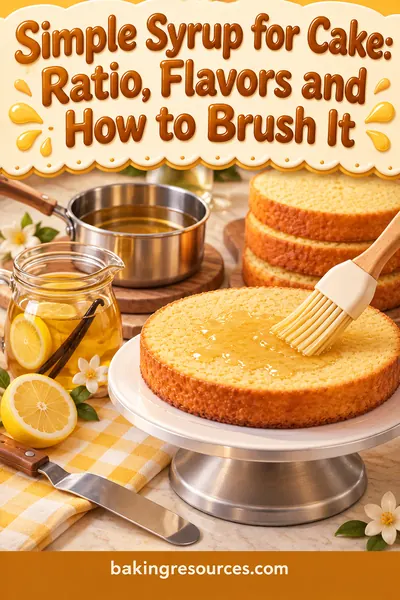 Baking guideSimple Syrup for Cake: Ratio, Flavors and How to Brush ItRead the guide →
Size matters too. Mini cupcakes dry out even faster than standard ones, and jumbo cupcakes keep a little better. If you're switching sizes, cupcake pan sizes shows how much batter each holds and how the baking time changes. For whole cakes, how to store cake has the full set of times.
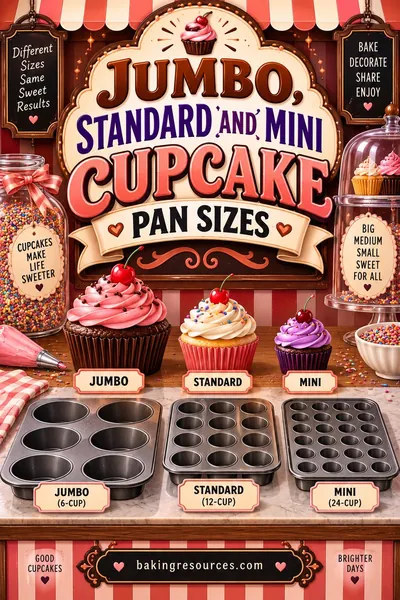 Baking guideJumbo, Standard and Mini Cupcake Pan Sizes and BatterFind my pan size →
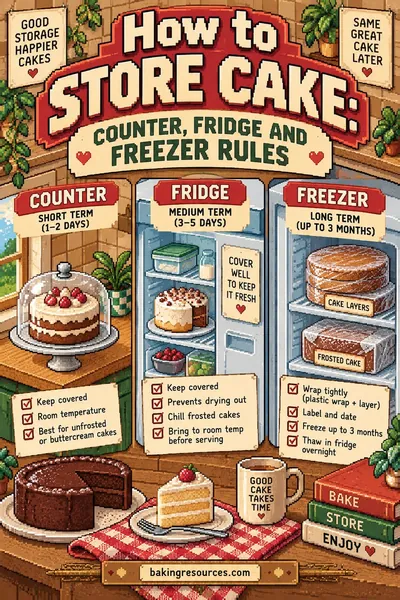 Baking guideHow to Store Cake: Counter, Fridge and Freezer RulesTake a look →
Worked example: cupcakes for a Christmas party
Say you're bringing 24 cupcakes to a Christmas party on Saturday, December 19: 12 with vanilla buttercream and 12 red velvet with cream cheese frosting.
Sunday, December 13. You bake both batches, cool them completely, wrap them and freeze them unfrosted. They're good in the freezer for up to 2 months, so there's no rush.
Friday, December 18. You take the cupcakes out in the morning and thaw them on the counter, still wrapped, for about an hour. You make both frostings in the afternoon. The vanilla cupcakes get buttercream and go in a tall container on the counter. The red velvet cupcakes get cream cheese frosting and go in the fridge. Count from Friday, the thaw day, as if they were freshly baked.
Saturday, December 19. You pack the buttercream cupcakes in a carrier at room temperature. The red velvet ones ride in a cooler with ice packs. At the party, they go on the table at 7 p.m. The cream cheese cupcakes need to be back in a fridge or cooler by 9 p.m.
The leftovers. Buttercream cupcakes are fine on the counter through Sunday, December 20, the second day after frosting, or in the fridge through Monday, December 21. Cream cheese leftovers stay in the fridge and should be eaten by Monday, December 21, three days after thawing.
For help with frosting amounts, the frosting calculator above works out how much you need for a dozen or more, and how to transport a cake has tips for getting a carrier full of cupcakes to the party upright.
Holiday make-ahead plan for cupcakes
Cupcakes are popular at Christmas parties, winter birthdays and school holiday events, and December is when fridges are most crowded. A plan built around the freezer takes the pressure off.
| When | What to do | Why |
|---|---|---|
| Up to 2 months ahead | Bake and freeze unfrosted cupcakes | Best quality window for unfrosted cupcakes |
| Up to 3 months ahead | Make and freeze buttercream in bags | Butter-and-sugar buttercream freezes well |
| 1 week ahead | Make fondant or sugar decorations | They need time to dry and keep at room temperature |
| 1 day ahead | Thaw cupcakes, thaw and rewhip frosting, frost | Fresh frosting, cupcakes at their best |
| Serving day | Add fruit, whipped cream or delicate toppings | These spoil or weep fastest |
Cream cheese frosting is best made fresh the day before, since it only keeps 3 to 4 days in the fridge. If you're short on time, how to soften cream cheese gets the blocks ready in minutes. And if you're baking several things for the holidays, how to store baked goods covers the bread, cookies and pies that share the counter.
Common cupcake storage mistakes
- Frosting warm cupcakes. The frosting melts and slides, and the trapped heat makes the tops soggy. Wait until they're completely cool.
- Covering them before they're cool. Steam turns into water inside the container, making sticky tops and peeling liners.
- Leaving cream cheese cupcakes on the party table all evening. They look just like buttercream cupcakes. Set a timer for 2 hours.
- Refrigerating unfrosted cupcakes "to keep them fresh." The fridge dries them out faster than the counter. Freeze them instead.
- Using a short container. A lid that touches the frosting ruins the piping and pulls the frosting off when you open it.
- Adding fruit or whipped cream days ahead. Add them on serving day.
- Thawing frosted cupcakes on the counter in their container. Condensation drips onto the frosting. Thaw them in the fridge.
Questions people ask
Do cupcakes need to be refrigerated?
It depends on the frosting. Unfrosted cupcakes and cupcakes with butter-and-sugar buttercream keep at cool room temperature for about 2 days. Cupcakes with cream cheese frosting, whipped cream, fresh fruit or a custard or cream filling need the fridge, and they shouldn't sit out for more than 2 hours in total, or 1 hour above 90°F.
How long do cupcakes last in the fridge?
Buttercream and cream cheese frosted cupcakes last up to 3 days in the fridge, counting from the day they were baked. Cupcakes with whipped cream are best within about a day, and custard-filled or fruit-topped cupcakes within 1 to 2 days. Keep them in a closed container and let buttercream ones sit out for about 30 minutes before serving.
Can you freeze frosted cupcakes?
Yes, if the frosting is buttercream or cream cheese. Freeze them unwrapped until the frosting is hard, then move them to a tall airtight container. They keep their best quality for up to 1 month. Thaw them in the fridge overnight. Don't freeze cupcakes topped with whipped cream or filled with custard, since both turn watery.
How long can cupcakes sit out?
Unfrosted and buttercream cupcakes can sit out for about 2 days in a cool room, in a closed container. Cupcakes with cream cheese frosting, whipped cream, fruit or a custard filling can sit out for no more than 2 hours, or 1 hour on a hot day above 90°F. After that, throw them out.
How far ahead can I make cupcakes for a party?
Bake them up to 2 days ahead and keep them on the counter, or up to 2 months ahead if you freeze them unfrosted. The best plan is to thaw and frost them the day before the party. Add whipped cream, fresh fruit or delicate decorations on the day you serve them, since those don't keep well.
How do you keep cupcakes moist overnight?
Cool them completely, then store them in a single layer in an airtight container on the counter, not in the fridge. Frosting them helps, since it seals the top. If they're unfrosted, a paper towel under the lid keeps the tops from getting sticky. If you need to hold them longer than 2 days, freeze them.
How can you tell if cupcakes have gone bad?
Look for mold, including under the liner and on the bottom, and smell the frosting. Throw them out if the frosting smells sour, has separated into a watery or oily layer, or feels slimy, or if fridge-only cupcakes sat out longer than 2 hours. A dry crumb or a crusty frosting is only staleness, not spoilage.
How long do store-bought cupcakes last?
Store-bought buttercream cupcakes usually keep about 2 days at room temperature or 3 days in the fridge, or until the date on the label if that comes sooner. Follow any storage directions on the package. Cupcakes with cream cheese frosting or real whipped cream should go in the fridge as soon as you get home.