Simple Syrup for Cake: Ratio, Flavors and How to Brush It

Simple syrup for cake is a 1:1 mix of sugar and water, heated until the sugar dissolves, then cooled and brushed lightly over each cake layer before you stack and frost. For an 8- or 9-inch round layer, about 2 to 4 tablespoons of syrup per layer is plenty to keep the crumb moist without making it soggy.
Bakery cakes often taste moister than homemade ones, and a soaking syrup is one of the main reasons. A thin coat of syrup seals in moisture, adds a little flavor, and gives you a safety net if a layer baked a minute or two too long. It is fast, it uses two pantry ingredients, and it fits neatly into the time between cooling your layers and frosting them.
This guide covers the ratio to use, how to make the syrup, how much to brush on each layer, flavor ideas, timing, and the mistakes that turn a moist cake into a wet one.
Quick Reference: Simple Syrup for Cake at a Glance
| Question | Short answer |
|---|---|
| Basic ratio | 1 part sugar to 1 part water by volume |
| Richer syrup | 2 parts sugar to 1 part water (sweeter, thicker, keeps longer) |
| Lighter syrup | 1 part sugar to 2 parts water (less sweet, thinner) |
| Amount per 8- or 9-inch layer | About 2 to 4 tablespoons |
| Amount per 6-inch layer | About 1 to 2 tablespoons |
| Syrup temperature when brushing | Cool or room temperature |
| Cake temperature when brushing | Fully cooled, or chilled |
| Storage | Covered in the fridge for up to about 2 weeks for 1:1 syrup |
What Simple Syrup Does for a Cake
A cake layer starts losing moisture the moment it leaves the oven. The outer edges and the top crust dry first, and every hour on the counter or in the fridge pulls a little more out. Simple syrup works in a few ways:
- It adds moisture back. The water soaks into the crumb, especially near the cut surface.
- It slows drying. Sugar holds on to water, so a syruped layer stays soft longer than a plain one.
- It carries flavor. Citrus, vanilla, coffee and other flavors can go into the syrup instead of the batter or the frosting.
- It rescues small mistakes. A layer that baked a little too long or a cake you need to make a day ahead both benefit from a light soak.
Syrup is not a fix for a cake that is truly dry and crumbly from a big overbake, and it does not make a dense cake light. It is a finishing step, like brushing butter on a hot roll.
The Best Sugar-to-Water Ratio
The classic simple syrup for cake is equal parts sugar and water. That ratio gives a syrup that is sweet but not cloying and thin enough to soak in rather than sit on top.
1:1 syrup (the everyday choice)
Use this for most layer cakes: vanilla, chocolate, yellow, white, lemon and spice cakes. It is thin enough to brush on easily and soaks into the crumb in a few minutes.
- 1/2 cup granulated sugar
- 1/2 cup water
That makes roughly 3/4 cup of syrup, which is enough for a two- or three-layer 8- or 9-inch cake with some left over.
2:1 rich syrup
Twice as much sugar as water gives a thicker, sweeter syrup. It soaks in more slowly and keeps longer in the fridge. Use it in small amounts on sturdy cakes, or thin it with a little water or juice when you brush.
1:2 light syrup
Half as much sugar as water is useful for very sweet cakes or when your frosting is already rich. It adds moisture with less sweetness. Because it has less sugar, it does not keep as long, so make it close to when you need it.
Measuring by weight
If you bake with a scale, 100 grams of sugar and 100 grams of water is an easy 1:1 batch. Weighing is more accurate than cups, especially when you scale up for a big cake. If you need to switch between cups and grams, the grams to cups converter handles sugar and water quickly.
How to Make Simple Syrup
- Combine. Put the sugar and water in a small saucepan.
- Heat gently. Set the pan over medium heat and stir until the sugar is fully dissolved and the liquid looks clear. It does not need to boil hard; a brief simmer is fine.
- Remove from heat. As soon as the syrup is clear, take it off the stove.
- Add flavor (optional). Stir in extracts after the syrup is off the heat. Add citrus zest, spices or tea now so they can steep as it cools.
- Cool completely. Let the syrup come to room temperature, or chill it. Strain out any zest or spices before using.
You can also make syrup in the microwave: heat the sugar and water in a heatproof measuring cup in short bursts, stirring between each, until the sugar dissolves. Watch it closely, since sugar syrup gets very hot.
How Much Syrup to Use on Each Layer
This is where most people go wrong. The goal is a moist crumb, not a wet one. Start with less than you think you need. You can always add a second pass, but you cannot take syrup out.
| Layer size | Light brush | Medium soak | Heavier soak |
|---|---|---|---|
| 6-inch round | 1 tbsp | 1 1/2 tbsp | 2 tbsp |
| 8-inch round | 2 tbsp | 3 tbsp | 4 tbsp |
| 9-inch round | 2 tbsp | 3 tbsp | 4 tbsp |
| 10-inch round | 3 tbsp | 4 tbsp | 5 tbsp |
| 9x13-inch sheet | 1/4 cup | 1/3 cup | 1/2 cup |
These are starting points per layer. Use them as a guide and adjust to your cake.
Which soak level to pick
- Light brush: tender cakes like chiffon-style, very moist oil-based cakes, or any cake that came out of the oven perfectly. You just want a little insurance.
- Medium soak: standard butter cakes and most vanilla and chocolate layers. This is the right choice for most home bakers.
- Heavier soak: sponge cakes, genoise and other foam cakes, which are drier by design and are meant to absorb syrup. Also good for a layer that baked a little long.
Matching syrup to cake type
| Cake type | How much syrup | Notes |
|---|---|---|
| Oil-based chocolate or carrot cake | Light or none | Already very moist; syrup can make it heavy |
| Butter cake (vanilla, yellow, white) | Medium | Butter cakes firm up in the fridge and benefit most |
| Sponge or genoise | Heavier | Built to soak up syrup |
| Pound cake | Light to medium | Brush the top while just warm for a glaze-like finish |
| Cupcakes | A light brush on top | Brush before frosting; about 1 teaspoon each |
| Box mix cake | Light | Box mixes are usually moist already |
How to Brush Syrup on Cake Layers
- Cool the layers fully. Warm cake is fragile and can turn mushy where the syrup lands. Many bakers chill their layers first, which makes them easier to handle.
- Level if needed. If you trim the domed tops, the cut surface absorbs syrup more evenly than the browned crust.
- Set the layer on a board or turntable. Place it cut side up.
- Use a pastry brush. Dip it in the syrup and brush in light, even strokes from the center out. Work your way around so every part of the surface gets some.
- Pay attention to the edges. Edges dry out first, so give them a little extra.
- Let it soak in. Wait a few minutes. The surface should look damp, not shiny with puddles.
- Stack and frost. Add your filling or frosting, then the next layer, and brush that one too.
No pastry brush?
A small spoon works. Drizzle the syrup slowly in a spiral, letting each spoonful soak in before adding more. A clean squeeze bottle also gives good control. Avoid pouring straight from a cup, which floods one spot and leaves the rest dry.
Brushing the top layer
Brush the cut side of the top layer before flipping it over, or brush the top lightly once it is in place. If you plan to frost the top layer with a crumb coat, keep the top soak light so the frosting sticks.
When to Soak: Timing From Oven to Frosting
Timing makes a difference to how well the syrup soaks in and how easy the cake is to frost.
| Situation | When to brush |
|---|---|
| Frosting the same day | After the layers are fully cool, right before stacking |
| Making layers a day ahead | Brush, wrap well and refrigerate; frost the next day |
| Freezing layers | Freeze plain; brush after thawing, just before stacking |
| Pound cake or loaf cake | Brush the top while the cake is still slightly warm |
| Cupcakes | Brush tops after cooling, before frosting |
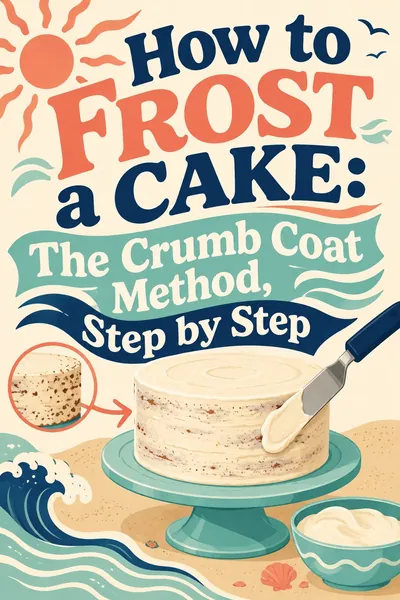
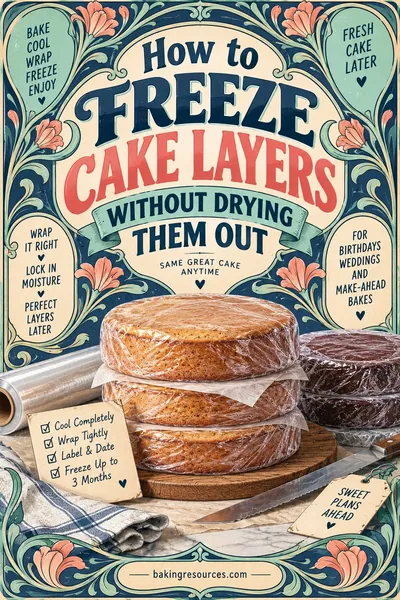
If you are baking ahead, the how to freeze cake guide explains wrapping and thawing so the layers come out ready for syrup. Once the layers are brushed and stacked, move on to how to frost a cake for the crumb coat and final coat.
Flavor Ideas for Simple Syrup
Flavored syrup is one of the easiest ways to make a plain cake taste special. Keep flavors in the same family as the cake and frosting so everything works together.
Extracts
Stir these into cooled 1:1 syrup. Start with 1/2 to 1 teaspoon per cup of syrup and taste.
- Vanilla extract or vanilla bean paste
- Almond extract (use a small amount; it is strong)
- Lemon or orange extract
- Coconut extract
Citrus
- Lemon syrup: replace a quarter of the water with fresh lemon juice and add a strip of zest while it cools. Great on lemon, blueberry and vanilla cakes.
- Orange syrup: use fresh orange juice for some of the water. Good with chocolate and almond cakes.
- Lime syrup: pairs well with coconut cakes.
Coffee and tea
- Coffee syrup: make the syrup with brewed coffee instead of water. Classic with chocolate cake and mocha frosting.
- Tea syrup: steep a tea bag in the hot syrup for a few minutes, then remove it. Earl Gray with lemon cake and chai with spice cake are both easy wins.
Spices and herbs
- Cinnamon stick or a few cloves for spice and carrot cakes
- Fresh ginger slices for gingerbread or pumpkin cake
- A sprig of mint or a few lavender buds (use a light hand) for summer cakes
Strain them out once the syrup has cooled.
Fruit
- Simmer a handful of berries with the syrup, then strain, for a pink berry syrup.
- Use juice from fruit you are already using in the filling, such as strawberry or raspberry.
Flavor pairing chart
| Cake | Syrup flavor | Frosting idea |
|---|---|---|
| Vanilla | Vanilla bean | Vanilla buttercream |
| Chocolate | Coffee or orange | Chocolate or mocha buttercream |
| Lemon | Lemon | Lemon cream cheese frosting |
| Strawberry | Strawberry | Strawberry buttercream |
| Coconut | Lime or coconut | Coconut buttercream |
| Spice or carrot | Cinnamon | Cream cheese frosting |
| Almond | Almond or orange | Almond buttercream |
Corn Syrup vs. Simple Syrup
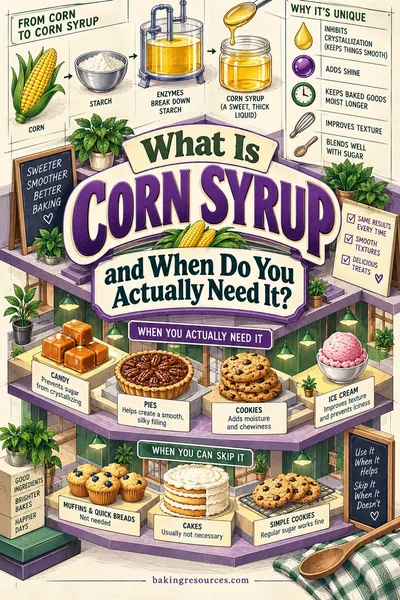
People sometimes ask whether they can use corn syrup instead of homemade simple syrup. They are different ingredients for different jobs. Corn syrup is thick and very sticky; it is used in candy, glazes and some frostings to prevent crystals and add shine. It is too thick to brush and soak into a cake layer on its own. If you are curious about where it fits, see what is corn syrup. For moistening layers, stick with sugar and water.
Planning Syrup and Frosting Together
Syrup adds sweetness, so think about it alongside your frosting. A cake with a heavier soak pairs well with a slightly less sweet frosting such as Swiss meringue buttercream or whipped cream frosting. A light brush works with any frosting.
When you are working out how much frosting a cake needs, the frosting calculator gives amounts by pan size and number of layers. A useful rule of thumb: you need far less syrup than frosting. For a two-layer 8-inch cake, about 1/2 cup of syrup covers both layers with a medium soak, while the same cake needs several cups of frosting.
Batch sizes for common cakes
| Cake | Syrup to make (1:1) |
|---|---|
| Two 6-inch layers | 1/4 cup sugar + 1/4 cup water |
| Two 8- or 9-inch layers | 1/2 cup sugar + 1/2 cup water |
| Three 8- or 9-inch layers | 3/4 cup sugar + 3/4 cup water |
| One 9x13-inch sheet | 1/2 cup sugar + 1/2 cup water |
| 24 cupcakes | 1/3 cup sugar + 1/3 cup water |
Each batch gives you a little extra, which is useful in case one layer drinks more than expected.
Storing Simple Syrup
- Pour cooled syrup into a clean jar with a lid.
- Store it in the refrigerator.
- Plain 1:1 syrup keeps for up to about two weeks. Rich 2:1 syrup keeps longer.
- Syrups with fruit, juice or fresh herbs spoil faster; use them within a few days.
- Throw it out if it looks cloudy, smells off or shows any mold.
Label the jar with the date and flavor so you do not mix up lemon syrup with coffee syrup next time.
Common Mistakes to Avoid
Using too much syrup. This is the biggest one. An oversoaked layer turns gummy, compresses under the weight of the layers above, and can make frosting slide. Start light and add more only if the layer still looks dry after a few minutes.
Brushing warm cake. Warm crumb is soft and absorbs unevenly. Let layers cool completely first.
Using hot syrup. Hot syrup can melt the surface of the cake and, later, your frosting. Cool it first.
Pouring instead of brushing. A pour floods one area. Brush or spoon slowly for an even soak.
Skipping the edges. The outside of a layer is often the driest part. Give it a little extra attention.
Clashing flavors. A strong syrup can fight with the frosting. Keep flavors in the same family, or keep the syrup plain vanilla when in doubt.
Soaking right before a crumb coat on the top. A wet surface makes the crumb coat hard to spread. Let the syrup soak in before frosting.
Syruping a cake that is already very moist. Oil-based cakes and many box mixes do not need it. Taste a scrap first.
Step-by-Step Example: Two-Layer Vanilla Cake
Here is how the whole process looks for a common cake:
- Bake two 8-inch vanilla butter cake layers and let them cool completely on a rack.
- While they cool, make syrup with 1/2 cup sugar and 1/2 cup water. Stir in 1 teaspoon vanilla once off the heat. Let it cool.
- Level the layers with a serrated knife.
- Place the first layer cut side up on a cake board. Brush it with about 3 tablespoons of syrup.
- Spread buttercream over the top.
- Brush the cut side of the second layer with about 3 tablespoons of syrup, then place it cut side down on top.
- Lightly brush the top with a little more syrup if it looks dry, wait a few minutes, then apply a crumb coat.
- Chill, then finish frosting.
You will have some syrup left over. Store it in the fridge for the next cake or for brushing cupcakes.
FAQ
What ratio of simple syrup is best for cake?
A 1:1 ratio of sugar to water by volume is the standard for cakes. It is sweet enough to add flavor, thin enough to soak in, and easy to remember. Use 2:1 for a richer syrup or 1:2 for a lighter one.
How much simple syrup should I put on each cake layer?
For an 8- or 9-inch round, start with about 2 to 3 tablespoons per layer and go up to 4 for sponge cakes or drier layers. For a 6-inch layer, 1 to 2 tablespoons is usually enough.
Should the cake be warm or cool when I add simple syrup?
For layer cakes, the cake should be fully cool or even chilled, and the syrup should be cool too. The exception is pound cake or loaf cake, which you can brush while slightly warm for a glaze-like top.
Will simple syrup make my cake soggy?
Only if you use too much. A light, even brush makes the crumb moist without turning it wet. If the surface looks shiny with puddles, you have added too much.
Can I make simple syrup ahead of time?
Yes. Plain 1:1 syrup keeps covered in the refrigerator for up to about two weeks. Syrups made with juice, fruit or fresh herbs should be used within a few days.
Do I need to use simple syrup for cake if I bake from a box mix?
Usually not. Box mix cakes tend to be moist already. A very light brush can help if you bake layers a day ahead, but taste a scrap first.
Can I use flavored syrups on cupcakes?
Yes. Brush about a teaspoon of cooled syrup over the top of each cooled cupcake before frosting. Lemon syrup on lemon cupcakes and coffee syrup on chocolate cupcakes are both easy upgrades.
Want the numbers without the math? Our guide to cardamom substitute comes with a free calculator.