
How Long Does Cheesecake Last? Safe Times for Every Kind

A baked cheesecake lasts up to 5 days in the fridge and 1 to 2 months in the freezer, but no more than 2 hours at room temperature. Cheesecake is made with cream cheese and eggs, so food safety rules treat it like a custard, not like a cake. That 2 hour limit counts every minute it spends out of the fridge, from cooling to serving to leftovers.
Toppings change the numbers. Fresh fruit, whipped cream and no-bake fillings all shorten the fridge time, and store-bought cheesecakes follow their labels. Pick your cheesecake and the day you made it, bought it or thawed it in the calculator below, and it works out the last good day for the counter, the fridge and the freezer.
Free calculator
Cheesecake storage calculator
Pick your cheesecake and the day you baked, bought or thawed it to see the last good day.
More free baking tools



Cheesecake storage times at a glance
Here is the short version. Fridge days count from the day the cheesecake was baked or made, not from the day you cut into it. Counter time starts as soon as it leaves the oven or the fridge, and it adds up across the day.
| Cheesecake | Counter | Fridge | Freezer (best quality) |
|---|---|---|---|
| Baked cheesecake, homemade | 2 hours max | Up to 5 days | 1 to 2 months |
| With a fruit topping | 2 hours max | About 3 days | Freeze it plain |
| With whipped cream on top | 2 hours max | About 2 days | Not with the cream on |
| No-bake cheesecake | 2 hours max | About 3 days | Up to 1 month |
| Store-bought, sold refrigerated | 2 hours max | Up to 5 days, or the label date if sooner | 1 to 2 months |
| Store-bought, sold frozen | 2 hours max once thawed | Up to 5 days after thawing, or what the box says | Until the date on the box |
| Mini cheesecakes and bars | 2 hours max | Up to 5 days | 1 to 2 months |
When a cheesecake falls between two rows, use the shorter time. A plain cheesecake with a spoonful of cherry topping on one side is a fruit-topped cheesecake for storage purposes, because the wettest part of the cake sets the clock for the whole thing.
Why cheesecake can't sit out
Cheesecake looks sturdy, and a cold slice feels almost firm enough to stand on its own. Under the surface, though, it's mostly cream cheese, eggs, sugar and often sour cream or heavy cream. That mix is moist, rich in protein and low in acid, which is exactly what bacteria like. Food safety guidance calls the range between 40°F and 140°F the danger zone, and a cheesecake sitting on a kitchen counter at 70°F sits right in the middle of it.
That is why the rule is 2 hours at room temperature, total, and only 1 hour if the room is above 90°F, as it can be at an outdoor summer party or in a hot car. Baking kills most of what was in the batter, but a cooled cheesecake can pick up new bacteria from a knife, a serving spatula, fingers or the air. Some kinds of bacteria also leave toxins behind that you can't see, smell or cook away.
A regular layer cake with butter-and-sugar frosting is a different story. It can sit out for a day or two, because the cake itself is drier and the sugar holds water tightly. Our guide on how to store cake covers those counter-friendly cakes. Cheesecake is in the other group, alongside custard pies and cream cheese frosting, and it belongs in the fridge.
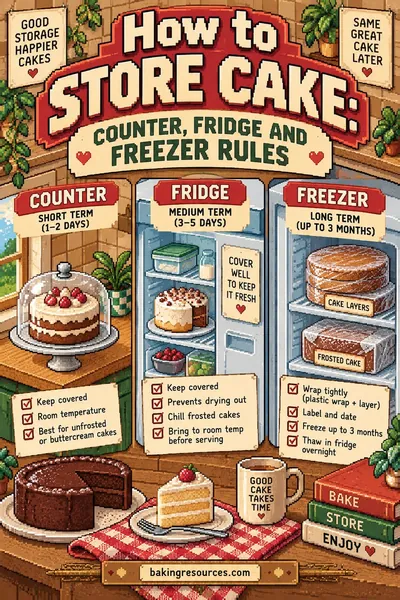 Baking guideHow to Store Cake: Counter, Fridge and Freezer RulesSee how long it keeps →
How to cool and store a fresh cheesecake
A cheesecake straight from the oven is too hot for the fridge. It would warm up the food around it, and steam trapped under a cover drips back onto the top and makes it wet and sticky. The cooling stage is also where cracks form, so it pays to go slow without breaking the 2 hour rule.
- Cool it in the oven or on a rack. Many recipes have you turn off the oven and leave the cheesecake inside with the door cracked for about an hour. Then move it to a wire rack. Keep the total time out of the fridge, oven cooling included, to about 2 hours.
- Run a thin knife around the edge. Do this once it has cooled a little. A cheesecake that sticks to the pan sides pulls apart as it shrinks, which is a big cause of cracks. The tips in how to prevent cheesecake from cracking go through the whole cooling routine.
- Chill it uncovered first. Put it in the fridge while it's still slightly warm, with nothing on top, or with a paper towel laid loosely over it. Condensation stays off the surface this way.
- Cover it once it's cold. After 4 hours or overnight, wrap it loosely in plastic wrap or foil, or set it in a covered cake carrier. Cream cheese picks up fridge smells quickly, and onions or leftovers can flavor it.
 Baking guideHow to Prevent Cheesecake From Cracking Every TimeShow me how →
Most baked cheesecakes need at least 4 hours in the fridge to set, and overnight is better. The texture firms up and the flavor rounds out, which is why cheesecake makes such a good make-ahead dessert. Before you start this process, make sure it actually finished baking. A center that's still raw won't firm up in the fridge, and how to tell when cheesecake is done explains the jiggle test and the target temperature.
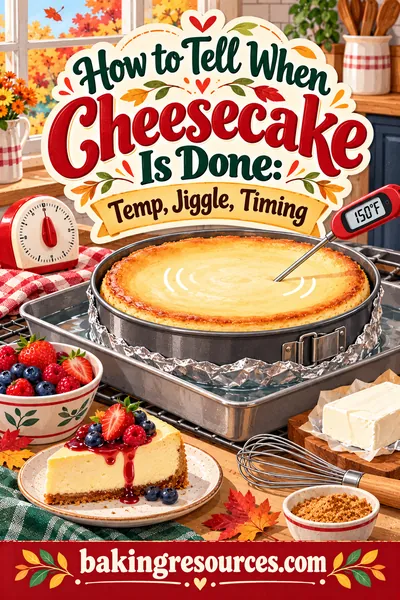 Baking guideHow to Tell When Cheesecake Is Done: Temp, Jiggle, TimingCheck if it's done →
Leave it in the pan or take it out?
You can store a cheesecake on the base of a springform pan, with the ring removed, for the full 5 days. Taking the ring off after the first chill lets cold air reach the sides. If you want to free up the pan, slide a long offset spatula or a thin cake board under the crust after chilling, when it's firm, and move it to a plate. If you're not sure what size or type of pan you have, springform pan sizes lists common sizes and how much batter each holds.
 Baking guideSpringform Pan Sizes Explained: Capacity ChartFind my pan size →
How toppings change the clock
The cheesecake itself is good for 5 days. Toppings often give out first, and some of them shorten the safe window for the whole cake. Here is how the common ones behave.
| Topping | Fridge time with topping on | What happens | Better plan |
|---|---|---|---|
| Sour cream layer (baked on) | Up to 5 days | Stays smooth, part of the cake | Nothing to change |
| Fresh berries or sliced fruit | About 3 days | Juice runs, berries soften and can mold first | Add fruit the day you serve |
| Cooked fruit sauce or cherry topping | About 3 days | Soaks into the top and edges | Store the sauce in a jar, spoon on per slice |
| Whipped cream | About 2 days | Weeps liquid and goes flat | Whip it close to serving |
| Caramel or chocolate ganache | Up to 5 days | Holds well, may lose its shine | Warm and drizzle per slice for the best look |
| Crumbled cookies or candy | 1 to 2 days for crunch | Turns soft, still safe | Sprinkle on right before serving |
The easy fix for nearly all of these is to store the cheesecake plain and top it as you serve. That way leftovers keep the full 5 days, and the topping always looks fresh. If you're making the whipped cream yourself, how to make whipped cream includes a stabilized version that holds its shape longer on a dessert table.
 Baking guideHow to Make Whipped Cream: Cold Cream, Perfect PeaksLearn the method →
No-bake cheesecake keeps a shorter time
No-bake cheesecake is a different dessert, even though it shares a name. The filling is usually cream cheese beaten with sugar and folded together with whipped cream, sweetened condensed milk, or gelatin. Nothing is heated, so nothing is cooked through, and the whipped cream starts to weep after a few days.
Plan on about 3 days in the fridge, and keep it there from the moment it's made, since it needs to set cold anyway. The 2 hour counter rule applies the same way. A no-bake cheesecake on a warm table also softens fast, and once it slumps it rarely firms back up nicely.
No-bake cheesecake freezes reasonably well for up to 1 month, and some people like it served half frozen, almost like an ice cream pie. Recipes that lean heavily on whipped cream can turn a bit grainy after thawing, while ones set with condensed milk or gelatin hold up better. If your filling recipe uses gelatin and you want a swap, gelatin substitutes covers which ones set firm enough to slice.
 Baking guideGelatin Substitute: Agar and Other Swaps With Exact AmountsPick a substitute →
Store-bought cheesecake: read the label
Store-bought cheesecakes come in two main kinds, and the rules differ a little.
Sold from the bakery counter or refrigerated case
Treat it like homemade. Get it into the fridge as soon as you get home, and finish it within 5 days or by the date on the label, whichever comes first. If it was baked in the store that morning, count from that day. If you don't know when it was made, the label date is your best guide, and earlier is better.
Sold frozen
Frozen cheesecakes keep until the date on the box as long as they stay frozen solid. Once you thaw one, the fridge clock starts. Most boxes say to eat it within a few days of thawing. Follow the box, and never go beyond 5 days after the day it came out of the freezer. Thaw it in the fridge, not on the counter. A whole cheesecake usually needs 8 to 12 hours, so overnight works well. Single slices thaw in an hour or two in the fridge.
The calculator above counts a frozen store-bought cheesecake from the day you thaw it, so pick that day as the start date, not the day you bought it.
Cheesecake from a restaurant
Slices brought home from a restaurant usually sat out on the table, then rode home in a car. Get them into the fridge within 2 hours of being served, and eat them within a day or two. You don't know how many days that slice already spent in the restaurant's fridge, so shorter is safer.
How to freeze cheesecake
Baked cheesecake is one of the best desserts for the freezer. The dense, rich filling holds up far better than a light sponge cake would. It keeps its best quality for 1 to 2 months. After that it's still safe if it stayed frozen solid at 0°F, but the texture can get a little crumbly and the flavor fades, and the crust can pick up freezer smells.
- Chill it first. Cool and refrigerate the cheesecake overnight so it's fully set. Freezing a warm cheesecake makes ice crystals that leave the texture grainy.
- Freeze it unwrapped until firm. Set it on a plate or the springform base in the freezer for 1 to 2 hours. A firm surface won't stick to the wrap.
- Wrap it well. Two layers of plastic wrap, then a layer of foil, or plastic wrap and a large freezer bag with the air pressed out. Label it with the date.
- Thaw it in the fridge. A whole cheesecake needs about 8 to 12 hours. Keep it wrapped while it thaws so the condensation forms on the wrap, not the cheesecake.
| What you freeze | Best quality in the freezer | Thawing time in the fridge | Notes |
|---|---|---|---|
| Whole baked cheesecake | 1 to 2 months | 8 to 12 hours | Leave it on a cardboard round or the pan base |
| Individual slices | 1 to 2 months | 1 to 2 hours | Wrap each slice, then bag them together |
| Mini cheesecakes or bars | 1 to 2 months | About 1 hour | Freeze on a tray first so they don't stick together |
| No-bake cheesecake | Up to 1 month | 4 to 6 hours | Whipped cream fillings can turn grainy |
| Fruit or whipped cream topped | Not recommended | Not applicable | Scrape off the topping, freeze it plain |
Once thawed, eat it within about 2 days for the best texture, and stay inside the original 5 day window. If the cheesecake spent 3 days in the fridge before you froze it, it only has about 2 days left after thawing. Don't refreeze a cheesecake that has thawed and been served. For cake layers and other frozen bakes, how to freeze cake explains the same wrap-and-label method in more detail.
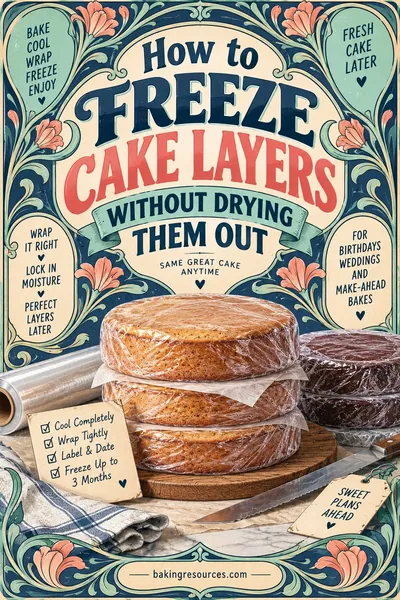 Baking guideHow to Freeze Cake Layers Without Drying Them OutGet the storage times →
Slicing frozen cheesecake
Cheesecake slices cleanly when it's very cold, so it's easiest to cut a whole cheesecake into slices before freezing, while it's firm from the fridge. Use a long knife dipped in hot water and wiped dry between cuts. Then you can pull out exactly as many slices as you need and leave the rest frozen.
How to tell if cheesecake has gone bad
Cheesecake usually tells you when it's past its best, but not always when it's unsafe. Throw it out if you notice any of these:
- Mold. Fuzzy spots in any color, green, blue, white, black or pink, on the filling, the crust or the topping. Don't scrape it off and eat the rest. Mold on soft, moist foods can spread below the surface where you can't see it.
- A sour or yeasty smell. Cream cheese has a mild tang, but a sharp, sour or cheesy-sweaty smell is a sign it has turned.
- Liquid pooling on top or around the base. A few beads of moisture after thawing are normal. A puddle of watery or yellowish liquid is not.
- A slimy or sticky film. The top should feel smooth and dry to a light touch, not tacky or slick.
- A crust that has turned mushy and gray. A slightly soft crust after a few days is normal. A wet, discolored crust that smells off is not.
- Time is up. It's past 5 days in the fridge, past 3 days for a fruit-topped or no-bake cheesecake, or it sat out longer than 2 hours.
That last point matters most. The bacteria that cause food poisoning often don't change how food looks, smells or tastes. A cheesecake left out overnight can look perfect in the morning and still make people sick. Don't taste a piece to check. When in doubt, throw it out.
Changes that are fine
Some changes are only about quality. A small crack, a slightly darker top, a crust that has softened, or a filling that tastes a little less fresh on day 5 are all normal. Frozen and thawed cheesecake may also look a bit dull on top. None of these mean it's unsafe if the cheesecake stayed cold and is still inside its time window.
Worked example: a Christmas cheesecake made ahead
Say you want to serve a homemade cheesecake on Christmas Day, Friday, December 25, and you'd rather not bake on the busiest days of the week. Here's how the dates work out.
Option 1, the fridge only. You bake it on Tuesday, December 22. It cools in the oven for an hour and on a rack for 45 minutes, which keeps it under the 2 hour limit, then goes into the fridge uncovered. That night, you cover it. Counting 5 days from Tuesday, the last good day is Sunday, December 27. On Christmas Day you set it out about 20 minutes before dessert, serve it, and put the leftovers back within 2 hours of setting it out. You eat the last slices on Saturday or Sunday.
Option 2, the freezer. You bake it on Saturday, December 5, chill it overnight, and freeze it on Sunday, December 6. It keeps its best quality until early February, so Christmas is well inside the window. On the night of Wednesday, December 23, you move it to the fridge to thaw. By Thursday, December 24, it's thawed, and you count from there. Christmas Day is fine, and the leftovers should be eaten within about 2 days of thawing, so by Saturday, December 26. Strawberries and whipped cream go on as you serve.
Both plans give you a ready dessert without baking on December 24. The freezer plan just needs a little more planning, and it frees up fridge space the week of Christmas, when fridges are usually packed.
Cheesecake at Thanksgiving, Christmas and winter parties
Holiday dessert tables are where the 2 hour rule gets broken most often. Everyone eats dinner, dessert goes out, people drift to the living room, and three hours later the cheesecake is still sitting on the counter. A few habits help:
- Set a timer when dessert goes out. Two hours goes fast when people are talking. When the timer goes off, cheesecake goes back in the fridge, even if someone might want seconds later.
- Serve on a chilled plate. A cake plate that spent 30 minutes in the fridge keeps the cheesecake colder and firmer on the table.
- Put out half at a time. For a big crowd, slice the cheesecake in the kitchen and set out half the slices, keeping the rest cold. Swap in fresh slices instead of refilling the warm plate.
- Use the cold garage carefully. A cold porch or garage can help in December, but only if it's reliably under 40°F, and the cheesecake needs to be covered and away from animals. A fridge thermometer tells you for sure.
- Bring it in a cooler. If you're carrying cheesecake to someone else's house, a cooler with ice packs keeps it safe on longer drives. The tips in how to transport a cake keep it from sliding around.
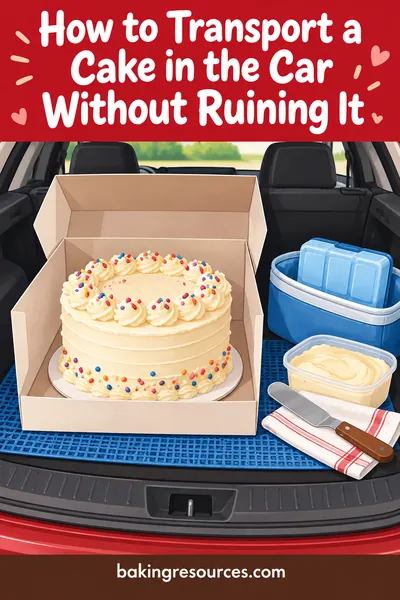 Baking guideHow to Transport a Cake in the Car Without Ruining ItSee how it's done →
If you're planning several desserts for a big holiday meal, how many pies for Christmas dinner helps you work out how much to make, and each extra cheesecake you don't need is one less thing crowding the fridge. A pumpkin pie on the same table follows nearly the same rules as cheesecake. How long pumpkin pie lasts covers that one.
 Baking guideHow Many Pies Do I Need for Christmas Dinner? Pie Math for 12 to 24 GuestsGet the details →
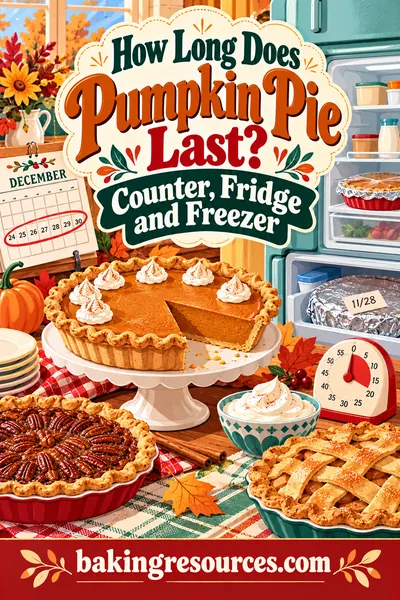 Baking guideHow Long Does Pumpkin Pie Last? Counter, Fridge and FreezerRead the storage guide →
Cheesecake next to other desserts
It helps to see why cheesecake gets the strict rules while some of its neighbors on the dessert table don't. The difference comes down to moisture and fresh dairy or eggs in the filling.
| Dessert | Counter | Fridge | Why |
|---|---|---|---|
| Baked cheesecake | 2 hours max | Up to 5 days | Cream cheese and eggs, moist filling |
| Pumpkin pie | 2 hours max | 3 to 4 days | Egg and milk custard |
| Cake with cream cheese frosting | 2 hours max | Up to 5 days | Fresh dairy in the frosting |
| Cake with buttercream | 2 to 3 days | Up to 5 days | Butter and sugar frosting, drier cake |
| Apple pie | Up to 2 days | Up to 4 days from baking | Fruit filling, no eggs or dairy |
Cream cheese frosting is the closest cousin to cheesecake, and how to store frosting gives times for it and every other frosting. For the rest of a holiday spread, from cookies to bread, how to store baked goods has the full list.
Common cheesecake storage mistakes
- Leaving it out to "come to room temperature." Some people serve cheesecake soft, but 20 to 30 minutes out of the fridge is plenty to take the chill off. Hours on the counter is not a serving style, it's a safety problem.
- Covering it while warm. Trapped steam drips onto the top and makes it wet and tacky, and the crust gets soggy. Chill first, cover second.
- Counting from the day you cut it. The 5 days start when it's baked. Cutting the first slice doesn't reset anything.
- Storing it next to strong foods. Cream cheese absorbs smells. Keep it covered and away from onions, garlic and cut fruit like cantaloupe.
- Freezing it with toppings. Fresh fruit turns mushy and whipped cream turns watery. Freeze it plain.
- Thawing it on the counter. The outside warms into the danger zone long before the middle thaws. Thaw it in the fridge.
- Using cream cheese straight from the fridge. This one is about baking, not storage, but cold cream cheese makes lumps, and people overmix to fix them, which adds air and causes cracks. How to soften cream cheese gets it ready safely in a few minutes.
Does cheesecake need to be refrigerated after baking?
Yes, every time. There is no version of a homemade baked cheesecake that's safe on the counter overnight. Some recipes call for very long cooling in a turned-off oven, but even then, the total time out of the fridge should stay around 2 hours. If a recipe tells you to leave cheesecake out for longer, follow the food safety rule instead.
The only cheesecake-style products that can sit at room temperature are shelf-stable packaged snacks made with preservatives and sealed packaging, and those come with their own instructions on the wrapper. Once opened, follow the wrapper, and when in doubt, refrigerate. Cooling a cheesecake properly also helps the texture, much like letting a cake cool before frosting. If you want to know more about that stage, how to cool a cake explains why trapped heat and steam cause problems.
What if the power goes out?
A closed fridge keeps food cold for about 4 hours during a power outage. Keep the door shut. If the power is out longer than that and the cheesecake has been above 40°F for more than 2 hours, throw it out. A frozen cheesecake in a full, closed freezer stays frozen for about 48 hours, or about 24 hours in a half-full one. If it still has ice crystals or feels fridge-cold, it's safe to refreeze or move to the fridge.
Questions people ask
Can cheesecake sit out overnight?
No. Cheesecake is made with cream cheese and eggs, so it shouldn't sit at room temperature for more than 2 hours in total, or 1 hour if the room is above 90°F. A cheesecake left out overnight should be thrown away, even if it looks and smells fine, because the bacteria that cause food poisoning don't always change how food looks or smells.
How long does cheesecake last in the fridge?
A baked cheesecake lasts up to 5 days in the fridge, counting from the day it was baked. Fruit-topped and no-bake cheesecakes keep about 3 days, and cheesecake with whipped cream on top is best within about 2 days. Keep it covered so it doesn't dry out or pick up smells from other food.
Can you freeze cheesecake?
Yes. Chill it overnight, freeze it unwrapped until firm, then wrap it in two layers of plastic wrap and one of foil. It keeps its best quality for 1 to 2 months. Thaw it in the fridge, about 8 to 12 hours for a whole cheesecake, and eat it within about 2 days. Freeze it without fruit or whipped cream on top.
How long can cheesecake sit out to cool after baking?
Keep the total time out of the fridge to about 2 hours, including any time it spends cooling in a turned-off oven. That's enough for it to cool to slightly warm. Then move it to the fridge uncovered, and cover it once it's cold so condensation doesn't drip onto the top.
How long does store-bought cheesecake last?
A cheesecake bought from a refrigerated case or bakery lasts up to 5 days in the fridge, or until the label date if that comes sooner. A cheesecake sold frozen keeps until the date on the box while frozen. Once thawed in the fridge, follow the box, and don't go past 5 days after thawing.
Is it safe to eat cheesecake after 7 days?
It's better not to. Food safety guidance for cheesecake runs about 5 days in the fridge, and when sources differ, the shorter time is the safer one. By day 7 the crust is soggy and the filling can start to sour, and harmful bacteria may be present even without any visible signs. Freeze any cheesecake you won't finish in time.
How do you know if cheesecake is bad?
Look for mold in any color, a sour or yeasty smell, a slimy film on top, or watery liquid pooling around the base. A mushy, gray crust is another sign. Also throw it out if it's past 5 days in the fridge or sat out longer than 2 hours, even if it looks fine. Don't taste it to check.
Does no-bake cheesecake last as long as baked cheesecake?
No. No-bake cheesecake keeps about 3 days in the fridge, compared with up to 5 days for a baked one. Its filling isn't cooked and often includes whipped cream, which weeps and breaks down sooner. It freezes for up to 1 month for the best quality, and it should never sit out for more than 2 hours.