
How to Tell When Cheesecake Is Done (Without Overbaking It)

A baked cheesecake is done when the center reads about 150°F (66°C) on an instant-read thermometer and the outer ring looks set while a 2 to 3 inch circle in the middle still wobbles like gelatin when you nudge the pan. Pull it right there. The middle firms up as it cools and chills, so if it looks fully set in the oven, it has already gone too far.
Not sure what your reading means? Type it into the calculator below and it tells you whether to keep baking, pull it now, or rescue an overbaked cake. Further down you'll find the jiggle test, how carryover heat works, and a Thanksgiving make-ahead timeline.
Free calculator
Cheesecake doneness checker
Type the temperature from the very center of your cheesecake, about halfway down, and see what to do next.
More free baking tools



The short answer: 150°F and a wobbly middle
A classic baked cheesecake is really a custard. Cream cheese, sugar, and eggs go into the oven as a thick liquid, and the eggs are what turn it into a sliceable cake. Egg proteins start to firm up in the 140s and keep tightening as they get hotter. Somewhere around 150°F (66°C) in the center, there's enough set to hold its shape once it's cold, but not so much that the proteins squeeze together and turn the texture dry, dense, or cracked.
That's why the target is a range, not a single magic number. Anywhere from about 147°F to 155°F in the very center is a good place to stop. Aim for 150°F and you have a little room on either side.
The second sign is the wobble. Give the pan a gentle nudge with an oven mitt. The outer 2 to 3 inches should barely move, and the middle should shimmy as one piece, like a pan of gelatin. If the middle ripples in waves, it's still liquid. If nothing moves at all, it's past done.
Signs your cheesecake is done (and what each one means)
You don't need every sign at once, but two or three that agree make it easy to trust your call.
| What you see or measure | Still underbaked | Done | Overbaked |
|---|---|---|---|
| Center temperature | Under 140°F | 147°F to 155°F | 165°F and up |
| Wobble when nudged | Waves roll across the whole top | Middle 2 to 3 inches jiggles as one piece | No movement at all |
| Surface | Wet and shiny all over | Matte at the edges, slightly glossy in the middle | Dull, with cracks |
| Edges | Soft, sloshy | Set and slightly puffed | Puffed high, pulling away, browned |
| Color | Pale cream | Pale, maybe faint golden edges | Tan or brown across the top |
One sign you can't use for cheesecake: the toothpick test. A toothpick comes out wet from a perfectly done cheesecake because the middle is meant to be soft. If you wait for a clean toothpick, you'll overbake it every time. Save that test for cakes and quick breads like banana bread.
 Baking guideHow to Tell If Banana Bread Is Done: 4 Real ChecksSee the doneness test →
How to take a cheesecake's temperature
An instant-read thermometer takes the guessing out of it. Here's how to get a reading you can trust:
- Wait until the edges look set. Checking too early just leaves extra holes.
- Go into the true center. The middle is the last spot to cook, so that's the number that matters.
- Push the tip about halfway down. Not touching the crust, and not just under the surface.
- Hold it still for a few seconds until the number stops climbing.
- Use the same hole each time if you need to check again.
Yes, the probe leaves a tiny hole. It's usually smaller than a pencil tip, and it can start a hairline crack in some cakes. Most people find that a fair trade for not overbaking. If you plan to serve the top plain, check with the wobble test first and only use the thermometer once it's close.
Carryover heat: why it looks underdone when it isn't
This is the part that throws most people off. When you turn the oven off, the cheesecake keeps cooking. The outside of the cake is hotter than the middle, and that stored heat keeps moving inward for a while. The center can climb another few degrees after you stop the bake.
Then the cake cools and chills, and the fat in the cream cheese firms up. That's the second half of "setting." A cheesecake that wobbles warm will slice clean once it has spent a night in the fridge.
So the cake you pull out of the oven should look slightly underdone. If it already looks like the finished slice you want, the carryover heat and chilling will push it past that point. Trust the thermometer and the wobble, not your eyes.
Water bath or no water bath: how it changes the signs
A water bath keeps the air around the pan humid and holds the outside of the cake near the temperature of hot water. That means the edges cook more slowly and the whole cake bakes more evenly, so the set ring and the wobbly middle look more alike. Many bakers find the 2 to 3 inch wobble rule easiest to read with a water bath.
Without a water bath, the edges heat faster. You'll see more puffing and browning at the rim, and the edges may be firm while the center is still well under 140°F. Lean on the thermometer more in that case, and expect a slightly drier outer ring.
If you use a water bath, wrap the outside of your springform pan in two layers of heavy foil or set it inside a slightly bigger cake pan so water can't seep in. If you're not sure your pan seals well, our guide to how a springform pan works walks through it, and the springform pan size guide helps if your recipe was written for a different pan.
 Baking guideWhat Is a Springform Pan and When Do You Use One?Get the measurements →
 Baking guideSpringform Pan Sizes Explained: Capacity ChartSee the sizes →
Cracks are their own topic. The water bath, gentle mixing, and slow cooling all help, and the full list lives in our guide on how to prevent cheesecake from cracking.
 Baking guideHow to Prevent Cheesecake From Cracking Every TimeRead the step by step →
How long cheesecake usually bakes
Bake times are a starting point, not a promise. Ovens run hot or cold, pans vary, and a cake that started with cold cream cheese needs longer. Use these to know when to start checking.
| Cheesecake | Oven | Start checking at | Usual total time |
|---|---|---|---|
| 9 inch, water bath | 325°F | 55 minutes | 60 to 75 minutes |
| 9 inch, no water bath | 325°F | 45 minutes | 50 to 65 minutes |
| 10 inch, water bath | 325°F | 65 minutes | 70 to 90 minutes |
| 6 inch, water bath | 325°F | 35 minutes | 40 to 50 minutes |
| Cheesecake bars, 9x13 pan | 325°F | 30 minutes | 35 to 45 minutes |
| Mini cheesecakes, muffin pan | 325°F | 15 minutes | 18 to 22 minutes |
Thinner cakes, like bars and minis, finish fast and overbake fast, so check early. For minis, the wobble test is easier than a thermometer: the centers should look just barely set with a slight jiggle. If your oven runs off, our guide to baking evenly and the tips on which oven rack to use (the middle, for cheesecake) are worth a quick read.
 Baking guideHow to Get Even Baking in Your Oven: Fix Hot SpotsShow me how →
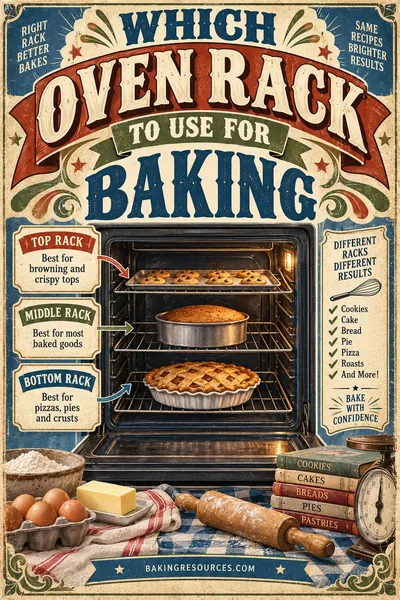 Baking guideWhich Oven Rack to Use for Baking: Top, Middle, LowGet the details →
A worked example
Say you're baking a 9 inch New York cheesecake in a water bath at 325°F. The recipe says 70 minutes.
- At 55 minutes you peek. The edges look matte, the middle is glossy and ripples in waves when you nudge the pan. You leave it alone.
- At 65 minutes the outer ring barely moves and the middle jiggles as one piece, but the wobbly area is about 5 inches wide. You slide the thermometer into the center: 141°F. The calculator says "nearly there."
- At 70 minutes the wobbly circle has shrunk to about 3 inches. Same hole, same depth: 149°F. That's done.
- You turn the oven off, prop the door open a few inches, and let the cake sit for 1 hour. Carryover heat nudges the center up a few degrees while it cools gently.
- Then it cools on a rack until it's no longer warm, about 1 to 2 hours, and goes into the fridge overnight.
The next day the slices are creamy all the way through, with no dry ring at the edge.
Cheesecake doneness mistakes (and how to fix them)
Waiting for the middle to look firm
This is the big one. A firm center in the oven means a dry, crumbly center after chilling. Pull it while the middle still wobbles.
Opening the oven every five minutes
Each peek lets heat out and lengthens the bake. Wait until the start-checking time, then check every 5 minutes.
Cold ingredients
Cold cream cheese leaves lumps and makes the bake time unpredictable. The center takes much longer to heat, so the edges overbake first. Our guides on how to soften cream cheese and why room temperature ingredients matter explain the fix.
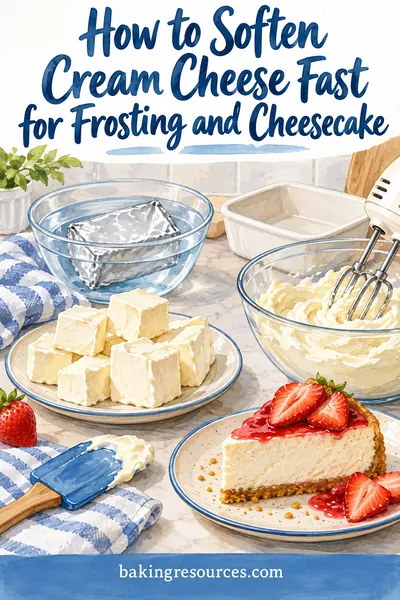 Baking guideHow to Soften Cream Cheese Fast for Frosting and CheesecakeRead the storage guide →
 Baking guideWhy Recipes Call for Room-Temperature IngredientsFind out why →
Whipping too much air in
Air bubbles puff the cake up in the oven and make it sink and crack as it cools. Mix on low, and add the eggs last, just until blended.
Cutting it too soon
Cheesecake needs at least 6 hours in the fridge, and overnight is better. A warm or barely chilled cheesecake looks underbaked even when it isn't.
Food safety: eggs, cooling, and the fridge
Because cheesecake is an egg and dairy custard, treat it like one. A long, slow bake to around 150°F, followed by an hour in the cooling oven, is the standard method used in well-tested recipes. If you're baking for someone pregnant, very young, older, or with a weak immune system, use pasteurized eggs for extra peace of mind.
After it comes out, let it cool until it's no longer warm, then refrigerate it. Don't leave a finished cheesecake at room temperature for more than 2 hours total, including serving time. Keep it covered in the fridge and eat it within 5 days. For freezing and wrapping tips, see how to store baked goods.
 Baking guideHow to Store Baked Goods: Counter, Fridge or FreezerGet the storage times →
Thanksgiving cheesecake: your baking-day timeline
Here's some good news for a busy holiday week: cheesecake is one of the best desserts to make ahead. It needs a night in the fridge anyway, and it frees up your oven on the big day, when the turkey and sides need every inch.
A simple plan:
- Monday: Set out the cream cheese and eggs in the evening if you're baking first thing Tuesday, or 1 to 2 hours before baking.
- Tuesday: Bake, check for 150°F and the wobble, cool in the oven for an hour, then on the counter.
- Tuesday night: Into the fridge, loosely covered.
- Wednesday: Run a thin knife around the edge and release the springform ring. Make any topping that keeps well.
- Thursday: Add fresh whipped cream or fruit just before serving. If you need a topping, our guide on how to make whipped cream takes about five minutes.
 Baking guideHow to Make Whipped Cream: Cold Cream, Perfect PeaksLearn the method →
If pumpkin cheesecake is on your menu, the same 150°F target applies. Pumpkin adds moisture, so it may take 5 to 10 minutes longer to get there.
Questions people ask
Should a cheesecake jiggle when it's done?
Yes. A done cheesecake should still jiggle in the middle. Nudge the pan and the center 2 to 3 inches should wobble as one piece, like gelatin, while the outer ring stays mostly still. If waves roll across the whole top, it needs more time. If nothing moves at all, it's past done and will likely be firm and a bit dry after chilling.
What internal temperature should cheesecake be?
Aim for about 150°F (66°C) in the very center, measured halfway down with an instant-read thermometer. Anywhere from about 147°F to 155°F is a good stopping point. Above roughly 165°F the eggs tighten up, which gives you a denser, sometimes grainy texture and a much higher chance of cracks.
Can I put an underbaked cheesecake back in the oven?
If you catch it while it's still warm, yes. Put it back in the oven at the same temperature and keep checking every 5 minutes. Once it has chilled, it's harder to fix, because rebaking a cold cake heats the edges long before the middle. If a chilled cheesecake is soupy in the center, bake it again gently in a water bath and check the center temperature.
Why does my cheesecake look underdone after chilling?
Usually it simply needs more time in the fridge. Cheesecake needs at least 6 hours, and overnight is better, to firm up all the way through. If it's still runny after a full night, the center never reached about 150°F. Next time, check with a thermometer instead of relying on bake time alone, since ovens and pans vary a lot.
How long can cheesecake sit out?
No more than 2 hours total at room temperature, including the time it's on the table. Cheesecake is made with eggs, cream cheese, and often sour cream, so it belongs in the fridge. Cool it until it's no longer warm, refrigerate it, and bring it out shortly before serving. Leftovers keep, covered, for up to 5 days in the fridge.
Do mini cheesecakes need a thermometer?
Not really. Minis are too small to probe easily, and they finish in about 18 to 22 minutes at 325°F. Look for tops that have lost their shine at the edges with a slight jiggle in the very center. Pull them then. They firm up as they cool and chill, just like a full-size cheesecake.