
How Long Do Brownies Last? Plain, Frosted and Cream Cheese

Plain homemade brownies last 3 to 4 days on the counter, about 1 week in the fridge and up to 3 months in the freezer for the best quality. They keep well because they're dense, sweet and fairly dry, so they can sit at room temperature in an airtight container. The eggs and butter are fully baked into the batter, which is why plain brownies don't need the fridge the way custard does.
Toppings change everything. Brownies with cream cheese, a cream-based ganache or whipped cream need the fridge and can't sit out more than 2 hours. Pick your brownies and the day you baked them in the calculator below, and it works out the last good day on the counter, in the fridge and in the freezer.
Free calculator
Brownie storage calculator
Pick your brownies and the day you baked or opened them to see the last good day.
More free baking tools



Brownie storage times at a glance
Here's the short version. All times count from the day you baked the brownies, not the day you cut them. Counter times assume a normal room around 68 to 72°F, in an airtight container, away from the stove and sunny windows.
| Brownies | Counter | Fridge | Freezer (best quality) |
|---|---|---|---|
| Plain brownies, fudgy or cakey | 3 to 4 days | About 1 week | Up to 3 months |
| Blondies | 3 to 4 days | About 1 week | Up to 3 months |
| With buttercream or fudge frosting | Up to 2 days | Up to 5 days | Up to 2 months |
| With a cream-based ganache topping | 2 hours max | Up to 5 days | Up to 2 months |
| Cream cheese brownies | 2 hours max | 3 to 4 days | Up to 2 months |
| With cream cheese frosting or whipped cream | 2 hours max | About 3 days | Freeze them plain |
| Store-bought, individually wrapped | Until the package date, unopened | Not needed | Up to 3 months |
If your brownies fit two rows, go with the shorter time. A pan of plain brownies with a cream cheese swirl through half of it is a cream cheese brownie for storage purposes, since you can't keep half a pan on the counter and half in the fridge without cutting it.
Why plain brownies are fine on the counter
People are sometimes surprised that brownies made with eggs and butter can sit out for days, while a cheesecake can't sit out for more than 2 hours. The difference is in what happens to those ingredients in the oven and how much free water is left afterward.
In a brownie, the eggs are mixed into the batter and baked all the way through. A plain brownie is also very high in sugar and fat and fairly low in moisture. Sugar holds on to water tightly, so very little of it is available for bacteria or mold to use. That's the same reason a pound cake or a buttercream-frosted layer cake keeps on the counter for a few days. The baked goods that need the fridge are the ones with wet, mild, fresh-dairy or custard parts: cheesecake, custard pies, cream fillings, cream cheese frosting and whipped cream.
Plain brownies do still go bad. After 3 or 4 days at room temperature they start drying out, and in a humid kitchen they can grow mold, usually starting along the cut edges or where they touch the container. That's why the counter window is days, not weeks. If you want a deeper look at what each ingredient does, what sugar does in baking explains how it locks up moisture.
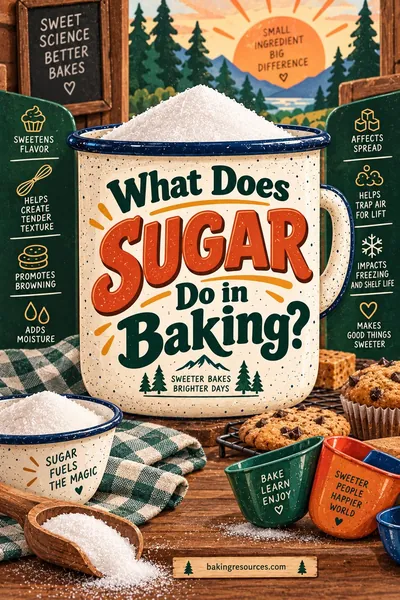 Baking guideWhat Does Sugar Do in Baking? Six Jobs, Not Just SweetSee the chart →
Undercooked brownies are a separate question
Very gooey brownies are a style, and a fudgy center is fine as long as the batter around it reached a safe temperature. A brownie that's still raw and liquid in the middle is a different matter, since raw eggs and raw flour can both carry germs. If you're not sure where the line is, how to tell when brownies are done covers the toothpick test and what moist crumbs should look like.
 Baking guideHow to Tell When Brownies Are Done: Fudgy and Cakey SignsSee the doneness test →
When brownies need the fridge
The brownie itself rarely sets the clock. The topping or filling does. Use this table to decide where a pan goes after it cools.
| Topping or mix-in | Where it goes | Why |
|---|---|---|
| Nothing, or nuts and chocolate chips | Counter | Dry, sweet, fully baked |
| Caramel swirl baked in | Counter | Cooked sugar, baked into the batter |
| Peanut butter swirl baked in | Counter | Low moisture, baked through |
| Buttercream or cooked fudge frosting | Counter for 2 days, then the fridge | Butter and sugar keep for a short time at cool room temperature |
| Ganache made with heavy cream | Fridge after 2 hours | Contains fresh cream |
| Cream cheese swirl or layer | Fridge after 2 hours | Cheesecake batter, cream cheese and eggs |
| Cream cheese frosting | Fridge after 2 hours | Fresh dairy, not baked |
| Whipped cream or mousse | Fridge after 2 hours | Fresh dairy, weeps quickly |
| Fresh berries on top | Fridge | Fruit juice wets the top and molds fast |
Ganache is the one people argue about. Some bakers keep ganache-topped desserts on the counter for a day or two, since chocolate and sugar make it fairly stable. Ganache is still made with fresh heavy cream, though, so the cautious choice is to treat it like any other fresh-dairy topping and keep it in the fridge after 2 hours. If you make your own, the ganache ratio guide explains how thick to make it for a glaze that sets on brownies.
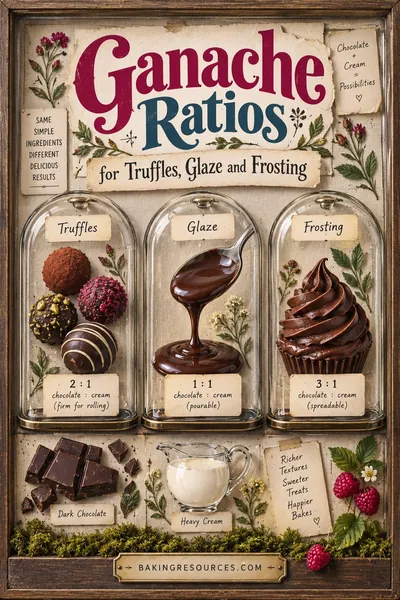 Baking guideGanache Ratio Guide: Truffles, Glaze and FrostingRead it next →
How to store brownies on the counter
Plain brownies stay soft and fudgy longest when they're kept away from air. A few simple habits make the difference between a brownie that's still great on day 3 and one that's dry and crumbly by day 2.
- Cool them completely in the pan. Warm brownies give off steam. Covered too early, that steam turns into water droplets on the lid and softens the top, and the damp spots are where mold starts. Most pans need 1 to 2 hours on a wire rack.
- Keep the slab whole. Every cut face loses moisture. If you can, lift the whole slab out of the pan using parchment and cut only what you're about to eat. The parchment paper guide explains how to leave overhang "handles" for lifting.
- Wrap it tight. Press plastic wrap against the cut edges, then wrap the whole slab, or cover the pan tightly with plastic wrap and foil.
- Or use an airtight container. If the brownies are already cut, stack them in an airtight container with a sheet of parchment between layers so they don't stick together.
- Keep them cool and dark. Not on top of the fridge, next to the oven or in a sunny spot. Warmth melts the fat and speeds up drying and spoilage.
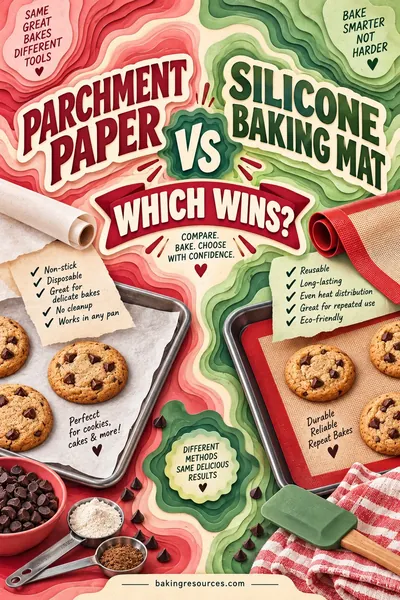 Baking guideParchment Paper vs Silicone Baking Mat: Which WinsRead the guide →
In a hot or humid kitchen
The 3 to 4 day counter time assumes a comfortable room. In summer, in a kitchen without air conditioning, or anywhere the air feels damp, brownies mold sooner, sometimes within 2 days. Moisture from the air settles on the surface, and warmth helps mold grow. Chocolate tops can also soften and smear, and frosting can slide. In those conditions, give plain brownies a day or two on the counter at most, then move them to the fridge in an airtight container, or freeze what you won't eat soon. If you notice condensation inside the container, wipe it out and add a folded paper towel under the brownies to catch extra moisture. Humidity affects other bakes too, and baking in humid weather explains what to expect from flour, dough and sugar on damp days.
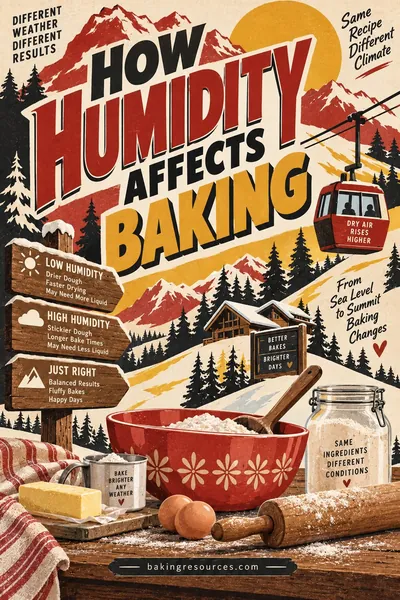 Baking guideHow Humidity Affects Baking: Flour, Dough and SugarGet the details →
The same approach works for most bar cookies. For a wider list of bakes, from bread to muffins, how to store baked goods has storage times for each one.
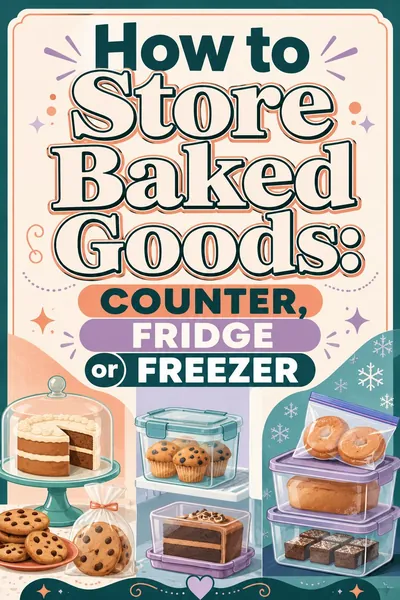 Baking guideHow to Store Baked Goods: Counter, Fridge or FreezerSee how long it keeps →
Do brownies last longer in the fridge?
They do, by a few days. A plain brownie keeps about 1 week in the fridge instead of 3 to 4 days on the counter, because cold slows down mold. The trade-off is texture. Cold air dries out baked goods, and the butter and chocolate firm up, so a fridge brownie can taste dense and dull straight out of the container.
That's easy to fix. Let a cold brownie sit on the counter for 20 to 30 minutes before eating, or warm it in the microwave for about 10 seconds. The fat softens and it tastes close to fresh again. Some people actually prefer brownies cold, since the texture turns chewy and almost like fudge.
The fridge is worth it in a few situations:
- Your kitchen is warm or humid, which is when brownies mold fastest.
- You won't finish the pan in 3 to 4 days but don't want to freeze them.
- The brownies have a topping that needs the fridge anyway.
Wrap them well. Brownies pick up fridge smells, and an uncovered pan dries out in a day or two.
How to freeze brownies
Brownies are one of the easiest bakes to freeze. They're dense enough that ice crystals do little damage, and they thaw quickly. For the best quality, eat them within 3 months. After that they're still safe if they stayed frozen solid at 0°F, but they slowly dry out and can taste of the freezer.
- Cool them fully. Room temperature all the way through, or chill them first for cleaner cuts.
- Decide on whole slab or squares. A whole slab stays moister. Squares are handier for lunches and snacks.
- Wrap in two layers. Plastic wrap first, pressed against every surface, then foil or a freezer bag with the air squeezed out. Wrap squares individually or in pairs.
- Label and date it. It's easy to forget what's in a foil package after a few weeks.
- Thaw them wrapped. On the counter for plain brownies, about 1 to 2 hours for squares or 3 to 4 hours for a slab. Brownies with cream cheese or ganache thaw in the fridge overnight.
| What you freeze | Best quality | How to thaw | Tip |
|---|---|---|---|
| Plain brownie slab, uncut | Up to 3 months | Counter, 3 to 4 hours, wrapped | Cut while still slightly cold for clean edges |
| Plain brownie squares | Up to 3 months | Counter, 1 to 2 hours, wrapped | Wrap each square for grab-and-go snacks |
| Frosted brownies (buttercream) | Up to 2 months | Fridge overnight | Freeze uncovered until firm, then wrap |
| Cream cheese or ganache brownies | Up to 2 months | Fridge overnight | Never thaw these on the counter |
| Brownies with whipped cream or cream cheese frosting | Not recommended topped | Not applicable | Freeze plain and top after thawing |
Once thawed, treat brownies as freshly baked from that point, using the times for their type, but expect the best texture in the first couple of days. Don't refreeze brownies that have thawed and then sat out.
Freezing brownie batter
You can freeze unbaked brownie batter too, in a freezer bag or a lined pan, for up to 3 months. Thaw it in the fridge overnight, spread it in the pan, and bake it a few minutes longer than the recipe says, since it starts cold. Don't leave raw batter out to thaw on the counter, because it has raw eggs.
Fudgy, cakey, box mix: do they keep differently?
All plain brownies follow roughly the same 3 to 4 day counter rule, but texture affects how they age.
- Fudgy brownies have more fat and chocolate and less flour. They stay moist longer, and they freeze especially well. Their soft centers can get a bit greasy in a warm room, so keep them cool.
- Cakey brownies have more flour and often some baking powder. They dry out faster on the counter, so they benefit more from tight wrapping. If yours came out cakier than you wanted, why brownies turn out cakey explains which part of the ratio to change.
- Box mix brownies keep about the same as homemade once baked. The mix usually calls for oil instead of butter, which keeps them soft a little longer.
- Blondies are brownies made with brown sugar and no cocoa. They follow the same rules as plain brownies.
- Egg-free brownies made with flax, applesauce or another swap keep about the same, though fruit-based swaps add moisture and can shorten the counter time a little in humid weather. Egg substitutes for brownies lists the swaps that bake up best.
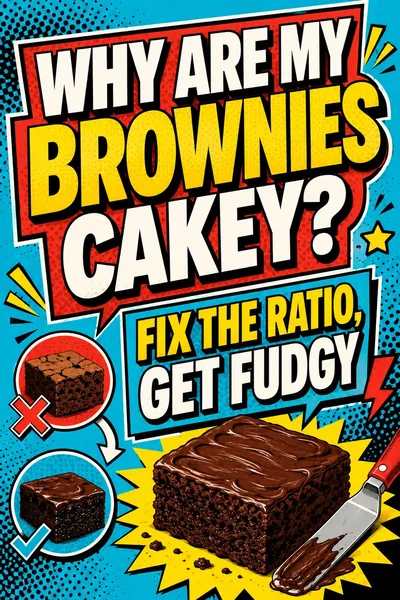 Baking guideWhy Are My Brownies Cakey? Fix the Ratio, Get FudgyFind out why →
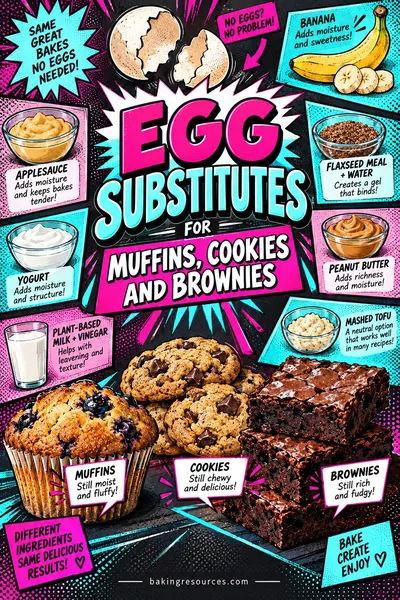 Baking guideEgg Substitutes for Muffins, Cookies and BrowniesShow me the ratios →
Pan size matters too. Thin brownies from a big pan dry out faster than thick ones from a small pan, since more of each square is crust and edge. If you're switching pans, brownie pan sizes shows how the batter depth and baking time change.
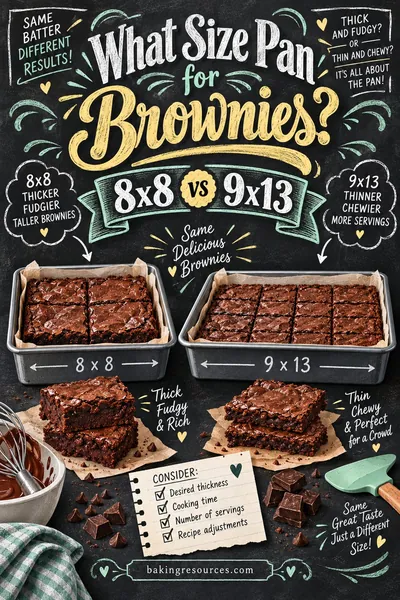 Baking guideBrownie Dish Size: 8x8 vs 9x13 and How to ConvertSee the sizes →
Store-bought brownies
Packaged brownies sold on a grocery shelf, the kind wrapped one by one, are made with ingredients and packaging that let them stay fresh until the date on the package. Keep them sealed at room temperature and follow the storage directions printed on the wrapper. Once a wrapper is open, treat that brownie like a homemade one and finish it within 3 to 4 days.
Brownies from a bakery case or a grocery bakery are usually not made to last as long. If they were sold at room temperature, store them as you would homemade, and count from the day you bought them unless the label says when they were baked. If they were sold from a refrigerated case, or have a cream cheese or cream topping, keep them in the fridge and use the label date or the times in the table above, whichever is sooner.
Unopened boxes of brownie mix are a pantry product, and the date on the box is about quality. An old mix may bake up flatter, since the leavening in it weakens over time. For the same reason, how long baking powder lasts is worth a look if you bake brownies from scratch with an old can.
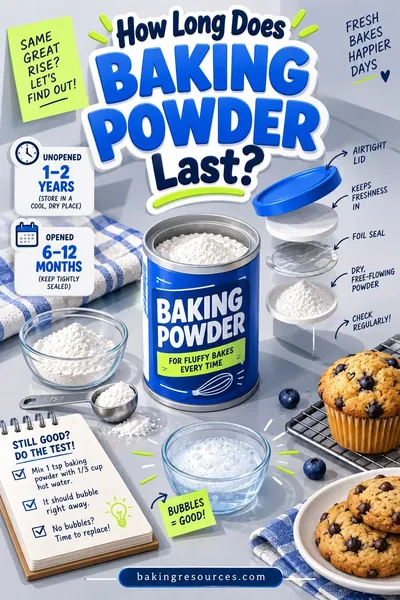 Baking guideHow Long Does Baking Powder Last? 6 to 12 Months Once OpenedGet the storage times →
How to tell if brownies have gone bad
Most of the time, brownies go stale before they go bad. Stale is only a quality issue. Spoiled is a safety issue. Here's how to tell the two apart.
Throw them out if you see
- Mold. White, green, blue or gray fuzzy spots, often on the cut edges, the bottom or where brownies touched each other. Mold can be hard to see on dark chocolate, so check the sides and bottoms in good light. Throw out the whole batch if one piece is moldy, since spores spread through a container.
- A sour, musty or stale-oil smell. Brownies should smell like chocolate. A sharp, rancid or cheesy smell means the fat has gone off or something is growing.
- A slimy or wet surface, especially under toppings, on cream cheese layers or under fruit.
- Toppings that have separated into a watery layer, or a cream cheese layer that smells sour.
- Time is up for the type. Cream cheese or ganache brownies that sat out longer than 2 hours, or any brownies past their fridge window.
Signs that are only about quality
- Hard, dry edges and a crumbly texture.
- A dull, slightly gray look on the chocolate top. That's usually fat or sugar bloom, where the cocoa butter or sugar rises to the surface. It's harmless. How to store chocolate explains why bloom happens.
- A firm, dense texture after the fridge, which softens again at room temperature.
Don't taste a brownie to decide whether it's safe. If it shows signs of spoilage or it's past its time, throw it out.
Bringing day-old brownies back
A brownie that's dry but not spoiled is still good food, and there are a few easy ways to make it enjoyable again.
- Warm it. About 10 seconds in the microwave softens the fat and brings back the fudgy texture. Eat it right away, since it hardens again as it cools.
- Add a slice of bread to the container. Overnight, the brownies pull moisture from the bread. Throw away the bread once it's dry and hard.
- Turn them into something else. Crumble dry brownies over ice cream or yogurt, layer them into a trifle, or blitz them into crumbs for a crust.
Don't try to revive a brownie that's moldy or smells off. Warming doesn't make spoiled food safe.
Worked example: brownies for holiday gift tins
Say you're making brownies for neighbor gifts and plan to hand them out on Saturday, December 19, with a Christmas cookie exchange the same week.
Plain fudgy brownies. You bake a 9x13 pan on Sunday, December 6. After cooling, you cut 24 squares, wrap them in pairs and freeze them on Monday. On Friday, December 18, you take them out and let them thaw on the counter, still wrapped, for about 2 hours. Saturday you pack them into tins. Counting 4 days from Friday's thaw, the last good counter day is Tuesday, December 22. You write "best by Dec 22" on each tin's tag, so neighbors know.
Cream cheese brownies. These need a different plan, because the recipients may leave the tin on the counter. Bake them on Thursday, December 17, keep them in the fridge, and hand them out Saturday in a sealed container with a note: "Keep refrigerated, eat by Sunday, Dec 20." Counting 4 days from Thursday gives Monday, December 21, and the note leaves a day of margin for the time they spend out of the fridge.
If you're packing several kinds of treats, how many cookies to bake for neighbor tins helps with the numbers. Keep plain brownies and cream cheese brownies in separate tins so the fridge-only ones don't get left out.
Brownies at Christmas, Thanksgiving and winter parties
Brownies are one of the best holiday bakes to make ahead, because plain ones freeze so well. A few things to keep in mind this time of year:
- Bake early, freeze, and thaw in batches. A pan baked in early December stays at its best through New Year's in the freezer. Thaw only what you need for each event.
- Watch toppings on the dessert table. Plain or buttercream-frosted brownies can stay out for the whole party. Cream cheese, ganache or whipped cream brownies need to go back in the fridge within 2 hours.
- Shipping brownies. Plain brownies ship well. Wrap squares individually and send them early in the week so they don't sit in a warehouse over a weekend. Don't ship cream cheese or ganache brownies.
- Peppermint and holiday mix-ins. Crushed candy canes on top melt and turn sticky in a humid container after a day or two. They're still safe, just messy, so add them close to serving.
Brownies keep longer than most holiday cookies with soft fillings, and a little less long than crisp cookies like shortbread. How long Christmas cookies last has times for the rest of the cookie tray, and Christmas cookies that freeze well pairs nicely with a freezer stash of brownies.
Bake sales, lunch boxes and care packages
Brownies travel more than most desserts, so it helps to know how each trip affects the clock.
Bake sales and school events
Plain brownies are the safest choice for a table that will sit out for hours. Wrap each square in plastic wrap or a small bag on the morning of the sale, so buyers get a fresh, clean piece and the brownies don't dry out in the open air. Skip cream cheese brownies and anything with whipped cream for long events, since a table with no cooler can't keep them under the 2 hour limit. Many schools and groups also ask for a list of ingredients or allergens, so a small label with "contains wheat, eggs, milk, nuts" saves questions.
Lunch boxes
A plain brownie square holds up fine in a lunch box until lunchtime with no ice pack. Pull a frozen square straight from the freezer in the morning, and it thaws by noon while helping keep the rest of the lunch cool. Cream cheese or ganache brownies need an insulated bag with an ice pack, the same as yogurt or cheese would.
Care packages
For mail, choose a plain fudgy recipe, since it stays moist longest. Cool the brownies fully, wrap each square tightly, and pack them snugly in a tin or a sturdy box so they don't slide. Mail them early in the week, and tell the person to eat them within 3 to 4 days of arrival or freeze them. Frosted brownies smear in transit and are better kept for local delivery.
Common brownie storage mistakes
- Covering them while warm. Steam turns into water on the lid and drips back onto the top. That damp patch is where mold grows first.
- Cutting the whole pan on day one. More cut edges means faster drying. Cut as you go.
- Leaving the pan uncovered. A pan with a towel over it is not airtight. Brownies lose moisture overnight.
- Leaving cream cheese brownies on the counter. They look like plain brownies, so people forget. Label the container, or keep them in the fridge from the start.
- Storing brownies with crisp cookies. Moisture moves from the brownies to the cookies, and the cookies go soft. Keep them in separate containers.
- Keeping them next to the oven. The heat speeds up staling and can melt chocolate tops.
- Thawing topped brownies on the counter. Anything with cream cheese, cream or ganache thaws in the fridge.
Questions people ask
Do brownies need to be refrigerated?
Plain brownies don't. They keep 3 to 4 days at room temperature in an airtight container, because they're dense, sweet and fully baked. Brownies with cream cheese, a cream-based ganache, cream cheese frosting or whipped cream do need the fridge, and they shouldn't sit out for more than 2 hours in total, or 1 hour if the room is above 90°F.
How long do brownies last in the fridge?
Plain brownies last about 1 week in the fridge, wrapped tightly so they don't dry out or pick up smells. Cream cheese brownies keep 3 to 4 days, and ganache or buttercream-topped brownies up to 5 days. Let cold brownies sit on the counter for 20 to 30 minutes, or warm them briefly, so the texture softens.
Can you freeze brownies?
Yes, and they freeze very well. Cool them completely, wrap them in plastic wrap and then foil or a freezer bag, and freeze for up to 3 months for the best quality. Thaw plain brownies on the counter, still wrapped, for 1 to 4 hours. Thaw cream cheese or ganache brownies in the fridge overnight.
How long do brownies last at room temperature?
Plain homemade brownies last 3 to 4 days at room temperature in an airtight container or with the slab tightly wrapped. Keep them in a cool spot away from the stove. Buttercream-frosted brownies are best within 2 days on the counter. Any brownies with fresh dairy toppings or cream cheese can only sit out for 2 hours.
How can you tell if brownies are bad?
Check for mold, especially on the cut edges and bottoms, where it can hide against the dark chocolate. Throw them out if they smell sour, musty or rancid, if toppings look wet or separated, or if fridge-only brownies sat out over 2 hours. Hard, dry edges and a dull top are only signs of staleness, not spoilage.
How long do box mix brownies last?
Once baked, box mix brownies keep about the same as homemade: 3 to 4 days on the counter, about 1 week in the fridge and up to 3 months in the freezer. An unopened box of mix keeps until the date printed on it. Past that date, the leavening can weaken, so the brownies may bake up a little flatter.
Why do my brownies get moldy so fast?
Usually it's trapped moisture. Brownies covered while still warm sweat inside the container, and the damp top molds within a few days. A warm or humid kitchen speeds it up too. Cool them fully before covering, keep them in a cool spot, and move them to the fridge or freezer if you won't finish them in 3 to 4 days.
Can you leave brownies out overnight?
Plain brownies, yes, as long as they're covered or wrapped so they don't dry out. Brownies with a cream cheese swirl, cream cheese frosting, whipped cream or a cream-based ganache, no. Those need to go in the fridge within 2 hours, and a pan left out overnight should be thrown away, even if it looks fine.