
How to Tell When Brownies Are Done, Fudgy or Cakey

Here's how to tell when brownies are done: a toothpick poked in the center comes out with a few moist crumbs, not wet batter, the edges have pulled away from the pan, and the center reads about 165 to 175°F for fudgy brownies or around 185°F for cakey ones. The top should look set and dull or crackly, with no jiggle.
Brownies keep cooking in the hot pan after you take them out, so the right moment is a little before they look finished. Type your thermometer reading into the calculator below and it tells you whether to keep baking, pull the pan now, or rescue a batch that went too far.
Free calculator
Brownie doneness checker
Slide your thermometer into the center of the pan at an angle, then type the reading here.
More free baking tools



Fudgy, chewy, or cakey: pick your target first
Brownies don't have one "done." A fudgy brownie and a cakey brownie are both fully baked, they just stop at different points. Fudgy brownies come out when the center is barely set and still dense and moist. Cakey brownies stay in until the crumb is light and springy all the way through. Chewy brownies land in between.
Most of the difference comes from the recipe itself: how much flour, butter, chocolate, and egg it uses, and how you mix it. If your brownies always turn out cake-like no matter when you pull them, the bake time isn't the main problem. Our guide on why brownies turn out cakey covers the ratio fixes. This page is about the oven side: knowing the moment your brownies hit the texture you're after.
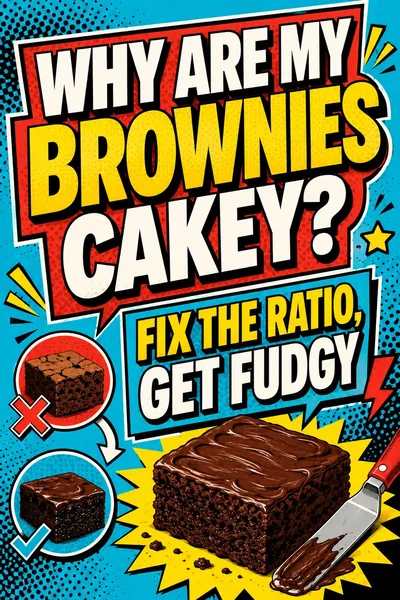 Baking guideWhy Are My Brownies Cakey? Fix the Ratio, Get FudgyFind out why →
Brownie temperatures: what the numbers mean
A thermometer takes out the guesswork, and it's handy with brownies because the top can look done long before the middle is. Brownies finish lower than cake, which is done around 200 to 210°F, because they're heavy on sugar, fat, and chocolate and light on flour. They're meant to stay dense, so they never need to dry out the way cake does.
| Center reading | Texture you get | What to do |
|---|---|---|
| Under 155°F | Wet batter in the middle | Keep baking, check every 3 to 5 minutes |
| 155 to 164°F | Almost set, eggs not quite cooked | 2 to 3 more minutes |
| 165 to 174°F | Fudgy: dense, moist, just set | Pull now and cool fully |
| 175 to 184°F | Chewy: firmer, still moist | Pull now |
| 185 to 194°F | Cakey: lighter, springy crumb | Pull right away |
| 195°F and up | Dry and crumbly | Rescue with syrup or frosting |
Why 165°F as the low end? Eggs are fully cooked at 160°F, so the fudgiest brownie should still clear that line in the center. A few degrees above it gives you a set middle that slices instead of oozing.
How to get a good reading
Brownies are thin, so go in at an angle from the side, aiming the tip at the center of the pan and halfway down. Straight down from the top often touches the pan bottom, which reads hotter. Skip any spot with a melted chocolate chip, since melted chocolate reads hot and fools the thermometer.
The toothpick test, done right
The toothpick test works well for brownies, as long as you know what you're looking for. Poke a toothpick or thin skewer into the center of the pan, not near the edge, and pull it straight out.
- Wet, shiny batter clinging to it: not done. Keep baking.
- A few moist, fudgy crumbs: done for fudgy or chewy brownies. This is the sign most people want.
- Clean, or a couple of dry crumbs: done for cakey brownies, and past it for fudgy ones.
The big mistake is waiting for a clean toothpick on a fudgy recipe. By the time it comes out clean, the brownies are cakey or dry. And if you hit a chocolate chip or a pocket of chunks, the smear will look like raw batter. Test a second spot before you decide.
What done brownies look like
No thermometer and no toothpick? Your eyes and a gentle shake still tell you a lot.
- The edges pull away from the pan. A thin gap along the sides means the outer part has set. The edges should look firm and slightly darker than the middle.
- The top is set. Most brownies get a shiny, crackly top, and the center should look dry and set rather than glossy and wet. A matte top works too for cakey recipes.
- No jiggle in the middle. Give the pan a gentle nudge. Fudgy brownies can have the slightest wobble right at the very center. If the middle ripples like pudding, it needs more time.
- The center has puffed a little. Brownies rise slightly as they bake, then settle as they cool. A sunken, wet center usually means underbaked.
These signs work like the ones for cookies, which also look a little underdone when they're ready. The brownie notes in how to tell when cookies are done follow the same idea for brownie cookies and bars.
 Baking guideHow to Tell When Cookies Are Done: 5 Reliable SignsSee the doneness test →
Carryover cooking: why you pull them a little early
A pan of brownies doesn't stop cooking when it leaves the oven. The hot pan keeps sending heat into the edges and bottom, and the center can climb a few more degrees as it rests. Metal pans hold and pass along heat well, and glass holds it even longer.
That's why the fudgy target is "barely set" and not "firm." Brownies pulled at about 170°F finish setting on the cooling rack. Brownies that already feel firm in the oven end up dry. Fudgy brownies also look underdone while hot, then firm up as the chocolate and butter cool. Give them at least 2 hours in the pan before cutting, or chill them for 30 minutes if you want very clean squares. Lining the pan helps too. Our guide on how to line a pan shows the parchment sling trick, which lets you lift the whole slab out.
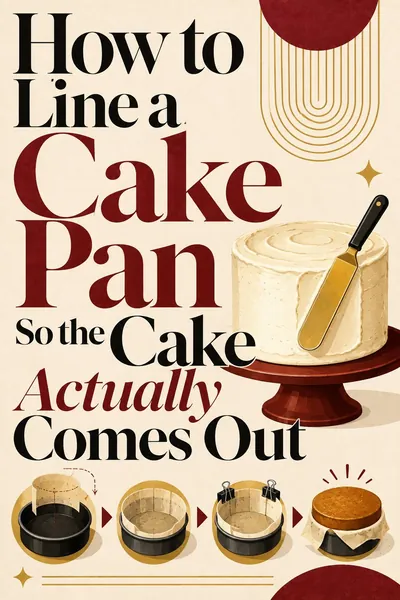 Baking guideHow to Line a Cake Pan So the Cake Actually Comes OutSee the sizes →
Baking times by pan size
Use time as the moment to start checking, not the moment to pull. These ranges assume 350°F, a light metal pan, and the middle oven rack.
| Pan | Batter depth | Start checking at 350°F |
|---|---|---|
| 8x8 inch metal | About 1 inch | 22 to 28 minutes |
| 9x9 inch metal | About 3/4 inch | 20 to 25 minutes |
| 9x13 inch metal, doubled batch | About 1 inch | 25 to 32 minutes |
| Glass pan, any size | Same | Bake at 325°F, check about 5 minutes later |
| Box mix | As the box says | 3 to 5 minutes before the shortest box time |
Glass and dark pans brown the edges faster, which is why many bakers drop the oven 25°F with glass. If you're switching pan sizes, the brownie pan size guide shows how much batter each pan holds and how the time shifts. And if you're curious why metal and glass act so differently, see silicone vs metal bakeware. For even baking, the middle rack is the safe bet (see which oven rack to use).
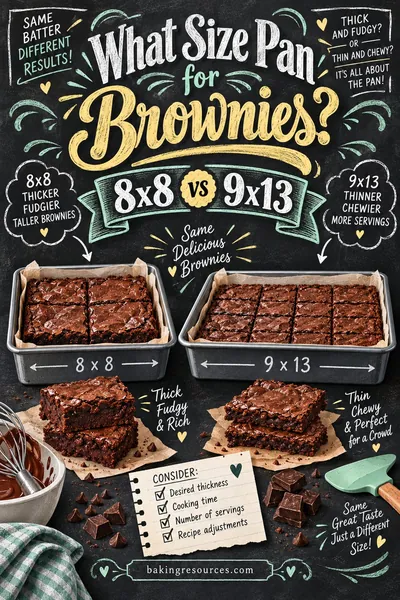 Baking guideBrownie Dish Size: 8x8 vs 9x13 and How to ConvertCheck the pan chart →
 Baking guideSilicone vs Metal Bakeware: Which One Bakes Better?See the chart →
Worked example: fudgy brownies in an 8x8 pan
Say you're making a fudgy recipe in an 8x8 inch metal pan at 350°F. The recipe says 25 to 30 minutes, so you check at 22. The edges have just started to pull away, but the center still ripples when you nudge the pan. You leave it.
At 25 minutes, the top looks crackly and set, and there's only a tiny wobble in the very middle. A toothpick in the center comes out with a few moist crumbs. You slide the thermometer in at an angle and get 168°F. The calculator says done for fudgy, so out it comes. You let it cool for 2 hours, lift it out by the parchment, and cut 16 dense, fudgy squares. If you had waited for a clean toothpick, you'd likely have baked to 185°F or more and ended up with cakey brownies.
Common mistakes and how to fix them
- Waiting for a clean toothpick on a fudgy recipe. Pull at moist crumbs instead.
- Testing too close to the edge. The edges bake first. Always test the center.
- Cutting while hot. Warm brownies tear and look raw. Let them cool and set first.
- Swapping in a glass pan without adjusting. Drop the oven 25°F or the edges overbake before the center sets.
- Melting chocolate too hot. Scorched chocolate makes grainy, dry brownies. Our guide on how to melt chocolate keeps it smooth.
- Baking egg-free brownies by the same signs. Brownies made with an egg swap often stay softer and look wetter when done. The egg substitutes for brownies guide explains what to expect.
 Baking guideHow to Melt Chocolate Without Seizing It (Full Guide)Show me how →
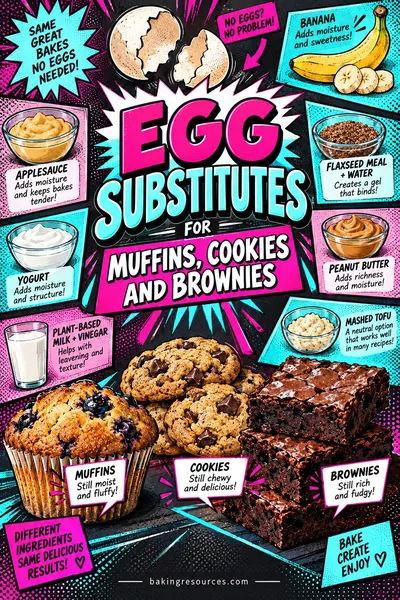 Baking guideEgg Substitutes for Muffins, Cookies and BrowniesSee the swaps →
If they're underbaked
If you cut in and find a wet middle, put the pan back at 325°F, covered loosely with foil, for 5 to 10 minutes. This works even after the pan has cooled, though it takes closer to 10 to 15 minutes. Check the center again and aim for at least 165°F.
If they're overbaked
Dry brownies can still be saved. Brush the top lightly with simple syrup while they're still warm, add a layer of frosting, or cube them and use them in a trifle or over ice cream.
 Baking guideSimple Syrup for Cake: Ratio, Flavors and How to Brush ItGet the details →
Brownies for Thanksgiving and holiday dessert tables
Brownies are a handy holiday dessert because they bake in under half an hour and travel well. A few tips for the busy season:
- Bake a day ahead. Brownies cut more cleanly the next day. Wrap the cooled slab tightly and keep it at room temperature, then slice before serving. Our baked goods storage guide covers how long they keep.
- Pumpkin or cream cheese swirl brownies take longer. The swirl adds moisture, so add 5 to 10 minutes and test a spot with both swirl and brownie. A cream cheese swirl means the pan goes in the fridge once cool.
- Fit the oven schedule. On Thanksgiving, bake brownies in the morning before the turkey, or while it rests. They need 350°F, not the turkey's lower temperature.
- Short on time? Our guide to turning cake mix into brownies gets a batch in the oven in minutes.
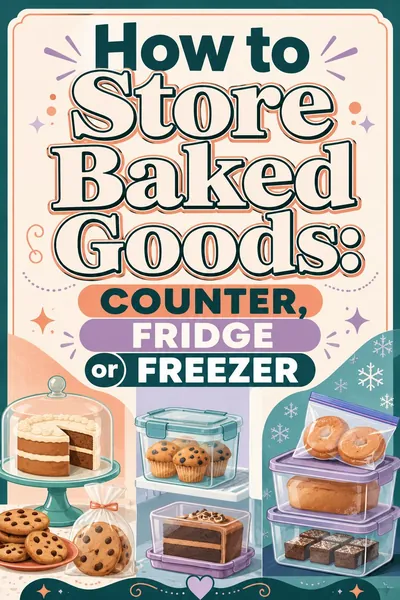 Baking guideHow to Store Baked Goods: Counter, Fridge or FreezerSee how long it keeps →
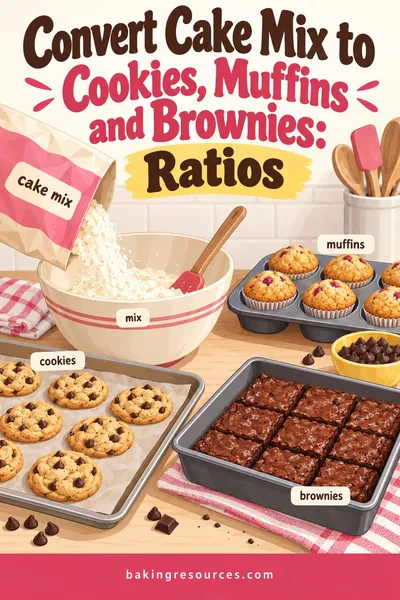 Baking guideConvert Cake Mix to Cookies, Muffins and Brownies: RatiosGet the measurements →
Questions people ask
What internal temperature are brownies done?
Fudgy brownies are done at about 165 to 175°F in the center, chewy ones at about 175 to 185°F, and cakey ones around 185°F. Below 160°F the eggs aren't fully cooked yet, so keep baking. Above about 195°F most brownies start to dry out. Measure at an angle into the center, away from the pan bottom and any melted chips.
Should a toothpick come out clean for brownies?
Only for cakey brownies. For fudgy or chewy brownies, you want a toothpick with a few moist crumbs stuck to it. Wet, shiny batter means they need more time. If you wait for a totally clean toothpick on a fudgy recipe, you'll overbake it and the brownies will turn out cake-like or dry.
Do brownies keep cooking after you take them out?
Yes. The hot pan keeps sending heat into the brownies, and the center can rise a few more degrees as it rests. That's why fudgy brownies come out when they're barely set. They firm up a lot as they cool, so give them at least 2 hours in the pan before cutting.
Why do my brownies look raw in the middle after cooling?
Either the center didn't reach about 165°F, or the pan was deeper than the recipe planned for. Glass pans and thick batter layers both slow the center down. Put the pan back at 325°F, covered loosely with foil, for 10 to 15 minutes and check the center temperature again.
How long do brownies take at 350°F?
In a light metal 8x8 inch pan, most homemade brownies take 22 to 28 minutes. A 9x9 inch pan takes about 20 to 25 minutes, and a doubled batch in a 9x13 inch pan takes about 25 to 32 minutes. For glass, bake at 325°F and check about 5 minutes later than the metal time.
Is it safe to eat gooey brownies?
Gooey is fine if the center has reached at least 160°F, which is when the eggs are fully cooked. Fudgy brownies at 165 to 175°F are dense and moist but safely baked. Brownies that are still liquid batter in the middle haven't reached that point, so put them back in the oven.