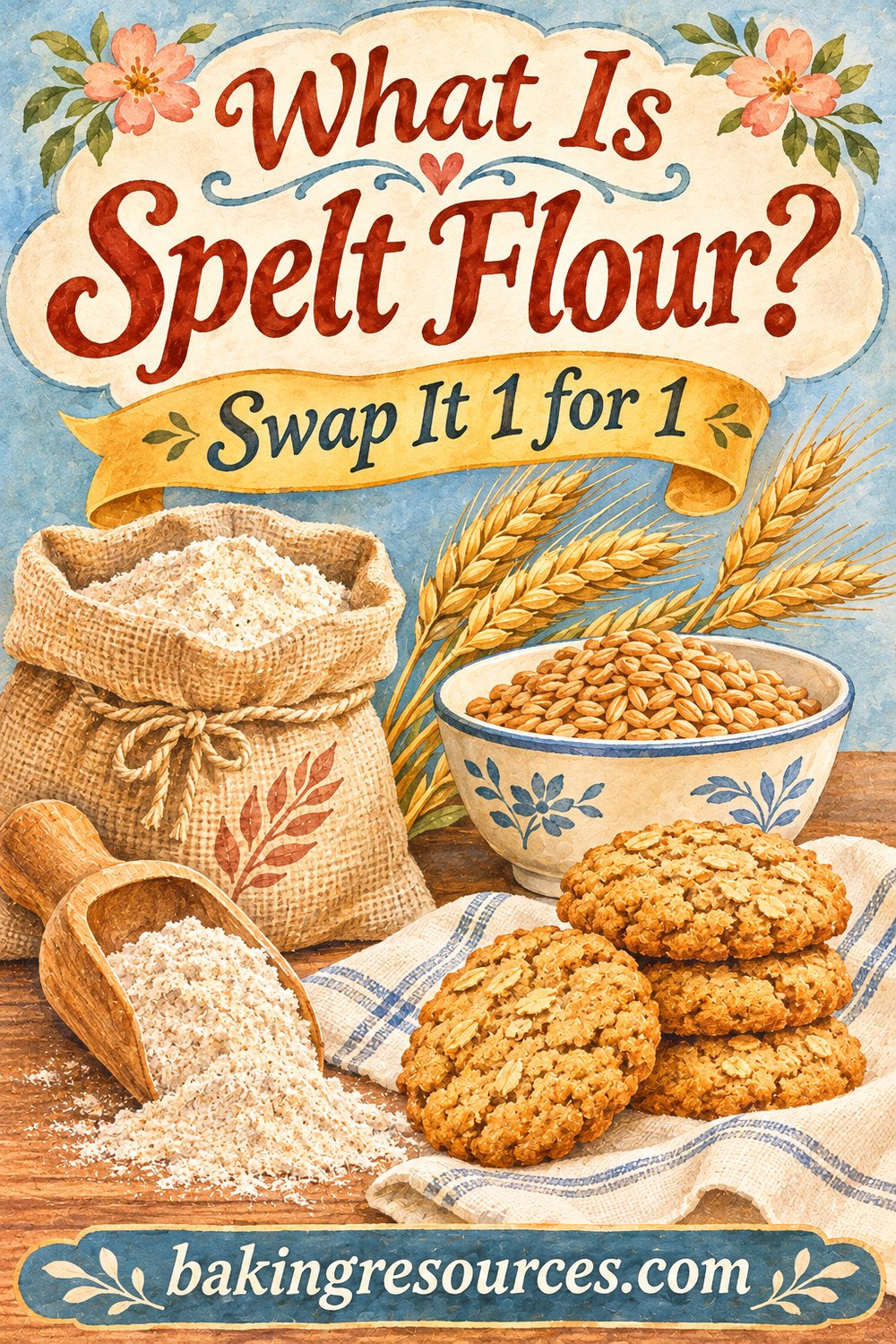
What Is Spelt Flour? (And Swapping It for All-Purpose)
Free calculator from Baking Resources
Spelt Flour Swap Guide
Pick the spelt you have and what you are making.
Need more? Open the free Ingredient Weight Chart.
More free baking tools



Want more options? Open the full ingredient weight chart.
- Spelt is an ancient wheat (Triticum spelta) and it contains gluten.
- Swap 1 cup all-purpose (125 g) for 1 cup spelt (about 120 g) in most recipes.
- Light spelt works 1 for 1 almost everywhere; whole spelt is best at half in cakes and bread.
- Mix spelt batter and dough about 25 percent less than you would wheat.
- Rest spelt dough 10 minutes so the bran softens.
- Whole spelt keeps about 3 months in the pantry and up to 1 year in the freezer.
If you have ever seen a bag of spelt flour next to the whole wheat and wondered what it is, you are not alone. What is spelt flour, and can it stand in for the all-purpose flour in your recipe? In short, yes, most of the time. It just likes a lighter touch than regular flour. Here is everything you need to bake with it happily.
What is spelt flour?
Spelt flour is flour ground from spelt, an ancient wheat grain that has been grown for thousands of years. It is a close cousin of the wheat in your all-purpose flour, but it is a different species, so it behaves a little differently in the bowl.
Spelt kernels grow inside a tough husk. Millers remove the husk, then grind the grain. You will see two kinds on the shelf:
- Whole spelt flour keeps the bran and germ. It is darker, nuttier and a bit coarser.
- Light or white spelt flour has most of the bran sifted out. It is paler and softer, and it feels like all-purpose flour in your hands.
Some bags say “sifted” or “refined” spelt. That is the light kind. If the label does not say whole, check the ingredient list or the color: cream means light, tan with brown flecks means whole.
Is spelt flour the same as whole wheat flour?
No. Spelt is not whole wheat, even though whole spelt looks similar. Spelt is its own type of wheat. Whole wheat flour is ground from common bread wheat with the bran and germ left in.
The differences you will notice in the kitchen:
- Spelt tastes milder and a little sweeter than whole wheat, which can be earthy or slightly bitter.
- Spelt gluten is weaker and more fragile, so spelt dough tears more easily when you over-knead.
- Spelt dissolves into liquids faster, so batters can feel thin at first and then thicken as they rest.
Our types of flour guide puts spelt next to the others if you want to compare more flours.
Does spelt flour have gluten?
Yes, spelt flour has gluten, so it is never safe for anyone with celiac disease or a gluten allergy. Spelt is a type of wheat, and gluten is the protein that gives wheat dough its stretch.
You may see spelt described as “easier to digest” or “low gluten.” Some people with a mild wheat sensitivity say they tolerate it better, but that is not the same as gluten-free. Spelt gluten is simply more delicate. It forms a softer, less chewy network than strong bread flour. If you need a true gluten-free bake, see our gluten-free flour weights and gluten-free baking substitutions instead.
What does spelt flour taste like?
Spelt flour tastes mildly nutty and a little sweet, with whole spelt showing the nuttiness more than light spelt. Most people describe it as a gentler version of whole wheat.
In sweet bakes like banana bread and oatmeal cookies, that nutty note is a bonus. In a delicate white cake you may find whole spelt too strong, so use light spelt or replace only half. The flavor also comes through more in plain bakes such as biscuits, pancakes and shortbread, where there are few other strong flavors to cover it.
Can you substitute spelt flour for all-purpose flour?
Yes. You can swap spelt for all-purpose flour 1 for 1 by volume in most cookies, muffins, pancakes and quick breads. Because spelt is a little lighter than all-purpose, a kitchen scale is more exact: use about 120 g of spelt for every 125 g of all-purpose.
How far you can go depends on what you are baking and which spelt you have. This table is the same guide as the calculator above.
| Recipe | Light spelt | Whole spelt | Notes |
|---|---|---|---|
| Cookies and bars | 1 for 1 | 1 for 1, or half to start | Rest dough 10 minutes |
| Muffins and quick breads | 1 for 1 | 1 for 1; add 1 to 2 tbsp milk if stiff | Stir until just mixed |
| Cakes and cupcakes | 1 for 1 | Up to half | Whole spelt can turn heavy |
| Yeast bread and rolls | 1 for 1 | About half, 10 percent less liquid | Knead about 5 minutes less |
| Pie crust and biscuits | 1 for 1 | Up to half | Handle as little as possible |
If you only remember one rule, remember this: spelt hates being worked. Whatever time you would normally mix or knead, cut it back by about a quarter.
How much spelt flour equals all-purpose flour?
One cup of all-purpose flour (125 g) is replaced by 1 cup of spelt flour, which weighs about 120 g. The difference is small, so cup for cup is fine if you spoon and level the flour. The Baking Resources ingredient weight chart uses 125 g per cup for all-purpose flour.
| All-purpose flour (US cups) | All-purpose (125 g per cup) | Spelt flour (about 120 g per cup) |
|---|---|---|
| 1/4 cup | 31 g | 30 g |
| 1/3 cup | 42 g | 40 g |
| 1/2 cup | 62 g | 60 g |
| 3/4 cup | 94 g | 90 g |
| 1 cup | 125 g | 120 g |
| 1 1/2 cups | 188 g | 180 g |
| 2 cups | 250 g | 240 g |
| 3 cups | 375 g | 360 g |
Spoon the flour into the cup and level it with a knife. Scooping straight from the bag packs in up to 20 percent more flour and makes dry bakes. Our guide to how to measure flour shows the spoon-and-level method, and the grams to cups converter handles other weights.
How do you bake with spelt flour?
Baking with spelt flour works best when you mix gently, rest the batter and watch the bake time. Follow these steps for almost any recipe:
- Weigh or spoon-and-level. Use about 120 g per cup of spelt.
- Mix less. Stir wet into dry until you no longer see dry flour, then stop.
- Rest for 10 minutes. Whole spelt needs time to soak up the liquid. The batter thickens as it sits.
- Check the thickness. If a whole spelt batter is stiff, add 1 to 2 tablespoons of milk. If it is runny, wait before adding more flour.
- Watch the oven. Check 2 to 3 minutes before the recipe’s earliest time until you learn how your spelt bakes.
For yeast dough, knead about 5 minutes less than you would with wheat, and let the dough rise until it has grown by about half, not doubled. Spelt dough that over-rises can collapse in the oven.
Worked example: spelt in chocolate chip cookies
A cookie recipe calling for 2 1/4 cups of all-purpose flour (281 g) takes about 2 1/4 cups of light spelt (about 270 g). Here is how that looks in practice, using our chocolate chip cookies recipe as the base.
- All light spelt: 2 1/4 cups (about 270 g). Same method, same time.
- Half and half: 1 1/8 cups all-purpose (140 g) plus 1 1/8 cups whole spelt (about 135 g). A safe first try if you are new to spelt.
- All whole spelt: 2 1/4 cups (about 270 g). Rest the dough 10 minutes, and expect a slightly nuttier, denser cookie.
Bake as the recipe says and judge doneness by the golden edges rather than the clock alone.
Spelt flour vs other flours
Spelt sits between all-purpose and whole wheat when it comes to flavor and strength. This table shows how it compares with the flours you probably already own.
| Flour | Gluten? | Taste | Swap for all-purpose |
|---|---|---|---|
| All-purpose | Yes, strong | Neutral | Baseline |
| Light (white) spelt | Yes, delicate | Mild, a little nutty | 1 for 1 in most recipes |
| Whole spelt | Yes, delicate | Nutty, a bit sweet | 1 for 1 in cookies and muffins; half in cakes and bread |
| Whole wheat | Yes, strong | Earthy, slightly bitter | Replace up to half |
| Bread flour | Yes, very strong | Neutral | Not an all-purpose swap in tender bakes |
Compare it with bread flour vs all-purpose if your recipe depends on a strong gluten structure. Spelt will not give you the chew of bread flour.
Common mistakes with spelt flour
- Overmixing. The number one problem. Spelt dough turns slack and gummy when worked too long.
- Adding extra flour. A spelt batter often looks wet at first. Wait 10 minutes before you decide it needs more flour.
- Replacing all the flour with whole spelt in a delicate cake. It will taste fine but be dense. Use half.
- Treating it as gluten-free. It is not.
- Skipping the rest. Whole spelt needs time to hydrate.
What if my spelt bake turns out wrong?
Most spelt problems come down to mixing and moisture. Here is what to change:
- Crumbly cookies or bars: add 1 tablespoon of milk or an extra egg yolk next time, and do not overbake.
- Gummy muffins: you mixed too long. Stir about 10 strokes less. If your muffins are also dry, see why are my muffins dry.
- Heavy cake: replace only half the flour with whole spelt, or switch to light spelt.
- Dense bread: knead less, use about 10 percent less water and let it rise by about half.
- Flat cookies: chill the dough 30 minutes. Our how to stop cookies spreading page has more fixes.
How do you store spelt flour?
Store spelt flour in an airtight container: light spelt keeps about 6 months in a cool pantry, and whole spelt keeps about 3 months in the pantry or up to 1 year in the freezer. Whole spelt keeps the germ, which has natural oils that can turn stale.
Smell it before you bake. Fresh spelt smells sweet and grainy. If it smells like old paint or crayons, it has gone rancid. Read how to store flour for container tips, and let frozen flour come to room temperature before measuring so it does not clump.
Is spelt flour healthier than all-purpose flour?
Whole spelt flour has more fiber than all-purpose flour because it keeps the bran and germ, much like whole wheat. Light spelt has less fiber and is closer to all-purpose flour. Neither is a magic fix, and both have gluten.
Choose spelt for the flavor and texture first. If you want more whole grains, a half-and-half mix with all-purpose flour is an easy way to start. Our healthy baking recipes show other simple swaps.
Quick reference: spelt flour
| Question | Short answer |
|---|---|
| What is spelt? | An ancient wheat with gluten and a nutty, slightly sweet taste |
| Gluten-free? | No. Not safe for celiac disease or gluten-free diets |
| Swap for all-purpose? | 1 for 1 by cup; about 120 g spelt for 125 g all-purpose |
| Light spelt in cookies | 1 for 1 |
| Whole spelt in cakes | Replace up to half |
| Yeast bread | Knead about 5 minutes less; start with half |
| Mixing | Mix less than you would with wheat |
| Storage | Airtight; whole spelt keeps about 3 months in the pantry, up to 1 year frozen |
Need a different swap? Try the baking substitutions tool or the kitchen conversion calculator.
Frequently asked questions
What is spelt flour?
Spelt flour is flour ground from spelt, an ancient type of wheat. It has gluten and tastes nutty and a little sweet. You can swap it for all-purpose flour 1 for 1 in many recipes.
Is spelt flour gluten-free?
No. Spelt is a wheat, so it contains gluten. Its gluten is more delicate than regular wheat gluten, but it is still not safe for celiac disease or a gluten-free diet.
Can I use spelt flour instead of all-purpose flour?
Yes. Use the same amount by cup, or about 120 g of spelt for every 125 g of all-purpose. Mix less, and use half spelt in cakes and bread if you are using whole spelt. See our guide to types of flour for other options.
Is spelt flour the same as whole wheat flour?
No. Spelt is a different, older species of wheat. Whole spelt and whole wheat both keep the bran and germ, but spelt tastes milder and sweeter and its gluten is weaker.
What does spelt flour taste like?
Light spelt tastes mild with a faint nutty note. Whole spelt tastes nuttier and a little sweeter, like a gentler whole wheat.
Does spelt flour need less liquid?
Often a little. Whole spelt soaks up liquid fast, then the dough can turn sticky. Start with about 10 percent less liquid in yeast bread and add back if the dough is dry.
Can you use spelt flour in cookies?
Yes, and cookies are the easiest place to start. Swap it 1 for 1, mix just until combined, and rest the dough 10 minutes. Try it in our chocolate chip cookie recipe.
How do you store spelt flour?
Keep it in an airtight container. Light spelt keeps about 6 months in a cool pantry. Whole spelt has natural oils, so it is best frozen if you will not use it within about 3 months. More in how to store flour.