Is Phyllo Dough the Same as Puff Pastry?
Free calculator from Baking Resources
Phyllo or Puff Pastry: Which Fits?
Pick the dish and which dough you have.
Need more? Open the free Butter Converter.
More free baking tools

Want more options? Open the full butter converter.
- Phyllo dough is not puff pastry: phyllo is paper-thin and nearly fat-free; puff pastry is butter-laminated.
- Phyllo needs about 1/2 tbsp (7 g) melted butter per sheet, or 4 tbsp (57 g) per 8 sheets.
- Phyllo bakes at 350 to 375°F (175 to 190°C); puff pastry at about 400°F (200°C).
- Swap 6 to 8 buttered phyllo sheets for 1 puff pastry sheet.
- Filo and fillo are other spellings of phyllo.
- 1 stick of butter is 113 g, or 8 tablespoons.
Is phyllo dough the same as puff pastry?
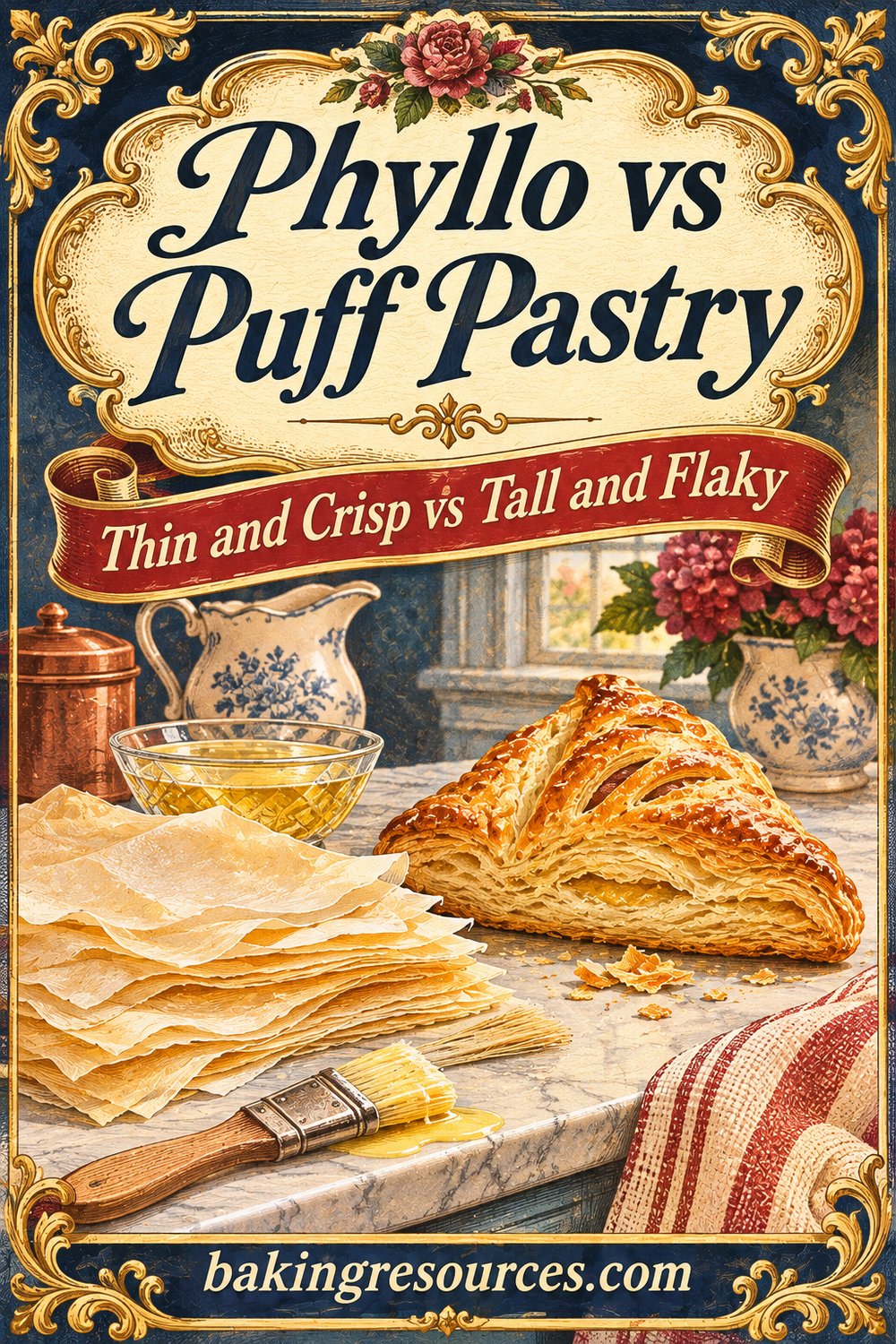
No, phyllo dough is not the same as puff pastry: phyllo is a paper-thin dough with almost no fat in it, while puff pastry is a thick dough with a lot of butter folded in. They both make flaky pastries, which is why people mix them up, but they get there in opposite ways.
With phyllo, you add the butter yourself, one brushed layer at a time, and the pastry bakes crisp and shattery. With puff pastry, the butter is already inside, so the dough rises into tall, tender layers. You will also see phyllo spelled filo or fillo. It is the same thing.
So if your recipe says one and you only have the other, do not just swap and hope. The next sections show what is different, and when a swap will work.
What is phyllo dough?
Phyllo dough is a very thin, unleavened dough made from flour, water and a small amount of oil, rolled or stretched until it is thinner than a sheet of paper. The word comes from the Greek for “leaf”. It is sold as stacked sheets in a frozen box.
Because the dough itself holds almost no fat, a single sheet is dry and brittle, and it tears if it sits out. You build a pastry by laying down a sheet, brushing it with melted butter or oil, and repeating. In the oven, the moisture in the butter turns to steam and lifts the sheets just enough to separate them, giving a crisp, crackly bite.
Phyllo is the dough behind baklava, spanakopita and strudel-style pastries. It is made from regular wheat flour, with no yeast or baking powder.
What is puff pastry?
Puff pastry is a laminated dough: a simple dough rolled around a block of cold butter and folded again and again, which creates hundreds of thin layers of dough and butter. It is sold as frozen sheets or blocks.
In a hot oven, the water in the butter turns to steam and forces the layers apart, so the pastry can grow to several times its original height. A large share of the finished dough’s weight is butter, often a third or more, which gives it that rich, tender flake. To dig into the method, see what lamination in pastry is.
Puff pastry is the dough behind turnovers, palmiers, napoleons, pot pie lids and wrapped brie. You can make it from scratch, but most home bakers buy it.
What are the main differences between phyllo and puff pastry?
The main differences are fat, thickness and how they rise: phyllo is nearly fat-free and paper-thin and does not rise, while puff pastry is rich with butter, thick and rises tall. This table puts them side by side.
| Phyllo dough | Puff pastry | |
|---|---|---|
| Fat in the dough | Almost none (a little oil) | A lot (butter folded in) |
| Thickness | Paper-thin sheets | Thick sheet, about 1/8 inch (3 mm) |
| Rise in oven | Barely lifts | Rises several times taller |
| Texture when baked | Crisp, shattery, crackly | Tall, flaky, tender |
| Added butter needed | Yes, brush every sheet | No |
| Typical oven | 350 to 375°F (175 to 190°C) | 400°F (200°C) |
| Handling | Dries out in minutes, keep covered | Cracks if too cold, sticky if too warm |
| Classic dishes | Baklava, spanakopita, strudel | Turnovers, palmiers, pot pie lids |
Can you substitute phyllo for puff pastry?
Yes, you can substitute phyllo for puff pastry by stacking 6 to 8 buttered sheets for each puff pastry sheet, though the result will be crisp and flat, not tall and puffy. Phyllo works well for turnovers, pie lids, wrapped brie and strudel. It does not work for palmiers or anything that needs height.
Use about 4 tablespoons (57 g, half a stick) of melted butter for every 8 sheets, and bake at 350 to 375°F (175 to 190°C). Because phyllo browns fast, check it after 12 minutes. If the top darkens before the filling is hot, cover it loosely with foil.
Can you substitute puff pastry for phyllo?
Yes, you can substitute puff pastry for phyllo in many savory pies and pastries, but it will puff up and taste richer, and it will not be crisp like phyllo. For baklava, it is a poor match, because baklava depends on dozens of thin, syrup-soaked, crisp layers.
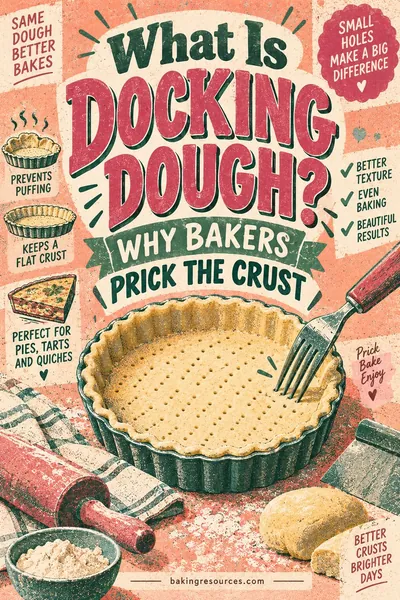
Here is how to make it work. Roll one puff pastry sheet thinner, to about 1/16 inch (1.5 mm), and prick it all over with a fork (this is called docking, and our guide to docking dough explains why). Use one thin sheet for every 6 to 8 phyllo sheets in the recipe. Bake it a little hotter, at 400°F (200°C), and skip the extra butter, since it already has plenty.
How much butter do you need for phyllo?
You need about 1/2 tablespoon (7 g) of melted butter per phyllo sheet, which is 4 tablespoons (57 g) for 8 sheets. This is a handy planning number, and it varies with sheet size and how thickly you brush. The butter converter changes sticks, tablespoons and grams for you.
| Phyllo sheets | Melted butter (tbsp) | Sticks | Grams |
|---|---|---|---|
| 4 | 2 | 1/4 | 28 g |
| 8 | 4 | 1/2 | 57 g |
| 12 | 6 | 3/4 | 85 g |
| 16 | 8 | 1 | 113 g |
| 24 | 12 | 1 1/2 | 170 g |
Use one 113 g stick to 8 tablespoons as your anchor. Unsalted butter lets you control the salt, which matters in a thin, crisp pastry. If you are choosing, read salted versus unsalted butter. For a dairy-free version, olive oil works well, and butter versus oil in baking shows what changes.
What is a worked example for a 9×13 pan?
For a 9×13 inch pan of layered phyllo pastry using 24 sheets, you need about 12 tablespoons (1 1/2 sticks, 170 g) of melted butter, and you bake it at 350 to 375°F (175 to 190°C). Here is the math, step by step:
- 24 sheets at 1/2 tablespoon each is 12 tablespoons.
- 12 tablespoons divided by 8 tablespoons per stick is 1 1/2 sticks.
- 1 1/2 sticks at 113 g each is about 170 g.
- Brush the pan, then every sheet, edge to edge, and add a final coat on top.
If you replaced the phyllo with puff pastry, you would roll out 3 or 4 thin sheets instead and skip the brushed butter entirely. Our baking substitutions tool lists other swaps you can run through the same logic.
Which one should you use for each dish?
Use phyllo for crisp, layered pastries like baklava, spanakopita and strudel, and puff pastry for tall, flaky ones like turnovers, palmiers and pot pie lids. This table gives the pick for common dishes.
| Dish | Best choice | Why |
|---|---|---|
| Baklava | Phyllo | Needs many thin, crisp layers to hold syrup |
| Spanakopita | Phyllo | Crisp triangle shell around the filling |
| Apple turnovers | Puff pastry | Rises tall and stays tender |
| Palmiers | Puff pastry | Caramelized layers need butter in the dough |
| Wrapped brie | Either | Phyllo is crisp, puff is rich |
| Apple strudel | Phyllo | Thin rolled layers |
| Pot pie lid | Puff pastry | Rises and holds its shape over hot filling |
| Cheese straws | Puff pastry | Twists puff and stay light |
How do you thaw and handle each one?
Thaw phyllo overnight in the refrigerator (about 8 to 12 hours) and puff pastry for 30 to 40 minutes at room temperature or overnight in the fridge. Rushing either one causes tearing or sticking.
For phyllo, unroll the stack on a counter, cover it with plastic wrap and a barely damp towel, and pull out one sheet at a time. A wet towel makes the sheets gummy, so wring it very well. For puff pastry, unfold it only when it bends without cracking, and keep it cold. If it turns sticky, chill it for 10 minutes. A little flour on the counter helps, and baking evenly in your oven keeps both from browning in patches.
How do you store leftover phyllo and puff pastry?
Wrap leftover phyllo tightly and refrigerate it for about 1 week, and keep unused puff pastry sheets cold for 2 to 3 days or refreeze if still cold. Check the package for exact times, since brands differ. Phyllo dries out fast, so use plastic wrap pressed right against the sheets, then a zip bag.
Baked pastries made with either are best the same day, since they soften as they sit. To crisp them up, warm them at 350°F (175°C) for 5 to 10 minutes. For more on keeping baked goods fresh, see how to store baked goods.
What are the common myths about phyllo and puff pastry?
The biggest myth is that phyllo is just very thin puff pastry. It is not, because the dough is made differently and puffs differently. These myths come up again and again:
- Myth: Phyllo is a lighter, healthier choice. Fact: It starts nearly fat-free, but every sheet gets brushed with butter, so the final pastry can be just as rich.
- Myth: Puff pastry is too hard for beginners. Fact: Store-bought sheets are made for home bakers and need only thawing and rolling.
- Myth: Torn phyllo is ruined. Fact: Tears disappear between layers once you brush them with butter.
- Myth: You must bake both at the same heat. Fact: Phyllo likes 350 to 375°F (175 to 190°C), puff pastry 400°F (200°C). Use the oven temperature conversion tool for Celsius.
What mistakes should you avoid?
The top mistake is letting phyllo dry out, which makes the sheets crack when you touch them. Avoid these slip-ups:
- Leaving phyllo uncovered while you work.
- Skipping butter between sheets, which gives dry, papery layers.
- Baking puff pastry on a hot, greased pan, which can make the bottom greasy. Use parchment.
- Using the same oven temperature for both. Phyllo burns at 400°F (200°C).
- Stretching puff pastry to fit, which makes it shrink and warp as it bakes. Roll gently instead.
- Using an egg wash on phyllo edges, which glues the layers together. Use butter.
Quick reference: phyllo versus puff pastry
Phyllo is thin, crisp and added-butter; puff pastry is thick, tall and butter-rich. This table sums it up.
| Question | Phyllo | Puff pastry |
|---|---|---|
| Same thing? | No | No |
| Fat inside the dough | Almost none | Plenty of butter |
| Rises? | No | Yes, several times its height |
| Butter to add | About 4 tbsp (57 g) per 8 sheets | None |
| Oven | 350 to 375°F (175 to 190°C) | 400°F (200°C) |
| Swap for the other | 6 to 8 sheets per puff sheet | 1 thin sheet per 6 to 8 phyllo sheets |
| Best in | Baklava, spanakopita, strudel | Turnovers, palmiers, pot pie lids |
If you are planning an apple dessert, our apple pie recipe shows a classic crust, and the pie crust recipe is another option when you have neither dough on hand.
Frequently asked questions
Is phyllo dough the same as puff pastry?
No. Phyllo is a paper-thin, nearly fat-free dough you layer with butter. Puff pastry has butter folded into thick dough and rises tall when baked.
Is filo dough the same as puff pastry?
No. Filo is just another spelling of phyllo. It is thin and crisp, while puff pastry is thick, buttery and puffs.
Can I use phyllo instead of puff pastry?
Yes. Stack 6 to 8 buttered phyllo sheets for each puff pastry sheet. It bakes crisp and flat, not tall.
Can I use puff pastry instead of phyllo?
Sometimes. Roll it thin and use it for savory pies and wraps. It puffs and is richer, so it is a poor match for baklava.
How much butter does phyllo need?
About 1/2 tablespoon (7 g) per sheet, or 4 tablespoons (57 g) for 8 sheets. Sheet size changes the amount a little.
What temperature do you bake phyllo?
350 to 375°F (175 to 190°C). Puff pastry bakes hotter, at about 400°F (200°C).
Which is easier for beginners, phyllo or puff pastry?
Puff pastry is easier because it only needs thawing and rolling. Phyllo takes patience, since the sheets dry out and tear.
Can you make baklava with puff pastry?
You can, but it will puff and turn bready instead of crisp. Phyllo, with about 24 buttered sheets, is the traditional choice.