
How Long to Bake Muffins at 375°F, by Size and Batter

Bake standard muffins at 375°F for 18 to 22 minutes, with the cups filled about three quarters full. Mini muffins take 10 to 13 minutes at the same temperature, and jumbo muffins take 24 to 30. They are done when the tops spring back, a toothpick in the center comes out with a few moist crumbs, and the middle reads 200 to 205°F.
Recipes also call for 350°F or 400°F, and batter that sat in the fridge overnight or is packed with frozen berries needs a few extra minutes. Pick your muffin size, oven temperature and batter in the calculator below, and it gives you the minutes and the sign to look for before you pull the pan.
Free calculator
Muffin bake time calculator
Pick your muffin size, oven temperature and batter to see the bake time and the sign they are done.
More free baking tools



Muffin bake times at a glance
Most muffin recipes are written for a light metal 12-cup pan at 375°F, though plenty use 350°F or 400°F. Size moves the clock the most, and oven temperature comes next. Here is the full chart for freshly mixed batter in paper liners.
| Muffin size | Batter per cup | 350°F | 375°F | 400°F |
|---|---|---|---|---|
| Mini (24-cup pan) | About 1 1/2 tbsp | 12 to 15 min | 10 to 13 min | 8 to 11 min |
| Standard (12-cup pan) | About 1/4 cup (3/4 full) | 20 to 25 min | 18 to 22 min | 15 to 19 min |
| Jumbo (6-cup pan) | About 3/4 cup | 27 to 33 min | 24 to 30 min | 21 to 26 min |
Start checking at the low end of the range. Muffins have a short window: the gap between moist and dry is only about three minutes. Once you know the minute that works in your oven for a recipe, write it on the card.
One standard 12-cup muffin recipe (about 2 cups of flour) makes about 12 standard muffins, 6 jumbo muffins, or 36 to 40 minis. For the exact capacity of each pan, our guide to jumbo, standard and mini pan sizes lists the volumes. Muffin and cupcake pans are the same pans.
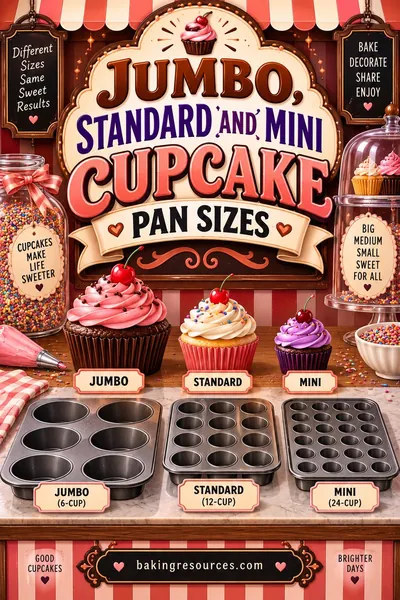 Baking guideJumbo, Standard and Mini Cupcake Pan Sizes and BatterSee the sizes →
Which oven temperature to use: 350°F, 375°F or 400°F
Muffin batter is thicker than cake batter and goes into the cups fuller. The oven temperature decides how tall the tops rise and how fast the outside browns compared with the center.
375°F, the middle ground
This is the most common setting. It is hot enough to push the batter up into a rounded top, and gentle enough that the middle cooks through before the edges dry. If a recipe does not say, start here.
350°F for heavy or very moist batters
A cooler oven gives flatter, paler tops but a more even bake. It is a good choice for dense batters like pumpkin, zucchini, bran and banana with lots of add-ins, and for jumbo muffins. Add 2 to 3 minutes for standard size.
400°F for tall, bakery-style domes
A hot oven sets the outside fast and forces the batter up, which gives tall, craggy tops. It works best for thick batter in cups filled to the rim. Standard muffins finish in about 15 to 19 minutes. Jumbos at 400°F can brown before the center is set, so watch them and lay foil loosely on top if needed.
The high-dome start
Many bakeries start hot and finish cooler. Bake standard muffins at 425°F for 5 minutes, then turn the oven down to 350°F without opening the door and bake 11 to 15 minutes more, for 16 to 20 minutes total. The first blast of heat lifts the tops quickly, then the lower heat lets the middle catch up without burning the edges. This works best in a pan filled to the top with thick batter.
Convection
With a fan oven, set the temperature 25°F lower and check a few minutes early. Fans can dry the tops of muffins, so some bakers turn them off. Our guide to convection vs conventional ovens explains the trade-off. For recipes written in Celsius or gas marks, use the oven temperature conversion chart.
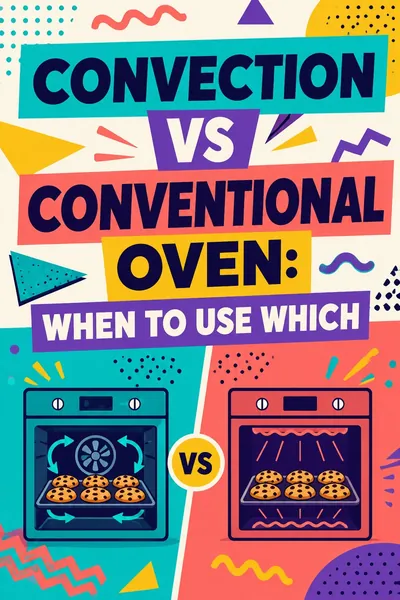 Baking guideConvection vs Conventional Oven: When to Use WhichTake a look →
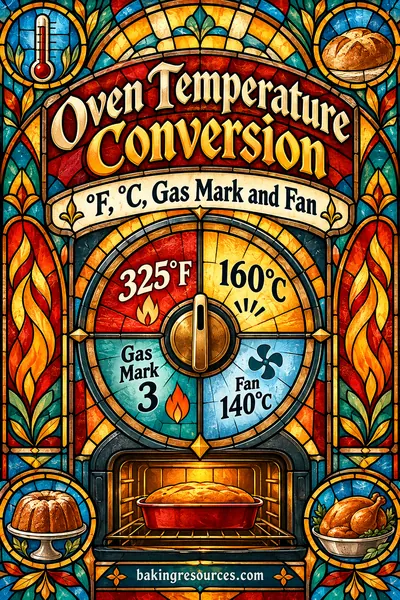 Free toolOven Temperature Conversion: °F, °C, Gas Mark and FanConvert it now →
How full to fill the cups, and how mixing affects the bake
Muffin cups are usually filled more than cupcake cups. Three quarters full is the standard for a rounded top just above the liner. Filling to the rim gives big bakery-style tops that spill onto the pan, and adds 1 to 3 minutes.
- Two thirds full: modest tops, about the low end of the range.
- Three quarters full: the classic dome; use the times in the chart.
- Full to the rim: tall muffin tops; add 1 to 3 minutes and expect fewer muffins per batch (about 9 or 10 from a 12-muffin recipe).
A large spring-loaded scoop (about 1/4 cup) makes even portions, so every muffin finishes together. If you fill to the rim, try filling only every other cup. The empty cups give the muffins more air around them, and the tops spread wide without merging.
How you mix matters too. Muffin batter should be stirred just until the flour disappears, with a few lumps left. Beating it smooth develops gluten, which gives peaked, tunneled muffins that seem done on top while the inside is tough. Our page on what overmixing does to batter explains what is happening. Muffin batter is also thick enough that a short 10 to 15 minute rest before scooping can give taller tops, since the flour has time to absorb liquid.
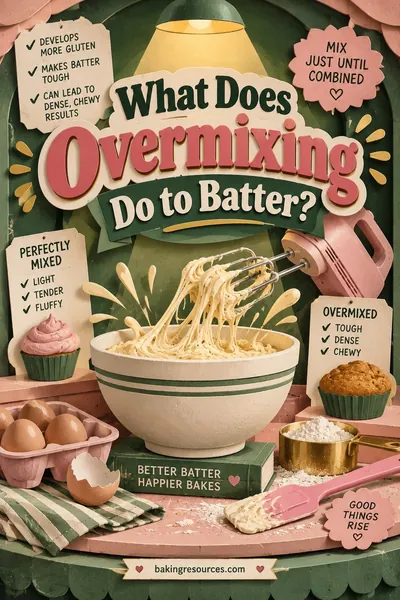 Baking guideWhat Does Overmixing Do to Batter? Tunnels and ToughnessGet the details →
Pan type: metal, dark, silicone and liners
Light aluminum is the baseline for every time on this page. Other pans need a small change.
| Pan | Standard muffins at 375°F | What changes | What to do |
|---|---|---|---|
| Light metal (aluminum) | 18 to 22 min | Even browning | Nothing; this is the baseline |
| Dark or nonstick metal | 16 to 20 min | Darker sides and bottoms | Check about 2 minutes early, or lower the oven 25°F |
| Silicone | 20 to 24 min | Slower to heat; pale sides | Set it on a sheet pan; allow about 2 extra minutes |
| Free-standing paper or foil cups on a sheet pan | 18 to 22 min | Thin cups may spread out | Use sturdy cups and fill only 2/3 full |
For mini muffins the correction is about 1 minute each way, and for jumbos about 3. If you are choosing a new pan, our comparison of silicone vs metal bakeware covers how each one browns and releases.
 Baking guideSilicone vs Metal Bakeware: Which One Bakes Better?See the chart →
Paper liners barely change the time. Greased cups without liners give slightly crisper, browner sides, and the muffins may finish a minute sooner. If your liners peel away after baking, that is usually trapped steam from cooling in the pan, which our guide on why liners peel away explains.
 Baking guideCupcake Liners Peeling Away? Why It Happens and How to Fix ItSee what went wrong →
How to tell muffins are done
Use the clock to know when to start checking, then use these signs to decide when to pull the pan. Two signs together are better than one.
- The toothpick. Push it into the center of a muffin in the middle of the pan. Done is clean or with a few moist crumbs. Wet batter means 2 more minutes. If you hit a blueberry or a chocolate chip, test a second spot.
- The spring-back. Press the top gently. It should spring back, not leave a dent.
- The top. Golden brown, dry looking, with no wet sheen in the cracks.
- The thermometer. An instant-read thermometer in the center reads 200 to 205°F. This is the best check for jumbos and for dark batters like chocolate or bran, where color tells you little.
Muffins keep cooking in the hot metal pan. Leave them for about 5 minutes, then lift them out onto a rack. If they cool in the pan, the bottoms steam and turn soggy, and the edges keep drying. Overbaking by even 2 or 3 minutes is the most common reason for dry muffins. Our guide on why muffins turn out dry covers that and the other causes.
 Baking guideWhy Are My Muffins Dry? 6 Causes and the Fix for EachFind out why →
Freshly mixed vs overnight batter, and frozen fruit
The chart above is for batter mixed and baked right away. Cold batter takes longer to heat through, so it needs extra minutes.
| Batter | Mini at 375°F | Standard at 375°F | Jumbo at 375°F |
|---|---|---|---|
| Freshly mixed | 10 to 13 min | 18 to 22 min | 24 to 30 min |
| Chilled overnight in the fridge | 11 to 15 min | 20 to 25 min | 27 to 34 min |
| Loaded with frozen berries or lots of fruit | 12 to 16 min | 21 to 27 min | 28 to 36 min |
Making batter the night before
Many muffin batters can be mixed the night before and kept covered in the fridge, which is handy for holiday mornings. Batters with double-acting baking powder hold up best, since part of the rise happens in the oven. Batters that rely only on baking soda lose more lift overnight. Scoop the cold batter straight into the cups without stirring it again, so you do not knock out the bubbles that formed. Keep the batter refrigerated the whole time, since it contains raw egg and dairy, and bake it within about a day.
Frozen berries
Fold frozen berries in straight from the freezer. Thawed berries bleed color through the batter and turn it gray-green or purple. A light toss in a spoonful of flour helps keep them from sinking. Frozen fruit chills the batter around it, so add about 3 to 5 minutes for standard muffins, and test the cake part, not a berry.
Cold dairy and eggs
Milk, yogurt and eggs straight from the fridge add a minute or two and can make melted butter firm into little bits. Letting them sit out for 20 to 30 minutes gives a smoother batter and a steadier bake. If you are out of buttermilk, our buttermilk substitute guide has the swaps that work in muffins.
 Baking guideButtermilk Substitute: 8 Easy Swaps That Work in BakingShow me the ratios →
Bake times by muffin type
Different batters behave differently, even in the same pan. Here are the usual times for standard muffins.
| Muffin type | Oven | Standard size | Notes |
|---|---|---|---|
| Blueberry (fresh berries) | 375°F | 18 to 22 min | Frozen berries add 3 to 5 min |
| Banana | 375°F | 18 to 22 min | Very ripe, wet batter sits at the high end |
| Chocolate chip or double chocolate | 375°F | 18 to 22 min | Use spring-back and a thermometer; color does not help |
| Pumpkin or zucchini | 350°F | 20 to 25 min | Dense and moist; the lower oven bakes the center evenly |
| Bran or oat | 375°F | 18 to 22 min | Let the batter rest 10 to 15 min so the bran softens |
| Corn muffins | 400°F | 15 to 19 min | Golden tops and edges; dries quickly if overbaked |
| With streusel or crumb topping | 375°F | 20 to 24 min | Topping slows the top; check the center |
| Cream cheese filled | 375°F | 20 to 24 min | Refrigerate once cool |
Boxed muffin mixes usually say 375 to 400°F and about 15 to 20 minutes for standard size. Follow the box, since mixes vary. If you are making muffins from a cake mix instead, our guide to converting cake mix to cookies, muffins and brownies has the ratios.
 Baking guideConvert Cake Mix to Cookies, Muffins and Brownies: RatiosFind my pan size →
Recipe changes that shift the bake time
Muffin recipes vary a lot, and a few common differences show up on the clock. If your muffins never match the time printed in a recipe, check these.
Oil vs butter
Oil-based batters stay fluid in the oven a little longer, so the centers can take an extra minute or two to set. They also stay softer for days. Butter batters brown a little faster and firm up sooner, with a more cake-like top.
Yogurt, sour cream or buttermilk
These thick, tangy dairy ingredients make a heavier, wetter batter that tends to land at the high end of the range, especially if they go in cold. They also help the muffins stay moist, which gives you a little more room before they dry out.
Whole wheat, oat or almond flour
Whole grain flours soak up more liquid and make a thicker batter. A 10 to 15 minute rest before scooping helps them hydrate and bake evenly. Almond flour browns fast, so muffins made mostly with it often do better at 350°F, with foil ready if the tops darken early.
Less sugar
Cutting the sugar a lot gives paler tops that look underdone even when they are not. Sugar also holds moisture, so lower-sugar muffins dry out faster if overbaked. Rely on the spring-back test and a thermometer rather than color.
Egg-free batter
Without eggs, muffins rise a bit less and the crumb sets more slowly. The time is usually close to normal, sometimes a couple of minutes longer. Test the center rather than trusting the top.
Why muffins take longer than cupcakes
Muffin pans and cupcake pans are the same, but standard muffins usually need a few more minutes than standard cupcakes. There are three reasons. Muffin cups are filled fuller, about 1/4 cup instead of 3 tablespoons. Muffin batter is thicker, with less sugar and fat, so heat moves through it more slowly. And muffins often carry fruit, nuts or bran, which add weight and moisture.
That is also why a muffin recipe often uses a hotter oven. The extra heat drives the rise of a thick batter and builds the domed, golden top that makes a muffin look like a muffin. If you are moving a recipe from one pan to another, such as a muffin recipe baked as a loaf, the baking time calculator works out the new time from the change in depth.
 Free toolBaking Time Calculator: New Pan, New TimeRun my numbers →
High altitude muffins
Above about 3,000 feet, muffins tend to rise fast, then sink, and they dry out sooner. A few small changes help:
- Raise the oven 15 to 25°F, so the structure sets before the bubbles grow too large.
- Start checking a few minutes earlier, since the hotter oven speeds things up. At 5,000 feet, a standard muffin recipe written for 375°F might bake at 390 to 400°F and finish in about 15 to 19 minutes.
- Reduce the baking powder or soda slightly, by about a quarter at 5,000 feet.
- Cut the sugar by 1 to 2 tablespoons per cup and add 1 to 2 tablespoons of liquid.
- The internal target is a few degrees lower, since water boils at a lower temperature. A muffin around 198°F that passes the toothpick test is done at 5,000 feet.
Our high altitude baking chart lists the exact changes for each elevation, so you can adjust one at a time.
Worked example: blueberry muffins for a holiday brunch
Say you want 12 standard blueberry muffins and 24 minis for a Christmas brunch. The recipe is written for 375°F and 18 to 22 minutes. You mix a double batch the night before and use frozen blueberries. You have one dark nonstick 12-cup pan and one light metal 24-cup mini pan.
- Night before. Mix the batter, fold in the frozen berries, cover and refrigerate.
- Morning. Heat the oven to 375°F for 15 minutes. Scoop the cold batter without stirring it: about 1/4 cup per standard cup, 1 1/2 tablespoons per mini.
- Work out the times. Use the frozen-berry row, which is the slowest case and already covers cold batter: standard muffins land at about 21 to 27 minutes in a light pan. The dark pan bakes about 2 minutes faster, so plan on 19 to 25. The minis in their light pan need about 12 to 16 minutes.
- Bake both together. Put both pans on the center rack, side by side, with space between them. Check the minis at 12 minutes. At 14 minutes they spring back and a toothpick shows moist crumbs. Out.
- Check the standard pan. At 19 minutes the middle muffin still has wet batter. At 22 minutes the center reads 202°F and springs back. Done.
- Cool. Five minutes in the pans, then onto a rack. Serve warm.
The calculator near the top of this page does this same math for any size, temperature and batter, so you can plan a mixed bake in a few seconds.
Troubleshooting: raw middles, flat or peaked tops, burnt bottoms
| Problem | Likely cause | Fix |
|---|---|---|
| Raw or gummy center, tops look done | Oven too hot, jumbo size, or frozen fruit chilled the batter | Bake jumbos at 350 to 375°F; test the center; allow extra minutes for frozen fruit |
| Flat tops that do not rise | Old baking powder, batter sat too long at room temperature, oven too cool, cups underfilled | Fresh leavening; fill 3/4 full; check the oven with a thermometer |
| Tall peaks or pointed tops with tunnels | Overmixed batter or oven too hot | Stir just until the flour disappears; bake at 375°F |
| Tops spread and merged together | Cups filled to the rim, thin batter | Fill 3/4 full, or fill every other cup |
| Dark or burnt bottoms | Dark pan, low rack, oven running hot | Center rack; check early in dark pans; slide a sheet pan on the rack below |
| Fruit sank to the bottom | Thin batter or wet fruit | Toss fruit in a little flour; use a thicker batter; fold in last |
| Dry, crumbly muffins | Overbaked, too much flour | Pull at moist crumbs; spoon and level or weigh the flour |
If your muffins brown much more on one side of the pan than the other, the oven has a hot spot. Turning the pan around halfway through fixes it, and our guide on getting even baking in your oven shows how to find the hot spots. Rack position matters too: the center rack is the safest place for a muffin pan, and our page on which oven rack to use explains why.
If you pull a pan and find a raw center right away, put the pan straight back in for 2 to 3 minutes and test again. Muffins that have already cooled are harder to rescue, since the outside dries before the center catches up. For the next batch, the fix is almost always one of three things: a hotter-than-expected oven browning the tops too early, a jumbo or overfilled cup, or cold batter. A quick check with an oven thermometer rules out the first, and the calculator above covers the other two.
Holiday mornings and bake-sale batches
Muffins are a go-to for Thanksgiving breakfast, Christmas morning, winter brunches and school bake sales, because they are fast and easy to carry. A few planning tips help when you need a lot of them.
Plan the oven time
Each round takes the bake time plus about 5 minutes to unload, cool the pan a little and refill. With one 12-cup pan at 375°F, that is about 25 minutes per dozen standard muffins. Four dozen takes close to 2 hours with one pan, or about an hour with two pans side by side. A second pan saves more time than anything else.
Two pans fit side by side on the center rack of most full-size ovens, with about an inch of space around each. Add about a minute when the oven is that full. If you have to use two racks, put them in the upper and lower thirds, swap the pans top to bottom and turn them around halfway through, and add 2 to 3 minutes. Do the swap quickly, and not before the tops have started to set, at about the 10 minute mark for standard muffins.
Make ahead
- Batter the night before: covered in the fridge, then scooped cold. Add 2 to 3 minutes for standard muffins.
- Bake a day ahead: once fully cool, store plain muffins in an airtight container at room temperature, lined with a paper towel to soak up moisture. They stay fresh about 2 days.
- Freeze baked muffins: wrap them individually or bag them once fully cool. They keep their best quality for about 2 to 3 months. Thaw at room temperature, or warm them at 350°F for 5 to 10 minutes.
Food safety for filled muffins
Muffins with a cream cheese filling or a cream cheese frosting need to go in the fridge once cool and should not sit out on a bake-sale table for more than 2 hours. Plain fruit, nut and chocolate chip muffins are fine at room temperature for a day or two. Our guide on how to store baked goods has the full counter, fridge and freezer rules. If someone in the group needs an egg-free option, our page on egg substitutes for muffins, cookies and brownies covers the swaps that bake up well.
Common muffin timing mistakes
- Testing an edge muffin. The outer cups bake first. Always test one from the middle of the pan.
- Waiting for a bone-dry toothpick. By then the muffins have often gone a minute or two too far. A few moist crumbs is the goal.
- Leaving muffins in the pan. The hot pan keeps baking them and steams the bottoms. Five minutes, then out.
- Using a cupcake time. Muffins are filled fuller with a thicker batter, so they need a few more minutes than cupcakes of the same size.
- Trusting the dial. Many ovens run 25°F or more off. An oven thermometer on the rack is the easiest way to explain muffins that are always over or under.
- Opening the door too early. Peeking in the first 10 minutes drops the heat while the tops are still rising.
- Thawing frozen berries. Thawed berries add water and color the batter. Use them frozen and add a few minutes.
Questions people ask
How long do you bake muffins at 350°F?
At 350°F, standard muffins filled about three quarters full take 20 to 25 minutes. Mini muffins take 12 to 15 minutes and jumbo muffins take 27 to 33 minutes. The lower oven gives flatter, paler tops but a very even bake, which suits dense batters like pumpkin, zucchini and bran. Start checking at the low end of each range.
How long do you bake muffins at 375°F?
At 375°F, standard muffins bake in 18 to 22 minutes, minis in 10 to 13 minutes and jumbos in 24 to 30 minutes. This is the most common muffin temperature because it gives a rounded top while the center cooks through. Pull them when a toothpick in the center comes out with a few moist crumbs.
How long do you bake muffins at 400°F?
At 400°F, standard muffins take about 15 to 19 minutes, minis about 8 to 11 minutes and jumbos about 21 to 26 minutes. The hot oven gives tall, domed tops and darker edges. It works best with thick batter in well-filled cups. Watch jumbo muffins closely and lay foil loosely on top if they brown before the center is set.
What internal temperature should muffins be?
Muffins are done at 200 to 205°F in the center. Push an instant-read thermometer into the middle of a muffin from the center of the pan. This is the most reliable check for jumbo muffins and for chocolate or bran muffins, where color does not tell you much. At high altitude the target is a few degrees lower.
How long do mini muffins take to bake?
Mini muffins take 10 to 13 minutes at 375°F, 12 to 15 minutes at 350°F, and 8 to 11 minutes at 400°F. Fill each cup with about 1 1/2 tablespoons of batter. They go from done to dry quickly, so check at the low end and pull them as soon as the tops spring back and look dry.
Do frozen blueberries change the bake time?
Yes. Frozen berries chill the batter around them, so standard muffins usually need about 3 to 5 extra minutes, minis about 2 to 3 and jumbos about 4 to 6. Fold the berries in straight from the freezer without thawing, so they do not bleed color into the batter, and test the cake part of the muffin, not a berry.
Can I make muffin batter the night before?
Many muffin batters keep overnight in the fridge, especially those made with double-acting baking powder. Cover the bowl and keep it refrigerated the whole time. In the morning, scoop the cold batter without stirring it and add about 2 to 3 minutes for standard muffins. Batters that use only baking soda lose more lift, so bake those the same day.
How long do jumbo muffins take to bake?
Jumbo muffins take 24 to 30 minutes at 375°F, 27 to 33 minutes at 350°F, and about 21 to 26 minutes at 400°F. Each cup holds about 3/4 cup of batter, so one 12-muffin recipe makes about 6 jumbos. Test the very center with a toothpick or thermometer, aiming for 200 to 205°F, since the tops look done well before the middle is.