
How Long to Bake Bread: Loaves, Rolls and Quick Breads

A standard 1 1/2 pound sandwich loaf bakes at 375°F for 30 to 35 minutes, a crusty free-form or Dutch oven loaf bakes at 450°F for 30 to 45 minutes, and dinner rolls take 15 to 18 minutes at 375°F. Bread is done when the center reads 190 to 210°F, depending on the type: about 190 to 200°F for soft enriched breads and 205 to 210°F for lean, crusty ones.
The kind of bread sets the oven temperature, and the size of the loaf sets the time. A pan, a stone, or a Dutch oven changes things again. Pick your bread and its size in the calculator below and it gives you the temperature, the time, and the internal temperature that tells you it is done.
Free calculator
Bread bake time calculator
Pick your kind of bread and the size of your loaf or rolls to see the oven temperature, bake time and finished internal temperature.
More free baking tools


Bread bake times at a glance
These are standard times and temperatures for home-sized loaves, with the dough fully risen and the oven fully preheated. Start checking at the low number, and confirm with a thermometer.
| Bread | Oven | Standard size | Time | Done at |
|---|---|---|---|---|
| White sandwich loaf | 375°F | 1 1/2 lb dough, 8 1/2 x 4 1/2 pan | 30 to 35 minutes | 195 to 205°F |
| Whole wheat sandwich loaf | 350°F | 1 1/2 lb dough, 8 1/2 x 4 1/2 pan | 35 to 45 minutes | 200 to 205°F |
| Enriched loaf (brioche, challah) | 350°F | 1 1/2 lb braid or loaf | 30 to 35 minutes | 190 to 200°F |
| Dinner rolls | 375°F | 2 oz each, spaced apart | 15 to 18 minutes | 190 to 195°F |
| Rustic free-form loaf | 450°F | 1 1/2 lb, on a stone or sheet | 30 to 35 minutes | 205 to 210°F |
| Dutch oven or sourdough boule | 450°F | 1 1/2 lb | 40 to 45 minutes total | 205 to 210°F |
| Baguette | 475°F | About 12 oz dough | 20 to 25 minutes | 205 to 210°F |
| Focaccia | 425°F | Half sheet or 9x13 pan | 20 to 25 minutes | 200 to 205°F |
| Quick bread (banana, zucchini) | 350°F | 9x5 pan | 55 to 70 minutes | 200 to 205°F |
Notice the pattern: lean, crusty breads go in hot and finish hot, while soft breads made with milk, butter, eggs or sugar bake cooler and finish cooler. That one split explains most of the numbers on this page. If you are not sure which group your bread belongs to, the guide to types of bread sorts the main styles.
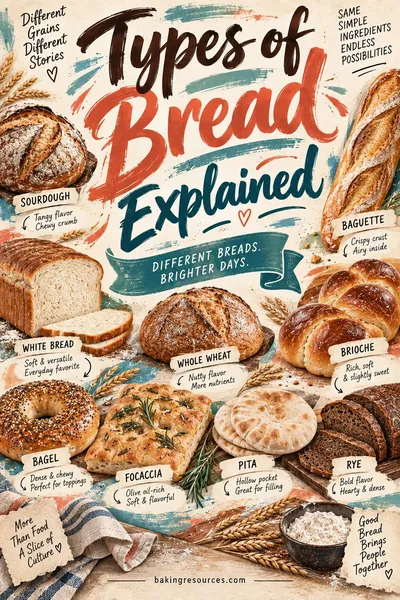 Baking guideTypes of Bread: A Baker's Guide to the Main StylesTake a look →
Bake time by loaf size and pan
For pan loaves, the amount of dough and the size of the pan decide the time. A bigger loaf has a thicker center for the heat to reach. The chart below is for a white sandwich dough at 375°F; add about 5 minutes for whole wheat at 350°F.
| Pan | Dough weight | Typical flour | Time at 375°F |
|---|---|---|---|
| Mini loaf, 5 3/4 x 3 | About 6 to 8 oz each | 3/4 cup | 18 to 22 minutes |
| 8x4 loaf pan | About 1 lb | 2 1/2 cups | 25 to 30 minutes |
| 8 1/2 x 4 1/2 loaf pan | About 1 1/2 lb | 3 to 3 1/2 cups | 30 to 35 minutes |
| 9x5 loaf pan | About 2 lb | 4 to 4 1/2 cups | 35 to 45 minutes |
| 13x4 Pullman pan, lid on | About 2 1/4 lb | About 5 cups | 40 to 45 minutes |
Dough that is too small for its pan bakes into a short, wide loaf and finishes faster. Dough that overfills the pan rises over the sides and can stay doughy in the center, so it needs more time and often a lower oven. The loaf pan sizes guide lists the dimensions and how much dough each pan holds.
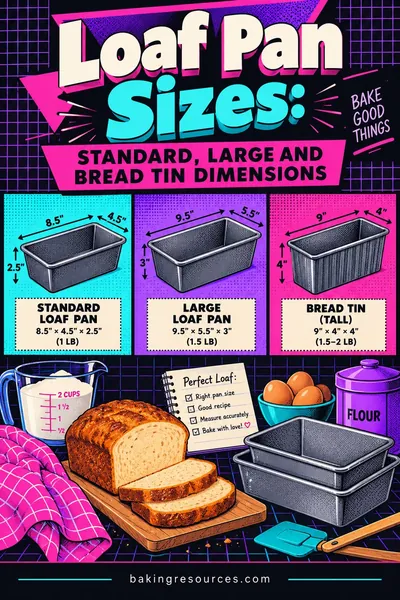 Baking guideLoaf Pan Sizes: Standard, Large and Bread Tin DimensionsGet the measurements →
Free-form loaves and rolls
Without a pan, the shape matters. A long, thin baguette bakes in about half the time of a round boule of the same weight, because no part of it is far from the surface. A tall, round loaf is the slowest of all. Rolls bake in 12 to 22 minutes depending on size, and rolls packed into a pan, touching each other, take about 5 minutes longer than rolls spaced apart on a sheet, since their sides are shielded from the heat.
Why lean and enriched breads bake differently
Lean bread is just flour, water, salt and yeast. Enriched bread adds fat, sugar, milk or eggs. Those additions change both the oven temperature and the internal temperature you aim for.
Lean breads: hot oven, 205 to 210°F inside
Baguettes, rustic loaves and sourdough have no sugar to burn, so they can take 450 to 475°F. The high heat gives strong oven spring and a thick, crackly crust. Inside, the crumb needs to reach about 205 to 210°F to fully set and dry out enough that it is not gummy.
Enriched breads: moderate oven, 190 to 200°F inside
Sugar and milk brown quickly, so brioche, challah, cinnamon bread and soft rolls bake at 350 to 375°F or they turn dark before the center is done. The fat and eggs also help the crumb set earlier, so these breads are done at 190 to 200°F. Baking them hotter than that just dries them out.
In-between breads
A typical sandwich loaf with a little milk, sugar and butter lands in the middle, at 375°F and 195 to 205°F inside. Whole wheat sits at the upper end because the bran holds more water.
How oven temperature changes the time
Bread is more flexible than cake about temperature, but the trade-off between crust and crumb is real. A hotter oven gives a darker crust in less time. A cooler oven gives a softer, paler crust and needs longer.
| Bread | Cooler oven | Standard oven | Hotter oven |
|---|---|---|---|
| Sandwich loaf, 1 1/2 lb | 350°F: 35 to 40 minutes | 375°F: 30 to 35 minutes | 400°F: 25 to 30 minutes, crust darker |
| Dinner rolls, 2 oz | 350°F: 18 to 22 minutes | 375°F: 15 to 18 minutes | 400°F: 12 to 15 minutes |
| Rustic loaf, 1 1/2 lb | 425°F: 35 to 40 minutes | 450°F: 30 to 35 minutes | 475°F: 25 to 30 minutes, very dark crust |
| Quick bread, 9x5 | 325°F: 65 to 75 minutes | 350°F: 55 to 70 minutes | Not recommended |
Change the temperature only on purpose. If a loaf browns too fast, it is usually easier to tent it with foil than to lower the oven partway through. Recipes in Celsius or gas marks are easy to translate with the oven temperature conversion chart.
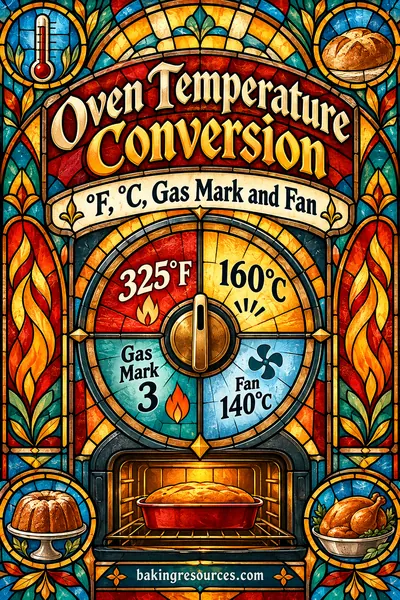 Free toolOven Temperature Conversion: °F, °C, Gas Mark and FanDo the math for me →
Why the preheat matters more for bread
A loaf gets most of its rise, called oven spring, in the first 10 to 15 minutes. If the oven is not fully hot, the dough rises slowly, the crust sets late, and the whole bake runs long. Preheat for at least 30 minutes for a stone or a Dutch oven, and 15 to 20 minutes for pan loaves.
Pans, stones and Dutch ovens
Light metal loaf pans
Aluminum or light steel pans give an even, golden crust and match the times in most recipes.
Dark and nonstick loaf pans
Dark pans brown the sides and bottom faster. For enriched and sandwich breads, lower the oven 25°F and expect about the same time, or keep the temperature and check 5 minutes early. Tip the loaf out to check the sides before you call it done.
Glass and ceramic loaf pans
Glass heats slowly, so the bottom and sides take longer to brown at first and then can overbrown late in the bake. Lower the oven 25°F and plan on about 5 extra minutes. The nice part is you can see the bottom crust color through the glass.
Baking stone or steel
A preheated stone or steel pushes heat into the bottom of a free-form loaf right away, which helps oven spring and gives a crisp bottom. Bake times for rustic loaves assume one. On a plain sheet pan, add a few minutes and expect a softer bottom crust.
Dutch oven
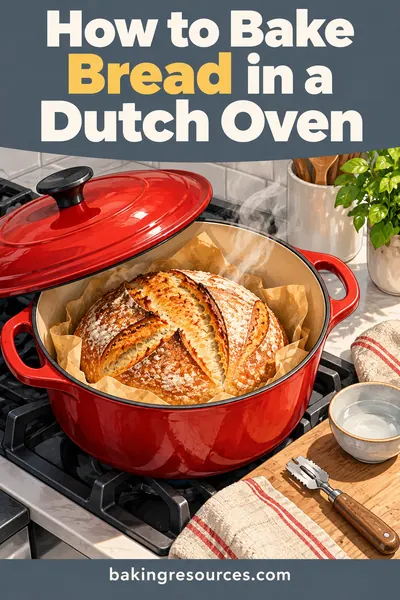
A covered Dutch oven traps the loaf's own steam, so the crust stays soft long enough for a big rise, then crisps once the lid comes off. A 1 1/2 pound loaf usually bakes 20 minutes with the lid on and 20 to 25 minutes with the lid off at 450°F. The full method, including preheating and safe handling of the hot pot, is in how to bake bread in a Dutch oven.
 Baking guideHow to Bake Bread in a Dutch Oven: Temps, Times and TipsShow me how →
How to tell when bread is done
Crust color is a poor guide on its own. A loaf can be deep brown outside and still raw inside, especially an enriched bread. Use these checks, starting with the most reliable.
Internal temperature
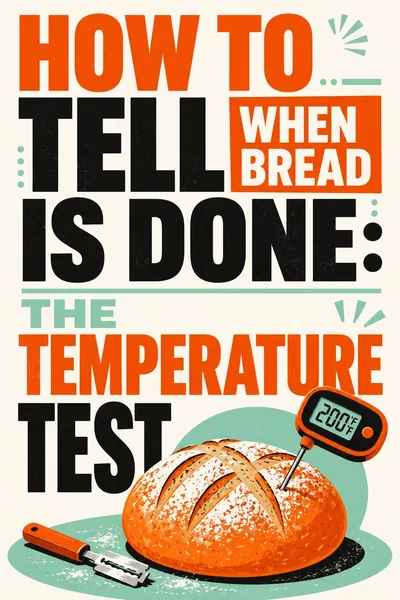
Push an instant-read thermometer into the center of the loaf from the side or bottom, so the hole does not show. The tip should sit in the middle of the thickest part, not touching the pan.
- Lean breads, baguettes, sourdough: 205 to 210°F
- Sandwich loaves: 195 to 205°F
- Whole wheat: 200 to 205°F
- Enriched breads, brioche, challah: 190 to 200°F
- Soft dinner rolls: 190 to 195°F
- Quick breads: 200 to 205°F
The hollow thump
Tip the loaf out and tap the bottom. A done loaf sounds hollow, like knocking on a door. A dull thud means there is still too much moisture inside. It is a useful extra check, but it takes practice and is less reliable for soft breads.
The sides and bottom
For pan loaves, tip the loaf out of the pan. The sides and bottom should be golden and firm, not pale and soft. If they are pale, put the loaf back in the oven directly on the rack, without the pan, for 5 minutes.
The skewer, for quick breads only
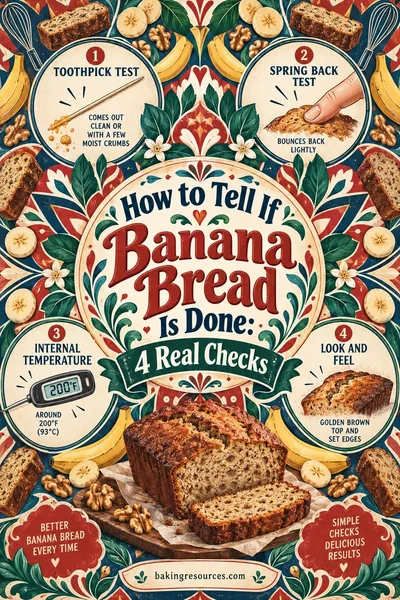
Quick breads behave like cake. A skewer down the center crack should come out clean or with a few moist crumbs. More on that in how to tell if banana bread is done. For yeast bread, a skewer is not useful. The full set of yeast bread checks, including a thermometer reading tool, is in how to tell when bread is done.
 Baking guideHow to Tell If Banana Bread Is Done: 4 Real ChecksSee the doneness test →
 Baking guideHow to Tell When Bread Is Done: The Temperature TestCheck if it's done →
Worked example: two loaves, two ovens
A sandwich loaf in a glass pan
Say your recipe makes a 1 1/2 pound white sandwich loaf, written for a metal 8 1/2 x 4 1/2 pan at 375°F for 30 to 35 minutes. Your only loaf pan is glass.
- Lower the oven to 350°F to keep the bottom and sides from overbrowning late in the bake.
- Plan on about 5 extra minutes, so 35 to 40 minutes.
- At 35 minutes, the top is golden and the bottom, seen through the glass, is a light tan. The thermometer reads 188°F. Give it 5 more minutes.
- At 40 minutes, it reads 197°F and the bottom is golden. Pull it, turn it out after 5 minutes, and cool it on a rack.
A sourdough boule in a Dutch oven
Now a 1 1/2 pound sourdough boule. Preheat the oven and the pot together at 450°F for 45 minutes. Bake with the lid on for 20 minutes, then take the lid off. At 35 minutes total, the crust is golden and looks finished, but the thermometer reads only 195°F, which is the classic trap. Leave it for 7 more minutes. At 42 minutes, the crust is deep brown and the center reads 207°F. That is done.
A braided challah on a sheet pan
Last, a 1 1/2 pound braided challah brushed with egg wash, baked on a light sheet pan at 350°F. The window is 30 to 35 minutes. At 20 minutes the braid is already a rich golden brown, because the egg wash and sugar color quickly, so lay a loose sheet of foil over the top. At 30 minutes, push the thermometer into the thickest part of the braid, near the middle: 186°F. Give it 4 more minutes. At 34 minutes it reads 193°F, inside the 190 to 200°F range. Take it out now rather than waiting for 200°F, since a few degrees of carryover heat will finish it on the rack and a challah pushed past 200°F starts to dry out.
Steam, scoring and egg wash
A few things you do before the bread goes in change how long it takes and how it looks when it comes out.
- Steam: lean loaves bake best with steam for the first 10 to 15 minutes. It keeps the crust soft so the loaf can expand, then the crust browns once the steam clears. A pan of hot water on a lower rack, or a covered Dutch oven, does the job. Without steam the crust sets early, the loaf rises less, and it can split on the side.
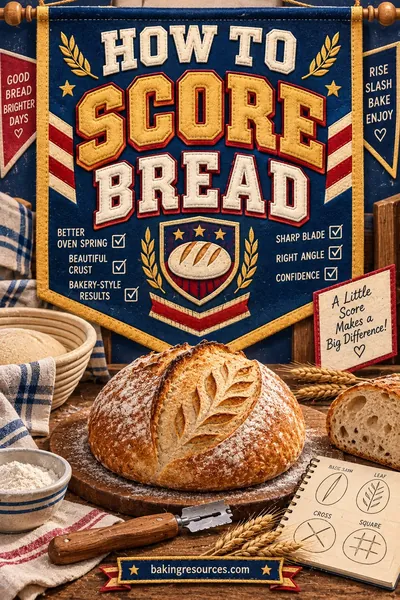
- Scoring: slashing the top lets the loaf expand where you want it. An unscored loaf often bursts on the side. The angles and depths are in how to score bread.
- Egg wash: a brushed egg wash makes enriched breads brown faster and shinier. Tent with foil once they reach the color you want, since the inside may need another 5 to 10 minutes. Different washes and what they do are covered in what is an egg wash.
 Baking guideHow to Score Bread: Blade Angle, Depth, and TimingLearn the method →
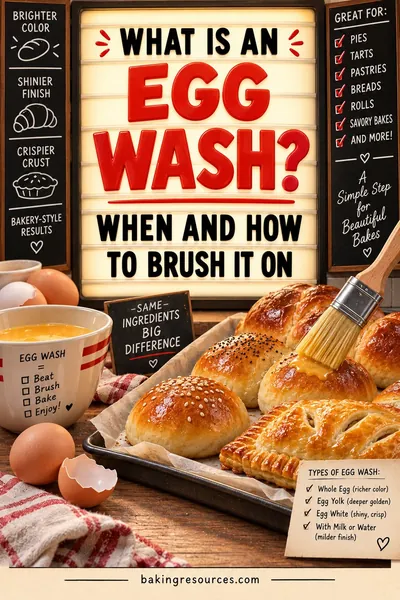 Baking guideWhat Is an Egg Wash? When and How to Brush It OnSee the chart →
Convection
Convection browns the crust faster and evenly, which is handy for rolls and baguettes. For pan loaves and enriched breads, lower the temperature by 25°F and check 5 minutes early, or the crust gets dark before the center reaches temperature. The convection vs conventional oven guide has more on when the fan helps.
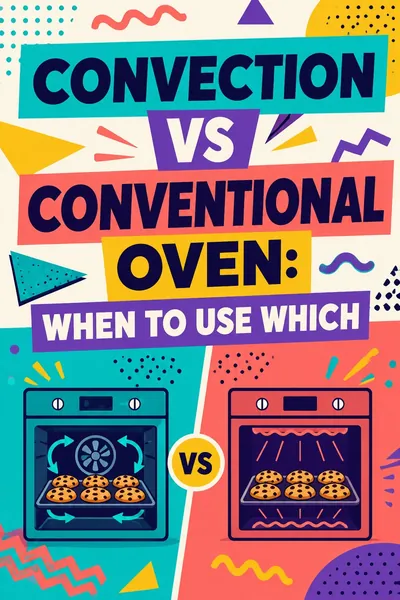 Baking guideConvection vs Conventional Oven: When to Use WhichRead it next →
Quick breads: a different clock
Banana bread, zucchini bread, pumpkin bread and cornbread rise with baking soda or baking powder instead of yeast. Their batter is wet and dense, closer to a cake than a dough, so they bake at a moderate 350°F for a long time.
- Mini loaf pans: 30 to 40 minutes at 350°F.
- 9x5 loaf pan: 55 to 70 minutes.
- 8 1/2 x 4 1/2 loaf pan: 60 to 75 minutes, because the same batter stands taller in the narrower pan.
- Muffins from the same batter: 18 to 22 minutes.
- Cornbread in an 8x8 pan or 10 inch skillet: about 20 to 25 minutes at 400 to 425°F, since the batter is thin and the hot pan sets the crust fast.
Quick breads are done at 200 to 205°F in the center, with a skewer coming out clean or with a few moist crumbs. They nearly always crack down the middle, and that crack is the last spot to bake through, so test there. If the top browns well before the center is done, lay a sheet of foil loosely over it at about the 40 minute mark.
Fruit, nuts and chocolate chips add bulk, so a loaf with lots of add-ins can need 5 to 10 minutes more. A batter made with cold eggs and buttermilk straight from the fridge also starts slower. Quick breads cool in the pan for 10 to 15 minutes before you turn them out, or they can break.
Common bread timing mistakes
- Judging by crust color. Enriched breads brown long before they are done inside, and lean breads can look finished at 195°F. A thermometer settles it in seconds.
- Going by the clock alone. Dough that rose a little more or less, a cool kitchen, or a cold pan all change the time. Recipe times are a window, not a promise.
- Trusting the oven dial. Home ovens often run 15 to 25°F off. For bread, a cool oven means less oven spring and a longer bake; a hot one means a dark crust over a soft middle. An oven thermometer shows you which yours is.
- Skipping the full preheat. The oven may beep long before the walls, stone or pot are truly hot. Give a stone or Dutch oven 30 to 45 minutes.
- Overproofing, then baking longer to compensate. An overproofed loaf spreads and sinks no matter how long it bakes. Bake when a floured finger poke springs back slowly and leaves a small dent.
- Leaving the loaf in the pan. A loaf that cools in its pan steams the sides and bottom soft. Turn pan loaves out within 5 to 10 minutes.
- Testing at the edge. The thermometer has to reach the middle of the thickest part. A reading near the crust will be 10°F or more higher than the center.
High altitude bread baking
Above about 3,000 feet, yeast dough rises faster because the air pressure is lower. The biggest changes happen before the bake: shorter rises, often a little less yeast, and sometimes a bit more liquid since flour dries out faster in thin, dry air.
In the oven, many bakers raise the temperature 15 to 25°F so the crust sets before an overproofed loaf can collapse, and check a few minutes early. The internal temperature target shifts too. Bread cannot get much hotter inside than the local boiling point while it still holds water, and at 5,000 feet water boils around 203°F. A lean loaf at that elevation is usually done at about 200°F, so do not keep baking to chase 210°F; you will only dry it out. Enriched breads still finish at about 190°F. The high altitude baking chart covers the dough changes by elevation.
 Baking guideHigh Altitude Baking Adjustments: The Chart by ElevationRead the guide →
Troubleshooting: raw middle, dry crust, cracks and sinking
Gummy or raw middle
The center did not reach its target temperature, or the loaf was sliced while hot. Underbaking is common with large loaves, dark crusts that looked done, and ovens that run cool. Check the temperature every time. If you catch it within a few minutes, put the loaf back at 350°F for 10 to 15 minutes, directly on the rack. If it reached temperature and is still gummy, see why is my bread gummy.
Crust too hard, thick or dark
The loaf baked too long, too hot, or without enough steam early on. For soft sandwich breads, brush the hot crust with melted butter and cool under a clean towel. More fixes are in why is my bread crust too hard.
Pale crust
The oven was too cool, the loaf came out early, or a lean dough had too little time to ferment. Bake a few minutes longer, or raise the oven 25°F for the last 10 minutes.
Cracked or burst sides
The crust set before the loaf finished rising. It usually means the dough was underproofed, the loaf was not scored, or the oven lacked steam.
Sunk or collapsed loaf
Overproofing is the main cause: the dough stretched so far that it could not hold up in the oven. A loaf that sinks after you take it out may also be underbaked. Shorter rises and checking the internal temperature fix both. If the loaf came out heavy rather than sunken, why is my bread dense walks through the causes.
Cooling before you slice
Bread keeps cooking after the oven. Steam is still moving through the crumb, and the starches set as the loaf cools. Slice too soon and even a perfectly baked loaf turns gummy.
- Dinner rolls: about 15 minutes.
- Sandwich loaves: 45 to 60 minutes, out of the pan, on a rack.
- Rustic loaves and baguettes: at least 1 hour.
- Large sourdough boules: 2 hours or more.
- Quick breads: 10 to 15 minutes in the pan, then at least 30 minutes more on a rack.
Always cool bread on a wire rack, not on a solid surface, so the bottom does not steam and go soft. Once cool, homemade bread keeps 2 to 3 days at room temperature, wrapped. For longer, slice and freeze it; the steps are in how to freeze bread.
Holiday bread baking
Thanksgiving and Christmas dinners almost always include rolls, and the oven is busy with the main dish. Bread fits in well if you plan for it.
Bake rolls while the roast rests
A turkey or ham rests 30 to 45 minutes out of the oven before carving. That is exactly enough time to raise the oven to 375°F and bake a pan of rolls in 18 to 25 minutes. Rolls baked touching in a 9x13 pan land at the longer end. Pull them when the center of a middle roll reads 190 to 195°F; the guide on the internal temperature of dinner rolls explains why the middle roll is the one to test.
Bake ahead and reheat
Fully bake rolls or loaves a day or two ahead, cool them completely, and wrap them tightly. Before dinner, warm rolls wrapped in foil at 350°F for about 10 minutes, and whole loaves for 10 to 15 minutes. Frozen baked rolls reheat straight from the freezer in about 15 to 20 minutes, wrapped in foil.
Par-baking
Par-baking means baking rolls until they are set but still pale, then cooling and freezing them. For 2 oz rolls at 375°F, bake about 10 to 12 minutes, until they are firm but barely colored. On the day, bake them from frozen at 375°F for about 8 to 12 minutes, until golden and 190 to 195°F inside.
How much to bake
Most guests eat two rolls at a holiday dinner, and some eat three. For a crowd count with batch sizes, see how many dinner rolls for Christmas dinner. Holiday breads like challah, stollen-style sweet loaves and braided wreaths follow the enriched bread timing: 350°F, 30 to 35 minutes for a 1 1/2 pound loaf, done at 190 to 200°F, with foil over the top once they are golden.
Questions people ask
How long do you bake bread at 350°F?
At 350°F, a 1 1/2 pound sandwich loaf takes about 35 to 40 minutes, a whole wheat loaf of the same size 35 to 45 minutes, an enriched loaf like brioche or challah 30 to 35 minutes, and a banana or zucchini bread in a 9x5 pan 55 to 70 minutes. Confirm with a thermometer: 190 to 205°F for most pan breads, 200 to 205°F for quick breads.
How long do you bake bread at 375°F?
At 375°F, a 1 lb loaf in an 8x4 pan takes 25 to 30 minutes, a 1 1/2 lb loaf in an 8 1/2 x 4 1/2 pan 30 to 35 minutes, and a 2 lb loaf in a 9x5 pan 35 to 45 minutes. Dinner rolls weighing 2 ounces take 15 to 18 minutes spaced apart, or about 5 minutes longer packed into a pan.
What internal temperature should bread be when it is done?
Lean breads like baguettes, rustic loaves and sourdough are done at 205 to 210°F. Sandwich loaves are done at 195 to 205°F, whole wheat at 200 to 205°F, and enriched breads like brioche and challah at 190 to 200°F. Soft dinner rolls finish at 190 to 195°F, and quick breads at 200 to 205°F. Measure in the center of the thickest part.
How long does bread take in a Dutch oven?
A 1 1/2 pound loaf takes about 40 to 45 minutes at 450°F: 20 minutes with the lid on, then 20 to 25 minutes with the lid off. A 1 pound loaf takes 32 to 35 minutes total, and a 2 pound loaf 45 to 50 minutes, with 25 minutes under the lid. Preheat the pot with the oven for about 45 minutes, and pull the loaf at 205 to 210°F.
Why is my bread brown outside but raw inside?
The crust browned before the center reached temperature. Common causes are an oven running hot, a dark pan, an enriched dough with lots of sugar, or a loaf that is too big for the time. Tent the loaf with foil once it reaches the color you want and keep baking until the center hits its target temperature. Lowering the oven 25°F helps next time.
How long should bread cool before slicing?
Dinner rolls need about 15 minutes, sandwich loaves 45 to 60 minutes, rustic loaves and baguettes at least an hour, and large sourdough boules 2 hours or more. The crumb is still setting as steam escapes, so slicing early makes even a fully baked loaf gummy. Cool bread on a wire rack so the bottom crust does not get soggy.
Can I bake bread in a glass loaf pan?
Yes. Lower the oven by 25°F and plan on about 5 extra minutes. Glass heats slowly at first, then holds heat, so the bottom and sides can overbrown late in the bake at the full temperature. The bonus is that you can see the bottom crust through the glass. Confirm doneness with a thermometer, as with any loaf.