
How Long Does Yeast Last? Dry, Instant and Fresh Yeast

Unopened active dry or instant yeast lasts until the best-by date on the package, stored in a cool, dry cupboard. Once opened, it keeps about 4 months in the fridge or about 6 months in the freezer in an airtight container. Fresh cake yeast is far more perishable: keep it in the fridge and use it by its date, or within about a week once the wrapper is open.
Old yeast rarely makes you sick. It just gets weaker until your bread won't rise, which is why a quick proof test is worth doing on any yeast near or past its date. Pick your yeast and the day you opened it in the calculator below, and it shows how long it stays good in the cupboard, the fridge and the freezer.
Free calculator
Yeast shelf life calculator
Pick your yeast and the day you opened it to see how long it stays good in the cupboard, fridge and freezer.
More free baking tools



Yeast shelf life at a glance
Here's the quick version. "Opened" times count from the day you first opened the jar, bag or packet. These follow the storage directions yeast makers print on their packages, which are the most widely used guidance for home bakers.
| Yeast | Cupboard | Fridge | Freezer |
|---|---|---|---|
| Active dry, unopened | Until the best-by date | Until the best-by date | Not needed while sealed |
| Active dry, opened | Not recommended | About 4 months | About 6 months |
| Instant or rapid-rise, unopened | Until the best-by date | Until the best-by date | Not needed while sealed |
| Instant or rapid-rise, opened | Not recommended | About 4 months | About 6 months |
| Fresh (cake) yeast, unopened | Not recommended | Until the package date | Not recommended |
| Fresh (cake) yeast, opened | Not recommended | About 1 week | Not recommended |
| Dry yeast past its date | Proof it first | Proof it first | Proof it first |
Plenty of bakers report opened yeast working well for longer than this, especially from the freezer. That can happen, because yeast fades slowly rather than all at once. The times above are the point where you can count on full strength without testing. Past them, the yeast isn't dangerous, but you should test it before trusting a whole batch of dough to it.
What "going bad" means for yeast
Baker's yeast is a living, single-celled fungus. Dry yeast is dried until the cells go dormant, and it wakes up again when it meets warm water and food. Over time, more and more of those cells die, and the ones that are left get sluggish. So when people say yeast has "gone bad," they almost always mean it has lost its strength. A dough made with weak yeast rises slowly, rises less, or doesn't rise at all.
Dry yeast that's simply old isn't a food safety problem. It won't make you sick. The risk is a wasted afternoon and a dense, flat loaf. Fresh cake yeast is different. It's moist and perishable, a bit like a soft cheese, and it can grow mold or spoil if it's kept too long or too warm. That's why fresh yeast gets much shorter times and why you should throw it out if it looks or smells wrong.
Three things wear down yeast faster than anything else:
- Moisture. Even humidity from the air can wake up dry yeast a little, and yeast that wakes up with no food uses up its energy and dies. A wet measuring spoon in the jar does the same.
- Oxygen. Air slowly damages the dried cells. That's why many dry yeasts are sold vacuum-packed or in nitrogen-flushed packets.
- Heat. A warm cupboard next to the stove or dishwasher speeds up every kind of decline.
Cold, dry and airtight is the answer to all three. That's why the fridge and freezer stretch the life of opened yeast so much.
Unopened dry yeast: trust the best-by date
Unopened packets, jars and vacuum-packed bricks of dry yeast keep until the best-by date printed on the package, as long as they're stored in a cool, dry place. That date is often a year or more after you buy it, but it varies by brand and by how long the yeast sat in the store, so read the date rather than guessing.
A few points about unopened yeast:
- The cupboard is fine. Sealed packages are protected from air and moisture, so a cool pantry shelf works well. Keep them away from the stove, the oven vent, the dishwasher and sunny windows.
- The fridge is optional. Cold storage won't hurt unopened yeast and can help in a hot kitchen or a hot climate. It doesn't extend the printed date, though.
- Vacuum-packed bricks feel hard as a rock. That's normal. Once you cut them open, the yeast turns loose and granular.
- Strips of three packets are each sealed separately, so tearing one off doesn't affect the others.
If you're not sure how much yeast is in a packet compared with your recipe, how much yeast is in a packet gives the grams and teaspoons, which helps when you're using up a half-full jar instead.
 Baking guideHow Much Yeast Is in a Packet? Grams, Spoons and UsesCheck the rise times →
Opened dry yeast: fridge or freezer
Once a jar or bag is opened, air and moisture start getting in every time you use it. That's when cold storage really matters. Opened active dry and instant yeast keep about 4 months in the fridge and about 6 months in the freezer, as long as the container is airtight.
| Where | How long (opened) | Good for | Watch out for |
|---|---|---|---|
| Cupboard | Not recommended | Nothing, once opened | Warmth and humidity weaken it fast |
| Fridge | About 4 months | People who bake every week or two | Door shelves are warmer and change temperature |
| Freezer | About 6 months | Occasional bakers, big bags | Condensation if you leave the cold jar open on a warm counter |
The freezer is the better choice for most home bakers, and dry yeast doesn't need to be thawed. Its low moisture means it doesn't freeze into a solid block, so you can scoop it straight from the jar into your flour or warm water. Just close the jar right away and put it back, so moist kitchen air doesn't condense inside.
The fridge works well if you bake bread often enough to use up the jar in a few months. Put it on a shelf toward the back, where the temperature stays steady.
How to store an opened jar or bag
- Write the date you opened it on the lid or bag with a marker. This is the single most useful step, because nobody remembers when they opened the yeast.
- Use an airtight container. The original screw-top jar is fine. For a bag or a vacuum brick, pour the yeast into a clean, dry glass jar with a tight lid, or squeeze the air out of the bag, roll it tight, clip it and put it inside a zip-top freezer bag.
- Use a dry spoon every time. A drop of water in the jar wakes up yeast and can let mold grow.
- Close it right away. Don't leave the open jar on the counter while you mix the dough.
- Store it cold and in the dark. Back of the fridge or anywhere in the freezer.
Leftover half packets
If a recipe only needs part of a packet, fold the top over tightly two or three times, clip or tape it, and put it in a small zip-top bag in the fridge or freezer. Treat it like any opened yeast and use it within the same 4 or 6 months. Small amounts are easy to forget, so label the bag with the date.
Fresh cake yeast
Fresh yeast, also called cake yeast or compressed yeast, comes as a soft, moist block wrapped in foil or plastic. It's about 70 percent water, which makes it work fast and gives some breads a lovely flavor, but it also makes it perishable. It's hard to find in many US stores and is more common in bakeries and in some European-style recipes.
- Unopened: keep it in the fridge at 40°F or colder and use it by the date on the package. It isn't a cupboard product, not even for a day.
- Opened: rewrap the leftover piece tightly in plastic wrap, then put it in a small airtight container or zip-top bag. Use it within about 1 week, or by the package date if that comes first. Exposed to air, the surface dries, darkens and stops working.
- Freezing: some bakers freeze fresh yeast, but it comes out weaker and softer, and the results are hard to predict. It's not recommended if you want reliable rising. If you must freeze it, use it soon and proof it first.
If you don't bake often, dry yeast is the better choice, and you can swap between them easily. The active dry vs. instant yeast guide explains the conversions, including fresh yeast, and the yeast converter tool linked above does the math for any amount.
 Baking guideActive Dry vs Instant Yeast: Conversions That WorkGet the proofing tips →
How fresh yeast should look and smell
Good fresh yeast is a creamy beige or light gray color, slightly moist, and crumbles cleanly between your fingers like a firm cheese. It smells pleasantly yeasty, like rising bread dough. Old fresh yeast turns darker brown at the edges, goes dry and hard or soft and sticky, and starts to smell sour or unpleasant.
How to tell if yeast is still good
The only sure way to know whether yeast still has its strength is to wake it up and watch. This is called proofing. You mix a little yeast with warm water and a pinch of sugar and wait about 10 minutes. Healthy yeast forms a thick, creamy foam that rises noticeably in the cup. Weak yeast makes a thin layer of bubbles. Dead yeast does nothing at all.
The details matter, especially the water temperature. Water that's too hot kills yeast and gives you a false "dead" result. The site's step-by-step guide on how to proof yeast has the exact temperatures and amounts, so they aren't repeated here.
 Baking guideHow to Proof Yeast: The 10-Minute Test That Saves a LoafRead the dough guide →
Proofing is worth doing whenever:
- The yeast is close to or past its best-by date.
- An opened jar is older than the times on this page, or you don't know when you opened it.
- The yeast spent time in a warm place, like a hot car, a cupboard over the stove or a summer kitchen.
- You're making something big or important, like holiday rolls for a crowd, and you can't afford a failure.
If your recipe uses instant yeast mixed straight into the flour, you can still proof a pinch of it separately as a test. Throw that test cup away and mix the recipe as written.
Using old or weak yeast
Your proof test tells you what to do next. Here's how to read the result.
| Proof test result | What it means | What to do |
|---|---|---|
| Thick, creamy foam, rises well in 10 minutes | Full strength | Use it as the recipe says |
| Foam forms but slowly, and stays thin | Partly weakened | Use it for a forgiving dough and expect a longer rise, or replace it |
| A few scattered bubbles | Mostly dead | Replace it, don't try to make up the difference |
| Nothing after 10 to 15 minutes | Dead, or the water was too hot | Retest with water at the right temperature, then replace if it's still flat |
With yeast that's only a little weak, you can give the dough more time. Let it rise until it has truly doubled, however long that takes, rather than following the clock. A warm spot helps. Some bakers add a little more yeast to make up for weakness, but that's guesswork, since you don't know how much of the yeast is still alive, and too much yeast can give a sour, overly yeasty taste.
Don't use questionable yeast for recipes that depend on a strong rise, like brioche, cinnamon rolls or anything with lots of butter, sugar and eggs. Those rich doughs are slow to rise even with fresh yeast. If your dough has already failed to rise, why dough doesn't rise walks through the other causes, from cold rooms to too much salt, so you can rule them out.
 Baking guideWhy Is My Dough Not Rising? 7 Causes and Fast FixesSee the timing chart →
What if you have no good yeast?
For quick breads, pancakes and some flatbreads, you can skip yeast and use chemical leavening instead. It won't taste like a yeast bread, but it can rescue dinner. Baking powder instead of yeast explains which doughs can make the switch. Baking powder loses strength over time too, so how long baking powder lasts is worth a quick look before you rely on an old can.
 Baking guideBaking Powder Substitute for Yeast: Which Doughs Can SwitchPick a substitute →
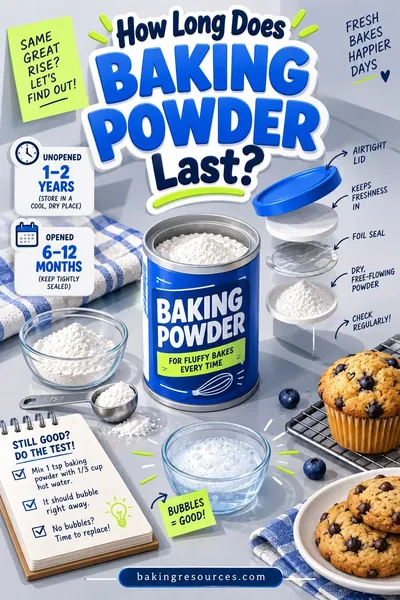 Baking guideHow Long Does Baking Powder Last? 6 to 12 Months Once OpenedGet the storage times →
How to tell yeast has gone bad
For dry yeast, the main sign is simply that it doesn't work. But there are a few times when you should throw yeast out without testing it:
- It's clumped and damp. Dry yeast that has formed hard or sticky clumps has been exposed to moisture. It's usually weak or dead, and it may not mix in evenly.
- It smells musty or moldy instead of mildly yeasty.
- There's visible mold, fuzzy spots or a slimy layer, in a jar of dry yeast or on fresh yeast.
- Fresh yeast has turned dark brown, very dry and crumbly, or soft and sticky, or smells sour.
- Fresh yeast is past its date. Unlike dry yeast, it's not worth testing.
- It fails the proof test twice with water at the right temperature.
A change in color on its own isn't a reliable sign for dry yeast, since different brands and types vary from tan to light gray. Go by smell, texture and the proof test.
Signs in your bread
Sometimes the first clue that yeast is weak is the bread itself: dough that barely moves after an hour in a warm spot, a loaf that's dense and squat, or rolls that don't puff in the oven. Before blaming the yeast, check the basics. Why bread didn't rise covers water temperature, cold kitchens and the other usual suspects.
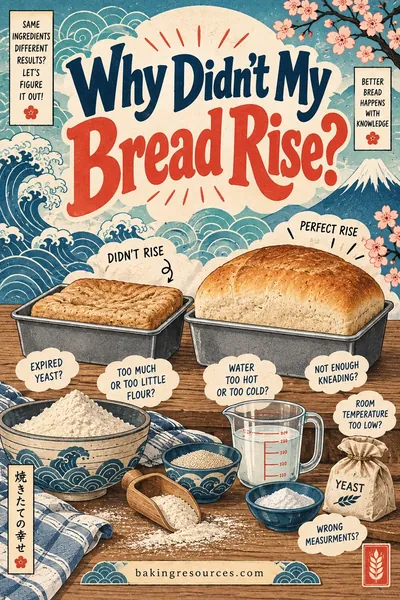 Baking guideWhy Didn't My Bread Rise? Yeast, Heat and TimingRead it next →
Does the type of yeast change how long it lasts?
Not much for dry yeasts. Active dry yeast has larger granules with a coating of dormant cells, which protects the live ones inside. Instant yeast, sold as rapid-rise, quick-rise or bread machine yeast, has finer particles. Both are dried and packaged in similar ways, and both get the same storage times once opened. The rapid-rise yeast guide explains how the fast-acting kinds differ in use, but they don't need different storage.
 Baking guideRapid Rise Yeast: What It Is and How to Use ItTake a look →
A few related products follow their own rules:
- Osmotolerant yeast (for very sweet doughs) stores like instant yeast.
- Sourdough starter is a living culture you feed, not a packaged yeast. It doesn't have a shelf life the same way, and it can live for years with regular feeding. How to tell if sourdough starter is ready covers how to judge its strength.
- Nutritional yeast and brewer's yeast are inactive and won't make bread rise. They store like other dry pantry foods and don't belong in this chart.
 Baking guideHow to Tell if Sourdough Starter Is Ready: Float and PeakRead the guide →
Worked example: holiday rolls from a half-used jar
Say it's Monday, November 23, and you're planning to make a double batch of dinner rolls for Thanksgiving on Thursday, November 26. You find a jar of instant yeast in the freezer, about half full, with "opened 4/10" written on the lid in marker.
Check the date. April 10 to November 23 is about 7 1/2 months. The freezer time for opened yeast is about 6 months, so this jar is past the point where you can count on full strength. It isn't unsafe, but it needs testing.
Test it. You stir a teaspoon of the yeast into warm water with a pinch of sugar and wait 10 minutes. It foams up in a thick, creamy layer. Good news: it's still strong, and you can use it for the rolls.
How much you need. Your recipe calls for 2 packets for a double batch, and a packet holds about 2 1/4 teaspoons, so you need 4 1/2 teaspoons. The jar has plenty.
Plan ahead anyway. Since the jar is old, you buy a fresh set of packets when you shop on Tuesday as backup, and you note the date on them. If the rolls rise slowly on Wednesday, you'll know to give them more time instead of panicking. Next year, you start a new jar in the fall so it's fresh for the holidays.
If you're scaling up for a crowd, how many dinner rolls for Christmas dinner works out the batch size, and the dinner rolls recipe is written to be made a day ahead.
 Baking guideHow Many Dinner Rolls for Christmas Dinner? Scale Your Recipe for 12, 20 or 30 GuestsSee the chart →
Yeast in the holiday baking season
November and December are when most home bakers use the most yeast: dinner rolls, cinnamon rolls on Christmas morning, holiday breads and pizza nights with family in town. They're also the months when stores sell out of yeast and when old jars get pulled from the back of the cupboard.
- Check your yeast in early November. Look at the dates on packets and the opened date on jars. Proof anything you're unsure about, and replace it before the busy weeks.
- Buy what you'll use. A big bag is convenient for frequent bakers, but if you only bake bread for the holidays, a strip of packets or a small jar wastes less. Open bags only when you need them.
- Freeze big bags right away. If you do buy in bulk, pour some into a small jar for everyday use and freeze the rest, so you're not opening the main supply over and over.
- Plan for overnight doughs. Many Christmas morning cinnamon roll recipes rise slowly overnight in the fridge. They need strong yeast, so this is a good place for a fresh packet. Christmas morning cinnamon rolls has a make-ahead plan.
- Keep yeast away from the oven. Holiday kitchens run hot for days. A jar left next to the stove during a baking marathon loses strength faster.
Hot kitchens, humid climates and travel
The times on this page assume a normal home: a cool cupboard for sealed yeast and a fridge at 40°F or colder for opened yeast. Some situations wear yeast out faster.
- Summer heat and no air conditioning. A cupboard can sit well above room temperature for weeks. In a hot climate, keep even unopened packets in the fridge, and plan on opened yeast losing strength sooner than the chart says.
- Very humid weather. Moist air creeps into a loosely closed jar every time you open it. Use a jar with a tight lid, and keep the opening time short. Baking in humid weather covers how damp air affects flour and dough as well.
- A hot car. Yeast left in a car on a warm day, on the way home from the store or to a vacation rental, can lose a lot of strength in one afternoon. Proof it before baking.
- Cabins and vacation homes. A jar left in a cupboard over the summer at a cabin is a good candidate for a proof test. Bring a fresh strip of packets instead if you're counting on bread.
Cold doesn't hurt dry yeast, so when in doubt, the fridge or freezer is the safer place.
How long does yeast dough last?
This page is about the yeast itself, but people often mean the dough. Once yeast is mixed into dough, the clock changes completely, because the yeast is awake and eating.
Most lean doughs, like pizza dough or a simple bread dough, can rise slowly in the fridge for 1 to 3 days. The cold slows the yeast enough that the dough develops flavor without over-rising. Past about 3 days, the yeast runs out of food, the dough turns slack and sour, and the bread or crust rises poorly. How long pizza dough should rise gives times for same-day, overnight and multi-day doughs.
Doughs with eggs, milk or butter, like dinner rolls, brioche or cinnamon rolls, are best baked within about a day of going into the fridge, since they get softer and harder to shape as the yeast keeps working. If you need to hold a dough longer, freeze it after the first rise, or shape it and freeze it, then thaw it in the fridge overnight and finish the rise at room temperature. Frozen dough comes back slower, so give it extra time.
Common yeast storage mistakes
- Not writing the date on an opened jar. Without it, you can only guess, and guessing leads to flat bread or wasted yeast.
- Keeping opened yeast in a cupboard near the stove. Heat is one of the fastest ways to weaken yeast.
- Using a wet spoon. Moisture in the jar wakes the yeast and can cause clumps or mold.
- Leaving the jar open on the counter. Especially a cold jar from the freezer, which collects condensation inside.
- Storing it in the fridge door. The temperature swings every time the door opens.
- Proofing in water that's too hot. It kills good yeast and makes you think it was dead all along.
- Keeping fresh yeast at room temperature. Fresh yeast is perishable and belongs in the fridge every moment it's not in use.
- Adding extra old yeast to "make up for it." Test it instead, and replace it if it's weak.
Questions people ask
Does yeast expire?
Yes, in the sense that it slowly loses its strength. Unopened dry yeast is good until the best-by date on the package. After that, or after opened yeast passes about 4 months in the fridge or 6 months in the freezer, more of the cells have died and your dough may rise slowly or not at all. A quick proof test tells you whether it still works.
Can you use expired yeast?
You can if it passes a proof test. Mix a little with warm water and a pinch of sugar and wait about 10 minutes. If it forms a thick, creamy foam, it's still strong enough to use. If it makes only a few bubbles or nothing at all, replace it. Expired dry yeast isn't harmful to eat, it just may not raise your bread.
Should yeast be refrigerated after opening?
Yes. Opened dry yeast keeps about 4 months in the fridge or about 6 months in the freezer in an airtight container, compared with a much shorter time in a warm cupboard. Write the date you opened it on the lid, use a dry spoon, and put it back right away so moisture doesn't get in.
Can you freeze yeast?
Dry yeast freezes very well. Opened active dry or instant yeast keeps about 6 months in the freezer in an airtight jar or a tightly sealed bag. It doesn't need thawing, so you can measure it straight from the freezer. Fresh cake yeast is a different story: freezing weakens it, so it isn't recommended if you want reliable rising.
How long does fresh yeast last?
Fresh cake yeast keeps in the fridge until the date on its package. Once opened, wrap the leftover piece tightly and use it within about 1 week, or by the package date if that comes first. Throw it out if it turns dark brown, dries and crumbles, turns soft and sticky, smells sour or shows any mold.
How do you know if yeast is dead?
Proof it. Stir a teaspoon of yeast into warm water with a pinch of sugar and wait 10 minutes. Live yeast makes a creamy, rising foam. Dead yeast stays flat, with no bubbles. If nothing happens, check that the water wasn't too hot, since hot water kills yeast, and test again before throwing the jar out.
Is instant yeast better than active dry for long storage?
Not really. Opened instant and active dry yeast both keep about 4 months in the fridge and about 6 months in the freezer, and unopened packages of either last until the best-by date. Instant yeast is handier from the freezer because it mixes straight into the flour, but the shelf life is about the same. Storage conditions matter far more than the type.
How long does a yeast packet last once opened?
A partly used packet keeps about as long as an opened jar: about 4 months in the fridge or 6 months in the freezer. Fold the top over tightly, clip or tape it, and seal it inside a small zip-top bag with the date written on it. Small amounts are easy to lose track of, so use them up first.