How Much Yeast Is in a Packet?

One standard US packet holds 2 1/4 teaspoons of dry yeast, which weighs 7 g or 1/4 oz. That is true for active dry, instant, rapid rise and bread machine yeast, because the packet is filled by weight and every dry yeast has the same density in the strip.
So how much yeast is in a packet is a settled number, not a range. If your recipe says "1 packet" and all you own is a jar, measure 2 1/4 level teaspoons and you have matched it. If your scale is out, 7 g is the target.
Need a different amount or a different type? Our free yeast converter turns packets into teaspoons, grams and fresh yeast in both directions.
Updated September 2026
The packet, in every unit you might need
Here is the whole thing on one line, then the same number broken into the units recipes actually use.
| Unit | One packet |
|---|---|
| Teaspoons | 2 1/4 tsp |
| Tablespoons | 3/4 tbsp |
| Grams | 7 g |
| Ounces (weight) | 1/4 oz, or 0.25 oz |
| Milliliters (volume) | About 11 mL |
| Grams per teaspoon | 3.11 g |
That last row is the one worth memorizing, because it unlocks every awkward amount. Divide 7 by 2.25 and you get 3.11 g in a teaspoon of dry yeast. From there:
- 1/2 teaspoon is 1.56 g
- 1 teaspoon is 3.11 g
- 1 1/2 teaspoons is 4.67 g
- 2 teaspoons is 6.22 g
- 1 tablespoon is 9.33 g
A recipe asking for 10 g of yeast wants a bit under 1 1/2 packets, or 3 1/4 teaspoons. You do not have to guess at that kind of thing, and the yeast converter will do it to the nearest quarter teaspoon.
Why every packet is 7 grams
The number comes from the old US retail standard of 1/4 ounce, which is 7.087 g. Manufacturers rounded it to 7 g on the metric side of the label and kept the imperial figure at 1/4 oz. The volume followed: 7 g of dry yeast granules fills a slightly generous 2 1/4 teaspoons.
You will still see two things on shelves that look like exceptions and are not.
European sachets are 7 g too, most of the time. Some brands sell 11 g sachets meant for 500 g of flour, and a few sell 5 g. The gram figure is always printed, so read it rather than assuming the strip in your hand matches a US recipe.
Bread machine yeast is instant yeast. Same 7 g packet, same granule, sometimes milled a little finer. It goes into the dry ingredients like any instant yeast.
The one genuine exception is fresh yeast, which is a different product with a different water content. More on that below.
How much yeast is in a packet compared with jar yeast
Nothing changes. A jar of active dry yeast and a strip of active dry yeast packets contain the same granules from the same production run. The packet is a portion size, not a formula.
What the packet gives you is a nitrogen-flushed, moisture-proof seal. An unopened packet keeps for its full printed life at room temperature. Once a jar is opened, the clock starts, and that is the real difference between the two formats.
| Format | Sealed life | After opening |
|---|---|---|
| Sealed packet | To the printed date, pantry is fine | Use it within a day or two |
| Vacuum jar or brick, unopened | To the printed date | Airtight in the freezer, 6 to 12 months |
| Jar, opened and stored in the pantry | Not applicable | Fades in weeks, especially in a warm kitchen |
If you bake often, a jar or a vacuum brick kept airtight in the freezer is the better buy. Yeast tolerates freezing well because the cells are dormant and dry. Take out what you need and put the container straight back.
Heat and humidity kill yeast far faster than time does. Our how to store flour guide covers the same logic for the rest of the dry pantry.
Does a packet of active dry equal a packet of instant?
By weight, yes. By leavening power, no, and this is the part that catches people.
Instant yeast is dried faster and gentler, so more of the cells survive the process. Gram for gram it carries more live yeast than active dry. Our converter uses the ratio the industry uses, taking instant as 1:
| Yeast type | Relative weight for the same rise |
|---|---|
| Instant | 1 |
| Active dry | 1.33, so 33% more |
| Fresh or cake | 3 |
Read that in the direction you actually need it. If a recipe calls for one 7 g packet of active dry and you are using instant, use about 5.25 g, which is 1 3/4 teaspoons. Going the other way, one 7 g packet of instant is replaced by about 9.3 g of active dry, which is 3 teaspoons or a level tablespoon.
For a small home loaf, swapping a whole packet for a whole packet without adjusting is not a disaster. It rises faster and tastes slightly more yeasty. For anything enriched or slow, do the math. Our full comparison lives in active dry vs instant yeast, and rapid rise yeast covers the version with dough conditioners blended in.
Fresh yeast equivalent of one packet
Fresh yeast, also called cake yeast or compressed yeast, is mostly water. It takes roughly three times the weight of instant to do the same job.
One 7 g packet of active dry converts to about 15.8 g of fresh yeast. Here is the arithmetic, because it is worth seeing once: 7 g of active dry is equal to 5.25 g of instant, and 5.25 multiplied by 3 gives 15.75 g of fresh.
Fresh yeast is sold in two common sizes, so:
- A small cake is 0.6 oz, or 17 g. That is a hair more than one dry packet's worth.
- A large block is 2 oz, or 57 g. That covers about 3 1/2 dry packets.
Crumble fresh yeast into the liquid rather than the flour, and give the dough a little extra time, because fresh starts slower than instant does.
How much flour will one packet raise?
A single packet comfortably leavens up to about 4 cups of all purpose flour, which is roughly 480 g at 120 g per cup. That is two standard sandwich loaves or a large batch of dinner rolls.
Here is the check, using baker's percentage, which is yeast weight divided by flour weight. One packet of active dry is 5.25 g of instant equivalent. On 480 g of flour that works out to 1.09%, which sits in the fast lane on the chart our converter uses:
| Rise you want | Instant yeast, as % of flour weight | Timing |
|---|---|---|
| Fast, warm spot | 1.0 to 1.5%, call it 1.2% | 1 to 1 1/2 hours |
| Standard, room temperature | 0.6 to 0.9%, call it 0.7% | 2 to 3 hours |
| Slow, room temperature | 0.25 to 0.5%, call it 0.35% | 4 to 6 hours |
| Overnight in the fridge | 0.10 to 0.25%, call it 0.16% | 12 to 24 hours |
| Long cold ferment | 0.05 to 0.12%, call it 0.08% | 24 to 72 hours |
That table explains why a packet is calibrated the way it is. Packets were designed for the postwar home baker who wanted bread the same afternoon, so a packet is a fast dose. It is not the amount a bakery would use for the same flour.
If your bread tastes strongly of yeast, you are probably not doing anything wrong except using a full packet where a third of one and more time would give you a better loaf. Baker's percentage explains how to think in ratios instead of packets.
Worked example: scaling a recipe off the packet
Say you have a roll recipe built around 1 packet of active dry yeast and 4 cups of flour, and you want to make a single loaf with 500 g of flour on a slow afternoon rise.
Step 1. Convert the packet to instant equivalent. 7 g of active dry divided by 1.333 gives 5.25 g of instant.
Step 2. Find the original percentage. 4 cups of flour is 480 g. So 5.25 divided by 480, times 100, equals 1.09%. That is a fast rise, which matches the recipe telling you to let it double in about an hour.
Step 3. Pick the rise you want. A slow 4 to 6 hour rise is 0.35% instant.
Step 4. Do the new math. 500 g of flour multiplied by 0.0035 gives 1.75 g of instant yeast, which is a hair over 1/2 teaspoon.
Step 5. Convert back if you only own active dry. 1.75 multiplied by 1.333 gives 2.33 g, which is 3/4 teaspoon.
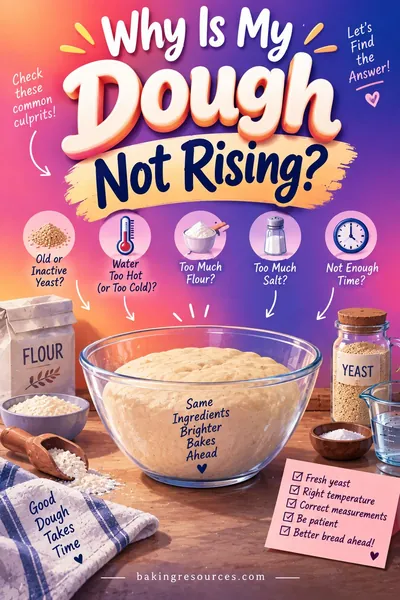
So the packet on your counter holds four times the yeast that loaf needs. That is not a mistake in the packet, it is a difference in the schedule, and the slower loaf will taste noticeably better. If the rise stalls anyway, why is my dough not rising walks through the causes in order.
Measuring a packet accurately without a scale
Dry yeast is a fine granule, so the spoon method is more reliable here than it is with flour. Two rules cover it.
- Scoop and level. Dip the measuring spoon into the yeast, overfill it slightly, then sweep the excess off with the back of a knife. Do not tap or pack.
- Use real measuring spoons. A teaspoon from the cutlery drawer is not a measuring teaspoon and can be off by a third.
A leveled 2 1/4 teaspoons lands within a few tenths of a gram of 7 g. That is close enough for any bread. Our guide on how to measure ingredients has the same technique for everything else in the recipe.
If you want to split a packet, do it by teaspoons rather than by eye. Half a packet is 1 1/8 teaspoons, which is 1 teaspoon plus a scant 1/8. A third of a packet is 3/4 teaspoon.
What to do with a partial packet
An opened packet has lost its seal, and dry yeast pulls moisture out of the air quickly. Two options work:
- Fold and tape it shut, then use the rest within a day or two, kept in the fridge.
- Tip it into a small airtight jar and put the jar in the freezer. Label it, because active dry and instant look identical.
What does not work is leaving a folded packet in a warm cabinet next to the stove for a month. If you are unsure whether an opened packet is still alive, test it before you build a whole dough around it. The method is in how to proof yeast: stir the yeast into warm water with a pinch of sugar and look for foam within 10 minutes.
Proofing is not required for modern yeast. It is a freshness test, and it earns its place only when you doubt the packet.
Two packets, half packets and other recipe quirks
Old recipes sometimes call for two packets in a single loaf. That is usually a holdover from when home yeast was less reliable, and it produces a fast, yeasty bread. You can safely cut it to one packet and add 30 to 45 minutes to the rise.
Sweet, rich doughs are the honest exception. Butter, eggs and sugar all slow yeast down, so brioche and cinnamon rolls really do use more yeast per gram of flour than a lean loaf does. If the dough has a lot of butter and sugar in it, keep the two packets.
For pizza, the amount depends entirely on your schedule rather than the dough. Pizza dough rise time sets out the yeast percentage for a same day dough versus a two day cold ferment.
FAQ
How many teaspoons are in a packet of yeast?
Exactly 2 1/4 teaspoons, or 3/4 of a tablespoon. That holds for active dry, instant, rapid rise and bread machine yeast, since all four are filled to the same 7 g weight and share the same granule density.
How many grams are in a packet of yeast?
7 g, which is the metric rounding of the old 1/4 ounce retail standard. Some European sachets are 11 g and a few are 5 g, so check the printed gram figure if the packet did not come from a US store.
Can I use 1 packet of instant yeast in place of 1 packet of active dry?
You can, and the loaf will be fine, but it will rise about a third faster because instant is more concentrated. For an exact match use 5.25 g of instant, which is 1 3/4 teaspoons, in place of the 7 g active dry packet.
How much flour does one packet of yeast raise?
About 4 cups, which is roughly 480 g. That is around 1.1% yeast by flour weight, a dose calibrated for a fast 1 to 1 1/2 hour rise. For a slow or overnight dough you need far less, sometimes as little as a quarter of a packet.
Is a packet of yeast the same as a tablespoon?
Close, but not equal. A packet is 2 1/4 teaspoons and a tablespoon is 3 teaspoons, so a tablespoon holds about a third more yeast, or 9.3 g against 7 g. Use 2 1/4 teaspoons if the recipe was written around packets.
How much fresh yeast replaces one packet?
About 15.8 g, since fresh yeast is roughly three times the weight of instant for the same rise. A 0.6 oz cake of fresh yeast, which is 17 g, is the nearest thing you can buy to one dry packet.
What happens if I use too much yeast?
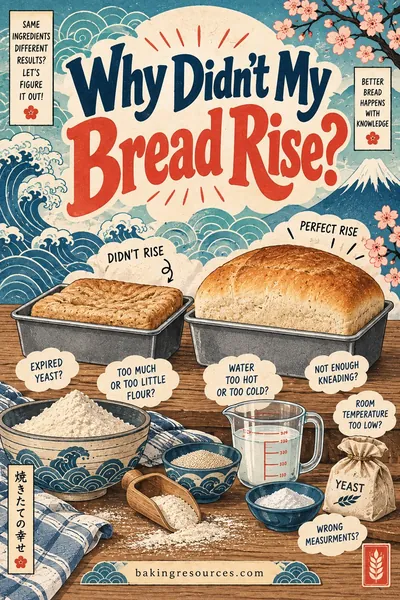
The dough rises fast, then collapses, and the bread tastes sharply of yeast with a coarse, open crumb that goes stale quickly. Overproofed dough also loses its structure, which is one of the causes covered in why didn't my bread rise once it has fallen back.
Do I need to proof yeast from a sealed packet?
No. Modern dry yeast is designed to be mixed straight into the flour, and the manufacturers say so on the strip. Proof only when the packet is old, has been open a while, or has been stored somewhere warm.