
Can You Freeze Pizza Dough? How to Wrap, Thaw and Bake It

Yes, you can freeze pizza dough, and it keeps its best quality for up to 3 months in a 0°F freezer. Freeze it in single-pizza balls after the first rise, coat each one lightly with oil, wrap it tight, and thaw it in the fridge for 12 to 24 hours before you stretch it. Par-baked crusts keep for about 2 months, and leftover baked pizza for 1 to 2 months.
The tricky part is the thaw, because that is where most frozen dough turns sticky, slack, or stubborn about rising. Pick what you froze and how you plan to use it in the calculator below, and it gives you the thaw time, oven temperature, and bake time, plus the one thing to check before the dough goes in.
Free calculator
Frozen pizza dough planner
Pick what is in your freezer and how much time you have, and get the thaw, the oven setting and the bake time.
More free baking tools



Pizza dough freezer times at a glance
Here is the short version. Every time below assumes a freezer running at 0°F or colder and dough that was wrapped airtight. Food kept frozen solid at 0°F stays safe indefinitely, so these are best-quality windows, not safety limits. Past them, the dough is still safe, it just rises less and bakes up flatter and drier.
| What you freeze | Best quality in the freezer | How to thaw | How to bake |
|---|---|---|---|
| Raw dough balls, after the first rise | Up to 3 months | Fridge 12 to 24 hours, or counter 2 to 3 hours | 500°F, 10 to 12 minutes on a stone or steel |
| Raw dough balls, straight after mixing | Up to 3 months, but expect a slower rise | Fridge 24 hours, then a 1 to 2 hour rise on the counter | 500°F, 10 to 12 minutes |
| Shaped, unbaked rounds | About 1 month | Do not thaw; top and bake from frozen | 475°F, 12 to 15 minutes on a sheet pan |
| Par-baked crusts | About 2 months | Not needed | 450°F, 10 to 14 minutes from frozen |
| Baked pizza or leftover slices | 1 to 2 months | Fridge overnight, never the counter | 375°F, 10 to 15 minutes from frozen, to 165°F |
Raw dough balls are the most flexible option, which is why most of this guide focuses on them. You can still change your mind about the size, the shape, and the toppings on pizza night.
Why pizza dough freezes so well
Pizza dough is about as freezer-friendly as anything you can make. A basic dough is just flour, water, yeast, salt, and maybe a spoon of oil. There are no eggs or dairy to worry about, and no delicate crumb to protect yet, because it has not been baked.
The one living thing in there is the yeast. Freezing slows it to a stop, and most of the cells survive. Some do not, because ice crystals form inside and around them as the dough freezes. That is why frozen dough usually rises a little slower after thawing than fresh dough. A few bakers who freeze dough often add about a quarter more yeast to batches they plan to freeze, so the survivors have backup. It is optional. For a standard dough used within 3 months, the normal amount works fine as long as you give it a proper thaw and rest.
The gluten matters too. Ice crystals can nick some of the stretchy gluten strands, so long-frozen dough can feel a bit slacker and tear more easily. Fast freezing keeps the crystals small, which is one reason to freeze in single-pizza portions rather than one giant lump. If your dough is fighting you even before it goes in the freezer, the fixes in why dough gets too sticky are worth a look first.
 Baking guideWhy Is My Dough Too Sticky? Seven Causes and FixesCheck the rise times →
When to freeze: after the first rise is best
You can freeze dough at two points: right after mixing, or after the first rise (the bulk rise). After the first rise is the better choice for most home bakers.
- After the first rise. The dough has already built flavor and some structure, and the yeast is active and healthy going in. After thawing, it only needs a short rest before shaping. This is the method in the calculator above.
- Right after mixing. This works, but the dough has to do its whole rise after a long cold sleep, so it is slower and less predictable. Plan on a full day in the fridge plus an hour or two on the counter.
- After a cold ferment. If you like a 1 to 3 day fridge rise for flavor, freeze the balls at the end of it. They come out tasting just as good as the day you froze them.
Avoid freezing dough that has over-risen, the kind that has collapsed or smells strongly of alcohol. The yeast has used up most of its food, and it will be tired and slow after thawing. Our guide on how long pizza dough should rise has the timing by temperature, so you can catch it at the right point. Kneading matters too: a dough with well-developed gluten holds up to freezing better, and the windowpane test for kneading tells you when it is ready.
 Baking guideHow Long Should Pizza Dough Rise? Times by MethodRead the dough guide →
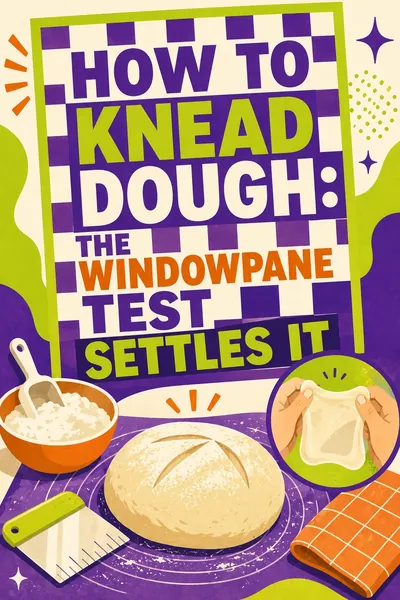 Baking guideHow to Knead Dough: The Windowpane Test Settles ItGet the proofing tips →
Sourdough, whole wheat and other dough types
Not every pizza dough is plain white flour and commercial yeast. The freezer handles most of them well, with a few differences worth knowing.
Sourdough pizza dough
Sourdough freezes well, with one catch: wild yeast is a bit more sensitive to freezing than commercial yeast. Frozen sourdough balls often need a longer rest after thawing, about 2 to 3 hours on the counter after the fridge thaw instead of 1 to 2, before they feel puffy again. The bacteria that make the tang survive fine, so the flavor stays. Use sourdough balls within 2 months if you want a lively rise.
Whole wheat and multigrain dough
Whole wheat dough freezes for the same 3 months, but the bran in it soaks up water and can make the thawed dough feel stiffer. If it tears when you stretch it, rest it another 15 to 20 minutes. Whole grain flours also contain natural oils from the germ, which can taste stale after very long storage, so they are best used toward the front of that window.
Doughs with milk, eggs or cheese
Some pizza and calzone doughs are enriched with milk, an egg, or grated cheese for a softer, richer crust. These freeze fine, but they change the thaw rules. Thaw them only in the fridge, and do not leave them out on the counter for more than 2 hours total, including the time they spend warming up before you shape them.
Instant or rapid-rise yeast doughs
Doughs made with rapid-rise yeast are built to go fast, so they can over-rise before you get them into the freezer. Freeze them as soon as they have roughly doubled. If you are not sure how much yeast your recipe actually used, how much yeast is in a packet has the grams and teaspoons for each type.
 Baking guideHow Much Yeast Is in a Packet? Grams, Spoons and UsesSee the timing chart →
How to wrap pizza dough for the freezer
Air is the enemy. Every gap between the dough and the wrap is a spot where ice can leave the dough and form frost, which dries the surface into a tough skin. Here is the wrap that prevents that:
- Divide into single pizzas. For a 12 inch pizza, that is about 250 to 280 grams of dough per ball. Weighing gives you even portions and even bake times.
- Shape each one into a smooth, tight ball. Tuck the edges under so the top is taut. A tight ball keeps its shape and thaws evenly.
- Coat lightly with oil. About 1/2 teaspoon of olive oil rubbed all over each ball. The oil stops the dough from sticking to the wrap and slows moisture loss.
- Wrap tightly in plastic wrap. Press it against the dough everywhere with no air pockets.
- Bag it. Slide the wrapped balls into a zip-top freezer bag, one or two per bag, and press out all the air before sealing. Leave a little room, since the dough can puff slightly before it freezes solid.
- Label and date. Write the date and the dough weight on the bag. You will not remember in February.
- Freeze flat and fast. Lay the bags on a tray in the coldest part of the freezer, usually the back, not the door. Once they are solid, you can stack them.
Some people skip the plastic wrap and use only an oiled zip-top bag. That is fine for a few weeks. For the full 3 months, the double layer makes a real difference, because a single layer of thin plastic lets moisture escape slowly over time. The same double-wrap rule shows up in freezing baked bread, for the same reason.
 Baking guideHow to Freeze Bread and Thaw It Without Drying ItGet the storage times →
Freezing par-baked crusts and shaped rounds
If you want pizza night to take 15 minutes, freeze par-baked crusts. They skip the thaw completely.
How to par-bake a crust for the freezer
- Stretch the dough to the size you want and set it on parchment.
- Prick the center all over with a fork so it does not balloon. That is called docking, and what docking dough does explains why it stops big bubbles.
- Brush the top very lightly with oil.
- Bake at 450°F for 5 to 6 minutes, just until the top looks dry and set but has barely any color.
- Cool completely on a wire rack. Warm crusts trap steam, and steam turns into ice crystals and a soggy center.
- Wrap each crust in plastic wrap, then foil or a large freezer bag, with parchment between crusts if you stack them.
 Baking guideWhat Is Docking Dough? Why Bakers Prick the CrustLearn more →
Par-baked crusts keep their best quality for about 2 months. Top them while frozen and bake at 450°F for 10 to 14 minutes.
Shaped but unbaked rounds
You can also stretch raw dough into rounds, freeze them flat on parchment-lined trays, then wrap and stack them. They take up little room, but they are fragile and they lose their rise faster, so use them within about a month. Bake them from frozen on a sheet pan at 475°F for 12 to 15 minutes. Do not thaw them first; a thawed raw round turns sticky and is hard to move.
Freezing baked pizza and leftover slices
Leftover pizza freezes well too, but it follows different rules than dough, because cheese and toppings like sausage or pepperoni are perishable foods. Get leftovers into the fridge or freezer within 2 hours of the pizza coming out of the oven, or within 1 hour if the room is above 90°F.
- Cool the slices, then lay them on a tray in a single layer and freeze them uncovered for about an hour, until firm.
- Wrap each slice in plastic wrap or foil, then put them in a freezer bag with the air pressed out.
- Use them within 1 to 2 months for the best texture.
- Thaw them in the fridge, or better yet, reheat them straight from frozen at 375°F for 10 to 15 minutes, until the center reaches 165°F.
Pizza with very wet toppings, like fresh tomatoes or lots of mushrooms, freezes the worst, because those toppings release water as they thaw. If you know you will freeze half a pizza, keep that half lightly topped. For the bigger picture on what goes where, our guide on storing baked goods on the counter, fridge or freezer covers breads, pies, and cakes side by side.
 Baking guideHow to Store Baked Goods: Counter, Fridge or FreezerSee how long it keeps →
How to thaw frozen pizza dough
There are three ways to thaw raw pizza dough. The fridge gives you the best texture, but all three work if you know what to watch for.
| Method | Time for a 250 to 280 g ball | Then | Best for |
|---|---|---|---|
| Fridge | 12 to 24 hours | 1 to 2 hours covered on the counter before stretching | Best flavor and easiest stretching; planning a day ahead |
| Counter, 68 to 72°F | 2 to 3 hours | Stretch as soon as it is soft all the way through | Same-day pizza when you remember at lunchtime |
| Cool water bath | 60 to 90 minutes | 20 to 30 minutes rest at room temperature | Last-minute dinners |
The fridge method, step by step
Take the dough out of the freezer bag but leave it in its plastic wrap, or move it to a lightly oiled container with a lid. Give it room: it will grow a bit as it thaws. Leave it in the fridge for 12 to 24 hours. It can stay there for another day or two after thawing if your plans change, and the flavor actually gets a little better.
About 1 to 2 hours before baking, set the covered dough on the counter. Cold dough snaps back when you stretch it, because cold gluten is tight. As it warms toward room temperature, it relaxes and stretches easily.
The counter and water methods
Plain pizza dough has no eggs or dairy, so thawing it on the counter is fine. Keep it covered so the surface does not dry out. If your dough recipe includes milk, eggs, or cheese, thaw it in the fridge instead.
For the water bath, keep the dough sealed in a zip-top bag with the air pressed out, sink it in a bowl of cool tap water, and change the water every 30 minutes. Never use hot water or the microwave. They heat the outside enough to kill yeast and start cooking the dough while the middle is still a block of ice.
Baking pizza from frozen dough: oven temperatures and times
Once thawed, frozen dough bakes just like fresh dough. A home oven does its best work as hot as it goes, usually 500°F, with a baking stone or steel preheated for a full 45 to 60 minutes. That stored heat is what puffs the rim and crisps the bottom before the toppings overcook.
| Starting point | Oven | Surface | Time | Done when |
|---|---|---|---|---|
| Thawed dough ball, 12 inch thin crust | 500°F | Preheated stone or steel | 8 to 10 minutes | Rim puffed and spotted brown, cheese bubbling |
| Thawed dough ball, 12 inch regular crust | 500°F | Preheated stone or steel | 10 to 12 minutes | Bottom crisp and browned when lifted |
| Thawed dough, sheet pan or pan pizza | 475°F | Oiled sheet pan, lowest rack | 12 to 15 minutes | Edges golden and pulling from the pan |
| Par-baked crust, frozen | 450°F | Rack or preheated stone | 10 to 14 minutes | Cheese bubbling, underside crisp |
| Par-baked crust, thawed | 450°F | Rack or preheated stone | 8 to 10 minutes | Cheese bubbling, underside crisp |
| Baked slices, frozen | 375°F | Sheet pan | 10 to 15 minutes | Center reaches 165°F |
Rack position changes everything with pizza. A stone or pan on the lowest rack crisps the bottom; one near the top browns the cheese faster. Our guide on which oven rack to use walks through that, and pizza oven temperatures compares home ovens with outdoor pizza ovens if you have one.
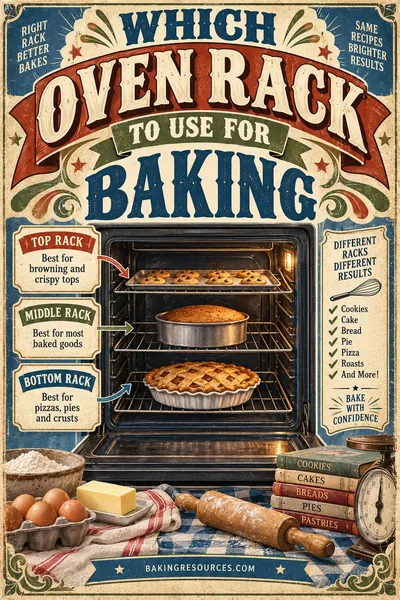 Baking guideWhich Oven Rack to Use for Baking: Top, Middle, LowSee the chart →
 Baking guidePizza Oven Temperature: Home Oven, Stone, and Wood-FiredRead the guide →
Worked example: a Sunday batch for three weeknight pizzas
Say you mix a batch of dough on Sunday with 750 grams of flour. That makes about 1,250 grams of dough, enough for four 12 inch pizzas at roughly 300 grams each. You bake one Sunday night and freeze the other three.
- Sunday, 2 p.m. Mix and knead. The bulk rise takes about 2 hours in a 75°F kitchen.
- Sunday, 4 p.m. Divide into four 300 gram balls. Set one aside to rise for dinner. Oil the other three with 1/2 teaspoon of oil each, wrap them in plastic, bag them, label them, and lay them flat in the freezer.
- Thursday night. You want pizza on Friday. Before bed, move one ball to the fridge in a covered container.
- Friday, 4:30 p.m. Take the dough out of the fridge and leave it covered on the counter. Put the stone on the lowest rack and preheat to 500°F at 5 p.m.
- Friday, 6 p.m. The dough is soft and relaxed. Stretch, top, and bake for 10 to 12 minutes.
- Two weeks later, a busy Tuesday. You forgot to move a ball to the fridge. At 3 p.m. you set it in an oiled, covered bowl on the counter. By 6 p.m. it is ready to stretch.
- The last ball gets used within the 3 month window, by the middle of the following month at the latest.
If you are scaling your recipe up to fill the freezer, the math in baker's percentage keeps the salt, water, and yeast in proportion so every batch behaves the same.
 Baking guideBakers Percentage Explained: Scale Any Bread RecipeGet the details →
A make-ahead plan for holiday and winter parties
Pizza is one of the easiest things to make ahead for the busy stretch from Thanksgiving weekend through New Year's. Leftover-turkey pizza, a kids' pizza night while the adults wrap gifts, or a tray of party squares on New Year's Eve: all of them get easier with dough already in the freezer.
Three to four weeks ahead
Mix two or three batches on a quiet weekend and freeze them as balls. A double batch fits fine in most freezers if you lay the bags flat. For a party, also par-bake a few crusts; they are the fastest thing to have on hand when guests arrive.
The day before
Move the balls you need to the fridge in the morning or the night before. Shred the cheese, cook any sausage or vegetables, and keep the toppings covered in the fridge.
Party day
Set the dough out 1 to 2 hours before baking. Bake the pizzas one or two at a time so the stone stays hot, and cut them into squares for easy grabbing. If you want more ideas for a spread, our list of New Year's Eve party food ideas has plenty that pair with pizza.
One winter detail matters: kitchens are cooler in December and January. A 65°F kitchen can stretch a 2 hour counter thaw closer to 3 or 4 hours. If the dough is still cold and stiff, set it in a turned-off oven with just the light on. That gentle warmth gets it moving without cooking it.
What goes wrong with frozen pizza dough, and how to fix it
Most frozen dough problems come from one of four things: air in the wrap, a rushed thaw, dough that sat too long, or yeast that had a hard time. Here is what each one looks like.
| What you see | Why it happened | What to do |
|---|---|---|
| Gray, dry, leathery patches or a crust of frost inside the bag | Freezer burn from air touching the dough | Pinch off and discard the dry spots; next time oil the ball and double wrap |
| Dough will not rise or puff after thawing | Some yeast died in the freezer, the dough is still cold inside, or it was frozen too long | Give it another 30 to 60 minutes somewhere warm; next time use it within 3 months |
| Dough is wet, sticky and slack | Ice melted on the surface, or the dough over-thawed on a warm counter | Dust lightly with flour, fold it over itself a few times, and rest it 15 minutes |
| Dough keeps shrinking back when stretched | It is still cold, so the gluten is tight | Cover it and wait 15 to 20 minutes more, then try again |
| Dense, flat crust with a tight crumb | Not enough rest after thawing, or the oven was not hot enough | Rest until the dough is soft and puffy; preheat the stone a full 45 to 60 minutes |
| Soggy center | Wet toppings, a cold stone, or frost left on a par-baked crust | Pat crusts dry, go light on wet toppings, and bake on the lowest rack |
| Strong sour or alcohol smell | The dough over-proofed before freezing or sat several days in the fridge after thawing | Still safe if it was handled properly, but bake it soon; it will taste tangy |
If the rise problem keeps coming back, the cause may be the yeast itself rather than the freezer. Proofing a spoonful in warm water with a pinch of sugar, as shown in how to proof yeast, tells you in 10 minutes whether a jar is still lively. And for a deeper list of rising problems, see why dough is not rising.
How to tell if frozen pizza dough is still good
Dough kept frozen solid stays safe, so the question is mostly quality. Check it after it thaws:
- Still good: it smells yeasty and wheaty, feels smooth and soft, and puffs a little as it comes to room temperature.
- Past its best but usable: some dry patches at the surface, a slower rise, or a slightly slack feel. Trim the dry bits and expect a flatter crust. It makes good flatbread or breadsticks.
- Throw it out: any fuzzy mold, a gray or pinkish color through the dough, a slimy surface, or a sharp sour smell that is clearly off rather than just tangy. Also toss dough that thawed in a power outage and then sat warm for hours.
Thawed dough can sit in the fridge for 2 to 3 more days. Refreezing thawed raw dough is safe if it thawed in the fridge, but each freeze kills more yeast, so the second round bakes noticeably flatter. Bake it instead, then freeze the baked pizza or crust if you need to.
Common mistakes to avoid
- Freezing one big lump. A whole batch in one bag takes a day or more to thaw and thaws unevenly. Portion before freezing.
- Skipping the oil. Bare dough sticks to the wrap and tears when you peel it off.
- Stretching it cold. Fridge-cold dough fights back and tears. Give it 1 to 2 hours covered on the counter.
- Thawing it in the microwave. Even the defrost setting cooks spots of dough and kills the yeast.
- Storing it in the freezer door. The door warms up every time it opens, and those small thaw and refreeze cycles cause freezer burn faster.
- Forgetting the label. Unlabeled dough tends to sit past 3 months. A date takes five seconds.
- Using a different yeast without adjusting. If you switch between active dry and instant yeast for your freezer batches, the amounts are different. Our guide to active dry vs instant yeast has the conversion.
Questions people ask
How long can you freeze pizza dough?
Raw pizza dough keeps its best quality for up to 3 months in a 0°F freezer when it is oiled and wrapped airtight. It stays safe longer while frozen solid, but the yeast weakens and the dough dries out over time, so older dough rises less and bakes flatter. Write the date on the bag so you use the oldest first.
Should I freeze pizza dough before or after it rises?
After the first rise is best. The dough has built flavor, the yeast is healthy, and it only needs a short rest after thawing. You can freeze it right after mixing, but then it has to do its whole rise after thawing, which is slower and less predictable. Avoid freezing dough that has already over-risen and collapsed.
Can you thaw pizza dough on the counter?
Yes, plain pizza dough made from flour, water, yeast, salt and oil can thaw on the counter. Keep it covered in a lightly oiled bowl, and it will be ready to stretch in about 2 to 3 hours in a 68 to 72°F kitchen. Dough made with milk, eggs or cheese should thaw in the fridge instead.
Can you bake pizza dough straight from the freezer?
Not as a frozen ball, because it cannot be stretched until it thaws. Frozen par-baked crusts and pre-stretched rounds are different: top them while frozen and bake. Par-baked crusts take 10 to 14 minutes at 450°F, and raw frozen rounds take 12 to 15 minutes at 475°F on a sheet pan.
Why is my frozen pizza dough not rising?
Usually it is still cold in the middle, so give it another 30 to 60 minutes somewhere warm. Freezing also kills some yeast, especially in dough kept longer than 3 months or frozen twice, so the rise is slower. If it is wrapped well and used on time and still will not rise, check that your yeast is fresh.
Can you refreeze pizza dough?
You can safely refreeze raw dough that thawed in the fridge, but the quality drops. Each freeze kills more yeast and damages more gluten, so the dough rises less and tears more easily. A better plan is to bake the thawed dough into a pizza or par-baked crust and freeze that instead.
How do you reheat frozen leftover pizza?
Reheat it straight from frozen on a sheet pan at 375°F for 10 to 15 minutes, or in a covered skillet over medium-low heat, until the cheese melts and the center reaches 165°F. If you thaw it first, do it in the fridge, never on the counter, because cheese and meat toppings are perishable.