
Can You Freeze Croissants? Baked, Unbaked and Filled

Yes, you can freeze croissants, and they keep their best quality for about 1 month in a 0°F freezer, whether baked or unbaked. Baked croissants go straight from the freezer into a 350°F oven for 10 to 12 minutes and come out crisp again. Unbaked shaped croissants need a night in the fridge to thaw, 2 to 3 hours to proof, and 15 to 20 minutes at 400°F.
The details change with fillings: almond and ham-and-cheese croissants have to thaw in the fridge, never on the counter. Pick what you froze and whether you are baking from frozen or thawed in the calculator below, and it gives you the exact oven temperature and time, plus the check that tells you they are ready.
Free calculator
Frozen croissant planner
Pick what kind of croissants you froze and whether they go straight from the freezer or get thawed first.
More free baking tools



Croissant freezer times at a glance
Every time here assumes a freezer at 0°F or colder and croissants wrapped airtight. Frozen solid, they stay safe much longer, so these are best-quality windows. After a month, baked croissants lose their crisp, buttery layers and start to taste flat, and unbaked dough loses some of its rise.
| What you freeze | Best quality in the freezer | How to thaw | How to bake or reheat |
|---|---|---|---|
| Baked plain croissants | About 1 month | Not needed, or 30 to 60 minutes on the counter | 350°F, 10 to 12 minutes from frozen |
| Baked chocolate croissants | About 1 month | Not needed, or 30 to 60 minutes on the counter | 350°F, 10 to 12 minutes from frozen |
| Baked almond croissants | About 1 month | Fridge only, overnight | 325°F, 15 to 20 minutes from frozen |
| Baked ham and cheese croissants | About 1 month | Fridge only, overnight | 325°F, 15 to 20 minutes from frozen, to 165°F |
| Unbaked shaped croissants, plain or chocolate | About 1 month | Fridge, 8 to 12 hours | Proof 2 to 3 hours, then 400°F for 15 to 20 minutes |
A month is shorter than for most breads, and there is a reason. A croissant is mostly about texture, a shattery outside and an airy, layered inside, and texture is the first thing the freezer wears down. Plan on eating them within the month, not the season.
Why croissants need a little more care in the freezer
A croissant is made by folding a slab of cold butter into yeast dough again and again, until there are dozens of thin sheets of dough separated by thin sheets of butter. In the oven, the water in the dough and butter turns to steam and pushes those sheets apart. That is where the flaky, honeycomb inside comes from. Our guide to lamination in pastry explains the folding in detail.
 Baking guideWhat Is Lamination in Pastry? Layers, Butter and FoldsLearn more →
That structure is what makes freezing tricky:
- Baked croissants have a huge surface area. All those thin, crisp layers give moisture lots of places to go. Wrap them loosely and they dry out; wrap them warm and they go soggy.
- Unbaked croissants rely on cold butter. If the dough thaws too warm, the butter softens and blends into the dough, and the layers merge. Then they bake up bready instead of flaky.
- The yeast takes a hit. Freezing kills some yeast cells. Croissant dough is rich and heavy, so it needs every bit of lift it can get.
None of this makes freezing a bad idea. It just means the cooling, wrapping, and thawing steps matter more than they do for a sandwich loaf.
Baked or unbaked: which should you freeze?
Both work. The best choice depends on how much time you want to spend on the day you serve them.
| Freeze baked | Freeze unbaked | |
|---|---|---|
| Time on serving day | 10 to 12 minutes in the oven | About 3 1/2 hours: proof, then bake |
| Planning ahead | None | Move to the fridge the night before |
| Texture | Very good: crisp outside, slightly less airy inside | Best: tastes freshly baked |
| Kitchen smell | A little | The whole house smells like a bakery |
| Fillings | Any filling | Plain or chocolate only |
| Risk of failure | Low | Moderate: under-proofing is common |
A good rule: freeze baked croissants for quick weekday breakfasts and freeze unbaked ones for special mornings, like holidays or a brunch with guests, when the fresh-baked result is worth the timing.
How to freeze baked croissants
The sooner baked croissants go into the freezer, the better they come out. Day-old croissants are already a bit dry and chewy, and the freezer locks in that day-old texture. Aim to freeze them the day they are baked.
- Cool completely. Set them on a wire rack for at least 1 hour. They should feel cool all the way through, including the thick middle. Warm croissants trap steam that turns the layers soggy.
- Wrap each one. Use plastic wrap, snug but not squeezed. Pressing too hard crushes the layers.
- Bag or box them. Put the wrapped croissants in a freezer bag with the air pressed out, or in a rigid container if you are worried about crushing. A container protects the delicate tips.
- Label and date. Note the type and the date. A month goes by fast.
- Freeze in a single layer. Once they are solid, you can stack the bags.
Croissants are fragile in the freezer, so keep them out from under heavy items like frozen meat or bags of vegetables. A squashed croissant does not puff back up. The same steps work for other breads too; how to freeze bread covers loaves, rolls and bagels.
 Baking guideHow to Freeze Bread and Thaw It Without Drying ItSee how long it keeps →
How to freeze unbaked croissants
Freezing unbaked croissants is how many bakeries manage fresh pastry every morning. The key is to freeze them after shaping but before the final rise, called the proof.
- Shape the croissants as your recipe directs, rolling them up from the wide end toward the tip, and set them on a parchment-lined sheet pan with the tip tucked underneath.
- Do not proof them. Proofed croissants are full of gas and fragile. They deflate in the freezer and bake up flat.
- Flash freeze. Put the whole sheet pan in the freezer, uncovered, for 2 to 3 hours, until the croissants are rock hard.
- Wrap and bag. Wrap them in pairs or individually in plastic wrap, then seal them in a freezer bag with the air pressed out.
- Label with the date and the oven temperature, and use them within about 1 month.
Work cold while you shape. If the dough starts to feel soft or greasy, or butter shows through the surface, slide it onto a sheet pan and chill it for 20 to 30 minutes before you keep going. Dough that goes into the freezer with smeared butter will bake up bready no matter how carefully you thaw it. The goal is distinct, firm sheets of butter at the moment the croissants hit the freezer, and again at the moment they hit the oven.
Freezing unshaped laminated dough as a block also works, for the same 1 month. It takes up less room, but you need to thaw it overnight in the fridge before rolling and cutting, so you lose a day. Shaped croissants are more convenient. Parchment or a silicone mat under them both work for flash freezing; see parchment paper vs silicone mats for which releases better from frozen.
 Baking guideParchment Paper vs Silicone Baking Mat: Which WinsRead the guide →
Chocolate, almond and ham and cheese croissants
Fillings change both what you can freeze and how you thaw it.
Chocolate croissants
Chocolate croissants (pain au chocolat) freeze just like plain ones, baked or unbaked. Chocolate is stable at room temperature, so they can thaw on the counter. The chocolate may get a faint gray film from the temperature change, called bloom. It is only cocoa butter or sugar coming to the surface and does not affect safety or taste much. The same thing happens to chocolate bars stored in a warm or changing spot, as explained in how to store chocolate. Leaving the croissants wrapped until they reach room temperature keeps condensation off the chocolate and limits the bloom.
 Baking guideHow to Store Chocolate So It Never Turns WhiteRead the storage guide →
Almond croissants
Almond croissants are filled and topped with almond cream, which is made with eggs, butter, sugar, and ground almonds. Once baked, they freeze well for about 1 month. Because the filling contains eggs, thaw them in the fridge and keep them out of the counter zone for no more than 2 hours, including serving time. Freeze them baked rather than unbaked; raw almond cream sitting through a long room-temperature proof is not a safe plan.
Ham and cheese croissants
Meat and cheese fillings are perishable. Freeze them baked, use them within 1 month, thaw them in the fridge, and reheat them until the center reaches 165°F. Wrapped baked ones also travel well frozen in a lunch bag with an ice pack.
Store-bought and bakery croissants
Croissants from a bakery or a grocery store freeze just like homemade ones, with a couple of points to watch.
- Freeze them the day you buy them. Bakery croissants are usually baked that morning. By the next day they have lost much of their crispness, and freezing locks in that softer texture.
- Take them out of the paper bag or plastic clamshell. Neither one keeps out freezer air. Wrap each croissant in plastic, then bag them.
- Croissants sold frozen and unbaked come with their own thaw and proof directions. Follow the package, since those doughs are made for a specific schedule.
- Bakery croissants with cream fillings, like pastry cream or cream cheese, freeze poorly. The filling turns watery or grainy. Eat those fresh.
How to thaw frozen croissants
For baked croissants, you often do not need to thaw them at all: they reheat beautifully straight from the freezer. If you do want to thaw them, here is how.
| Croissant | Where to thaw | How long | Then |
|---|---|---|---|
| Baked plain or chocolate | Counter, in the wrap | 30 to 60 minutes | 350°F for 4 to 5 minutes to re-crisp |
| Baked almond | Fridge, in the wrap | 6 to 8 hours or overnight | 350°F for 6 to 8 minutes |
| Baked ham and cheese | Fridge, in the wrap | 6 to 8 hours or overnight | 350°F for 6 to 8 minutes, to 165°F |
| Unbaked shaped | Fridge, on a lined sheet pan, covered | 8 to 12 hours | Proof 2 to 3 hours, then bake |
Keep baked croissants in their wrap while they thaw. The moisture that condenses as they warm collects on the outside of the wrap instead of on the pastry. Unwrap them once they reach room temperature.
Unbaked croissants need the slow fridge thaw. On the counter, the outside warms and the butter softens long before the center thaws, and the layers start to smear together. A cold, slow thaw keeps the butter firm, so the sheets stay separate.
How to reheat baked croissants from frozen
The oven is the best tool by far, because it drives off moisture and re-crisps the layers. The microwave does the opposite: it heats the water in the pastry and turns it soft and chewy within a minute.
| Method | From frozen | From thawed | Result |
|---|---|---|---|
| Oven at 350°F, middle rack | 10 to 12 minutes | 4 to 5 minutes | Crisp, flaky, warm through: the best |
| Toaster oven at 350°F | 8 to 10 minutes | 3 to 4 minutes | Very good; watch the tips |
| Air fryer at 300°F | 5 to 7 minutes | 2 to 3 minutes | Crisp outside; check that the center is warm |
| Microwave | Not recommended | 10 seconds at most | Soft and chewy, then tough |
Set the croissants on a sheet pan with a couple of inches between them so hot air reaches every side. If the tips are browning faster than the middle is warming, rest a loose sheet of foil over the top. Let them sit 5 minutes after they come out; the layers firm up as they cool slightly. Rack position matters for delicate pastry, and which oven rack to use explains why the middle is safest.
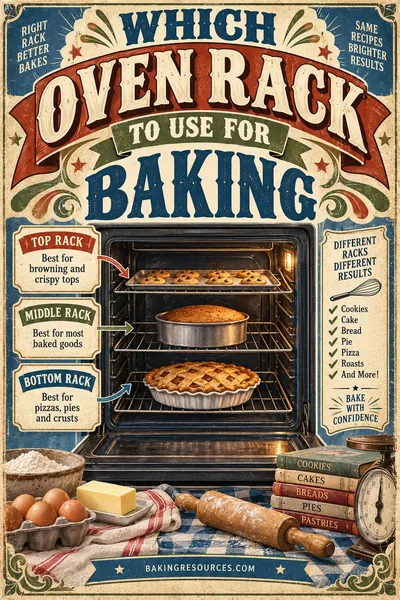 Baking guideWhich Oven Rack to Use for Baking: Top, Middle, LowRead it next →
In a convection oven, drop the temperature to 325°F and start checking a couple of minutes early. The fan crisps the outside faster. Our guide to convection vs conventional ovens explains the usual adjustment.
 Baking guideConvection vs Conventional Oven: When to Use WhichSee the chart →
Proofing and baking unbaked croissants from the freezer
This is the step that decides whether frozen dough turns into a bakery-style croissant or a dense, greasy roll. The steps are simple; the patience is the hard part.
- Thaw overnight in the fridge. Set the frozen croissants on a parchment-lined sheet pan with about 2 inches between them, cover loosely with plastic wrap, and leave them in the fridge for 8 to 12 hours.
- Proof at a cool room temperature. Move the pan to a spot around 75°F, still loosely covered. Keep it under 80°F. Warmer than that, the butter softens and leaks out in the oven.
- Wait for the signs. After 2 to 3 hours, they should be roughly double in size, look puffy and slightly wobbly, show clearly separated layers at the cut ends, and jiggle when you gently shake the pan. In a cool winter kitchen, this can take 3 hours or a little more.
- Preheat the oven to 400°F about 30 minutes before they look ready.
- Egg wash. Beat 1 egg with 1 tablespoon of water and brush it on gently, avoiding the cut layers so they are not glued shut. What an egg wash does covers why it gives that deep, glossy shine.
- Bake at 400°F for 15 to 20 minutes, until deep golden brown all over, including the creases. Pale croissants are underbaked and will be doughy inside.
- Cool 10 minutes on a rack before serving.
 Baking guideWhat Is an Egg Wash? When and How to Brush It OnTake a look →
If they will not puff even after 3 hours, the yeast may have struggled in the freezer, or the dough may have been frozen too long. The general causes in why dough is not rising apply here too.
 Baking guideWhy Is My Dough Not Rising? 7 Causes and Fast FixesCheck the rise times →
Worked example: fresh croissants on Christmas morning
Say you want 8 warm croissants on the table at 9 a.m. on Christmas Day, and you have 8 unbaked, shaped croissants in the freezer from early December.
- December 24, 9 p.m. Unwrap the croissants, set them on a parchment-lined sheet pan, 4 across and 2 down, with 2 inches between them. Cover loosely with plastic wrap and put the pan in the fridge.
- December 25, 5:30 a.m. Take the pan out of the fridge. They have been thawing for 8 1/2 hours and are soft but still cold. Set the pan in a draft-free spot around 72 to 75°F.
- 8:00 a.m. They look puffy and jiggle when you nudge the pan. The kitchen was cool, so it took the full 2 1/2 hours. Preheat the oven to 400°F.
- 8:25 a.m. Brush on the egg wash.
- 8:30 a.m. Into the oven on the middle rack.
- 8:47 a.m. Deep golden brown, including the folds. Out they come.
- 9:00 a.m. Served, still warm.
If that 5:30 a.m. alarm sounds too early, use baked frozen croissants instead. They go into a 350°F oven at 8:45 a.m. and are on the table at 9 a.m.
A weekday version with baked croissants
Now say you bought a dozen croissants from a bakery on Saturday morning. You eat 4 that day and wrap the other 8 individually by noon, while they are still fresh, then bag them and label the bag. On weekday mornings you take out 2, set them on a small sheet pan, and slide them into a 350°F oven as it preheats. Because the oven is still heating, give them 12 minutes instead of 10. They come out crisp with a warm center. All 8 are gone in under three weeks, well inside the 1 month window. If you only want one at a time, an air fryer at 300°F does it in 5 to 7 minutes without heating the whole oven; our air fryer conversion guide explains why lower temperatures work better for pastry in there.
 Baking guideOven to Air Fryer Conversion: Drop 25°F, Cut Time 20%Get the details →
A make-ahead plan for holiday brunches
Croissants are the kind of thing that feels special on Thanksgiving weekend, Christmas morning, or New Year's Day, but nobody wants to laminate dough during the holidays. The freezer splits the work into small pieces.
Three to four weeks ahead
Make the dough, laminate, shape, and freeze. Or buy unbaked croissants from a bakery that sells them, and freeze them the same day. Croissants are best within a month, so do not start before about the middle of November for Christmas.
One to two weeks ahead
If you are also serving baked croissants, say for sandwiches on a second day, bake and freeze those now.
The night before
Move the unbaked croissants to a lined sheet pan in the fridge. Move any baked almond or ham and cheese croissants to the fridge too, still wrapped.
The morning of
Set the unbaked croissants out to proof first thing. While they rise, set the table and prep everything else. Bake them at 400°F, then use the same oven at 350°F for any baked croissants, which need only 10 to 12 minutes from frozen, or 6 to 8 from the fridge for filled ones. Put any leftover filled croissants back in the fridge within 2 hours.
For a party spread, mini croissants work well split and filled. Our list of New Year's Eve party food ideas has a few that build on store-bought pastry.
 Baking guideIdeas for New Years Eve Party Food: 40 Easy Crowd-PleasersTake a look →
What goes wrong with frozen croissants, and how to fix it
| What you see | Why it happened | Fix next time |
|---|---|---|
| Baked croissants are soggy after reheating | Wrapped while warm, or reheated in the microwave | Cool 1 hour before wrapping; reheat in the oven |
| Dry, crumbly, papery croissants | Freezer burn, or kept past a month | Wrap each one, bag with the air pressed out, use within a month |
| Flat, dense unbaked croissants | Under-proofed, or proofed before freezing | Freeze before proofing; proof until doubled and jiggly |
| Butter pooling on the pan in the oven | Proofed too warm, or under-proofed so the dough could not hold the butter | Proof at about 75°F, never above 80°F, and wait for the jiggle |
| Pale outside, doughy inside | Pulled too early | Bake until deep golden brown, including the creases |
| Tips burned before the middle warmed | Oven too hot or rack too high | Middle rack, loose foil on top |
| Croissants never rose after thawing | Yeast weakened by long or repeated freezing | Use within a month and freeze only once |
| Crushed or flattened tips | Heavy items stacked on top in the freezer | Freeze in a rigid container or on the top shelf |
Croissant sandwiches and leftover croissants
Croissants make great sandwiches, and it is tempting to build them ahead and freeze them for grab-and-go breakfasts. Some fillings work and some do not.
Breakfast sandwiches that freeze well
Fully cooked fillings like scrambled or baked egg, cooked sausage or bacon, ham, and sliced cheese freeze well inside a baked croissant for about 1 month. Cool every part completely before assembling. Wrap each sandwich in plastic wrap, then foil, then bag them. To serve, thaw in the fridge overnight, then unwrap the plastic, keep the foil on, and heat at 350°F for 15 to 20 minutes until the center reaches 165°F. Open the foil for the last few minutes to crisp the top. These contain eggs and meat, so they never thaw on the counter.
Fillings to add after thawing
Lettuce, tomato, cucumber, mayonnaise, and soft fresh cheeses do not freeze well. They turn limp and watery and soak into the pastry. Freeze the croissant plain or with the cooked fillings only, and add the fresh things after reheating.
Day-old croissants you did not freeze in time
If a few croissants are already a day or two old and have lost their crispness, they are not worth freezing as-is, but they are still great ingredients. Freeze them torn into pieces for a future bread pudding or breakfast bake, where their richness shines and their texture does not matter. Day-old croissants also make excellent French toast, since the buttery layers soak up the custard without falling apart. Treat a croissant bread pudding like any custard dish: refrigerate it within 2 hours of baking, and reheat leftovers until hot.
Signs they are past their best, and common mistakes
Croissants kept frozen solid stay safe, so you are mostly judging quality. Past their best, they show frost inside the wrap, dry gray patches, and a stale, flat taste even after reheating. Those are still safe; split them and use them for a breakfast bake or bread pudding. Throw them out if you see mold, which can happen when they were bagged warm or sat a few days before freezing, or if filled croissants sat at room temperature for more than 2 hours.
Mistakes to avoid
- Freezing day-old croissants. Freeze on baking day for the best texture.
- Proofing before freezing. Shape, freeze, then proof after thawing.
- Thawing unbaked croissants on the counter. The butter softens and the layers merge. Fridge overnight.
- Thawing almond or ham and cheese croissants on the counter. Eggs, meat and cheese need the fridge.
- Reheating in the microwave. It turns crisp layers chewy. Use the oven.
- Using salted butter when the recipe calls for unsalted. It changes the flavor and can slow the yeast a bit in rich doughs. See salted vs unsalted butter for how to adjust.
- Refreezing thawed unbaked dough. The second freeze weakens the yeast and smears the layers. Bake it, then freeze the baked croissants if you need to.
For more on keeping pastries, breads and pies at their best on the counter, in the fridge and in the freezer, see our guide on storing baked goods.
Questions people ask
How long can you freeze croissants?
Croissants keep their best quality for about 1 month in a 0°F freezer, baked or unbaked, when each one is wrapped and sealed in a freezer bag. They stay safe longer while frozen solid, but baked croissants lose their crisp layers and unbaked dough loses some of its rise, so plan to use them within the month.
Is it better to freeze croissants baked or unbaked?
Unbaked croissants give the freshest result, but they need an overnight fridge thaw and 2 to 3 hours of proofing before baking at 400°F. Baked croissants are much quicker: 10 to 12 minutes at 350°F straight from the freezer. Freeze baked ones for busy mornings and unbaked ones for special occasions.
How do you reheat frozen croissants so they are crispy?
Unwrap them, set them on a sheet pan, and bake at 350°F for 10 to 12 minutes straight from frozen, or 4 to 5 minutes if already thawed. Let them rest 5 minutes before eating. Avoid the microwave, which turns the flaky layers soft and chewy. In a convection oven, use 325°F.
Can you bake frozen croissant dough without thawing?
Not unbaked, unproofed croissants. They need to thaw in the fridge for 8 to 12 hours and then proof for 2 to 3 hours until doubled and jiggly. Baked straight from frozen, the butter melts out before the dough can rise, and you get flat, greasy pastries. Baked croissants are the ones that go straight from freezer to oven.
Can you freeze almond croissants?
Yes, freeze them baked for up to about 1 month. The almond cream filling is made with eggs and butter, so thaw them in the fridge, not on the counter, and do not leave them at room temperature for more than 2 hours. Reheat at 325°F for 15 to 20 minutes from frozen, or 350°F for 6 to 8 minutes once thawed.
Can you freeze store-bought croissants?
Yes. Freeze them the day you buy them, while they are still fresh. Take them out of the paper bag or plastic clamshell, wrap each one in plastic, and seal them in a freezer bag. Reheat at 350°F for 10 to 12 minutes from frozen. Croissants with pastry cream or cream cheese fillings freeze poorly and are best eaten fresh.
Why did my frozen croissants come out flat?
Usually they were not proofed long enough after thawing. Frozen dough is slower, so it often needs the full 2 to 3 hours, sometimes more in a cool kitchen. Croissants proofed before freezing, kept longer than a month, or proofed above 80°F also come out flat, because the gas escapes or the butter melts into the dough.
Can you refreeze croissants?
Baked plain or chocolate croissants that thawed briefly on the counter can be refrozen, but each round dries them out and dulls the layers, so they will not be as good. Do not refreeze thawed unbaked dough; the second freeze weakens the yeast and smears the butter layers. Bake it first, then freeze the baked croissants if needed.