What Is Molasses?

Molasses is the thick, dark syrup left behind when sugar cane juice is boiled down and the sugar crystals are spun out of it. Everything the crystals rejected stays in that syrup: minerals, acids, caramelized sugars, and a bitterness you can taste from across the kitchen.
That leftover status is exactly why it matters in baking. Molasses is acidic, it holds water like a sponge, and it browns faster than any other sweetener on your shelf. Put it in a batter and you get a darker, moister, chewier result that reacts with baking soda. Leave it out of a gingerbread and you get a pale cookie that rises poorly and tastes like nothing much.
Updated September 2026
Out of molasses halfway through a recipe? Our free baking substitutions finder gives you the working swaps for molasses, brown sugar and corn syrup, including the leavening fix each one needs.
What is molasses made from, and how it happens
Cane juice comes out of the mill sweet, cloudy, and thin. Sugar mills boil it, cool it, and spin the syrup in a centrifuge so the sugar crystals separate out. The syrup that gets thrown off is molasses.
Then they do it again. And again. Each boil pulls out more crystals, and each time the syrup left behind is darker, thicker, less sweet, and more bitter than the round before.
| Boil | Syrup you get | Sweetness | Color | Typical use |
|---|---|---|---|---|
| First | Light or mild molasses | Sweetest | Warm amber brown | Cookies, pancakes, table syrup |
| Second | Dark or full-flavor molasses | Moderately sweet | Deep brown | Gingerbread, baked beans, brown bread |
| Third | Blackstrap molasses | Barely sweet, bitter | Near black | Small amounts for depth, mineral supplement |
Three boils, three products, one plant. That's the whole story, and once you know it the labels on the shelf stop being confusing.
Beet sugar makes molasses too, but beet molasses tastes unpleasant to most people and generally goes to animal feed and industrial fermentation rather than grocery shelves. If a jar is sold for eating in the United States, assume cane.
The sulfured and unsulfured split
Older processing used sulfur dioxide to help preserve green, immature cane and to lighten the syrup. That leaves a faint chemical sharpness behind. Most jars you'll find now say "unsulfured," which means the cane was ripe and no sulfur was added.
Buy unsulfured when you have the choice. The flavor is cleaner and rounder, and it's what nearly every modern American recipe assumes.
Types of molasses and what each one does in a bake
The three grades are not interchangeable in any recipe where molasses is the point. Swapping blackstrap into a cookie built for light molasses is the single most common way people ruin a batch.
| Grade | Taste | Best in | Swap notes |
|---|---|---|---|
| Light (first boil) | Sweet, mild caramel, gentle tang | Cookies, muffins, glazes, on pancakes | Can stand in for dark, expect a lighter color |
| Dark (second boil) | Rich, smoky, mildly bitter | Gingerbread, spice cake, baked beans, brown bread | The default when a recipe just says "molasses" |
| Blackstrap (third boil) | Salty, sharply bitter, mineral | Use for a fraction of the total, never all of it | Replace at most a quarter of the molasses called for |
When an American recipe says "molasses" with no adjective, it means dark, full-flavor, unsulfured molasses. That's the jar to keep in the pantry if you only keep one.
Blackstrap is a specialty item, not a default. It carries real mineral content, which is why it shows up in health food aisles, and you can check the actual nutrient breakdown in the USDA's FoodData Central database rather than trusting a bottle's marketing. In a batter, though, its bitterness dominates fast. Use a spoonful of it inside a larger amount of dark molasses if you want depth without the burnt edge.
What molasses actually does in a batter
Four jobs, and each one changes how the finished bake behaves.
It brings acid. Molasses runs acidic, generally down around pH 5, which means it reacts with baking soda to make carbon dioxide. This is why gingerbread recipes almost always call for soda rather than powder. Take the molasses out and the soda has nothing to react with, so the dough sits flat and tastes faintly soapy. Structural dough is a different job again, and our gingerbread house panel guide covers the proportions that hold a wall up.
It holds water. Molasses is roughly 20 to 25 percent water by weight, and the sugars in it are hygroscopic, meaning they pull moisture out of the air and hang onto it. A molasses cookie is still soft on day four while a plain sugar cookie has gone crisp. That's not a coincidence, it's the syrup doing its job.
It browns early. The mix of invert sugars and amino compounds in molasses drives Maillard browning at lower temperatures than plain sucrose does. Molasses bakes go dark fast. Check them earlier than the recipe says, especially the bottoms, and if yours are scorching every time our guide to cookies burnt on the bottom covers the pan and rack fixes.
It weighs a lot. One cup of molasses is 337 g, which is heavier than a cup of water and close to honey at 340 g. That density matters when you're scaling a recipe or subbing by volume. Our ingredient weight chart has all three syrups if you want to weigh instead of pour.
Worked example: making brown sugar from scratch
This is the clearest demonstration of what molasses does, because brown sugar is literally white sugar with molasses stirred back in.
- Light brown sugar: 1 cup granulated sugar (200 g) plus 1 tablespoon molasses (about 21 g)
- Dark brown sugar: 1 cup granulated sugar (200 g) plus 2 tablespoons molasses (about 42 g)
Rub it together with a fork, or beat it in a stand mixer for 30 seconds until there are no dark streaks left. It is identical to the boxed product, because the boxed product is made the same way. The full method and the other options live in our brown sugar substitute guide.
Now look at what that one tablespoon buys you. It's about 5 percent of the total weight, and it turns a crisp cookie into a chewy one, adds enough acid to wake up baking soda, and darkens the crumb. That's a big return on a small pour.
Molasses vs the other dark syrups
People reach for whatever dark bottle is closest, and the results vary wildly. Here's what each one really is.
| Syrup | What it is | Acidic? | Substitutes for molasses? |
|---|---|---|---|
| Dark corn syrup | Corn syrup with caramel color and flavoring | No | Yes for texture, no for taste. Adjust the soda |
| Golden syrup | Inverted cane sugar syrup, British staple | Barely | Lighter and sweeter, no bitterness |
| Treacle (black) | The British name for dark molasses | Yes | Yes, near enough identical |
| Sorghum syrup | Boiled sorghum cane juice, never centrifuged | Mildly | Close in body, sweeter and tangier |
| Maple syrup | Boiled maple sap | Barely | Texture yes, flavor no |
| Pomegranate molasses | Reduced pomegranate juice, not sugar cane | Very | No. Savory and sour, a different ingredient |
Two of those cause most of the confusion. Treacle is simply what the British call molasses, so a recipe asking for black treacle wants dark molasses and you can pour it straight in. Pomegranate molasses shares only the word. It's a fruit reduction used in Middle Eastern cooking, and it will not work in gingerbread.
Corn syrup is the closest structural match because both are thick invert sugar syrups that resist crystallizing, but corn syrup carries no acid and almost no flavor. If you're weighing that swap, our guide to what corn syrup is explains where it can and can't fill in.
How to substitute molasses, and what to fix when you do
Every molasses substitute costs you something. The trick is knowing which loss you can live with in that particular recipe.
| Instead of 1 cup molasses | Use | Fix required |
|---|---|---|
| Dark brown sugar route | 3/4 cup packed dark brown sugar plus 1/4 cup water | Warm gently until dissolved. Milder, still slightly acidic |
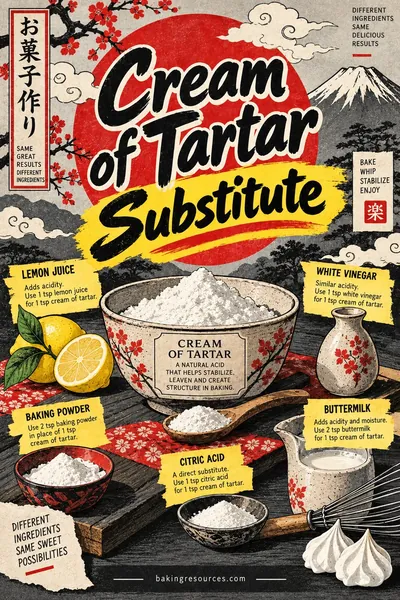
| Maple syrup | 1 cup maple syrup | Add 1 tsp lemon juice to keep the baking soda reacting |
| Dark corn syrup | 1 cup dark corn syrup | Not acidic. Add 1 tsp lemon juice or swap some soda for powder |
| Honey | 1 cup honey | Browns even faster. Drop the oven about 25°F and watch it |
| Blackstrap only | 3/4 cup blackstrap plus 1/4 cup water or maple | Cuts the bitterness to something edible |
The line that trips people is the acid line. Molasses and baking soda are a leavening pair. Replace the molasses with something neutral and you have soda sitting in a dough with nothing to react with, which reads as a flat, slightly metallic bake. One teaspoon of lemon juice per cup of substitute syrup puts the reaction back.
Going the other direction, if you want to use molasses in place of some of the sugar in a recipe, swap no more than half the sugar, cut about 1/4 cup of other liquid for each cup of molasses you add, and stir in about 1/2 teaspoon of baking soda per cup to balance the extra acid.
Worked example: rescuing a gingerbread with no molasses
Say the recipe wants 1 cup molasses, 1/2 cup brown sugar, and 1 teaspoon baking soda, and the jar is empty.
- Warm 3/4 cup packed dark brown sugar with 1/4 cup water until it's a smooth syrup. That's your molasses stand-in.
- Taste it. It'll be sweeter and much less bitter than the real thing, so cut the recipe's separate 1/2 cup brown sugar down to 1/3 cup.
- Keep the baking soda where it is. Brown sugar holds enough of the original molasses acid to keep the reaction going.
- Expect a paler, gentler gingerbread. Add an extra 1/4 teaspoon of ground ginger and a pinch of black pepper to make up some of the missing bite.
You've traded darkness and bitterness for something still very good. That's the honest outcome, and it beats abandoning the bake.
Buying, storing, and measuring molasses without the mess
Molasses keeps a long time. An unopened jar is stable in a cool cupboard for years, and an opened one is fine at room temperature for many months as long as the rim is wiped and the lid is tight. Do not refrigerate it. Cold molasses turns into something closer to tar and will not pour.
Signs it's actually gone: visible mold on the surface, a fermented or fizzy smell, or a lid that pushes back when you press it. Crystals at the bottom are not spoilage, just sugar settling out, and warming the jar in a bowl of hot water clears them.
Measuring is the annoying part. Two fixes:
- Oil the cup. Spray or wipe the measuring cup with neutral oil first and the molasses slides straight out instead of coating the sides. Same trick works for honey and corn syrup.
- Weigh it instead. 337 g per cup, 21 g per tablespoon. Set the bowl on the scale, tare, and pour. No cup to wash at all.
If your recipe calls for oil or melted butter as well, measure the fat first in the same cup. The film it leaves does the greasing for you.
Where molasses earns its place
It isn't a general purpose sweetener, and it shouldn't be. Molasses belongs in bakes with enough spice, salt, or fat to stand up to its bitterness.
- Gingerbread and ginger cookies. The classic pairing, and the one recipe where nothing else will do.
- Boston brown bread and dark rye. The bitterness reads as savory depth against the grain.
- Baked beans and barbecue glazes. Acid plus sweetness plus color, all in one pour.
- Oatmeal and spice cookies. A tablespoon or two adds chew without making the cookie taste of molasses.
- Shoofly pie and gingerbread cake. Molasses is most of the flavor structure, not an accent.
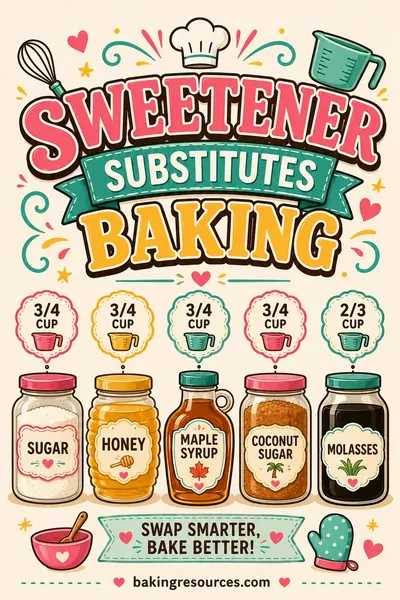
Where it does not belong: delicate vanilla or citrus bakes, white cakes, most buttercreams, and anything you want to stay pale. If you're chasing depth in a lighter bake, muscovado sugar gives you some of the same character with less of the darkness, and our roundup of sweetener substitutes for baking covers the milder options.
For the bigger picture on how any sugar changes the way a bake behaves, what sugar does in baking is the companion piece to this one.
FAQ
What is molasses in simple terms?
It's the syrup left over after sugar is crystallized out of boiled cane juice. Think of it as everything sugar cane contains apart from the pure white crystals: minerals, acids, and caramelized flavor compounds, all concentrated into one dark, thick liquid.
Is blackstrap molasses the same as regular molasses?
No, and swapping them ruins a recipe. Blackstrap comes from the third boil, so it's the least sweet and by far the most bitter. If a recipe just says "molasses" it means dark, full-flavor molasses from the second boil. Use blackstrap for at most a quarter of the total if you want extra depth.
Can I use honey instead of molasses?
You can, but you're changing two things at once. Honey has similar body and moisture, so the texture holds up well, but it lacks the bitterness and it browns even faster. Drop the oven temperature by about 25°F and expect a lighter, sweeter, honey-flavored result rather than a gingerbread one.
Does molasses need to be refrigerated after opening?
No. Room temperature in a tightly closed jar is correct, and refrigeration only makes it too stiff to pour. Wipe the rim before you close it so the lid doesn't glue itself shut, and it'll stay good for many months.
Why does my molasses recipe call for baking soda instead of baking powder?
Because molasses is acidic and baking soda needs an acid to work. The two react together to make the lift. Baking powder already contains its own acid, so a recipe that uses it isn't relying on the molasses for leavening. If you substitute a neutral syrup for the molasses, add a teaspoon of lemon juice per cup so the soda still has something to react with.
Is treacle the same thing as molasses?
Black treacle and dark molasses are essentially the same product under different names on either side of the Atlantic, so swap them one for one. Golden syrup is a different thing entirely: it's inverted cane syrup, much lighter and sweeter, with none of the bitterness.
How much does a cup of molasses weigh?
337 g, or about 21 g per tablespoon. It's slightly lighter than honey at 340 g per cup and slightly heavier than corn syrup at 328 g. Weighing it is faster than measuring it, since you skip the greased cup entirely.