Muscovado Substitute: What to Use Instead

The closest muscovado substitute is dark brown sugar plus 1 tablespoon of molasses per cup. That takes ordinary brown sugar from around 6 percent molasses up into muscovado territory, and it matches the color, the moisture and the faintly bitter caramel note better than anything else in a normal pantry.
Working from white sugar instead? Use 1 cup of granulated sugar plus 2 1/2 tablespoons of molasses for dark muscovado, or 1 1/2 tablespoons for light. Stir with a fork until there are no dark streaks, then measure and use it exactly as the recipe asks.
Need a different amount? Our free baking substitutions finder scales any of these ratios to 1/3 cup, 2 1/4 cups, or straight grams.
Updated September 2026
What muscovado actually is, and why the swap works
Muscovado is unrefined cane sugar. The juice is boiled down and the molasses is never spun out, so the molasses is part of the crystal rather than a coating on it. That is the entire difference.
Commercial brown sugar is refined white sugar with molasses sprayed back on. Muscovado never had it removed. Chemically you end up in a similar place, which is exactly why adding molasses back to brown sugar closes the gap so well.
The gap you are closing is mostly a matter of concentration. The figures below are the ranges these sugars are usually sold at, and brands vary inside them:
| Sugar | Molasses content, roughly | Texture | Taste |
|---|---|---|---|
| Granulated white | 0% | Dry, free flowing | Clean sweetness only |
| Light brown | 3 to 4% | Soft, slightly damp | Mild caramel |
| Dark brown | 6 to 7% | Damp, clumps easily | Caramel with a toffee edge |
| Light muscovado | 8 to 10% | Sticky, packs into a lump | Caramel, toffee, a mineral note |
| Dark muscovado | 10 to 13% | Very sticky, almost fudgy | Smoky, licorice, slightly bitter |
| Demerara | 1 to 2% | Large dry crystals | Faint, mostly crunch |
| Turbinado | 1 to 2% | Large dry crystals | Faint honey note |
Two things follow from that table. Demerara and turbinado look like muscovado and taste almost nothing like it, so they are the swap people reach for first and regret. And dark muscovado carries roughly twice the molasses of dark brown sugar, which is why one tablespoon per cup is the correction rather than a splash.
Muscovado substitute chart, per 1 cup
Amounts below replace 1 cup of dark muscovado, which weighs about 225 g packed. For light muscovado, halve the added molasses.
| Substitute | Amount per 1 cup dark muscovado | How close it gets | What changes |
|---|---|---|---|
| Dark brown sugar + molasses | 200 g dark brown (scant cup) + 1 1/2 tbsp molasses | 9 out of 10 | Almost nothing. Best all-round answer |
| Dark brown sugar alone | 1 cup packed (213 g) | 7 out of 10 | Lighter color, less depth, slightly drier crumb |
| Light brown sugar + molasses | 1 cup packed + 2 1/2 tbsp molasses | 8 out of 10 | Very close, a touch sweeter |
| White sugar + molasses | 1 cup (200 g) + 2 1/2 tbsp molasses | 8 out of 10 | Grittier until it dissolves, mix thoroughly |
| Jaggery, panela or piloncillo | 225 g, grated or chopped fine | 9 out of 10 | The true cousin. Harder, so grate it first |
| Coconut sugar | 230 g, which is about 1 1/2 cups | 6 out of 10 | Drier, less sticky, mild caramel, no bitterness |
| Demerara or turbinado + molasses | 200 g + 2 tbsp molasses | 6 out of 10 | Crystals stay crunchy unless dissolved in fat first |
| Maple sugar | 225 g | 6 out of 10 | Maple flavor takes over, drier crumb |
| Date sugar | 225 g | 4 out of 10 | Never melts, leaves a grainy texture, use only in crumbles |
| Honey or maple syrup | 3/4 cup, then cut other liquid by 3 tbsp | 4 out of 10 | Liquid swap, changes three things at once |
The last row is a different kind of substitution altogether. Swapping a dry sugar for a liquid one changes moisture, browning and oven temperature all at the same time, and our sweetener substitutes for baking guide has the three adjustments each one needs.
Weight beats volume with these sugars, and here is the proof
One cup is not one cup once molasses gets involved. Packed sugars compress differently, and unrefined sugars hold more water.
| Sugar | Grams per cup, packed |
|---|---|
| Granulated white | 200 g |
| Light or dark brown, packed | 213 g |
| Muscovado, packed | 220 to 230 g |
| Coconut sugar | 154 g |
| Turbinado | 180 g |
| Powdered sugar | 120 g |
Look at coconut sugar. Swap it cup for cup and you have quietly removed 70 g of sugar from the formula, which is about a third. That shows up as a paler, drier, less chewy result, and most people blame the coconut sugar rather than the measuring cup.
Weigh instead. Our ingredient weights chart carries the full list, and "packed" stops being a judgment call the moment a scale is involved.
What the molasses is actually doing
Molasses is not just color and taste. It does three measurable jobs, and losing any of them changes the bake.
It brings water. Molasses is around 20 to 25 percent water. A cup of dark muscovado carries maybe 12 to 15 g of water that white sugar would not. That is why muscovado cookies stay chewy on day three and white sugar cookies go crisp.
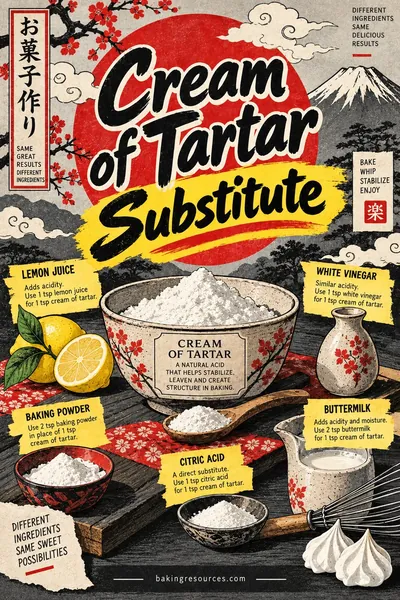
It is acidic. Molasses sits near pH 5, so it reacts with baking soda. Swap muscovado out for plain white sugar in a formula leavened with soda and you lose part of the lift. If you make that swap, add 1/4 teaspoon of cream of tartar per cup or expect a denser crumb. Our baking soda vs baking powder guide explains which recipes depend on that reaction.
It browns hard. Molasses is loaded with the reducing sugars and amino acids that drive the Maillard reaction, so anything made with muscovado colors faster. Check baked goods 3 to 5 minutes early after this swap, especially at the edges.
It attracts water from the air. That is also why muscovado turns into a brick in the cupboard. The same fix works as for brown sugar: a slice of bread in a sealed container overnight, or 20 seconds in the microwave under a damp paper towel. Our guide to softening brown sugar has the timings for each method.
Which muscovado substitute to use, by what you are baking
| What you are making | Best swap | Avoid | Why |
|---|---|---|---|
| Chewy cookies | Dark brown + 1 1/2 tbsp molasses per cup | Demerara, date sugar | Chew comes from the moisture the molasses holds |
| Gingerbread and spice cakes | Light brown + 2 1/2 tbsp molasses | Coconut sugar alone | The spice needs a dark, faintly bitter base under it |
| Sticky toffee style puddings | Dark brown + 1 1/2 tbsp molasses, or jaggery | White sugar alone | The whole point of the bake is the molasses depth |
| Caramel sauce | Dark brown sugar alone | Muscovado swaps with big molasses additions | High molasses scorches and turns bitter at caramel heat |
| Banana bread and quick breads | Dark brown sugar alone | Date sugar | Forgiving batter, the small color gap does not show |
| Streusel and crumble toppings | Demerara or turbinado | Anything wet | You want dry crystals that stay crunchy |
| Meringue and light sponge | Do not substitute in either direction | Muscovado | The water and acid deflate delicate foams |
| Bread and enriched dough | Light brown or muscovado 1 to 1 | Date sugar | Yeast eats the sugar either way, color is the only change |
A dark fruitcake belongs on the spice cake row, and fruitcake without nuts covers what carries the texture in that bake once the nuts come out.
Worked example: a cookie formula that calls for 1 cup dark muscovado
What you have: a cookie formula listing 1 cup packed dark muscovado, 1 cup butter, 2 1/4 cups all-purpose flour, 2 eggs and 1 teaspoon of baking soda. No muscovado in the house, only dark brown sugar and a jar of molasses.
Step 1. Weigh the target. A cup of packed dark muscovado is about 225 g, and roughly 12 percent of that is molasses, so 27 g of molasses and 198 g of sugar solids.
Step 2. Weigh what you have. A cup of packed dark brown sugar is 213 g, carrying about 6.5 percent molasses, so around 14 g of molasses.
Step 3. Find the gap. 27 minus 14 is 13 g of molasses short. A tablespoon of molasses weighs about 21 g, so you need a little over half a tablespoon. In practice, 1 1/2 tablespoons of molasses added to a scant cup of dark brown sugar lands you in the right place, because you also trim the brown sugar back to keep the total weight honest.
Step 4. The final swap. 200 g of dark brown sugar plus 1 1/2 tablespoons (32 g) of molasses gives 232 g of mixture, which is within a few grams of your 225 g target and carries about 20 percent more molasses than plain dark brown. Close enough that nobody at the table will tell.
Step 5. What changes in the bake. Nothing structural. The dough is slightly softer, so chill it 30 minutes if you want less spread. The cookies brown about 2 minutes faster, and they stay chewy a day longer than the same batch made with plain brown sugar. Our guide to chewy vs crispy cookies covers the other levers if you want to push it further.
Worked example: swapping in coconut sugar without wrecking the ratio
The trap. A formula calls for 1 cup of dark muscovado and all you have is coconut sugar. Cup for cup feels right and it is not.
The math. 1 cup packed muscovado is 225 g. 1 cup of coconut sugar is 154 g. Match by volume and you are 71 g of sugar short, about 32 percent.
The fix. Use 230 g of coconut sugar, which is roughly 1 1/2 cups, and add 1 tablespoon of molasses to bring back some of the depth. Now the sugar weight matches and only the flavor differs.
What still changes. Coconut sugar holds less water than muscovado, so the crumb runs a shade drier. Add 1 tablespoon of milk or water per cup swapped if the batter looks stiff. Coconut sugar also caramelizes at a slightly lower temperature, so pull the pan when the edges are set rather than waiting for a deep color.
The takeaway. Every unrefined sugar has its own density. Volume swaps between them are guesses, weight swaps are conversions.
Going the other way: using muscovado where brown sugar is called for
This direction is easier, and it is usually an upgrade.
Swap 1 to 1 by weight, not by volume, since muscovado packs about 5 percent heavier. In a cookie or a spice cake it is a straight improvement: deeper color, more chew, a longer shelf life.
Two cautions. In anything pale and delicate, a vanilla sponge or a shortbread, dark muscovado will dominate and turn the crumb gray-brown. Use light muscovado there, or stick with brown sugar. And in caramel work, high-molasses sugar scorches before it caramelizes properly, so it is the wrong tool for a sauce that has to hit 240°F.
If you find yourself building brown sugar from scratch as often as you build muscovado, our brown sugar substitute guide has the base ratios in one place.
Frequently asked questions
What is the best muscovado substitute in a pinch?
Dark brown sugar with 1 to 1 1/2 tablespoons of molasses stirred into each cup. It matches the color, the stickiness and the caramel depth closely enough that side by side the difference is small. Plain dark brown sugar on its own is the next best thing and still works in almost any cookie or spice cake.
Can I use demerara instead of muscovado?
Only where crunch is the goal, like a streusel or a sugar crust. Demerara carries 1 to 2 percent molasses against muscovado's 10 to 13, so it brings almost no flavor and no moisture. Its big dry crystals also refuse to dissolve in a creamed butter mixture, which leaves gritty pockets in the crumb.
Is muscovado the same as dark brown sugar?
No. Dark brown sugar is refined white sugar with molasses added back at around 6 to 7 percent. Muscovado is unrefined cane sugar that kept its molasses, usually 10 to 13 percent in the dark version. Muscovado is stickier, darker, more mineral and slightly bitter, and it hardens faster in the cupboard.
How much molasses do I add to make muscovado?
For 1 cup of dark muscovado, stir 2 1/2 tablespoons of molasses into 1 cup of white granulated sugar. For light muscovado, use 1 1/2 tablespoons. If you are starting from dark brown sugar rather than white, you only need 1 to 1 1/2 tablespoons, since the brown sugar already carries about half of what you need.
Does swapping muscovado change baking time?
By a few minutes, yes. Molasses browns fast, so anything made with a high-molasses sugar colors earlier than the same formula made with white sugar. Start checking 3 to 5 minutes before the stated time and judge by the set edges rather than by the clock or the color alone.
Can I use coconut sugar as a muscovado substitute?
Yes, but weigh it. A cup of coconut sugar is only 154 g against 225 g for packed muscovado, so a cup-for-cup swap removes about a third of the sugar. Use 230 g of coconut sugar per cup of muscovado and add a tablespoon of molasses to bring back the depth.
Why did my muscovado turn into a rock?
Molasses holds water, and when that water evaporates the crystals lock together. Seal it in an airtight container with a slice of bread or a terracotta sugar saver overnight and it softens. For instant use, microwave it under a damp paper towel in 20 second bursts, then use it right away before it sets again.
What can I use instead of muscovado in caramel?
Dark brown sugar, or plain granulated with a spoonful of molasses stirred in at the end. Muscovado's high molasses content scorches before the sugar reaches proper caramel temperature, so it tastes burnt rather than deep. Add the molasses off the heat once the caramel is already made.
Related guides: Brown sugar substitute | Sweetener substitutes for baking | How to soften brown sugar | Ingredient weights chart | Baking substitutions finder