Sugar-Free Brown Sugar Substitutes for Baking That Actually Bake

The best sugar-free brown sugar substitutes for baking are the packaged brown-style blends built on allulose or on monk fruit with erythritol, used cup for cup by volume in place of packed brown sugar. If you want to build your own, start with 1 cup of a granular sugar-free sweetener, add 1/2 teaspoon of molasses-flavored extract for the taste and 1 teaspoon of vegetable glycerin for the softness, then rub it together with a fork until the color is even.
The part nobody tells you is that swapping the sweetener is only half the job. Brown sugar browns, spreads, softens and feeds baking soda, and most sugar-free sweeteners do none of that. Get the four fixes below right and your cookies come out chewy and golden instead of pale, puffy and slightly crunchy.
Want the ratio worked out for the exact amount your recipe calls for? Our free baking substitutions tool does the math for any quantity, in cups or grams, and tells you what each swap changes.
Updated September 2026
Sugar-free brown sugar substitutes for baking, ranked by what they can do
Here is the honest ranking. Every one of these is measured against 1 cup of packed brown sugar, which weighs 213 g on our ingredient weights chart.
| Substitute | Use per 1 cup packed brown sugar | Browns? | Cookies spread? | Best for | Watch out for |
|---|---|---|---|---|---|
| Allulose brown-style blend | 1 cup, by volume | Yes, fast | Yes, a lot | Cookies, blondies, sticky toppings, caramel | Over-browns. Drop the oven 25°F |
| Allulose, plain granular | 1 1/3 cups plus molasses flavoring | Yes, fast | Yes | Anything that should stay soft | Only about 70 percent as sweet |
| Monk fruit and erythritol brown blend | 1 cup, by volume | Barely | A little | Muffins, quick breads, streusel, crumbles | Cooling taste, can turn crunchy on day two |
| Erythritol, plain granular | 1 1/3 cups plus molasses flavoring | No | No | Crumb toppings, shortbread, cheesecake bases | Recrystallizes as it cools, so it goes gritty |
| Xylitol | 1 cup | Slightly | Slightly | Cakes and muffins where you want no cooling taste | Toxic to dogs, even a crumb on the floor |
| Allulose and monk fruit blend, homemade | 3/4 cup allulose plus 1/4 cup monk fruit blend | Yes | Yes | The best all-around browner without the harsh sweetness | Two products instead of one |
| Stevia, pure extract | About 1 tsp, plus a bulking agent | No | No | Nothing on its own. It has no bulk | Missing 213 g of body that the recipe needs |
| Bulked stevia blend | 1 cup, by volume | No | No | Batters that already have structure | Reads bitter to some people in dark bakes |
| Blackstrap molasses, 1 tsp only | 1 cup sweetener plus 1 tsp molasses | Yes, a little | A little | The most authentic flavor if trace sugar is fine | Not truly sugar free. Call it reduced sugar |
| Yacon syrup | 2 tsp with 1 cup granular sweetener | Yes | Slightly | Low glycemic flavor closest to molasses | Not sugar free either, and it loosens batter |
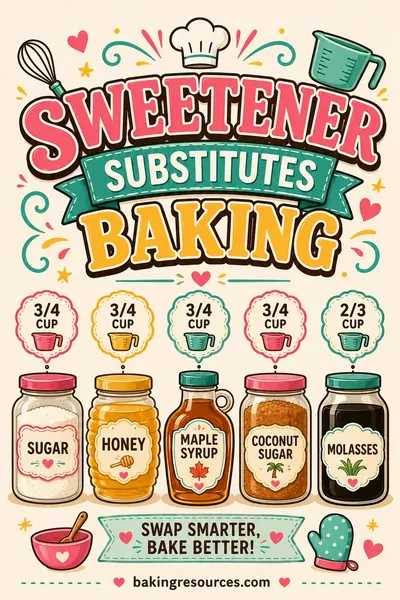
Two things drop off the list entirely. Coconut sugar and date sugar are not sugar free. They get sold in the same aisle and they behave beautifully in baking, but they are sugar, and they land on your blood glucose like sugar. If that was the reason you came here, skip them. Our sweetener substitutes baking guide covers those two properly, along with honey and maple.
Why sugar-free brown sugar behaves so differently
Sugar is not one ingredient doing one job. In a brown sugar cookie it is doing five, and a sweetener that only replaces the sweet part leaves four holes.
- Sweetness. This one is easy, and every sweetener on the list handles it.
- Browning. Real sugar caramelizes and joins the Maillard reaction with the flour and dairy proteins. Allulose does this, which is what makes it special. Erythritol, xylitol and stevia mostly do not.
- Spread. Sugar melts into a syrup in the oven and lets a cookie flow outward. Sugar alcohols stay solid far longer, so the dough sets in whatever shape you dropped it in.
- Moisture. The molasses in brown sugar is hygroscopic, which is a fancy way of saying it pulls water out of the air and holds it. That is what keeps a brown sugar cookie chewy on day three.
- Acid for the soda. Molasses is mildly acidic. Plenty of recipes count on that acid to react with the baking soda. Take the molasses away and the soda has nothing to work against.
Once you can see the five jobs, the fixes stop being guesswork. You are not looking for one magic powder. You are patching four specific holes.
The four fixes that make a sugar-free swap taste right
Fix 1: put the molasses flavor back
Brown sugar tastes like brown sugar because of molasses, not because of the color. There are three ways to get it back:
- Molasses-flavored extract, 1/2 teaspoon per cup of sweetener. Fully sugar free, and it is the closest match.
- Blackstrap molasses, 1 teaspoon per cup. Real molasses at 337 g per cup means 1 teaspoon is about 7 g, so you are adding a few grams of sugar to a whole batch. Not sugar free, but if your goal is lower sugar rather than zero, this tastes the best of the three.
- Maple extract plus a pinch of salt, 1/4 teaspoon of extract per cup. Different but pleasant, and it works well in oat cookies and streusel.
Add the flavoring to the wet ingredients, not the dry. Extracts disperse better in butter or oil than in a bowl of powder.
Fix 2: put the softness back
Without molasses, a sugar-free bake tends to dry out overnight. Choose one:
- Vegetable glycerin, 1 to 2 teaspoons per cup of sweetener. It is a humectant, it holds water, and it is the standard trick in commercial low-sugar baking.
- 1 tablespoon of unsweetened applesauce per cup. Easy and effective, though it thins the dough a little.
- An extra egg yolk in a cookie dough that already has one. The lecithin and fat both help.
Glycerin is the strongest of the three by a wide margin. If your low-carb cookies keep going hard by the next morning, this is usually the missing piece.
Fix 3: put the acid back
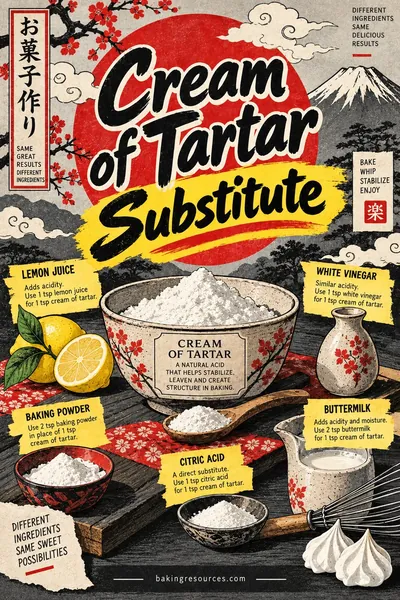
If your recipe uses baking soda and no other acid such as buttermilk, yogurt or lemon, the molasses was doing that job. Replace it with 1/4 teaspoon of cream of tartar or 1 teaspoon of lemon juice per cup of sweetener. If you would rather not fuss with it, swap the soda for baking powder at three times the amount, since baking powder brings its own acid. Our cream of tartar substitute guide has the full acid table if you are out of both.
Fix 4: change the oven, not just the bowl
This is the step that gets skipped, and it is why so many sugar-free bakes come out wrong.
| Sweetener | Oven change | Time change | Why |
|---|---|---|---|
| Allulose | Drop 25°F | Cut 2 to 4 minutes | Browns much faster than sugar and burns at the edges |
| Erythritol or monk fruit blend | Keep the same | Add 2 to 3 minutes | Barely browns, so color lies about doneness |
| Xylitol | Drop 15°F | Same | Browns slowly but does caramelize eventually |
| Blend of allulose and erythritol | Drop 25°F | Same | The allulose sets the browning speed |
With the non-browning sweeteners, stop judging by color entirely. Go by edge set and center jiggle instead. Our how to tell when cookies are done guide has the touch test that still works when the color never arrives.
Worked example: a cookie dough with 1 cup of packed brown sugar
Say your recipe calls for 1 cup packed light brown sugar, 1/2 cup granulated sugar, 2 1/4 cups all-purpose flour, 1 cup butter, 1 egg, 1 teaspoon baking soda, and bakes at 375°F for 10 to 12 minutes.
Step 1. Convert the brown sugar. 1 cup packed brown sugar is 213 g. Use 1 cup of an allulose brown-style blend by volume. Do not try to match 213 g on the scale, because these blends are formulated to match sugar by volume and not by weight, and hitting 213 g of allulose would make the dough far too sweet and far too wet.
Step 2. Convert the white sugar too. 1/2 cup granulated is 100 g, since granulated runs 200 g per cup. Use 1/2 cup of a granular monk fruit and erythritol blend. Mixing the two sweeteners is deliberate. The allulose brings the browning and chew, the erythritol brings clean sweetness and keeps the total allulose low enough that the edges do not scorch.
Step 3. Patch the holes. Add 1/2 teaspoon molasses-flavored extract and 1 teaspoon glycerin to the creamed butter. Add 1/4 teaspoon cream of tartar to the flour, because you removed the only acid in the recipe.
Step 4. Change the oven. Bake at 350°F instead of 375°F, and check at 8 minutes instead of 10.
Step 5. Flatten the dough balls. Sugar-free doughs spread less no matter what you do. Press each ball to about 1/2 inch thick before it goes in and you get the shape you were expecting.
The result is a cookie that is genuinely chewy, browns to a real golden edge, and stays soft for two days. It is not identical to the original. It is close enough that people eat three.
Weights, because volume gets confusing fast
Brown sugar is the single worst ingredient for volume measuring, because how hard you pack it changes the amount by a third. These are the numbers our calculators use:
| Ingredient | 1 cup | 1 tablespoon |
|---|---|---|
| Light or dark brown sugar, packed | 213 g | About 13.3 g |
| Brown sugar, spooned in loose | About 145 g | About 9 g |
| Granulated white sugar | 200 g | 12.5 g |
| Powdered sugar, unsifted | 120 g | 7.5 g |
| Molasses | 337 g | About 21 g |
| All-purpose flour, spooned and leveled | 125 g | 7.81 g |
That 213 g against 145 g gap is why recipes say "packed." A recipe written for packed brown sugar and made with loose brown sugar is missing almost a third of its sweetener. When you switch to a sugar-free blend, the packing question goes away, because those blends do not clump, so you level them like flour. Run any of these through our grams to cups converter if your recipe is metric.
Choosing by what you are baking
| What you are making | Best sugar-free brown sugar swap | Why |
|---|---|---|
| Chocolate chip cookies | Allulose brown blend, or allulose plus erythritol | Needs spread, chew and browning, and only allulose delivers all three |
| Brownies | Allulose brown blend | Fudgy texture depends on a sweetener that stays syrupy, not one that recrystallizes |
| Muffins and quick breads | Monk fruit and erythritol brown blend | Baking powder does the lift, so you only need sweetness and a little moisture |
| Crumble or streusel topping | Erythritol brown blend | The recrystallizing that ruins cookies is exactly what makes a crumble crunchy |
| Oatmeal cookies | Allulose brown blend plus 1 tsp glycerin | Oats absorb a lot of water, so the humectant matters more here than anywhere |
| Banana bread | Monk fruit brown blend | The banana already brings moisture and browning of its own |
| Caramel sauce | Allulose, always | It is the only common sugar-free sweetener that truly caramelizes |
| Cheesecake base | Erythritol brown blend | No browning needed, and the crunch works in a crust |
| Gingerbread | Reduced sugar only, with 1 tsp blackstrap | Molasses is the whole flavor, so a fully sugar-free version is a different cookie |
Gingerbread deserves its own note. Molasses is not a supporting player there, it is the point. A sugar-free gingerbread made with extract alone tastes like spiced shortbread. Keep the teaspoon of real blackstrap and accept the trace sugar, or bake something else.
What goes wrong, and how to read the failure
They came out pale and cakey. The sweetener did not melt. That is erythritol or a bulked stevia blend behaving normally. Flatten the dough before baking, and add 1 to 2 tablespoons of allulose to the next batch to get some spread back.
They tasted cold, like mint without the mint. That is erythritol's cooling effect, and it is stronger in anything you eat at room temperature. Cut the erythritol with allulose, which has no cooling effect at all, or serve the bake slightly warm.
They went crunchy overnight. Erythritol recrystallized as it cooled. Store them in an airtight container with a slice of bread, and use glycerin next time. Our how to store baked goods guide has the container rules that make the biggest difference.
The edges burned before the middle set. Too much allulose, or the oven was too high. Drop 25°F and check earlier.
The whole thing sank. You probably removed an acid the baking soda needed. Add the cream of tartar back.
What about brown sugar you have already got, just less of it?
There is a middle path that people forget. In most cookie and muffin recipes you can simply cut the sugar by a quarter with no other change, and by a third if you add a tablespoon of liquid back. A cookie made with 3/4 cup of brown sugar instead of 1 cup is still a good cookie. You lose a little spread and a little chew, and you gain nothing to explain to anyone.
That is often a better answer than a full sugar-free conversion for a recipe you only bake at holidays. Save the full swap for the things you bake every week. Our what does sugar do in baking guide explains exactly how far you can push the reduction before the structure gives way.
Frequently asked questions
What is the best sugar-free substitute for brown sugar in cookies?
An allulose-based brown-style blend, cup for cup by volume, with 1 teaspoon of glycerin added to the wet ingredients. Allulose is the only widely sold sugar-free sweetener that browns and spreads like real sugar, so it is the only one that gives you a cookie with a golden edge and a chewy center. Drop the oven by 25°F, because it browns faster than sugar does.
Can I make sugar-free brown sugar at home?
Yes, and it takes about a minute. Put 1 cup of granular allulose or a monk fruit blend in a bowl, add 1/2 teaspoon of molasses-flavored extract and 1 teaspoon of vegetable glycerin, and work it with a fork until the color is even and no wet streaks remain. Store it in a sealed jar. It stays soft far longer than real brown sugar, because there is no molasses in it to dry out.
Is coconut sugar a sugar-free brown sugar substitute?
No. Coconut sugar is sugar. It is roughly 70 to 80 percent sucrose, it raises blood glucose, and it counts fully as sugar for any dietary purpose. It is a genuinely useful brown sugar replacement for flavor and it works one for one by volume, but it belongs in the swap-for-taste category, not the sugar-free one.
Why do my sugar-free cookies stay in a ball and never spread?
Because the sweetener never melted. Real sugar liquefies in the oven and lets the dough flow. Erythritol, xylitol and bulked stevia stay solid much longer, so the dough sets where you put it. Flatten each ball to about 1/2 inch before baking, and use allulose for at least a third of the sweetener next time.
Does allulose really brown like real brown sugar?
Yes, and faster. Allulose is a rare sugar that participates in the Maillard reaction, so it caramelizes and browns in a way sugar alcohols simply cannot. The catch is speed. A batch that took 12 minutes with brown sugar can be past golden at 9 minutes with allulose. Lower the oven 25°F and start checking 2 to 3 minutes early.
Do I need to change the baking soda when I remove brown sugar?
Often, yes. Molasses is mildly acidic, and in a recipe with no buttermilk, yogurt, lemon or cocoa, it is the only thing your baking soda has to react with. Add 1/4 teaspoon of cream of tartar per cup of sweetener, or swap the soda for three times as much baking powder, which brings its own acid along.
How do I measure sugar-free brown sugar blends, packed or loose?
Loose and leveled, like flour. Packing is a rule for real brown sugar, because molasses makes the crystals cling and trap air. Sugar-free blends are dry and free-flowing, so packing them would overload the recipe. Spoon into the cup and sweep the top flat.
Can I use dark brown sugar rules for a sugar-free version?
Yes. The only difference between light and dark brown sugar is how much molasses is in it, so for a sugar-free dark version you just double the flavoring: 1 teaspoon of molasses-flavored extract per cup instead of 1/2. If you are working from a recipe built on real dark brown sugar, our muscovado sugar substitute guide explains how far the flavor really carries.
Where to go next
If your goal is lower sugar rather than none at all, start with the brown sugar substitute guide, since making your own from white sugar and molasses gives you full control of the amount. For every other sweetener question, from honey to date syrup, our sweetener substitutes baking guide has the ratios and the liquid corrections side by side.
And when you are mid-recipe with a bowl already going, the free substitutions tool gives you the exact amount for the quantity you actually have, along with what it will do to the texture and the rise.