
How Long to Bake Gingerbread Cookies: Soft, Crisp or House Pieces

Bake gingerbread cookies at 350°F for 8 to 10 minutes if you want them soft and rolled 1/4 inch thick. For crisp, snappy gingerbread at the same thickness, give them 11 to 13 minutes, and for sturdy gingerbread house panels, 12 to 15 minutes. Because the dough is already dark brown, you judge doneness by feel and surface, not color.
Thickness changes those numbers by a few minutes either way, so roll evenly and know your number before the first pan goes in. Pick the style you want and how thick you rolled the dough in the calculator below, and it gives you the minutes plus the signs to watch for.
Free calculator
Gingerbread bake time calculator
Pick the kind of gingerbread you want and how thick you rolled the dough to see the bake time at 350°F.
More free baking tools



Gingerbread bake times at a glance
Gingerbread recipes almost always bake at 350°F. What changes is how long, and that depends on whether you want soft cookies, crisp cookies or building panels, plus how thick you roll the dough.
| Style | 1/8 inch | 1/4 inch | 3/8 inch |
|---|---|---|---|
| Soft gingerbread cookies | 6 to 8 min | 8 to 10 min | 10 to 12 min |
| Crisp gingerbread cookies | 8 to 10 min | 11 to 13 min | 13 to 15 min |
| Gingerbread house pieces | 10 to 12 min | 12 to 15 min | 15 to 20 min |
The sweet spots are 1/4 inch for soft cookies, 1/8 to 1/4 inch for crisp ones, and 1/4 inch for house walls. The other combinations work, but each one comes with a catch, which the calculator above points out.
Why gingerbread is harder to time
With most cookies, you watch for golden edges. Gingerbread is dark brown before it ever goes in the oven, thanks to the molasses, so color tells you very little. By the time the edges look obviously darker, the cookies are often past soft and heading toward bitter. If you want to know why molasses behaves this way, our page on what molasses is explains the sugars it brings.
 Baking guideWhat Is Molasses? Types, Flavor and Baking SwapsGet the details →
Instead of color, use these cues:
- Surface shine. Raw dough looks slightly glossy. Baked gingerbread looks dry and matte across the top.
- Edge feel. Touch an edge lightly with a fingertip. Set edges feel firm, not tacky.
- Center press. For soft cookies, a gentle press leaves a slight dent. For crisp cookies and house pieces, the center should not give at all.
- Smell. When the kitchen smells strongly of ginger and spice, start checking. A sharp, burnt smell means you are late.
Our page on how to tell when cookies are done covers the general signs for all cookies. The ones above are the gingerbread-specific version.
 Baking guideHow to Tell When Cookies Are Done: 5 Reliable SignsCheck if it's done →
Soft gingerbread cookies
Soft gingerbread is all about pulling the pan early. Roll the dough to 1/4 inch, bake 8 to 10 minutes, and take them out when the tops look dry but the centers still feel a little soft. They keep baking on the hot pan, so give them 5 minutes there before moving them to a rack.
Recipes for soft gingerbread usually have more butter, some brown sugar and a bit of baking soda, which gives a slightly puffy, cakey bite. Rolling thicker, up to 3/8 inch, makes them softer still. Thin 1/8 inch dough rarely stays soft because there is not enough center to hold moisture.
To keep them soft after baking, store them airtight as soon as they are fully cool. Gingerbread draws moisture from the air, so soft cookies left out uncovered will go stale at the edges within a day.
Crisp gingerbread cookies
Crisp gingerbread, sometimes called ginger thins or snaps, needs a thinner roll and a few more minutes. Bake 1/8 inch dough for 8 to 10 minutes or 1/4 inch dough for 11 to 13 minutes, until the surface is dry and firm all the way to the center.
The crunch finishes as the cookies cool, not in the oven. A cookie that feels slightly flexible when hot can still turn crisp on the rack. Leave them on a wire rack, not the pan, so air reaches the bottoms. If yours come out soft anyway, they probably absorbed moisture after cooling. A few minutes back in a 300°F oven will dry them out again.
Gingerbread ornaments
For cookies you plan to hang on the tree, use the crisp settings and poke a hanging hole with a straw before baking. The hole shrinks as the dough puffs, so make it a little bigger than you need, and re-poke it right after the pan comes out while the cookies are still soft.
Gingerbread house pieces
House dough is usually stiffer, with less butter and often no leavening, so it bakes flat and holds sharp edges. The goal is firm, dry panels that will not bend under icing and candy. At 1/4 inch, that takes 12 to 15 minutes at 350°F.
A few tricks make the panels come out square:
- Roll the dough directly on parchment, cut the shapes, lift away the scraps, and slide the whole sheet onto the pan. Moving cut panels by hand stretches them.
- Bake same-size pieces together. Small chimney and door pieces finish several minutes before big roof panels.
- As soon as the panels come out, lay your paper template on top and trim any edges that spread. Warm gingerbread cuts cleanly. Cold gingerbread cracks.
- Let the pieces dry flat overnight before you build.
How big to cut each wall and roof panel, and how the pieces fit together, is all on the gingerbread house size guide.
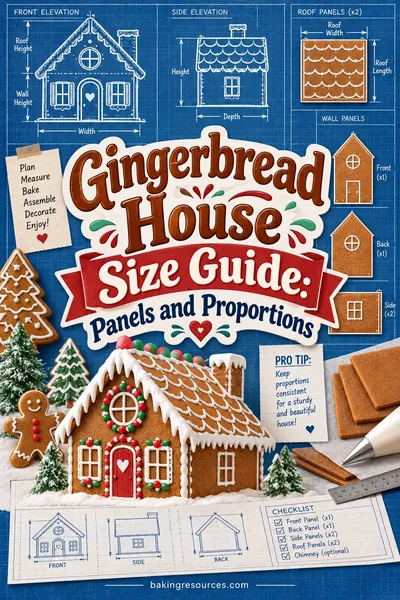 Baking guideGingerbread House Size Guide: Panels and ProportionsGet the measurements →
What changes the bake time
The chart assumes chilled dough on parchment-lined, light metal pans on the middle rack. Here is how common changes move the clock.
| What changed | Effect on time | Tip |
|---|---|---|
| Dough very cold or frozen | Add 1 to 2 minutes | Cold dough keeps shapes sharper |
| Dark nonstick pan | Check 1 to 2 minutes early | Bottoms scorch fast with molasses |
| Silicone mat | Add about 1 minute | Bottoms stay a bit softer |
| Convection setting | Shorter | Lower to 325°F and check early |
| Large cutter (6 inch or more) | Add 1 to 3 minutes | Bake big shapes on their own pan |
| Recipe heavy on honey | Browns faster | Check early, consider 325°F |
Liners make more difference than you might expect. The comparison of parchment paper vs silicone mats shows why. And if you are not sure your oven's convection setting is worth using for cookies, see convection vs conventional ovens.
 Baking guideParchment Paper vs Silicone Baking Mat: Which WinsRead it next →
 Baking guideConvection vs Conventional Oven: When to Use WhichSee the chart →
Worked example: gingerbread people for a Christmas tray
Say you want two dozen soft gingerbread people for a holiday cookie tray, decorated with simple icing buttons and smiles.
- Chill the dough at least 2 hours, then roll it to 1/4 inch between two sheets of parchment.
- Cut the shapes with a 4 to 5 inch cutter and place them 1 inch apart on a parchment-lined light metal pan.
- Bake at 350°F on the middle rack. Check at 8 minutes.
- At 9 minutes, the tops look dry, the arms and legs feel firm, and a light press on the belly leaves a small dent. Pull the pan.
- Leave them on the pan 5 minutes, then cool on a rack for about 1 hour before icing.
For icing that pipes cleanly, our page on royal icing consistency shows which thickness to use for outlines and dots. Out of meringue powder? Here are meringue powder substitutes that still set firm.
 Baking guideRoyal Icing Consistency: Piping, Flood and 10-Second IcingRead the guide →
 Baking guideMeringue Powder Substitutes for Icing and FrostingFind my swap →
Cooling counts as baking time
Gingerbread keeps changing for several minutes after the pan leaves the oven. The hot metal underneath keeps cooking the bottoms, and steam keeps escaping from the centers. That is why the timing above stops while soft cookies still feel a little underdone. If you wait until they feel finished in the oven, they will be firm and dry once cool.
Use the pan rest on purpose:
- Soft cookies: 5 minutes on the pan, then a wire rack. Pack them away airtight as soon as they reach room temperature.
- Crisp cookies: 2 to 3 minutes on the pan, then a rack, uncovered, until completely cool. Trapped steam is what makes crisp gingerbread go limp.
- House panels: trim on the pan while warm, then slide the parchment and panels onto a flat rack or board and let them dry for at least 8 hours.
Soft and crisp gingerbread should never share a tin, because the crisp ones pull moisture from the soft ones and both end up chewy. Our guide on how to store baked goods covers containers and keeping textures apart.
 Baking guideHow to Store Baked Goods: Counter, Fridge or FreezerSee how long it keeps →
Gingerbread mistakes and fixes
- Bitter, burnt taste. The cookies went a minute or two too long. Molasses scorches quickly. Pull them sooner, and use a timer, not your eyes.
- Cookies hard as rocks. Overbaking, too much flour while rolling, or storing them uncovered. Our page on why cookies turn hard goes through each cause.
- Puffy, rounded shapes. Too much baking soda or warm dough. Chill the cut shapes 10 minutes before baking.
- Thin limbs burnt, body soft. The cutter has skinny parts. Choose chunkier cutters for thick dough.
- House walls bending. The panels were underbaked or still damp. Bake until the center does not give, then dry overnight.
 Baking guideWhy Are My Cookies Hard? 7 Causes and How to Fix ThemFind out why →
Planning your holiday gingerbread baking
Gingerbread is the backbone of a lot of Christmas baking, so it helps to plan the days around it.
- Make the dough up to 3 days ahead and keep it wrapped in the fridge. It rolls better after resting.
- Bake house pieces at least one day before the building party so they can dry.
- Build houses in a dry room if you can. Damp air softens gingerbread and icing. Our page on baking in humid weather explains what moisture does to sugary doughs.
- Bake soft cookies within a day or two of serving for the best texture, and crisp ones and ornaments up to a week ahead.
 Baking guideHow Humidity Affects Baking: Flour, Dough and SugarTake a look →
Questions people ask
How long do you bake gingerbread cookies at 350°F?
At 1/4 inch thick, soft gingerbread cookies take 8 to 10 minutes at 350°F and crisp ones take 11 to 13 minutes. Gingerbread house panels at 1/4 inch need 12 to 15 minutes. Thinner dough bakes a couple of minutes faster and thicker dough a couple of minutes slower, so start checking at the low end.
How do you know when gingerbread cookies are done?
Look at the surface and touch, not the color. Done gingerbread looks dry and matte instead of glossy, and the edges feel firm. For soft cookies, a gentle press in the center leaves a slight dent. For crisp cookies and house panels, the center should feel firm with no give at all.
What thickness should I roll gingerbread cookies?
Roll to 1/4 inch for soft gingerbread cookies and for most house panels. For thin, crisp gingerbread, roll to 1/8 inch. Thick 3/8 inch dough makes extra soft, cakey cookies or strong base pieces for large houses, but it is hard to get crisp all the way through.
Why did my gingerbread cookies come out hard?
Most often they baked a minute or two too long. Molasses dough sets fast, and soft gingerbread should come out while the centers still give a little. Extra flour from rolling and leaving the cookies uncovered also make them hard. Store them airtight as soon as they cool.
Do gingerbread house pieces need to bake longer than cookies?
Yes. House panels need to be firm and dry all the way through so they do not bend, so they bake about 12 to 15 minutes at 1/4 inch, a few minutes longer than soft cookies. Trim them against your template while warm, then let them dry flat overnight before building.
Can I bake gingerbread dough straight from the freezer?
Yes. Cut shapes from frozen or very cold dough can go straight into a 350°F oven. Add about 1 to 2 minutes to the bake time. The cold dough actually helps the shapes keep crisp edges and keeps faces, buttons and other details from puffing away.
Should I bake gingerbread at a lower temperature to keep it soft?
No, 350°F works well for soft gingerbread. A lower oven means a longer bake, and the extra time dries the cookies out more than a short, hotter bake does. The real key to soft gingerbread is rolling to 1/4 inch or thicker and pulling the pan while the centers still give slightly. Lower the oven only if your recipe is heavy on honey or you are baking with convection.