
How Long to Bake Cupcakes at 350°F, by Size and Pan

Bake standard cupcakes at 350°F for 18 to 22 minutes, with each liner about two thirds full. Mini cupcakes need 10 to 14 minutes at the same temperature, and jumbo cupcakes need 22 to 28. They are done when the tops spring back, a toothpick in the center comes out with a few moist crumbs, and the middle reads 205 to 210°F.
Those times shift when you change the oven temperature, use a dark or silicone pan, or bake batter that has been sitting in the fridge. Pick your size, oven setting and pan in the calculator below and it gives you the minutes for your batch, plus the sign to look for when it is time to pull the pan.
Free calculator
Cupcake bake time calculator
Pick your cupcake size, oven temperature and pan to see the bake time and what done looks like.
More free baking tools


Cupcake bake times at a glance
Almost every cupcake recipe, from scratch or from a box, is written for 350°F and a light metal muffin pan. Size is the biggest thing that moves the clock, and oven temperature is the second. Here is the full chart for a light-colored metal pan with paper liners.
| Cupcake size | Batter per cup | 325°F | 350°F | 375°F |
|---|---|---|---|---|
| Mini (24-cup pan) | About 1 tbsp | 12 to 16 min | 10 to 14 min | 8 to 11 min |
| Standard (12-cup pan) | About 3 tbsp (2/3 full) | 21 to 25 min | 18 to 22 min | 15 to 18 min |
| Jumbo (6-cup pan) | 1/2 to 2/3 cup | 26 to 32 min | 22 to 28 min | 19 to 24 min |
Always start checking at the low end of the range. Ovens drift, pans vary, and a cupcake has very little batter to hide behind, so the gap between moist and dry is only two or three minutes. Once you find the minute that works in your oven, write it on the recipe card. Next time you will not have to guess.
If you want to know how many cups a pan actually holds, or how much batter goes into each size, our guide to jumbo, standard and mini cupcake pan sizes has the measurements. This page sticks to the clock.
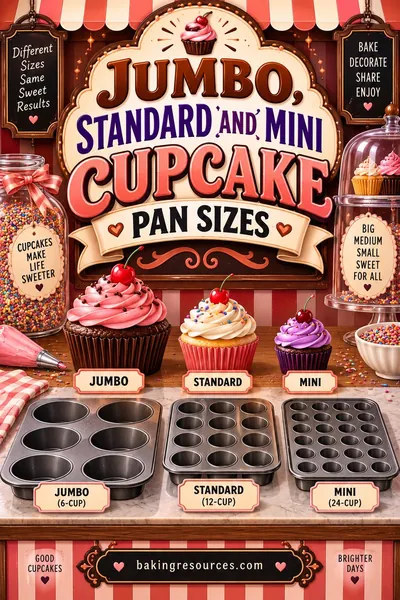 Baking guideJumbo, Standard and Mini Cupcake Pan Sizes and BatterGet the measurements →
Why 350°F is the standard, and what happens if you change it
A cupcake has two jobs to finish at about the same moment. The outside has to set and brown lightly, and the very center has to rise, set and lose its wet batter. At 350°F those two jobs line up nicely for a standard cupcake. The leavening has time to lift the batter before the top sets, and the middle cooks through before the edges dry out.
Baking at 325°F
A cooler oven slows everything down. The batter rises more evenly, and the tops come out flatter and paler. That is handy when you plan to pipe a big swirl of frosting, because a flat top gives the frosting a steady base. Expect about 3 extra minutes for standard cupcakes and 4 or more for jumbos. Many bakers use 325°F for jumbo cupcakes and for very rich, dense batters, because the center gets time to catch up before the outside overbakes.
Baking at 375°F
A hotter oven sets the outside fast and pushes the center up into a dome. Standard cupcakes finish in about 15 to 18 minutes. The tops are taller and a bit darker, and the edges are firmer. It works for muffin-style cupcakes, but it is easy to overshoot. Minis at 375°F go from done to dry in about a minute, and jumbos can brown on top while the middle is still wet.
Convection ovens
A fan oven moves hot air around the pan, so it bakes faster. The usual move is to set the oven 25°F lower than the recipe says and start checking a few minutes early. Our page on convection vs conventional ovens explains when the fan helps and when it just dries the tops. If your recipe is written in Celsius or gas marks, the oven temperature conversion chart gives you the matching setting.
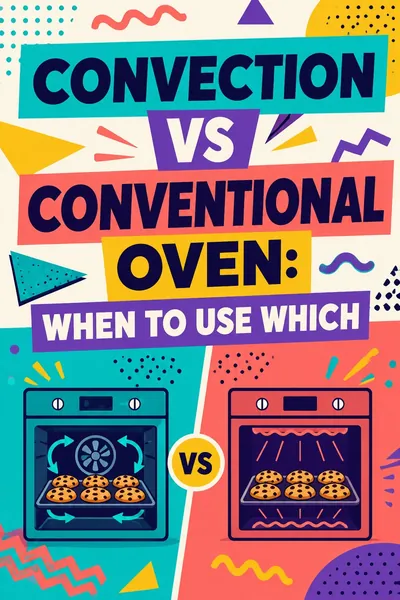 Baking guideConvection vs Conventional Oven: When to Use WhichGet the details →
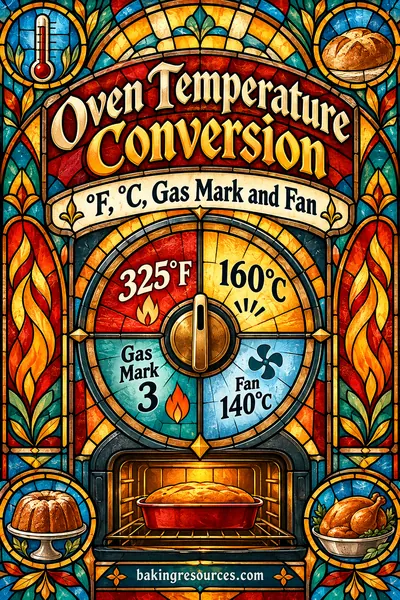 Free toolOven Temperature Conversion: °F, °C, Gas Mark and FanPlug in my recipe →
How full to fill the liners, and why it changes the time
The fill level matters almost as much as the pan size. A standard liner filled two thirds full holds about 3 tablespoons of batter, and that is the amount the 18 to 22 minute range is built around. Fill it to the top and you have closer to 4 tablespoons, which adds 2 or 3 minutes and often spills over the edge into a mushroom top.
| Fill level (standard cup) | Batter | Time at 350°F | What you get |
|---|---|---|---|
| Half full | About 2 tbsp | 15 to 18 min | Short, flat cupcakes; good under tall frosting |
| Two thirds full | About 3 tbsp | 18 to 22 min | Classic rounded top just above the liner |
| Three quarters full | About 3 1/2 tbsp | 20 to 23 min | Taller dome; may crack |
| Full to the rim | About 4 tbsp | 21 to 24 min | Overflows and spreads onto the pan |
A spring-loaded scoop solves most fill problems. A 3 tablespoon scoop (often sold as a #20 or #24, depending on the brand) fills standard liners evenly, and a 1 tablespoon scoop does the same for minis. When every cup holds the same amount, every cupcake finishes at the same minute, and you do not end up with three dry ones on the end and three raw ones in the middle.
A typical two-layer cake recipe makes about 24 standard cupcakes. A box of cake mix usually makes 24 as well. If you are planning a big batch, our chart of how many cake mixes per pan size helps you work out how many boxes to buy.
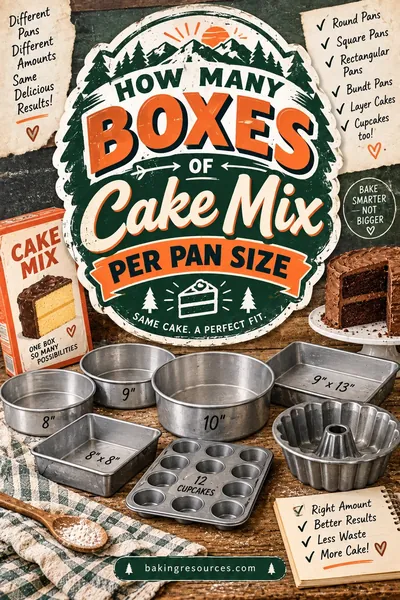 Baking guideHow Many Boxes of Cake Mix per Pan Size: Full ChartSee the sizes →
Pan type: light metal, dark metal, silicone and liners
The pan changes how fast heat reaches the batter. Light-colored aluminum is the standard, and the times in this guide are based on it. Everything else needs a small correction.
| Pan | Standard cupcakes at 350°F | What changes | What to do |
|---|---|---|---|
| Light metal (aluminum) | 18 to 22 min | Even, gentle browning | Nothing; this is the baseline |
| Dark or nonstick metal | 16 to 20 min | Absorbs more heat; darker sides and bottoms | Check about 2 minutes early, or lower the oven 25°F and keep the usual time |
| Silicone | 20 to 24 min | Heats slowly; pale bottoms and sides | Set it on a metal sheet pan and allow about 2 extra minutes |
| Foil or paper baking cups on a sheet pan (no muffin tin) | About 18 to 22 min | Cups can splay out if thin | Use sturdy foil or double paper cups and fill a little less |
For minis, the dark pan and silicone corrections are about 1 minute each way. For jumbos, they are closer to 3 minutes. The calculator above handles all of that. If you are deciding which kind of pan to buy, our comparison of silicone vs metal bakeware walks through the trade-offs.
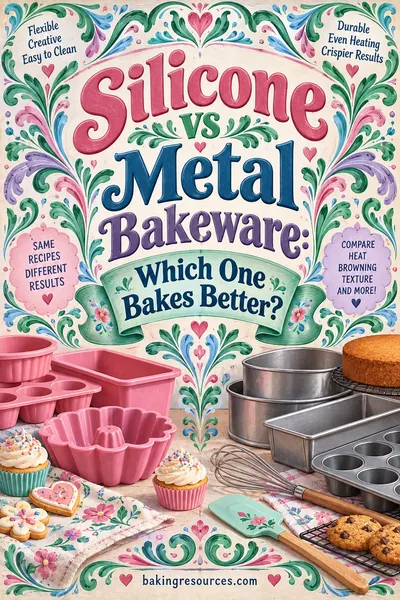 Baking guideSilicone vs Metal Bakeware: Which One Bakes Better?Read the guide →
Paper liners vs greased cups
Liners barely change the time. A greased cup without a liner may brown a little more on the sides and finish a minute sooner, because the batter touches hot metal directly. Liners keep cupcakes moist longer and make them easy to carry, so most people use them. If your liners keep pulling away from the cupcakes after baking, that is usually a moisture and cooling issue, not a timing one. Our guide on why cupcake liners peel away covers the fixes.
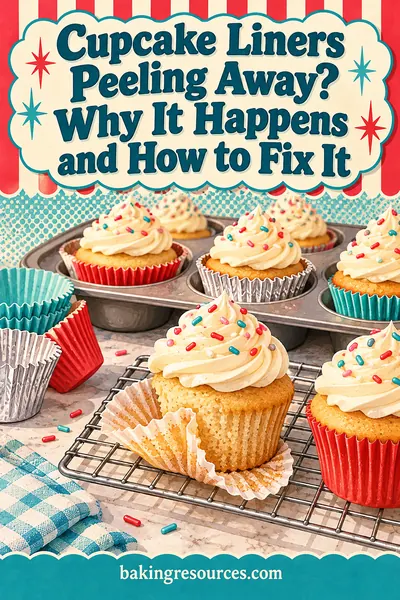 Baking guideCupcake Liners Peeling Away? Why It Happens and How to Fix ItFind out why →
How to tell cupcakes are done
The clock gets you close. These signs tell you when to actually pull the pan. Use at least two of them, since any one test can fool you.
- The toothpick test. Push a toothpick into the center of a cupcake in the middle of the pan. Done means clean or with a few moist crumbs. Wet, shiny batter means it needs 2 more minutes. If you hit a chocolate chip or a filling, try a second spot.
- The spring-back test. Press the top lightly with a fingertip. A done cupcake springs right back. If your finger leaves a dent, keep baking.
- The look. The top should look dry and matte all the way across, with no wet shine in the center. Vanilla cupcakes will be light golden at the edges. Chocolate ones are harder to read by color, so lean on the other tests.
- The edges. The cake should just start to pull away from the liner or the side of the cup.
- The thermometer. An instant-read thermometer in the center reads 205 to 210°F for a fully baked cupcake. This is the most reliable check for jumbos, where the outside can look done well before the middle is.
Cupcakes keep cooking for a minute or two in the hot metal pan after they come out. Let them sit in the pan for about 5 minutes, then move them to a rack. If you leave them in the pan until fully cool, steam gets trapped under the liner and the bottoms turn damp.
One more tip: check the cupcakes in the center of the pan, not the ones on the edge. The outer cups get more heat and always finish first. If the middle ones are done, the whole pan is done.
Room-temperature vs chilled batter
Most cupcake batter is meant to go into the oven right after mixing, while the ingredients are around room temperature. That is the batter the times above are written for. Two common situations change it.
Cold ingredients
If you mixed the batter with eggs and milk straight from the fridge, the batter starts cooler and takes a minute or two longer to bake. It may also rise less evenly, since cold butter does not hold air as well when you cream it. Our guide on why recipes call for room-temperature ingredients explains what is going on. For the clock, plan on 1 to 2 extra minutes for standard cupcakes.
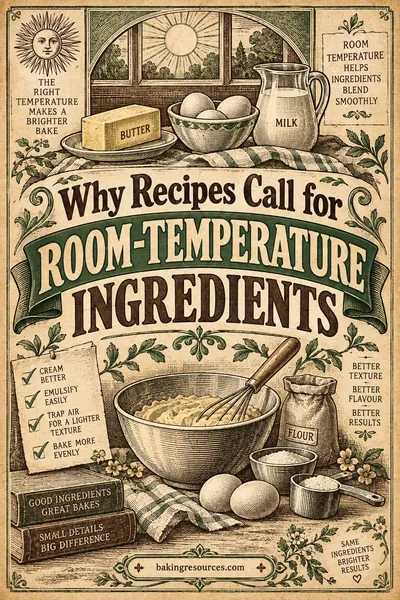 Baking guideWhy Recipes Call for Room-Temperature IngredientsFix it next time →
Batter made ahead and kept in the fridge
You can mix most cupcake batters a few hours ahead and keep them covered in the fridge. Batter that uses baking soda alone loses lift faster than batter with double-acting baking powder, so same-day baking is safer. Scoop the cold batter straight into the liners without stirring it again, and expect 2 to 3 extra minutes for standard cupcakes. Batter with raw eggs should go back in the fridge if it will sit more than 2 hours, and should never sit on the counter overnight.
Second pan of a big batch
If you only have one pan, the second half of the batter waits on the counter while the first pan bakes. That is fine for 20 to 30 minutes. Let the pan cool for a few minutes before you fill it again, or the batter starts cooking against hot metal and the bottoms come out tough.
Scratch, box mix and filled cupcakes
Box mixes are written for the same 350°F range and usually land between 18 and 22 minutes for standard cupcakes, just like scratch batter. Follow the time on your box, since mixes differ a little in how much batter they make. Box mix batter tends to be thinner, so it rises higher and forms a rounder dome.
Some styles bake a bit differently:
- Chocolate cupcakes. Same times as vanilla, but you cannot see browning, so use the spring-back test and a thermometer.
- Carrot, pumpkin and spice cupcakes. These are heavier and wetter. Expect the high end of the range, or 1 to 2 minutes past it.
- Red velvet. Usually the standard 18 to 22 minutes. The color hides browning, so watch the tops for that dry, matte look.
- Cupcakes with a baked-in filling (a spoonful of cream cheese mixture or jam dropped into the batter). Add 2 to 3 minutes and test the cake part, not the filling. Any cupcake with a cream cheese filling has to go in the fridge once cool.
- Gluten-free batters. These often need a few extra minutes and benefit from a thermometer, since the crumb can look set before the starches finish.
Mixing also affects how they bake. Batter that is beaten hard after the flour goes in develops gluten and tends to form peaked, tunneled tops. If that sounds familiar, our page on what overmixing does to batter explains why.
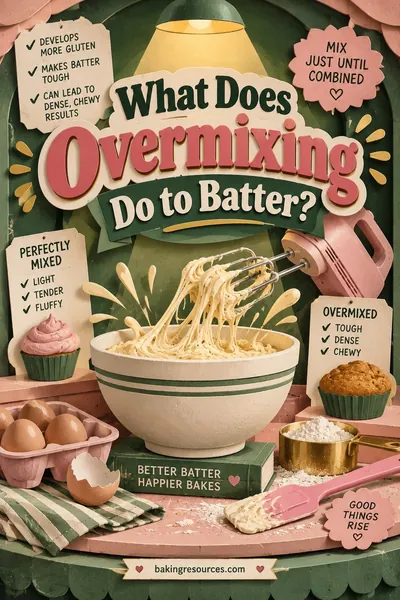 Baking guideWhat Does Overmixing Do to Batter? Tunnels and ToughnessTake a look →
Baking more than one pan at once
A home oven can handle two muffin pans at once, but each pan blocks some heat from the other. Here are the options, from best to most crowded.
- One pan on the middle rack. The most even result, and the times in the chart above.
- Two pans side by side on the middle rack. Works in most full-size ovens if there is at least an inch of space around each pan. Add about 1 minute.
- Two pans on two racks. Put the racks in the upper and lower thirds. Swap the pans top to bottom and turn them around at about the halfway point, and add 2 to 3 minutes. The bottom pan tends to brown more underneath.
Our page on which oven rack to use for baking explains why the middle rack is the safe default. Opening the door to swap pans lets out heat, so do it quickly, and never open the door in the first 10 minutes for standard cupcakes. That is when the structure is still setting, and a blast of cool air can make the centers sink.
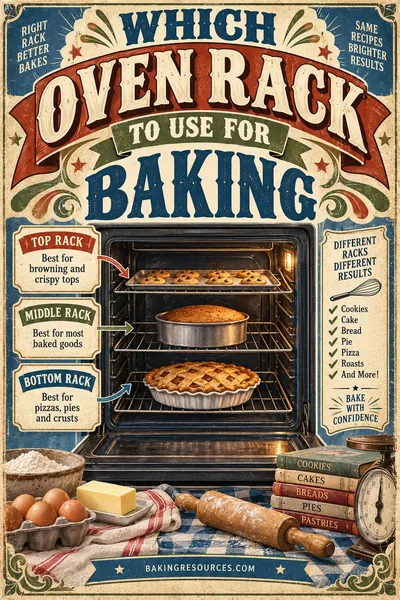 Baking guideWhich Oven Rack to Use for Baking: Top, Middle, LowSee the chart →
If you have one regular pan and one mini pan, they can go in together at 350°F. Pull the minis at 10 to 14 minutes and leave the standard pan in until it reaches its own 18 to 22.
High altitude cupcakes
Above about 3,000 feet, air pressure is lower, so batter rises faster and loses moisture faster. Cupcakes tend to rise up, then collapse, and they dry out easily. The standard fix has two parts: change the recipe a little, and change the oven.
- Raise the oven 15 to 25°F, so the structure sets before the bubbles grow too big. For most cupcakes that means 365 to 375°F.
- Because the oven is hotter, start checking about 4 minutes earlier for standard cupcakes. At 5,000 feet and 375°F, check at around 14 minutes and expect 15 to 18.
- Cut the baking powder or soda a little, reduce the sugar by 1 to 2 tablespoons per cup, and add a couple of tablespoons of liquid.
- Fill liners only half to two thirds full, since batter rises more at altitude and can spill.
The exact amounts depend on your elevation. Our high altitude baking chart lists the changes by height so you can adjust one step at a time.
 Baking guideHigh Altitude Baking Adjustments: The Chart by ElevationLearn more →
Worked example: 24 vanilla cupcakes for a school bake sale
Say you are making one batch of vanilla cupcakes from a recipe that makes 24 standard cupcakes. You own one light metal 12-cup pan and one dark nonstick 12-cup pan. The recipe says 350°F for 18 to 22 minutes.
- Preheat fully. Turn the oven to 350°F at least 15 minutes ahead. A lot of ovens beep before the walls are fully hot.
- Fill evenly. Use a 3 tablespoon scoop so every liner is about two thirds full. You should get 24 cupcakes with a little batter to spare.
- Decide on the pans. The light pan follows the recipe: 18 to 22 minutes. The dark pan runs hotter, so it should be checked at about 16 minutes. Instead of guessing for two different pans at once, bake them side by side on the middle rack if they fit, with an extra minute added for the crowding.
- Check early. At 16 minutes, test the middle cupcake of the dark pan. It springs back and a toothpick shows a few moist crumbs, so that pan comes out. At 19 minutes, the light pan is still a little wet in the middle cup. At 20 minutes, it is done.
- Cool in two stages. Five minutes in the pans, then onto racks. Frost only once they are fully cool, about an hour later.
The total oven time was about 20 minutes, and both pans came out at the right moment. Want a different setup? The calculator near the top of this page shows the time for each size, oven temperature and pan.
Troubleshooting: raw middles, sunken or peaked tops, burnt bottoms
When a batch goes wrong, the clock is only part of the story. Here are the common problems, what usually causes them, and how to fix the next batch.
| Problem | Likely cause | Fix |
|---|---|---|
| Raw or gummy middle, tops look done | Oven too hot, or pulled early; jumbo size | Check the oven with a thermometer; test the center cup; bake jumbos at 325 to 350°F |
| Centers sank after cooling | Underbaked, too much leavening, or door opened early | Bake until 205 to 210°F; measure leavening level; keep the door shut for the first 10 minutes |
| Tall peaks or cracked domes | Oven too hot, overfilled, or overmixed | Bake at 350 or 325°F; fill two thirds; mix just until the flour disappears |
| Flat, pale tops | Oven too cool, old baking powder, or batter sat too long | Check oven temperature; use fresh leavening; bake soon after mixing |
| Dark or burnt bottoms | Dark pan, bottom rack, or oven running hot | Use the middle rack; light pan or check early; slide a sheet pan on the rack below |
| Dry, crumbly cupcakes | Baked too long, or too much flour | Pull at moist crumbs, not a bone-dry toothpick; weigh or spoon-and-level flour |
| Uneven cupcakes across the pan | Uneven fill or hot spots | Use a scoop; rotate the pan halfway through |
Sunken centers deserve a closer look, since they are the most common complaint. Most of the time the cupcakes were just underbaked by a minute or two, and the soft center could not hold itself up once it cooled. The causes are the same ones that sink a full-size cake, and our guide on why cakes sink in the middle goes through them in order. For tops that split open, see why cakes crack on top.
Holiday and bake-sale batches
Thanksgiving, Christmas parties, school events and winter birthdays all tend to call for cupcakes by the dozen. Big batches are mostly a planning problem. The bake itself is the same 18 to 22 minutes per pan, but the pans add up.
Plan the oven time
For each round in the oven, count the bake time plus about 5 minutes to unload, cool the pan a bit, refill and reload. With one 12-cup pan, that is roughly 25 to 27 minutes per dozen. Four dozen takes close to 2 hours with one pan, or about an hour if you have two pans going side by side. Having a second pan saves more time than anything else.
Make ahead
- Bake unfrosted cupcakes 1 day ahead. Once fully cool, store them in an airtight container at room temperature. They stay soft and moist for about 2 days.
- Freeze unfrosted cupcakes up to about 2 to 3 months for best quality. Wrap them well and thaw them in their wrapping so condensation forms on the outside, not on the cake.
- Frost the day you serve, or the day before. Our frosting calculator tells you how much to make for the number of cupcakes and the size of the swirl.
Food safety for frosted batches
Buttercream made with butter and powdered sugar is fine at cool room temperature for a day or two. Cream cheese frosting, whipped cream and any custard or cream filling are different: those cupcakes go in the fridge and should not sit out more than 2 hours, including the time they spend on a bake-sale table. If you are selling or sharing in a warm room, choose a buttercream instead. Our guide on how to store cake has the full counter, fridge and freezer rules.
Common cupcake timing mistakes
- Trusting the oven dial. Home ovens often run 25°F or more away from what the dial says. A cheap oven thermometer that sits on the rack tells you the real number, and it explains most "my cupcakes always take longer" stories.
- Testing an edge cupcake. The outside cups bake first. Always test one from the middle of the pan.
- Waiting for a bone-dry toothpick. By the time the pick is totally clean, the cupcakes have often gone a minute too far. A few moist crumbs is the goal.
- Opening the door too early. Peeking in the first 10 minutes can drop the oven temperature and sink the centers.
- Filling unevenly. Different amounts in each cup means different bake times in the same pan.
- Leaving them in the pan. The hot pan keeps cooking them and traps steam under the liners. Five minutes, then onto a rack.
- Using a cake time for cupcakes. If you turn a cake recipe into cupcakes, the clock drops a lot. The baking time calculator can help when you move a recipe into a different pan.
Quick reference
If you only remember one thing, remember the standard: 350°F, liners two thirds full, light metal pan, 18 to 22 minutes, and test the middle cupcake at 18. Everything else on this page is an adjustment from there.
- Mini: 10 to 14 minutes at 350°F.
- Standard: 18 to 22 minutes at 350°F.
- Jumbo: 22 to 28 minutes at 350°F, or 26 to 32 at 325°F.
- Dark pan: check about 2 minutes sooner. Silicone: allow about 2 minutes more.
- Cold or refrigerated batter: add 1 to 3 minutes.
- Done: springs back, a few moist crumbs, 205 to 210°F in the center.
Questions people ask
How long do you bake cupcakes at 350°F?
Standard cupcakes filled two thirds full bake in 18 to 22 minutes at 350°F in a light metal pan. Mini cupcakes need 10 to 14 minutes and jumbo cupcakes need 22 to 28 minutes. Start checking at the low end, test a cupcake from the middle of the pan, and pull them when a toothpick comes out with a few moist crumbs.
How long do you bake cupcakes at 325°F?
At 325°F, standard cupcakes take about 21 to 25 minutes, minis take 12 to 16 minutes and jumbos take 26 to 32 minutes. The lower oven gives flatter, paler tops, which many people like for piping frosting. It is also a good choice for jumbo cupcakes and dense batters, since the center has time to bake before the edges dry out.
How long do you bake cupcakes at 375°F?
At 375°F, standard cupcakes bake in about 15 to 18 minutes, minis in 8 to 11 minutes and jumbos in 19 to 24 minutes. The hotter oven gives taller, domed tops and darker edges. Watch closely, because minis can overbake in about a minute, and jumbos may brown on top before the center is fully set.
How do I know when cupcakes are done without a toothpick?
Press the top lightly with a fingertip. A done cupcake springs back, while an underbaked one keeps a dent. The top should look dry and matte with no wet shine in the center, and the cake should just begin to pull away from the liner. An instant-read thermometer in the center should read 205 to 210°F.
Why are my cupcakes raw in the middle but brown on top?
The oven is usually too hot, so the outside sets and browns before heat reaches the center. Check the real temperature with an oven thermometer, since many ovens run hot. Jumbo cupcakes are the most likely to do this, so bake them at 325 to 350°F, lay foil loosely over the tops if they darken early, and test the very center.
Do cupcakes take longer in a silicone pan?
Yes, a little. Silicone heats more slowly than metal, so standard cupcakes usually need about 2 extra minutes, minis about 1 and jumbos about 3. The bottoms and sides will be paler. Always set a silicone pan on a metal sheet pan before filling it, so it stays flat and is easy to move in and out of the oven.
Can I bake cupcakes and a cake at the same time?
Yes, as long as both use the same oven temperature. Put them on the middle rack with space around each pan, or on two racks if needed. The cupcakes will finish much sooner, usually in 18 to 22 minutes at 350°F, so set a separate timer for them and leave the cake in until it passes its own doneness test.