
How Long to Bake Brownies in Every Pan, Fudgy or Cakey

Most homemade brownies bake at 350°F for 22 to 28 minutes in an 8x8 inch metal pan, 20 to 25 minutes in a 9x9, and 25 to 32 minutes when you double the batch into a 9x13. Fudgy brownies are done when the center reads 165 to 175°F and a toothpick comes out with moist crumbs, not wet batter.
Brownies are less forgiving than cake, because the line between fudgy and dry is only a few minutes wide, and the pan keeps baking them after they leave the oven. The pan size, the pan material, and the texture you want each shift the clock. Pick all three in the calculator below to get your time, the oven setting, and exactly what to look for.
Free calculator
Brownie bake time calculator
Pick your pan, what it is made of, and the texture you want to see the bake time and how to check it.
More free baking tools



Brownie bake times at a glance
These windows are for a scratch brownie recipe baked at 350°F in a light metal pan on the middle rack. Fudgy and cakey recipes are listed separately because a cakey batter has more flour and leavening and needs a few more minutes to set all the way through.
| Pan | Batter depth | Fudgy at 350°F | Cakey at 350°F |
|---|---|---|---|
| 8x8 square | About 1 inch | 22 to 28 minutes | 25 to 30 minutes |
| 9x9 square | About 3/4 inch | 20 to 25 minutes | 22 to 27 minutes |
| 11x7 rectangle | About 3/4 inch | 20 to 25 minutes | 22 to 27 minutes |
| 9x13, doubled batch | About 1 inch | 25 to 32 minutes | 28 to 35 minutes |
| 9x13, single batch | Under 1/2 inch | 16 to 22 minutes | 18 to 23 minutes |
| Standard muffin tin | About 3 tbsp per cup | 15 to 18 minutes | 17 to 20 minutes |
Start checking at the low number. Brownies go from gooey to just right to dry faster than almost anything else you bake, and an extra 5 minutes is often the whole difference between fudgy and crumbly.
If your recipe was written for one pan and you only own another, the brownie pan size guide shows how to scale the batch so the depth stays right, and the baking time calculator adjusts the time when the depth does change.
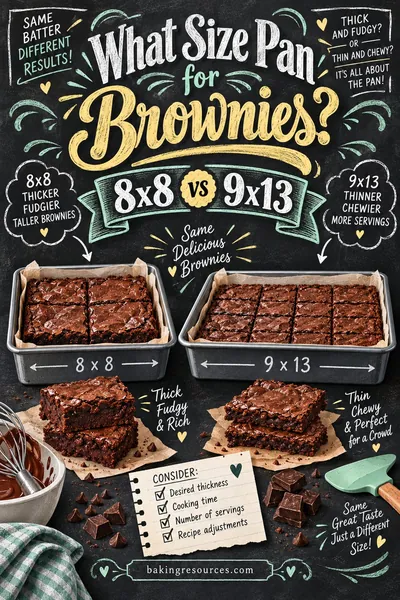 Baking guideBrownie Dish Size: 8x8 vs 9x13 and How to ConvertCheck the pan chart →
 Free toolBaking Time Calculator: New Pan, New TimeConvert it now →
Why fudgy and cakey brownies bake differently
A fudgy brownie is mostly chocolate, butter, sugar and eggs, with just enough flour to hold it together. A cakey brownie has more flour, often some milk, and baking powder that makes it rise. That difference changes both the time and the finish line.
- Fudgy batter is dense and does not rise much. It sets from the edges in, and the center is supposed to stay soft and moist. You pull it while a toothpick still shows moist crumbs.
- Cakey batter rises and builds a light crumb, like a thin chocolate cake. It needs to bake until the middle is set and springy, which takes about 2 to 3 minutes longer in the same pan.
- Chewy brownies sit in between. They usually use more brown sugar or melted butter, and they are done a little past fudgy.
If your brownies keep coming out cakey when you wanted fudgy, the recipe is often the reason, not the oven. The ratio fixes are in why are my brownies cakey. Overbaking is the other common cause, and that one this page can fix.
 Baking guideWhy Are My Brownies Cakey? Fix the Ratio, Get FudgyFind out why →
How pan size and batter depth change the time
Brownies bake from the edges inward. The deeper the batter, the farther the heat has to travel to set the middle, and the longer the edges sit in a hot pan while that happens. That is why depth matters far more than the total amount of batter.
| Batter depth | What you get | Time at 350°F | Tip |
|---|---|---|---|
| Under 1/2 inch | Thin, chewy, crisp-edged bars | 16 to 22 minutes | Check early; they dry out fast |
| 3/4 inch | Classic chewy squares | 20 to 25 minutes | Good balance of edge and middle |
| About 1 inch | Thick, fudgy squares | 22 to 32 minutes | The standard 8x8 depth |
| Over 1 1/4 inches | Very thick; edges overbake easily | 35 minutes and up | Drop to 325°F and add 10 or more minutes |
Bigger pan, same batter
Pour an 8x8 batch into a 9x9 and the batter is about 20 percent thinner. It bakes 2 to 3 minutes faster and gets a slightly chewier texture. Pour the same batch into a 9x13 and it is less than half an inch deep, which gives thin, crisp-edged bars in 16 to 22 minutes.
Smaller pan, same batter
Squeeze a 9x13 recipe into two 8x8 pans and you are fine. Squeeze it into one 8x8 and the batter is far too deep: the edges turn hard while the middle stays raw. If you have no choice, use 325°F, expect 45 minutes or more, and test the center with a thermometer. If you are short on pans, the guide to 9x13 pan substitutes lists combinations that keep the depth right.
 Baking guide9x13 Pan Substitute: Every Swap That Actually WorksWhat can I use? →
Oven temperature: 325°F vs 350°F vs 375°F
Most brownie recipes use 350°F. It sets the edges and forms the shiny, crackly top while the center stays moist. Here is what happens when you move away from it.
325°F
A lower oven bakes more evenly from edge to center, so you get softer edges and a more uniform texture. It adds about 5 to 10 minutes to the time. Use 325°F for glass and dark pans, deep batches, and any brownie with a cheesecake or caramel swirl.
350°F
The standard. Use it for light metal pans and normal depths. All the times in the chart above are for 350°F.
375°F
Too hot for most brownies. The edges and top overbake before the center sets, and the crackly top often turns dull and dry. The one exception is a thin single batch in a 9x13 for crisp bars, and even then 350°F is easier to control.
If your recipe is written in Celsius or gas marks, the oven temperature conversion chart has the matching numbers. For a convection oven, lower the temperature by 25°F and keep the time, or keep the temperature and start checking about 5 minutes early. More detail is in convection vs conventional oven.
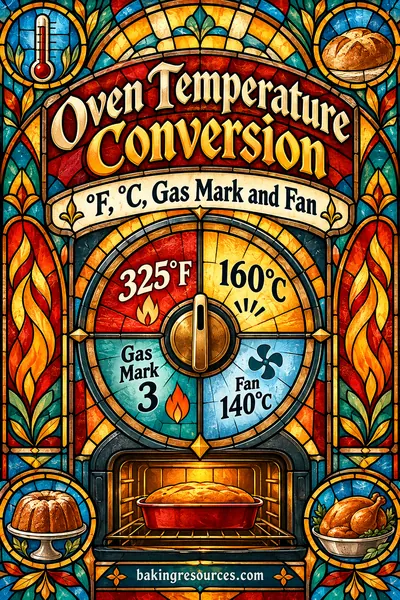 Free toolOven Temperature Conversion: °F, °C, Gas Mark and FanGet my number →
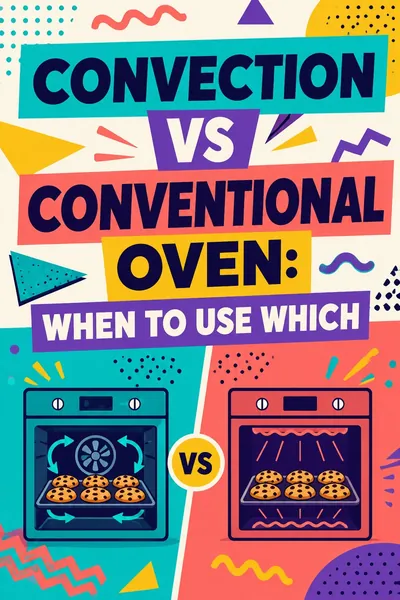 Baking guideConvection vs Conventional Oven: When to Use WhichGet the details →
Dark, light and glass pans
The pan you bake in changes brownies more than it changes cake, because brownies are mostly edge. A pan that runs hot gives you a ring of dry, hard edges around an underdone middle.
| Pan material | Oven setting | 8x8 fudgy | 9x13 doubled, fudgy | What to watch |
|---|---|---|---|---|
| Light aluminum | 350°F | 22 to 28 minutes | 25 to 32 minutes | The baseline; recipes are written for it |
| Dark or nonstick metal | 325°F | 19 to 28 minutes | 22 to 32 minutes | Edges darken fast; check 3 minutes early |
| Glass or ceramic | 325°F | 27 to 33 minutes | 30 to 37 minutes | Keeps baking after it comes out |
Light metal
Light aluminum heats quickly and evenly and does not over-brown. It is the best brownie pan you can own, and the one the recipe times assume.
Dark and nonstick
Dark metal absorbs more heat. At 350°F the corners turn hard before the middle sets. Lower the oven 25°F, and even then start checking about 3 minutes before the light-pan time, since a dark pan at 325°F can finish as quickly as a light pan at 350°F.
Glass and ceramic
Glass heats slowly, then holds that heat. Brownies in glass at 350°F often come out with overbaked edges and bottoms. Lower the oven to 325°F and plan on about 5 minutes more than the metal time. Then pull the pan a touch early, because a hot glass dish keeps baking the brownies on the counter for several minutes. Lining any pan with a parchment sling, as in how to line a cake pan, also softens the bottom heat and makes lifting the slab out easy.
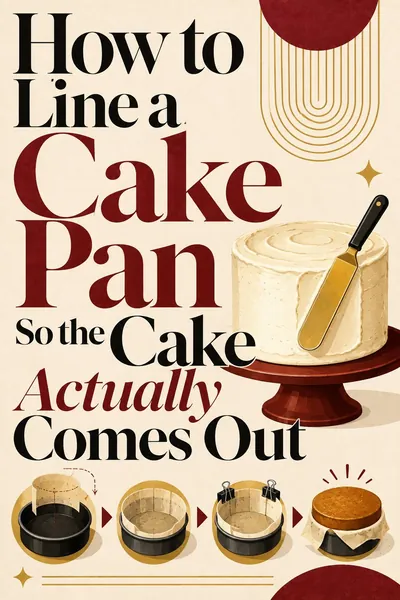 Baking guideHow to Line a Cake Pan So the Cake Actually Comes OutSee the sizes →
Boxed brownie mix times
Boxed mixes are made to match the times on the box, so follow those first. A few patterns hold across most brands:
- Box times are written for a range of pans, often 8x8, 9x9 and 9x13. A family-size mix in an 8x8 is thick, so it takes noticeably longer than in a 9x13, sometimes 35 to 40 minutes.
- Box times usually assume light metal pans. Use the same glass and dark pan rules from the section above.
- Start checking 3 to 5 minutes before the shortest time on the box. Most mixes reach a fudgy texture at the low end.
- Adding extra eggs, chips or nuts makes a deeper batter and can add a few minutes.
Mixes are also handy for more than brownies. The guide on converting cake mix to cookies, muffins and brownies gives ratios for quick batches when the holiday schedule is tight.
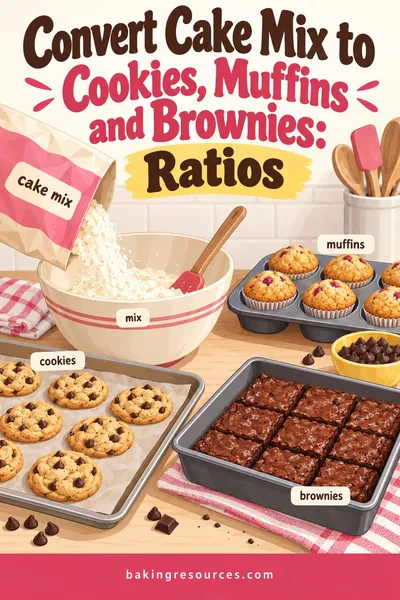 Baking guideConvert Cake Mix to Cookies, Muffins and Brownies: RatiosGet the measurements →
How to tell when brownies are done
Here is where brownies get tricky. The usual cake test, a clean toothpick, means a fudgy brownie is already overbaked. Use these signs together.
Internal temperature
An instant-read thermometer in the center is the most reliable check. Fudgy brownies are done at about 165 to 175°F, chewy ones at 175 to 185°F, and cakey brownies around 185°F. Eggs are fully cooked at 160°F, so even the fudgiest brownie should clear that. Angle the probe in from the side so the tip sits halfway down in the middle of the pan.
The toothpick test, brownie style
For fudgy brownies, poke a toothpick about 1 inch in from the edge, not in the very center. It should come out with moist, sticky crumbs. Then poke the center: a few damp crumbs are fine, but wet, glossy batter means it needs 3 to 5 more minutes. For cakey brownies, the center toothpick should come out with just a few dry crumbs.
The top and edges
- The edges are set and starting to pull away from the pan.
- The top has gone from shiny to dull or crackly across most of the pan.
- When you gently shake the pan, the center does not ripple. A tiny wobble right in the middle is fine for fudgy brownies.
Every sign, with what each stage looks like, is in how to tell when brownies are done.
 Baking guideHow to Tell When Brownies Are Done: Fudgy and Cakey SignsSee the doneness test →
Worked example: doubling a batch into a glass 9x13
Say your fudgy recipe makes one 8x8 pan in 22 to 28 minutes at 350°F, and for a holiday party you want a doubled batch in your glass 9x13.
- Check the depth. A doubled 8x8 batch fills 128 square inches of batter area, and a 9x13 is 117. The batter sits a little deeper than in the original pan, about 1 inch, so it needs slightly more time.
- Adjust for the pan. In light metal, a doubled batch takes 25 to 32 minutes at 350°F. Glass needs 325°F and about 5 more minutes, so plan on 30 to 37 minutes.
- Check early. Peek at 30 minutes. The edges have pulled away and the top is crackly, but the center ripples. Give it 4 more minutes.
- Confirm. At 34 minutes, the thermometer in the middle reads 168°F and a toothpick 1 inch from the edge shows moist crumbs. Pull it.
- Cool. Leave the pan on a rack for at least 2 hours. The center keeps setting as it cools, and the glass keeps baking it gently for the first few minutes.
Had you baked that glass pan at 350°F for 37 minutes, the edges would have been hard and the middle well past 185°F, which is cakey and dry.
A second example: one batch in a dark nonstick 9x9
Now say you are making a single fudgy batch, but the only square pan in the cupboard is a dark nonstick 9x9. Two things change at once. The bigger pan spreads the batter to about 3/4 inch, which takes the light-metal time down to 20 to 25 minutes at 350°F. The dark finish means you lower the oven to 325°F and start checking about 3 minutes earlier.
So set the oven to 325°F and look at 17 minutes. The edges will likely be set and the top dull at the rim but shiny in the middle. Check again every 2 minutes. Most batches land between 19 and 25 minutes, and you pull the pan when the center reads about 165 to 175°F. Because the pan is thinner than the recipe planned, the brownies come out a little chewier, with a little more edge in every square.
Mix-ins, swirls and add-ons
Anything you fold in or swirl on top changes how the batter bakes.
- Chocolate chips and nuts: add bulk and depth, so add 2 to 3 minutes. Melted chips also make the toothpick look wet even when the batter is set, so poke a spot without chips, or use the thermometer.
- Cream cheese swirl: adds moisture, so bake at 325°F and add 5 to 10 minutes. Test a spot that has both brownie and swirl. Cheesecake brownies must be refrigerated once cool.
- Caramel or peanut butter swirl: brown fast. Bake at 325°F and tent with foil if the swirl darkens before the center is done.
- Cookie dough or candy layer on the bottom: treat the pan as deeper than it is and start checking 5 minutes later than usual.
If you are melting chocolate for the batter, keep it gentle; scorched chocolate tastes bitter no matter how well the brownies bake. The steps are in how to melt chocolate.
 Baking guideHow to Melt Chocolate Without Seizing It: 3 Easy MethodsLearn the method →
Brownie styles and cousins: times side by side
Once you know the basic 8x8 time, most other brownie-style bakes fall into place. The differences come from how much flour, sugar and moisture the batter holds and how it is shaped.
| Bake | Pan | Oven | Time | Done when |
|---|---|---|---|---|
| Classic fudgy brownies | 8x8 metal | 350°F | 22 to 28 minutes | 165 to 175°F, moist crumbs |
| Cakey brownies | 8x8 metal | 350°F | 25 to 30 minutes | About 185°F, few dry crumbs |
| Blondies | 8x8 metal | 350°F | 25 to 30 minutes | Golden edges, center just set |
| Cheesecake swirl brownies | 8x8 metal | 325°F | 35 to 40 minutes | Swirl set with a slight wobble |
| Brownie bites | Mini muffin tin | 350°F | 10 to 14 minutes | Tops set, centers soft |
| Skillet brownie | 10 inch cast iron | 350°F | 20 to 25 minutes | Edges set, center soft but not wet |
Blondies are easier to judge by color than brownies, because the edges turn golden brown as they finish. A cast iron skillet holds a lot of heat, so a skillet brownie keeps cooking after it leaves the oven; pull it while the very center still looks soft. Brownie bites are small enough that a minute matters, so set a timer for the low end.
The cheesecake swirl time assumes an 8x8 pan with a cream cheese layer marbled through the top. The cream cheese part is a custard, so it follows custard rules: bake it gently and refrigerate the pan once it has cooled.
Common brownie timing mistakes
- Baking until a toothpick is clean. It is the most common reason for dry brownies. Fudgy brownies are done while the pick still shows moist crumbs.
- Trusting the oven dial. Many home ovens run 15 to 25°F off. With a bake this short, that can mean 5 minutes either way. An oven thermometer on the middle rack tells you the truth.
- Using the recipe time with a different pan. A 9x9 bakes faster than an 8x8, and a glass dish needs a lower oven. Change the time any time you change the pan.
- Opening the oven every few minutes. Each peek drops the oven temperature and slows the bake. Look through the window until the low end of the time window, then test.
- Using the bottom rack. The bottom rack sits close to the heating element and scorches the bottom of brownies. The middle rack is right for nearly all brownies; which oven rack to use explains why.
- Cutting too soon. Warm brownies look underdone even when they are not, and people put the pan back in the oven and overbake it. Check the temperature, then trust the cooling time.
- Cold batter going into the oven. If you chilled the batter or used cold eggs, it can take 3 to 5 minutes longer. Let chilled batter sit at room temperature for about 15 minutes before baking.
High altitude brownies
At high altitude, brownies tend to rise and then fall, bake up dry, or turn greasy, because water evaporates faster and gas bubbles expand more. Fudgy brownies are less affected than cakes since they use little leavening, but a few changes help above about 3,000 feet:
- Raise the oven about 15°F, so the edges and top set before the batter overexpands.
- Start checking 3 to 5 minutes earlier than the sea-level time.
- Cut the sugar by about 1 tablespoon per cup and add an extra egg or a tablespoon or two of liquid if they come out dry.
- For cakey brownies, also reduce the baking powder slightly.
The thermometer target also drops a little, since moist batter cannot get much hotter than the local boiling point. Fudgy brownies are still done once the center clears 165°F. The full elevation chart is in high altitude baking adjustments.
Troubleshooting: raw middle, dry edges, cracks and sinking
Raw or gooey middle
The batter was too deep, the oven runs cool, or the pan came out too early. If the center is wet when you cut it, put the pan back at 325°F, loosely covered with foil, for 5 to 10 minutes and check for at least 165°F. It still works after the brownies cool, it just takes closer to 10 to 15 minutes.
Hard, dry edges
Almost always a dark or glass pan at 350°F, or a pan left in a few minutes too long. Lower the oven 25°F for those pans, line with parchment, and pull the brownies when the center reads 165 to 175°F.
Cracked or dull top
A thin, shiny, crackly top is normal and good. A deeply cracked, dull top usually means the brownies baked too long or too hot, or the recipe had more flour and leavening than a fudgy brownie needs.
Sunk in the middle
A slight dip as fudgy brownies cool is normal. A deep crater means the center was underbaked and collapsed, or too much leavening made it rise and then fall. Check the center temperature next time, and see the high altitude notes if you live above 3,000 feet.
Greasy on top
Butter separated from the batter, usually because it was too hot when mixed in or the batter was undermixed. Let melted butter cool a few minutes and stir the batter until it looks glossy before it goes in the pan.
Cooling and cutting: the last 2 hours count
Brownies are not finished when they leave the oven. The heat in the pan keeps cooking the center for several minutes, and the structure sets as the chocolate and butter cool. That is why you pull fudgy brownies at 165 to 175°F rather than baking until they look firm.
- Cool in the pan on a wire rack for at least 2 hours before cutting.
- For very clean squares, chill the cooled slab for 30 minutes, then cut with a long, sharp knife wiped clean between cuts.
- Cut a warm pan and the middle will look raw even when it is fully baked. That is soft chocolate, not uncooked egg, as long as the center reached 165°F.
Plain brownies keep, covered, at room temperature for 3 to 4 days. Brownies with cream cheese, whipped cream or other dairy toppings belong in the fridge and should not sit out more than 2 hours. Both freeze well for about 3 months for best quality. The baked goods storage guide covers wrapping and thawing.
Holiday brownie baking
Brownies are a holiday favorite because they bake fast, travel well, and freeze. A few timing tips for the busy season:
Bake ahead and freeze
Bake brownies a week or two before Thanksgiving or Christmas, cool them completely, wrap the whole slab tightly, and freeze. Thaw wrapped at room temperature for a few hours, then cut. A frozen slab is easier to cut neatly, too, so you can also cut it while still firm and thaw the squares on a covered tray. Plain brownies keep their best quality frozen for about 3 months.
Share the oven
If a turkey or ham is roasting at 325°F, brownies can go in at the same temperature. Treat it like the glass and dark pan setting: add about 5 to 10 minutes to the 350°F time and check the center temperature. Baking the brownies before the roast goes in is easier still.
Gift boxes and cookie tins
Brownies cut into 2 inch squares tuck well into tins with cookies. A 9x13 doubled batch cut 6 by 8 gives 48 squares. If you are filling tins for neighbors, the plan in cookie tins for 12 neighbors shows how to split batches. Keep plain brownies and dairy-topped brownies in separate tins, since only plain ones can stay out at room temperature.
Peppermint and holiday swirls
Crushed candy canes on top go on in the last 5 minutes or right after the pan comes out, so they do not melt into puddles. A peppermint cream cheese swirl follows the cream cheese timing: 325°F and 5 to 10 extra minutes. For egg-free holiday batches, see egg substitutes for brownies, and expect egg-free brownies to set a little softer, so go by the toothpick rather than the thermometer.
Questions people ask
How long do brownies take at 350°F?
In a light metal 8x8 pan, homemade fudgy brownies take 22 to 28 minutes at 350°F and cakey ones 25 to 30 minutes. A 9x9 takes 20 to 25 minutes, a doubled batch in a 9x13 takes 25 to 32 minutes, and a single batch spread thin in a 9x13 takes 16 to 22 minutes. Start checking at the low end, since brownies dry out quickly.
How long do brownies bake in a glass pan?
Lower the oven to 325°F and add about 5 minutes to the metal-pan time. A fudgy 8x8 batch in glass takes about 27 to 33 minutes, and a doubled batch in a glass 9x13 about 30 to 37 minutes. Glass holds heat and keeps baking the brownies after they come out, so pull them as soon as the center reaches about 165 to 175°F.
What internal temperature are brownies done?
Fudgy brownies are done at about 165 to 175°F in the center, chewy brownies at about 175 to 185°F, and cakey brownies around 185°F. Eggs are fully cooked at 160°F, so every style should be above that. Measure halfway down in the middle of the pan, with the probe angled in so it does not touch the bottom.
Should a toothpick come out clean from brownies?
Only for cakey brownies. For fudgy brownies, a clean toothpick means they are already overbaked. Poke about an inch in from the edge and look for moist, sticky crumbs, then check the center for wet, glossy batter. A few damp crumbs in the middle is right. Wet batter means 3 to 5 more minutes. Melted chocolate chips can fool the test, so avoid poking them.
Why are my brownies raw in the middle but burnt on the edges?
The batter was too deep for the pan, or the pan was glass or dark metal baked at 350°F. Both heat the edges much faster than the center. Lower the oven to 325°F for glass and dark pans, keep the batter about 1 inch deep, and line the pan with parchment. If the middle is still wet, return the pan at 325°F under loose foil for 5 to 10 minutes.
How long should brownies cool before cutting?
Give them at least 2 hours in the pan on a wire rack. The center keeps setting as the chocolate and butter cool, and cutting early makes even fully baked brownies look raw and gooey. For very clean edges, chill the cooled slab for about 30 minutes, then cut with a long, sharp knife, wiping the blade between cuts.
How long do boxed brownie mixes bake?
Follow the box first, since the mix is made to match those times. Most mixes list times for 8x8, 9x9 and 9x13 pans, and a family-size mix in an 8x8 is thick enough to need 35 to 40 minutes. Start checking 3 to 5 minutes before the shortest listed time, and use the same glass and dark pan rule: 325°F and a little extra time.