
Bread Hydration Calculator for Yeast and Sourdough Dough

Bread hydration is the weight of the water divided by the weight of the flour, times 100. So 350 grams of water with 500 grams of flour is 70% hydration. Most sandwich loaves sit around 60 to 65%, country sourdough around 70 to 78%, and ciabatta and focaccia at 80% or more. The higher the number, the wetter the dough and the more open the crumb.
The bread hydration calculator below does the math for you, including the flour and water hidden inside your sourdough starter, which most people forget. Type your flour, water, starter and salt to check a recipe, or pick a target hydration and it tells you how much water to add.
Free tool
Bread hydration calculator
Type your flour, water, salt and any sourdough starter to check your dough, or pick a target hydration to get the water you need.
More free baking tools



What bread hydration means
Hydration is a baker's percentage. Instead of measuring water in cups, bakers compare everything to the weight of the flour, which always counts as 100%. Water is then written as a percentage of that flour. Here is the formula:
Hydration % = water (g) ÷ flour (g) × 100
So 500 g flour and 325 g water is 325 ÷ 500 × 100 = 65%. The beauty of this is that the number works at any size. A 65% dough with 1,000 g of flour needs 650 g of water, and the feel of the dough stays the same. If baker's percentages are new to you, our guide to baker's percentage walks through how to scale a whole recipe this way.
 Baking guideBakers Percentage Explained: Scale Any Bread RecipeLearn more →
Hydration only works by weight. A cup of flour can weigh anywhere from 120 to 150 grams depending on how you fill it, so a recipe in cups can swing several percent without you noticing. A kitchen scale makes your dough the same every time.
Hydration by bread type
Every style of bread has a typical range. Use these as a starting point, then adjust for your flour.
| Bread | Typical hydration | What the dough is like |
|---|---|---|
| Bagels | 50 to 57% | Stiff and smooth, for a dense, chewy bite |
| Soft pretzels | 55 to 60% | Firm enough to roll into ropes and twist |
| Sandwich loaf | 60 to 65% | Soft and easy to knead, for a tight, even crumb |
| Dinner rolls | 60 to 65% (counting milk) | Soft and smooth, shapes into neat balls |
| Hand-tossed pizza dough | 60 to 65% | Stretchy but not sticky |
| Baguette | 65 to 75% | Supple, a little tacky, holds a long shape |
| Country sourdough | 70 to 78% | Soft and slack, built with folds |
| Whole wheat loaf | 70 to 80% | The bran soaks up extra water |
| Ciabatta | 75 to 85% | Very sticky, gives big holes |
| Focaccia | 75 to 85% | Loose and bubbly, baked in a pan |
For a tour of these styles and how they are made, see types of bread.
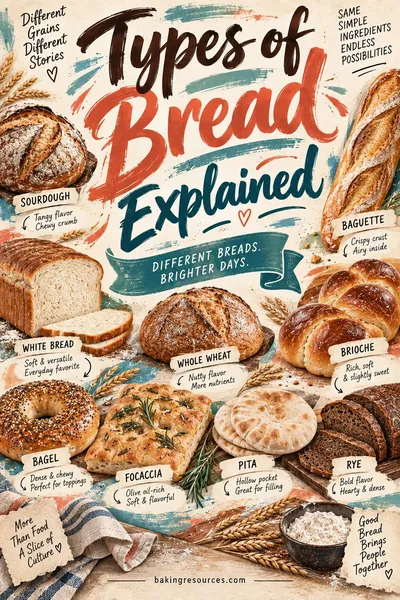 Baking guideTypes of Bread: A Baker's Guide to the Main StylesGet the details →
How hydration changes the dough and the loaf
More water does three things. It makes the dough softer and stickier. It gives the yeast and gluten more room to work, which leads to bigger, more irregular holes. And it creates more steam in the oven, which helps the loaf spring up and gives a thinner, crackly crust.
Less water does the opposite. A lower hydration dough is easier to handle, holds a tight shape, and bakes into a closer, softer crumb. That is what you want for sandwich bread, bagels and rolls, where big holes would let the butter fall right through.
Neither is better. A 62% dough is just right for toast, and an 80% dough is just right for focaccia. Wetter doughs do take more skill, so if you are just starting out, 65 to 70% is a friendly place to learn. Kneading changes too: stiff doughs knead easily on the counter, while wet ones do better with stretch and folds. Our page on how to knead dough covers both methods.
 Baking guideHow to Knead Dough: The Windowpane Test Settles ItCheck the rise times →
Counting starter flour and water
Sourdough starter is part flour and part water, and both count toward hydration. Leave the starter out and your math will be off, sometimes by several percent.
A starter's own hydration tells you the split. A 100% starter is equal weights of flour and water, so 100 g of starter holds 50 g flour and 50 g water. A stiff starter at 50% hydration has half as much water as flour, so 100 g holds about 67 g flour and 33 g water. The general rule:
Flour in starter = starter weight ÷ (1 + starter hydration as a decimal). Water in starter = starter weight minus that flour.
Add those to the main dough before you work out the hydration. The calculator above asks for your starter weight and hydration and does this split for you. For more on feeding and using a firmer starter, see our stiff starter ratio guide, and make sure the starter is active before mixing with the tips on how to tell if sourdough starter is ready.
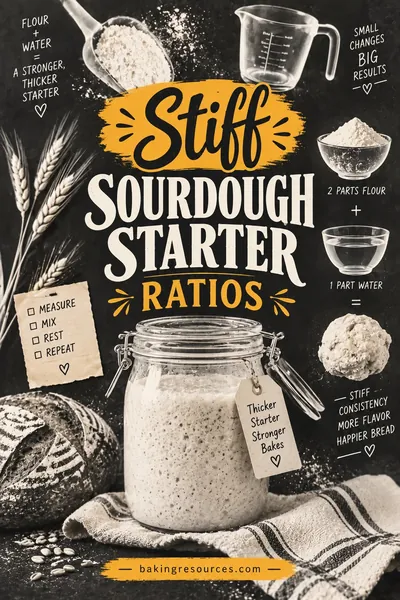 Baking guideStiff Sourdough Starter Ratios: Feeding Chart and MathSee the timing chart →
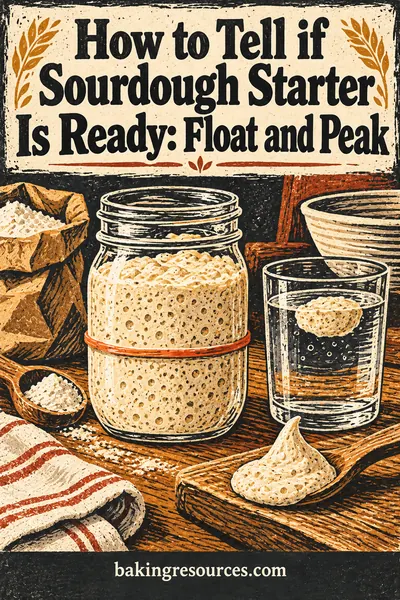 Baking guideHow to Tell if Sourdough Starter Is Ready: Float and PeakRead the dough guide →
Other liquids count too
Water isn't the only thing that hydrates dough. Milk, eggs, butter and honey all carry water, and in enriched breads like dinner rolls and brioche they can make up most of the liquid. Bakers usually count only the water inside them.
| Ingredient | Water content (about) | What 100 g adds |
|---|---|---|
| Whole milk | 87% | 87 g water |
| Buttermilk | 90% | 90 g water |
| Whole eggs | 75% | 75 g water |
| Butter | 16 to 18% | 16 to 18 g water |
| Honey | 17% | 17 g water |
So a dough with 500 g flour, 250 g milk and one 50 g egg has about 218 g of milk water plus about 38 g of egg water, for roughly 256 g total, or about 51%. Enriched doughs feel softer than that number suggests because fat and sugar also loosen the dough, which is why rich doughs often look low on paper.
Salt: 1.8 to 2.2% of the flour
Salt is figured the same way as hydration, as a percentage of the total flour. Most bread uses 1.8 to 2.2%, and 2% is the classic number. For 500 g of flour, that is 10 g of salt.
Go lower and the bread tastes flat and the dough can feel slack, since salt tightens gluten. Go much higher and the bread tastes too salty and the yeast slows down. Remember to include starter flour in the total. Weighing salt is best, since a teaspoon of fine table salt weighs nearly twice as much as a teaspoon of flaky kosher salt; our chart on kosher salt vs table salt has the gram weights.
 Baking guideKosher Salt vs Table Salt: Conversion Chart and GramsRead the guide →
Flour type and how much water it drinks
The same hydration feels different depending on the flour. Higher protein flours build more gluten and absorb more water, so they feel less sticky at the same percentage.
- Bread flour (about 12 to 14% protein) handles high hydration well. See bread flour vs all-purpose for the full comparison.
- All-purpose flour (about 10 to 12% protein) feels wetter. Drop the hydration 2 to 5% when swapping it in for bread flour.
- Whole wheat flour soaks up more water because of the bran. Add about 5 to 10% more water when it makes up a big share of the flour.
- Rye flour absorbs a lot and stays sticky. Rye-heavy breads often run 75% and up.
 Baking guideBread Flour vs All Purpose Flour: What Really ChangesRead it next →
Giving flour time to drink helps too. Resting just the flour and water for 20 to 30 minutes before adding salt and yeast, called an autolyse, makes a wet dough smoother and easier to handle.
 Baking guideWhat Is Autolyse in Bread Baking and Why It WorksSee the chart →
Worked example: a yeast sandwich loaf
Say you want a soft sandwich loaf at 65% hydration with 500 g of bread flour.
- Water: 500 × 0.65 = 325 g of water.
- Salt: 500 × 0.02 = 10 g.
- Yeast: about 1 to 1.5% instant yeast, or 5 to 7 g. One packet is about 7 g; see how much yeast is in a packet.
- Check it: type 500 g flour, 325 g water and 10 g salt into the calculator. It shows 65% hydration and 2% salt.
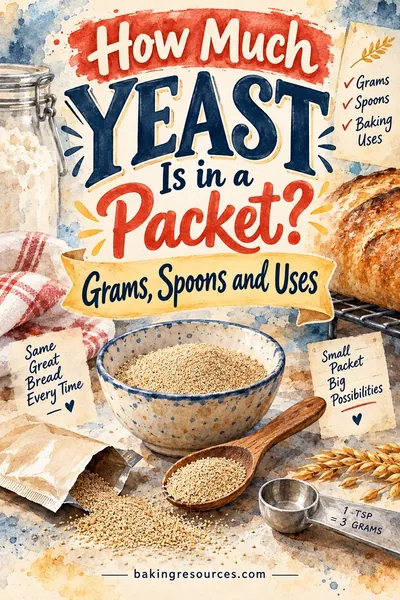 Baking guideHow Much Yeast Is in a Packet? Grams, Spoons and UsesGet the proofing tips →
The dough should feel soft and just slightly tacky after kneading. That is the standard dough band.
Worked example: sourdough with starter
Say a recipe uses 400 g bread flour, 300 g water, 100 g of 100% starter and 9 g salt.
- Split the starter: 100 g at 100% is 50 g flour and 50 g water.
- Total flour: 400 + 50 = 450 g.
- Total water: 300 + 50 = 350 g.
- Hydration: 350 ÷ 450 × 100 = about 77.8%.
- Salt: 9 ÷ 450 × 100 = 2%.
Without counting the starter you would get 300 ÷ 400 = 75%, almost 3 points off. Want exactly 75% instead? You need 450 × 0.75 = 337.5 g of total water. Subtract the 50 g already in the starter and add about 288 g of water. That is what the target mode of the calculator does. Baked in a lidded pot, this loaf gets great oven spring; see how to bake bread in a Dutch oven.
 Baking guideHow to Bake Bread in a Dutch Oven: Temps, Times and TipsShow me how →
Holiday bread and winter weather
Thanksgiving dinner rolls, Christmas morning cinnamon rolls and a big tray of holiday focaccia are some of the most baked breads of the year. Rolls and sweet doughs live at the lower, softer end, 60 to 65% counting the milk and eggs. A festive focaccia topped with rosemary and cranberries does best at 75 to 80%.
Winter also changes how dough behaves. Heated indoor air is dry and flour stored in it can be a little thirstier, so a dough may feel stiffer than usual. Hold back about 5% of the water and add it in only if the dough needs it. Cold kitchens slow rising too, so give the dough more time rather than more yeast.
Troubleshooting hydration
- Dough is too sticky to shape. The hydration is higher than your flour or skill can handle. Drop 3 to 5% next time, use wet hands and a bench scraper, and do stretch and folds. Our guide on why dough is too sticky covers more fixes.
- Loaf spreads flat in the oven. Too wet for a free-form loaf, or not enough strength built. Lower the hydration or bake it in a pan.
- Crumb is tight and dense. Hydration may be too low, or the dough was underproofed. See why bread turns out dense.
- Bread tastes flat. Salt is likely under 1.8%. Weigh it next time.
- Numbers look right but dough feels off. You may have forgotten the starter, or your flour absorbs differently. Adjust by 2 to 3% and take notes.
Questions people ask
How do you calculate bread hydration?
Divide the weight of the water by the weight of the flour, then multiply by 100. For example, 350 g water and 500 g flour is 70% hydration. If you use sourdough starter, add the flour and water inside the starter to the totals first. A 100% starter is half flour and half water by weight.
What is a good hydration for beginners?
Somewhere around 65 to 70% is a friendly place to start. The dough is soft and slightly tacky but still easy to knead and shape by hand, and it bakes into a nice, moderately open crumb. Once that feels comfortable, try going up 2 to 3% at a time to see how the dough and crumb change.
Does sourdough starter count in hydration?
Yes. The starter is flour and water, so both go into the totals. A 100 g starter at 100% hydration adds 50 g flour and 50 g water. Leaving it out can make your hydration number look 2 to 4% lower than it really is, which explains why a dough sometimes feels wetter than the recipe suggests.
Should I use the same hydration with all-purpose flour?
Usually a little less. All-purpose flour has less protein than bread flour, so it absorbs less water and feels stickier at the same percentage. Drop the hydration about 2 to 5% when swapping all-purpose for bread flour. Whole wheat goes the other way and often needs 5 to 10% more water.
How much salt should bread have?
Most bread uses 1.8 to 2.2% salt, based on the total flour weight including starter flour. For 500 g of flour, that is about 10 g of salt. Weigh it rather than measuring with spoons, because table salt and kosher salt weigh very different amounts per teaspoon.
Do milk and eggs count toward hydration?
Bakers usually count the water inside them. Whole milk is about 87% water, and eggs are about 75% water. So 250 g of milk adds roughly 218 g of water to the dough. Enriched doughs also feel softer than their number suggests, because butter and sugar loosen the dough too.