How to Make Oat Flour at Home and Bake With It

Here is how to make oat flour: put rolled oats in a blender or food processor and blend on high for 30 to 60 seconds, until the oats turn into a fine, soft powder with no large flakes left. About 1 1/4 cups of rolled oats makes roughly 1 cup of oat flour, and one cup of homemade oat flour weighs about 90 grams.
That is the whole method, and once you know how to make oat flour you will rarely need to buy it. It takes about a minute, uses one ingredient you probably already have, and gives you a mild, slightly sweet flour that makes muffins tender, pancakes fluffy and cookies pleasantly chewy.
The trickier part is baking with it. Oat flour has no gluten, absorbs liquid differently from wheat flour, and weighs much less per cup. This guide covers the method step by step, which oats to use, weight-per-cup numbers, how to sift and store it, and clear swap rules for muffins, cookies, pancakes, quick breads and yeast breads.
Quick Reference
| Question | Short answer |
|---|---|
| Best oats to use | Old-fashioned rolled oats or quick oats |
| Blend time | 30 to 60 seconds on high, in short bursts |
| Rolled oats needed for 1 cup flour | About 1 1/4 cups |
| Weight of 1 cup oat flour | About 90 grams (spooned and leveled) |
| Weight of 1 cup all-purpose flour | About 120 to 125 grams |
| Swap for all-purpose | Swap by weight, not by cup |
| Storage | Airtight container; cool pantry for weeks, fridge or freezer for longer |
| Gluten-free? | Oats are naturally gluten-free, but use oats labeled gluten-free if that matters |
How to Make Oat Flour Step by Step
What you need
- Rolled oats (old-fashioned or quick)
- A blender, food processor, or spice/coffee grinder for small batches
- A fine-mesh sieve (optional)
- An airtight container
Method
- Measure the oats. Use about 1 1/4 cups of rolled oats for each cup of flour you want. For accuracy, weigh them instead: the weight of oats in equals the weight of flour out.
- Add to the blender. Fill the jar no more than about halfway. Overfilling leaves unground flakes at the top.
- Blend in bursts. Blend on high for 10 to 15 seconds, stop, and let the flour settle. Repeat three or four times. Short bursts keep the motor and the flour from heating up.
- Scrape and check. Scrape down the sides and around the blade. Rub a pinch between your fingers. It should feel soft and powdery, with no whole flakes.
- Sift if you want it finer (optional). Shake the flour through a fine-mesh sieve. Return any larger bits to the blender for another burst.
- Measure again. Homemade oat flour is fluffy right after blending. If your recipe uses cups, stir the flour, spoon it into the cup and level it. Better yet, weigh it.
Blender vs. food processor
| Tool | Result | Notes |
|---|---|---|
| High-speed blender | Very fine, soft flour | Fastest and finest; work in batches |
| Regular blender | Fine flour | Blend a bit longer; shake the jar between bursts |
| Food processor | Slightly coarser flour | Good for larger batches; sift for finer texture |
| Spice or coffee grinder | Very fine | Small batches only; clean well first |
Which Oats to Use
| Oats | Use for oat flour? | Notes |
|---|---|---|
| Old-fashioned rolled oats | Yes, the best choice | Grind easily into fine flour with good flavor |
| Quick oats | Yes | Grind even faster; texture is about the same |
| Instant oats (plain) | Works in a pinch | Very fine; avoid flavored or sweetened packets |
| Steel-cut oats | Not ideal | Hard to grind into fine flour in most blenders; gritty result |
| Oat groats | Not ideal at home | Need a grain mill |
Toasting oats for more flavor
For a nuttier, deeper flavor, spread rolled oats on a sheet pan and toast them at about 325 °F for 8 to 12 minutes, stirring once, until lightly golden and fragrant. Cool completely before grinding. Toasted oat flour is especially good in cookies, crumbles and pancakes.
How Much Oat Flour Weighs Per Cup
Knowing how to make oat flour is only half the job; measuring it is where most oat flour swaps go wrong. Oat flour is lighter and fluffier than all-purpose flour, so a cup of oat flour weighs noticeably less than a cup of wheat flour. If you swap cup for cup, you end up with less flour than the recipe needs, and your batter is too thin.
| Measure | Approximate oat flour weight |
|---|---|
| 1 cup | 90 grams |
| 3/4 cup | 68 grams |
| 2/3 cup | 60 grams |
| 1/2 cup | 45 grams |
| 1/3 cup | 30 grams |
| 1/4 cup | 23 grams |
| 1 tablespoon | 6 grams |
These numbers are for oat flour that is stirred, spooned into the cup and leveled. Homemade flour can be a bit fluffier or denser depending on how fine you grind it, which is exactly why weighing is the most reliable method. For converting any flour between grams and cups, use the grams to cups converter, and the how to measure flour guide shows the spoon-and-level method.
Oats to flour yield
| Rolled oats | Approximate oat flour |
|---|---|
| 1 1/4 cups | 1 cup |
| 2 1/2 cups | 2 cups |
| 3 3/4 cups | 3 cups |
| 5 cups | 4 cups |
How to Swap Oat Flour Into Recipes
Oat flour does not contain gluten, the protein network that gives wheat-based baked goods their stretch and structure. That means it behaves very differently depending on what you are baking. Recipes that rely on tenderness (muffins, pancakes, cookies) welcome oat flour. Recipes that rely on structure (yeast breads, tall layer cakes) need it in smaller amounts.
Swap rules by recipe type
| Baked good | How much oat flour | Tips |
|---|---|---|
| Pancakes and waffles | Up to all of the flour | Swap by weight; rest batter 5 to 10 minutes |
| Muffins | Up to all of the flour | Expect a slightly denser, very tender crumb |
| Quick breads (banana, zucchini) | Up to about half; more with care | Loaves can sink with all oat flour |
| Drop cookies | Up to all of the flour | Chill dough; cookies spread a little more |
| Crumbles and crisps | All of the flour | An easy, foolproof place to start |
| Brownies | Up to all of the flour | Fudgy results; works well |
| Layer cakes | About a quarter | More can make cakes crumbly and flat |
| Yeast breads | About a quarter at most | Needs wheat flour for gluten structure |
How to do a full swap
- Find the flour weight in your recipe. If the recipe lists only cups, figure all-purpose at about 120 to 125 grams per cup.
- Use the same weight of oat flour. For 1 cup (about 125 grams) of all-purpose flour, use about 125 grams of oat flour, which is close to 1 1/3 cups.
- Let the batter rest. Oat flour absorbs liquid more slowly. A 5- to 10-minute rest lets it thicken and gives a better texture.
- Check the thickness. If the batter looks thinner than usual after resting, add a spoonful or two more oat flour.
- Watch the bake. Oat flour baked goods brown a little faster and can feel soft in the center when done. Use a toothpick test rather than only the clock.
How to do a partial swap
For cakes, quick breads and yeast breads, replace part of the flour instead:
- Start by replacing a quarter of the all-purpose flour with oat flour, by weight.
- If you like the result, try a third next time.
- Keep the rest of the recipe the same.
This adds oat flavor and tenderness while keeping enough gluten for structure.
Adding binders for gluten-free baking
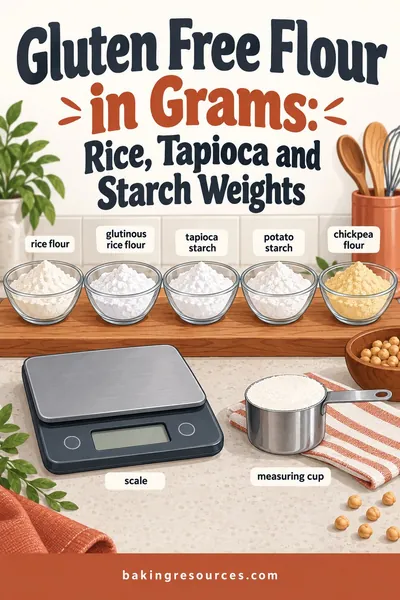
If you use oat flour as the only flour in a gluten-free recipe, eggs do much of the binding work. Some bakers add a little ground flaxseed or psyllium husk to help hold things together in egg-free recipes. For broader gluten-free swap ideas, see the gluten-free baking substitutions guide, and the gluten-free flour in grams chart lists cup weights for other gluten-free flours you might blend with oat flour.
Is Homemade Oat Flour Gluten-Free?
Oats do not contain gluten on their own. However, oats are often grown, harvested and processed alongside wheat, barley and rye, so regular oats can pick up traces of gluten. If you are baking for someone who must avoid gluten, use oats clearly labeled gluten-free and grind them in a clean blender. Some people who avoid gluten also react to oats, so anyone with a medical condition should check with their doctor about whether oats are right for them.
How Oat Flour Compares With Other Flours
Oat flour is one of many flours you can use at home. Here is how it stacks up against a few common ones in everyday baking.
| Flour | Gluten | Flavor | Texture it gives |
|---|---|---|---|
| All-purpose | Yes | Neutral | Balanced structure and tenderness |
| Whole wheat | Yes | Nutty, hearty | Denser, heartier crumb |
| Oat flour | No | Mild, slightly sweet | Tender, moist, a bit dense |
| Almond flour | No | Rich, nutty | Moist, delicate, browns fast |
| Rice flour | No | Neutral | Lighter, can be sandy alone |
The types of flour guide covers each flour in more detail, including protein levels and best uses.
Recipe Ideas for Oat Flour
Oat flour shines in these everyday bakes:
- Banana oat muffins: swap all the flour for oat flour by weight. The bananas keep them moist.
- Fluffy oat pancakes: use all oat flour, rest the batter, and cook on medium heat.
- Chocolate chip oat cookies: replace half or all of the flour; chill the dough at least 30 minutes.
- Fruit crisp topping: combine oat flour, rolled oats, brown sugar, cinnamon and butter.
- Blueberry quick bread: replace half of the flour with oat flour.
- Breakfast bars: oat flour, rolled oats, nut butter and honey make a simple bar.
How to Store Oat Flour
Oats contain natural oils, which means oat flour can turn stale or rancid faster than white flour.
- Pantry: in an airtight container in a cool, dark place, use within a few weeks.
- Fridge: keeps for a few months in an airtight container.
- Freezer: keeps the longest. Let it come to room temperature before baking, and stir it to break up clumps.
- Label the container with the date.
- Smell before using. Oat flour should smell mild and slightly sweet. A bitter, sharp or paint-like smell means it has gone off.
Because it takes only a minute to make, many bakers simply grind what they need each time. For general flour storage tips, see how to store flour.
Common Mistakes to Avoid
Swapping cup for cup. A cup of oat flour weighs much less than a cup of all-purpose. Swap by weight or use about 1 1/3 cups oat flour per cup of all-purpose.
Leaving whole flakes. Unground flakes make baked goods gritty. Blend until powdery and sift if needed.
Overfilling the blender. Work in batches for a fine, even grind.
Skipping the batter rest. Oat flour needs a few minutes to soak up liquid.
Using all oat flour in yeast bread. Without gluten, the loaf will not rise properly. Keep oat flour to about a quarter of the total.
Using steel-cut oats. They rarely grind fine in a home blender.
Overbaking. Oat flour bakes can feel soft when done. Check with a toothpick, and pull them when it comes out with a few moist crumbs. If your muffins come out dry, the why are my muffins dry guide covers other common causes.
FAQ
How to make oat flour without a blender?
A food processor works well, and a spice or coffee grinder works for small batches. Without any appliance, you can pulse oats in a sealed bag with a rolling pin, but the result will be coarse and better suited to crumbles than cakes.
How much oat flour does 1 cup of oats make?
About 1 1/4 cups of rolled oats makes roughly 1 cup of oat flour. By weight, the amounts are the same: 90 grams of oats gives about 90 grams of flour.
Can I replace all-purpose flour with oat flour one to one?
By weight, yes, in muffins, pancakes, cookies and brownies. By volume, no. Use about 1 1/3 cups of oat flour for every cup of all-purpose flour, and rest the batter before baking.
Can I use oat flour in bread?
Yes, in small amounts. Replace up to about a quarter of the wheat flour with oat flour. More than that makes a dense loaf because oat flour has no gluten.
Is homemade oat flour healthier than all-purpose flour?
Oat flour is a whole grain flour, since it is made from the whole oat. Whether it fits a specific diet is a personal question; check with your doctor or a dietitian for advice about your own needs.
How long does homemade oat flour last?
A few weeks in an airtight container in a cool pantry, a few months in the fridge, and longer in the freezer. Smell it before using.
Why are my oat flour cookies spreading?
Oat flour has no gluten, so cookies can spread more. Chill the dough for at least 30 minutes, make sure you used enough flour by weight, and try mixing in some rolled oats for extra body.