
How Many Apples for Apple Pie, by Pie Size and Apple Size

For a standard 9 inch apple pie, you need about 2.5 to 3 pounds of apples, which is 6 to 8 medium apples and makes about 8 cups once peeled and sliced. An 8 inch pie needs about 2 pounds, and a deep-dish pie can take 4 pounds or more. That sounds like a lot, but apples shrink as they bake, so a well-filled pie starts out heaped high.
Apple sizes vary a lot from bag to bag, so counting alone can leave you short. Pick your pie size and your apple size in the calculator below, and it gives you the count, the weight, and the cups of slices to aim for.
Free calculator
Apple pie apple calculator
Pick your pie size and how big your apples are.
More free baking tools



The quick answer by pie size
Here's the full chart. Weight and cups stay the same no matter what size your apples are. Only the count changes, which is why weight is the more reliable number to shop by.
| Pie size | Apples by weight | Sliced | Small apples | Medium apples | Large apples |
|---|---|---|---|---|---|
| 8 inch | 1.75 to 2 lb | About 6 cups | 7 to 8 | 5 to 6 | 4 |
| 9 inch | 2.5 to 3 lb | About 8 cups | 10 to 12 | 6 to 8 | 5 to 6 |
| 10 inch | 3.5 to 4 lb | About 10 cups | 14 to 16 | 9 to 11 | 7 to 8 |
| 9 inch deep-dish | 4 to 4.5 lb | About 12 cups | 16 to 18 | 11 to 12 | 8 to 9 |
These amounts are for a double-crust or crumb-topped pie with a generous, domed filling. Not sure what size your pan really is? Measure across the inside of the rim, and check the depth too. Our pie pan sizes guide shows how much a standard, deep-dish, and tart pan each hold.
 Baking guidePie Pan Sizes: Standard, Deep Dish and Tart Pan GuideGet the measurements →
Why an apple pie needs so many apples
Raw apple slices are full of air pockets and water. In the oven, the slices soften and slump, and they release juice that partly cooks off. A filling that starts an inch or more above the rim usually ends up level with it. That's why recipes call for what looks like far too many apples.
If you use only enough slices to fill the pan level, the top crust bakes into a dome, the apples sink underneath it, and you get a big empty gap when you slice. Piling the apples high is the fix. Pack them in snugly as you go, so there are fewer air pockets for the filling to fall into.
Count or weigh? Why weight wins
"Six apples" can mean almost 2 pounds or well over 3, depending on whether you grabbed small lunchbox apples or big ones. A kitchen scale settles it. Weigh the whole apples before peeling, and use the weights in the chart.
No scale? Use these rough sizes:
- Small: about 2 1/2 inches across, about 4 ounces, roughly 4 to a pound.
- Medium: about 3 inches across, about 6 ounces, roughly 2 1/2 to 3 to a pound.
- Large: about 3 1/2 inches across or bigger, 8 ounces or more, about 2 to a pound.
Most grocery store apples sold loose fall in the medium to large range. Bagged apples tend to be smaller. Our guide on kitchen scale vs measuring cups explains why weighing makes baking so much more predictable.
 Baking guideKitchen Scale vs Measuring Cups: Why Weight WinsSee the chart →
From whole apples to cups of slices
Peeling and coring takes away a good chunk of each apple, usually around a quarter of its weight. Here's what you can expect to end up with after peeling, coring, and cutting into 1/4 inch slices.
| You start with | Sliced, peeled and cored |
|---|---|
| 1 small apple | About 3/4 cup |
| 1 medium apple | About 1 cup |
| 1 large apple | About 1 1/2 cups |
| 1 pound whole apples | About 2 3/4 to 3 cups |
| 3 pounds whole apples | About 8 to 9 cups |
If your recipe lists cups, slice the apples into a large measuring bowl and stop once you hit the number. If you come up short, add one more apple. If you're over by a cup or so, it's fine, just mound the extra on top.
Which apples to use
The best apple pie uses firm apples that hold their shape, and the best flavor comes from mixing tart and sweet. Firm, tart apples like Granny Smith keep their slices intact and give the pie its bright taste. Sweeter, firm apples like Honeycrisp, Braeburn, Jonagold, Pink Lady, and Golden Delicious add sweetness and a softer bite.
A half-and-half mix of tart and sweet is a good starting point. Softer apples, like McIntosh, turn to applesauce on their own. They can be nice as one or two apples mixed in, since they melt into the filling and help it hold together, but don't build a whole pie on them. Red Delicious is better for snacking, since it turns mealy when baked.
Slicing, thickening, and the gap problem
Cut your slices about 1/4 inch thick. Thinner slices pack tightly and cook evenly. Thick chunks leave air pockets and may still be crunchy when the crust is done.
For 8 cups of apples, most recipes use about 1/2 to 3/4 cup sugar and about 1/4 cup flour or 2 to 3 tablespoons cornstarch to thicken the juice. If you're out of cornstarch, our cornstarch substitute guide has swaps that work in fruit fillings. Scale the sugar and thickener along with the apples for bigger or smaller pies. Brown sugar works too, and the brown sugar substitute guide helps if you're out.
 Baking guideCornstarch Substitute: 9 Swaps and When to Use EachFind my swap →
 Baking guideBrown Sugar Substitute: Make Your Own in 30 SecondsGet the swap chart →
Two ways to avoid a gap under the crust
- Let the slices sit. Toss the apples with sugar and spices and let them rest 30 to 60 minutes. Drain off the juice, simmer it down to a syrup, and pour it back over the apples. The slices shrink a little before baking, so they pack tighter.
- Precook the filling. Cook the apples in a wide pan for 5 to 10 minutes, just until they start to soften, then cool them completely before filling the crust. Precooked fillings settle less, so plan on the higher end of the apple range.
Apples for other pie styles
Not every apple pie has two crusts. Here's how the amount shifts for the other styles you might bake this season.
- Crumb-topped or Dutch apple pie. Use the same amount as the chart, though you can stay at the lower end. A crumb topping sits right on the apples and sinks with them, so there's no top crust to leave a gap.
- Lattice-top pie. Use the full amount. Open lattice lets more steam escape, so the filling cooks down a bit more, and a tall mound keeps the lattice looking full.
- Galette. A free-form galette about 10 inches across holds much less, around 1.5 to 2 pounds, or 4 to 5 medium apples. Slice them thin and fan them in a single, overlapping layer or two.
- Hand pies. Each one holds only 2 to 3 tablespoons of finely diced filling. One medium apple gives about 1 cup diced, enough for about 5 or 6 small hand pies.
Whichever style you choose, the same rules apply: firm apples, even slices, and a little more filling than looks right.
Worked example: two 9 inch pies for Thanksgiving
Say you're making two 9 inch double-crust pies for Thanksgiving, and the store has big, loose apples. The chart says 5 to 6 large apples per pie, so 10 to 12 large apples for two pies, or about 5 to 6 pounds in total.
You weigh what's in your bag: 11 apples at 5.5 pounds. That's right in range. You buy two extra in case one is bruised or you come up short on slices. At home, you peel, core, and slice, and end up with about 16 cups, about 8 per pie. You toss each batch with about 2/3 cup sugar and 2 1/2 tablespoons cornstarch, mound the slices high, and add the top crusts.
Now say your sister is bringing a third pie in a 9 inch deep-dish pan and only has small apples from a backyard tree. The calculator says 16 to 18 small apples, about 4 to 4.5 pounds, for about 12 cups. That's a lot of peeling, so she might swap in a few large store apples to cut the work. Mixing sizes is fine. What matters is reaching the weight or the cups, not the count. She'd use about 1 cup of sugar and 1/3 cup flour, a bit more than a regular pie, since there's half again as much fruit.
Common mistakes
- Counting apples without checking their size. Bags of small apples leave pies half full. Go by weight or cups.
- Filling only to the rim. It always shrinks. Mound the filling high.
- Using all soft apples. The filling turns to mush and releases too much juice. Use mostly firm apples.
- Too many apples for a regular pan. A deep-dish amount in a standard pan bubbles over. Bake on a sheet pan just in case.
- Rough handling of the crust. A tall filling tempts you to stretch the top crust, which makes it shrink and toughen. Roll it a little larger instead. Our guide on why pie crust turns tough covers the rest, and cutting butter into flour shows the flaky crust basics.
 Baking guideWhy Is My Pie Crust Tough? Causes and Fixes That WorkFind out why →
 Baking guideHow to Cut Butter Into Flour for Flaky Pastry Every TimeShow me how →
Brush the top crust with an egg wash for a golden shine, and bake on the lower-middle rack so the bottom crust browns. Our guide on which oven rack to use explains why.
 Baking guideWhat Is an Egg Wash? When and How to Brush It OnRead it next →
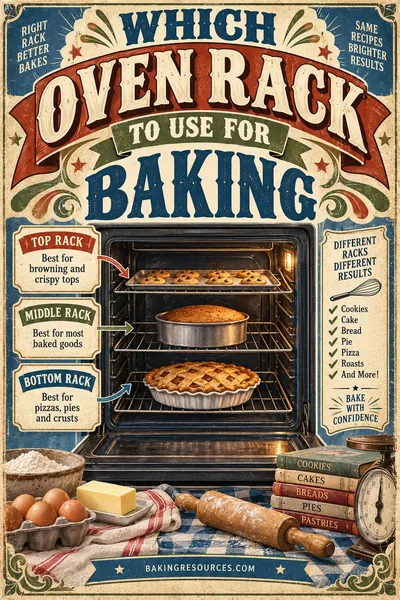 Baking guideWhich Oven Rack to Use for Baking: Top, Middle, LowLearn more →
Planning your Thanksgiving and holiday pies
Apple pie is a holiday favorite, and a little planning keeps the week calm:
- Shop by the pound. Multiply the weight by your number of pies, then buy one or two extra apples.
- Store apples cold. Whole apples keep for weeks in the fridge crisper drawer, so you can shop early.
- Make the crust ahead. Pie dough freezes beautifully. Our guide to freezing pie dough shows how to have discs ready weeks before the big day.
- Slice the morning of. Cut apples brown quickly. Toss them with a little lemon juice if they'll sit for more than a few minutes.
- Use the extras. Leftover apples make great caramel apples for the kids' table. The tips in how to keep caramel from sliding off apples help them turn out neat.
 Baking guideHow to Freeze Pie Dough: Discs, Shells, and ThawingRead the dough guide →
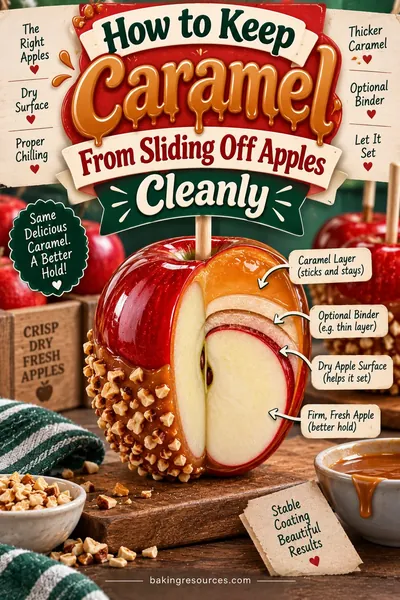 Baking guideHow to Keep Caramel From Sliding Off Apples CleanlyRead the step by step →
Questions people ask
How many apples do I need for a 9 inch apple pie?
A 9 inch pie needs about 2.5 to 3 pounds of apples. That's 6 to 8 medium apples, 5 to 6 large ones, or 10 to 12 small ones. Once peeled, cored, and sliced, you'll have about 8 cups. Mound them high in the crust, since they shrink as they bake.
How many cups of sliced apples are in a pound?
One pound of whole apples gives about 2 3/4 to 3 cups of slices after peeling and coring. Peel and core take away roughly a quarter of the weight. So 3 pounds of whole apples makes about 8 to 9 cups, which is enough for a standard 9 inch pie.
How many apples for a deep-dish apple pie?
A 9 inch deep-dish pie needs about 4 to 4.5 pounds of apples, or about 12 cups sliced. That's 11 to 12 medium apples or 8 to 9 large ones. Bake it on a sheet pan, since a tall filling often bubbles over the edge.
Why is there a gap between my apple pie crust and the filling?
The apples shrank while the top crust set in a dome above them. Fix it by mounding more apples into the pie, slicing them thinner so they pack tightly, or letting the sliced apples sit with sugar for 30 to 60 minutes and draining them first. Precooking the filling briefly also helps.
What are the best apples for apple pie?
Use firm apples that hold their shape. A mix works best: tart Granny Smith for brightness, plus sweeter firm apples like Honeycrisp, Braeburn, Jonagold, Pink Lady, or Golden Delicious. Soft apples like McIntosh turn mushy on their own, so use just one or two mixed in, if any.
How many apples for an 8 inch pie?
An 8 inch pie needs about 1.75 to 2 pounds of apples, which makes about 6 cups sliced. That's 5 to 6 medium apples, about 4 large ones, or 7 to 8 small ones. Scale the sugar and thickener down to about three quarters of a 9 inch recipe.