
Shortening Substitute: What to Use and Exactly How Much

The easiest shortening substitute is butter: use 1 cup plus 2 tablespoons of butter for every 1 cup of shortening. The extra 2 tablespoons make up for the water in butter, since shortening is pure fat and butter is only about 80 percent fat. Lard, solid coconut oil and stick margarine work well too, each with its own small adjustment.
Which swap you pick matters most in pie crust, cutout cookies and frosting, where shortening's high melting point does real work. Pick how much shortening your recipe needs and the fat you have, and the calculator below works out the exact amount for you, with a note on what changes.
Free calculator
Shortening substitute calculator
Pick how much shortening your recipe calls for and the fat you have, and see the exact amount to use.
More free baking tools



What shortening does in a recipe
Vegetable shortening is solid fat made from plant oils. It's 100 percent fat, with no water and no milk solids. It tastes like almost nothing, and it stays solid until it's quite warm, around 115°F to 120°F. Butter, by comparison, starts going soft in a warm kitchen and melts below body temperature.
Those traits explain why recipes call for it. In pie crust, the fat stays in solid bits longer in the oven, so the crust sets around them and turns flaky. In cookies, it melts late, so the dough holds its shape and spreads less. In frosting, it stays firm and bright white even on a warm day. And because there's no water, it makes a tender crumb with less gluten.
Every swap below gives up one or more of those traits, usually in exchange for better flavor. Knowing which trait your recipe needs tells you which swap to pick.
Shortening substitute chart
All amounts replace 1 cup of shortening. Weights are about 190 grams for a cup of shortening, so the swaps aim to match that much fat.
| Swap | Amount for 1 cup shortening | Best for | What changes |
|---|---|---|---|
| Butter | 1 cup + 2 tbsp | Cookies, cakes, pie crust, frosting | Better flavor; more spread, softer frosting |
| Stick margarine (80% fat) | 1 cup + 2 tbsp | Cookies, cakes | Acts like butter; avoid tub spreads |
| Plant-based butter sticks | 1 cup + 2 tbsp | Dairy-free cookies, cakes, crusts | Acts like butter; check the label for about 80% fat |
| Lard | 1 cup minus 1 tbsp | Pie crust, biscuits, tamales | Very flaky; mild savory note |
| Refined coconut oil, solid | 1 cup minus 2 tbsp | Cookies, pie crust (well chilled) | Softens fast in a warm room |
| Ghee | 1 cup minus 2 tbsp | Cookies, quick breads | Nutty, buttery; softer dough |
| Vegetable oil | 1 cup minus 2 tbsp | Recipes that melt the shortening, greasing pans | No good for creaming, flaky crust or frosting |
Butter: the 1 cup plus 2 tablespoons rule
Why you need a little more
Butter is about 80 percent fat and 16 to 18 percent water, with a little milk solids. A cup of butter weighs about 227 grams but holds only around 180 grams of fat. A cup of shortening is about 190 grams of pure fat. Adding 2 tablespoons of butter per cup brings the fat back in line. If you work in sticks, 1 cup plus 2 tablespoons is 2 1/4 sticks, and our butter converter turns that into grams or tablespoons for you.
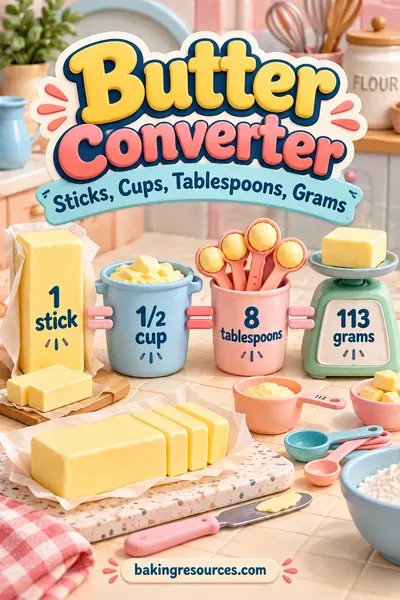 Free toolButter Converter: Sticks, Cups, Tablespoons, GramsUse the free tool →
The water in butter
Those extra tablespoons of butter also bring about 2 to 3 tablespoons of water per cup of shortening replaced. In cakes and cookies that hardly matters. In pie crust it does. Water plus flour makes gluten, and too much gluten makes a tough crust. So when you swap butter into a shortening crust, start with about 2 tablespoons less ice water, then add more a little at a time only if the dough won't hold together. Our guide on why pie crust turns tough explains the rest.
 Baking guideWhy Is My Pie Crust Tough? Causes and Fixes That WorkFix it next time →
Flavor and spread
Butter wins on taste, no contest. But it melts sooner, so cookies spread wider and get crispier edges. Chill the dough for at least 30 minutes before baking to slow that down. If you want to know why, our page on stopping cookies from spreading covers the levers. If your recipe uses salted butter, leave out about 1/4 teaspoon of the recipe's salt per stick.
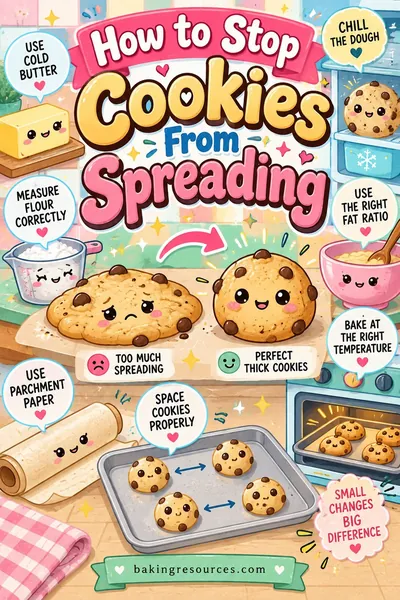 Baking guideHow to Stop Cookies From Spreading: 7 Dough LeversSee how it's done →
Lard: the flakiest swap for pie crust
Lard is rendered pork fat. Like shortening, it's almost 100 percent fat, so the swap is close to 1 for 1. Lard is a little denser, so use 1 cup minus 1 tablespoon for each cup of shortening. Before shortening was invented, lard was the standard fat for pie crust and biscuits, and it still makes some of the flakiest crusts you can get.
Look for "leaf lard" or a mild, white, freshly rendered lard if you can find it. It has the least pork flavor and is lovely in both sweet and savory pies. Shelf-stable blocks work too, with a slightly stronger taste. Lard isn't vegetarian, so skip it when baking for someone who avoids meat.
Coconut oil and ghee
Refined coconut oil
Solid coconut oil can replace shortening in cookies and pie crust. Use refined coconut oil if you don't want a coconut taste. It's a bit denser than shortening, so 1 cup minus 2 tablespoons replaces a full cup. The catch is its low melting point, about 76°F. In a warm kitchen it turns soft or liquid, so measure it solid, keep the dough cold, and chill pie dough well before rolling. It makes cookies a little crisper and pie crust tender but less layered.
Ghee
Ghee is butter with the water and milk solids cooked off, so it's nearly pure fat. Use 1 cup minus 2 tablespoons per cup of shortening. It's soft at room temperature, so it's better in cookies and quick breads than in flaky crusts. It brings a toasty, nutty butter flavor.
Vegetable oil: only when the shortening gets melted
Some recipes melt the shortening first, like certain brownies, muffins, quick breads and old-fashioned cakes. In those, liquid oil is an easy swap. Use 1 cup minus 2 tablespoons of a neutral oil like canola or vegetable oil. It's the same idea for greasing pans and for frying.
Don't use oil when the recipe creams shortening with sugar, cuts it into flour for a crust, or whips it into frosting. Those methods depend on the fat being solid. Creaming traps air in solid fat, which is what lifts a cake. You can read how that works in our guide on creaming butter and sugar. Liquid oil can't hold that air, so you get a dense, greasy bake.
 Baking guideHow to Cream Butter and Sugar: 3 to 5 Minutes, ExplainedLearn the method →
Pie crust vs cookies vs frosting
| Recipe | Best swap | How to handle it |
|---|---|---|
| Pie crust | Lard, or half butter and half lard | Keep fat cold; use less ice water with butter |
| Biscuits | Butter or lard | Grate frozen butter into the flour |
| Drop cookies | Butter or stick margarine | Chill the dough 30 minutes or more |
| Cutout cookies | Butter | Chill dough, then chill cut shapes 10 minutes |
| Decorator frosting | Butter, or half butter and half shortening if you have a little | Keep the cake cool; add powdered sugar to stiffen |
| Melted-fat cakes, brownies | Vegetable oil | Use 1 cup minus 2 tbsp per cup |
For crusts, the method matters as much as the fat. Our guide on cutting butter into flour shows how big the fat pieces should be. For frosting, butter makes a softer, creamier result that tastes far better but holds less in heat. Our guide on making buttercream covers the main styles.
 Baking guideHow to Cut Butter Into Flour for Flaky Pastry Every TimeRead the step by step →
 Baking guideHow to Make Buttercream: The 5 Types and When to Use EachShow me how →
Worked example: a Thanksgiving pie crust with butter
Say your family pie crust uses 2 1/2 cups of flour, 1 cup of shortening and 6 to 8 tablespoons of ice water, and you only have butter.
- Do the fat math. 1 cup of shortening becomes 1 cup plus 2 tablespoons of butter, or 2 1/4 sticks.
- Keep it cold. Cut the butter into cubes and freeze them for 15 minutes. Butter softens faster than shortening, so speed helps.
- Cut back the water. Start with 4 tablespoons of ice water instead of 6. Add more 1 tablespoon at a time only if the dough crumbles when you squeeze it.
- Rest the dough. Chill the discs at least 1 hour. You can make them days ahead, and our guide on freezing pie dough shows how.
- Bake hot. A hot oven sets the crust before the butter melts out. For custard pies like pumpkin, our blind baking guide keeps the bottom crisp.
 Baking guideHow to Freeze Pie Dough: Discs, Shells, and ThawingCheck the rise times →
 Baking guideHow to Blind Bake a Pie Crust Without a Soggy BottomGet the details →
The crust will brown a little deeper and taste richer than the shortening version, with slightly fewer, bigger flakes.
Christmas cookies and holiday frosting
Holiday baking is where shortening shines, so it's worth planning the swap. For sugar cookie cutouts, butter dough spreads more and blurs the edges of stars and trees. Chill the dough well, roll it cold, and pop the cut shapes in the fridge or freezer for 10 minutes before baking. Our guide on how long to chill sugar cookie dough has the timing.
 Baking guideHow Long to Chill Sugar Cookie Dough Before RollingSee the timing chart →
For frosting on a cake that will sit out at a warm party, all-butter frosting can droop. Keep the cake in a cool spot until serving, and add a little more powdered sugar for a stiffer frosting. Our tips on keeping buttercream from melting help a lot here. Baking dairy-free for the holidays? Plant-based butter sticks work 1 cup plus 2 tablespoons for each cup of shortening, and our dairy-free baking substitutions page covers the milk and cream too.
 Baking guideHow to Keep Buttercream from Melting at Outdoor PartiesLearn more →
Mistakes and quick fixes
- Cookies spread into one big sheet. Butter or coconut oil melted too soon. Chill the dough longer and bake on a cool pan.
- Pie crust is tough. Too much water came in with the butter, or the dough was worked too long. Use less ice water next time.
- Pie crust is greasy and crumbly. The fat got too warm before baking. Chill everything, including the flour and bowl.
- Frosting is soft and slides. All-butter frosting needs a cooler room. Chill the frosted cake for 20 minutes to firm it up.
- Using tub margarine or spreads. They're high in water and make thin dough and soggy crusts. Use sticks with about 80 percent fat.
- Swapping oil into a creamed recipe. You lose the trapped air and get a dense cake. Use solid fat whenever the recipe says "cream."
Questions people ask
Can I use butter instead of shortening?
Yes. Use 1 cup plus 2 tablespoons of butter for every cup of shortening, because butter is about 80 percent fat and shortening is pure fat. Expect better flavor, more spread in cookies and a slightly softer frosting. In pie crust, cut back the ice water by about 2 tablespoons to make up for the water in the butter.
What is the best shortening substitute for pie crust?
Lard is the closest match, using 1 cup minus 1 tablespoon per cup of shortening, and it makes a very flaky crust. Butter is the most popular swap and gives the best flavor, with slightly bigger, fewer flakes. Many bakers like a mix of half butter and half lard for both flavor and flakiness.
Can I use oil instead of shortening?
Only when the recipe melts the shortening, such as some brownies, muffins and quick breads, or for greasing pans and frying. Use 1 cup minus 2 tablespoons of oil per cup. Oil does not work when the recipe creams the fat with sugar, cuts it into flour or whips it into frosting, because those methods need solid fat.
Is coconut oil a good substitute for shortening?
Refined coconut oil works well in cookies and pie crust if you keep it cold. Use 1 cup minus 2 tablespoons for each cup of shortening, measured while solid. It melts at about 76 degrees Fahrenheit, so dough softens quickly in a warm kitchen. Unrefined coconut oil works the same way but adds a coconut taste.
Why did my cookies spread more after swapping out shortening?
Shortening stays solid until it is fairly warm, so cookie dough holds its shape in the oven. Butter, margarine and coconut oil melt sooner, so the dough spreads before it sets. Chill the dough for at least 30 minutes, scoop it cold, and bake on a cool baking sheet to keep cookies thicker.
Can I use butter instead of shortening in frosting?
Yes, and it tastes much better. Use 1 cup plus 2 tablespoons of butter per cup of shortening, and expect a softer, creamier, ivory frosting. It holds less well in heat, so keep the frosted cake cool and add a little extra powdered sugar if you need stiffer frosting for piping details.