Pastry Flour Substitute: How to Hit 9 Percent Protein at Home

The working pastry flour substitute is 2 parts all-purpose flour to 1 part cake flour, measured by weight. For 1 cup of pastry flour, that is 80 g of all-purpose plus 40 g of cake flour, whisked or sifted together. By volume it comes out to 2/3 cup all-purpose plus 1/3 cup cake flour, which is close enough for most recipes.
Pastry flour exists to sit in a narrow band, roughly 8 to 9 percent protein. All-purpose is too strong for it, cake flour is too weak, and blending the two is the only pantry route that lands in the middle on purpose rather than by accident.
Before you blend anything, check the gram weights: our free ingredient weight chart has the per-cup numbers for every flour on this page, and blending by volume is where these swaps drift.
Updated September 2026
What you are actually aiming at
Pastry flour is milled from soft wheat and ground slightly coarser than cake flour. Around 8 to 9 percent protein, it makes just enough gluten to hold a fluted pie rim upright and not enough to turn that rim chewy. That is the entire job.
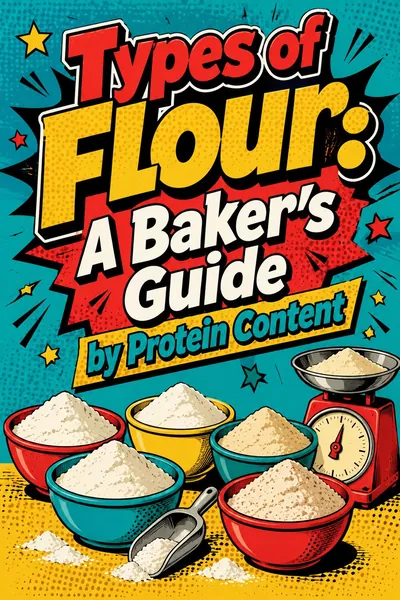
All-purpose runs about 10 to 12 percent, and the spread inside that range matters more than the label suggests. Cake flour runs 7 to 9 percent and is usually chlorinated, which changes how it drinks liquid on top of the protein difference. The full protein ranking for every flour on the shelf is in our guide to types of flour, and there is no point repeating it here.
What you need for a substitute is one number and one habit. The number is your all-purpose flour's protein content, which you can work out from the nutrition panel by dividing grams of protein by the serving size in grams. The habit is weighing, because every blend on this page is a ratio and ratios do not survive a scoop.
Pastry flour substitute option 1: the 2 to 1 blend
Two parts all-purpose, one part cake flour, by weight.
| Pastry flour needed | All-purpose | Cake flour |
|---|---|---|
| 1 cup (120 g) | 80 g | 40 g |
| 1 1/2 cups (180 g) | 120 g | 60 g |
| 2 cups (240 g) | 160 g | 80 g |
| 3 cups (360 g) | 240 g | 120 g |
| 4 cups (480 g) | 320 g | 160 g |
| Any amount | 2/3 of the total weight | 1/3 of the total weight |
Whisk the two together thoroughly, or sift them once, before you measure out what the recipe needs. Cake flour is milled much finer than all-purpose and it does not distribute on its own.
Here is the math, so you know what you actually made. Take a national-brand all-purpose at about 10.5 percent protein and a standard cake flour at about 7 percent. Two thirds of 10.5 is 7.0, and one third of 7 is 2.33. Add them and the blend sits at about 9.3 percent protein, right at the top of pastry flour's range.
That is the honest answer, and it is a good one. You started at 10.5 and landed at 9.3, which is a real, measurable drop in gluten potential, and in a pie crust or a biscuit it is exactly the difference between tender and tough.
The caveat is your all-purpose brand. King Arthur all-purpose runs about 11.7 percent. Run the same math and the blend lands near 10.1 percent, which is not pastry flour, it is slightly softened all-purpose. If your bag is a high-protein national brand, shift the ratio to half all-purpose and half cake flour, which brings 11.7 percent down to about 9.3 and puts you back where you wanted to be.
So the rule is: 2 to 1 with a 10 to 10.5 percent all-purpose, 1 to 1 with an 11.5 percent or higher one. Read the panel once, write the number on the bag with a marker, and you never have to think about it again.
Why not go softer still? Because pastry flour is not cake flour and the extra protein is load-bearing. A pie crust made from a half-and-half blend of a weak all-purpose and cake flour can be too fragile to lift into the pan in one piece. Structure is part of the specification here, not an unwanted side effect.
Pastry flour substitute option 2: all-purpose plus cornstarch
The other pantry route swaps starch in for some of the flour's protein. Our cake flour substitute guide owns that method in full, including the sifting step that decides whether it works, so use that page for the technique.
What is worth saying here is the part that page's own arithmetic quietly proves: the cornstarch trick lands in pastry flour territory, not cake flour territory. Pulling 2 tablespoons of all-purpose out of a cup and putting 2 tablespoons of cornstarch back takes an 11 percent flour down to about 9.5 percent. That is a hair above the pastry range and well above the 7 to 8 percent a real cake flour hits.
Which makes it a very good pastry flour substitute and a merely acceptable cake flour substitute.
Two practical notes if you take this route:
- Use the full 2 tablespoons per cup, not 1. A single tablespoon only drops an 11 percent flour to about 10.3 percent, which is not enough to change anything you can taste.
- Sift at least twice. Cornstarch clings and clumps, and undispersed pockets bake into chalky, slightly gummy spots. This matters more in a thin pie crust than it does in a cake, because there is less around it to hide in.
The blend in option 1 is still the better match of the two, because cake flour brings a finer particle size and, in most US brands, chlorine-treated starch that absorbs liquid faster. Cornstarch dilutes protein and nothing else. Use the cornstarch route when cake flour is the thing you do not have.
Pastry flour substitute option 3: check your all-purpose first
There is a real chance you already own pastry flour and the bag does not say so.
Southern all-purpose flours are milled from soft red winter wheat and run about 8 to 9 percent protein. White Lily and Martha White are the ones people name. That is not close to pastry flour, that is pastry flour, sold as all-purpose because Southern baking is built around biscuits and the local flour was always the soft kind.
If a Southern brand is what you have, use it straight, one for one, wherever a recipe asks for pastry flour. No blending, no cornstarch, no adjustment.
This cuts both ways, and the reverse is the more common problem. A Southern biscuit recipe made with a national or a high-protein all-purpose has just gained two to three percentage points of protein without a single other change, which is why those recipes travel so badly. If your biscuits come out tough and short and you have been blaming your hands, blame the bag first. Our page on bread flour vs all purpose walks through what happens at the other end of the protein scale, and the mechanism is the same in both directions.
A related label note: many Southern brands are sold as self-rising, which is the same soft wheat with baking powder and salt already in it. That is not a pastry flour substitute unless you subtract the recipe's own leavening and salt, and our guide to self-rising flour has the exact amounts.
Whole wheat pastry flour, and what replaces it
Whole wheat pastry flour is a different product from both of the above. It is whole grain flour milled from soft white wheat rather than hard red, so it keeps the bran and germ but starts from a low-protein wheat. It typically tests around 9 to 10 percent protein.
The bran is the complication. Bran particles physically cut through developing gluten strands, so whole wheat pastry flour behaves weaker than its protein number suggests, and it also drinks noticeably more water than white flour does.
To substitute for whole wheat pastry flour:
- Half regular whole wheat flour and half cake flour, by weight. The whole wheat brings the bran and the flavor, the cake flour pulls the protein back down. This is the closest match.
- Half regular whole wheat and half all-purpose if you have no cake flour. Slightly stronger, still workable in muffins and quick breads.
- White whole wheat flour on its own, accepting a firmer result. It is milled from hard white wheat, so the flavor is mild but the protein is high.
In every case, add liquid. Start with an extra tablespoon per cup of flour and give the batter or dough fifteen minutes to hydrate before you judge it, because bran keeps absorbing water after mixing.
To substitute white pastry flour for whole wheat pastry flour, swap one for one and expect a lighter, milder, slightly less filling result. Nothing breaks. You just lose the nutty flavor and the fiber.
What each substitute does in the four bakes that matter
Pastry flour shows up in four recipes more than anywhere else. Here is what each swap does to each one.
| Bake | 2 to 1 blend | AP plus cornstarch | Straight all-purpose | Straight cake flour |
|---|---|---|---|---|
| Pie crust | Tender, flaky, holds a fluted edge | Tender, slightly shorter and sandier | Reliable, can turn chewy if overworked | Too fragile, tears when lifted |
| Biscuits | Tall, soft, cottony pull | Soft, a little more crumbly | Shorter and tougher unless handled fast | Slumps, weak sides, pale |
| Scones | Tender crumb, clean rise | Tender, slightly drier bite | Dense and bready if overmixed | Spreads outward, poor definition |
| Tender cookies | Soft, cakey, minimal spread | Soft with a shorter, sandier snap | Chewier, more spread | Sandy, spreads badly, greasy edges |
Pie crust
Protein is your ceiling for toughness before a drop of water goes in, and pastry flour raises that ceiling by lowering the protein. The 2 to 1 blend is the best home substitute for exactly this bake, because it keeps enough strength to lift a rolled sheet into the pan without cracking.
Two things change with a softer flour. It absorbs less water than all-purpose, so hold back about a tablespoon of your ice water per cup of flour and add it only if the dough will not come together. And it needs less rest, though rest still helps. Our guide to why pie crust turns tough covers the handling side, which outranks flour choice on most days.
Straight cake flour is the trap here. People assume softer is always better for crust and end up with a dough that shreds on the counter.
Biscuits
This is the bake that made pastry flour famous, and the one where the substitution shows up most clearly.
A soft flour lets a biscuit rise tall and stay cottony inside, because the gluten web is weak enough to be pushed open by steam rather than holding the dough down. The 2 to 1 blend does this well. So does a Southern all-purpose used straight.
The other half of a biscuit is the butter, and no flour substitution rescues warm butter. Keep it under 40°F, cut it in fast, and stop while the pieces are still visible. Our guide to cutting butter into flour has the methods.
Scones
Scones are more forgiving than biscuits because the dough is richer and usually contains egg, which brings its own structure. All three substitutes work.
The reason to soften your flour at all here is insurance against overmixing. A 9 percent flour simply cannot develop as much gluten as an 11 percent one in the same number of stirs, so the margin for error widens. If your scones have been coming out flat rather than tough, flour is probably not your problem, and our page on why scones come out flat covers the leavening and butter temperature causes.
Tender cookies
Sugar cookies, shortbread, snickerdoodles, and anything meant to be soft rather than chewy all benefit from a lower-protein flour.
The cornstarch route is arguably better than the blend for cookies specifically, because the extra starch gives a shorter, sandier snap that reads as expensive in a shortbread. For a soft, cakey cookie, the 2 to 1 blend gives a cleaner crumb.
Do not use straight cake flour in a drop cookie. There is not enough protein to hold the dough together against melting butter, and the cookies spread into thin, greasy discs.
Using pastry flour where the recipe calls for all-purpose
The reverse question comes up as soon as someone buys a bag and wonders what else to do with it.
Swap it 1:1 and expect a softer, more tender result. That is fine and often an improvement in muffins, quick breads, pancakes, waffles, crepes, tender cakes, pie crust, biscuits, scones, shortbread, and soft cookies.
Adjust the liquid slightly. A softer flour absorbs a few percent less water than all-purpose. If the batter looks looser than usual, that is why. Hold back a tablespoon of liquid per cup of flour on the first attempt.
Do not use it for these:
- Yeast bread of any kind. There is not enough protein to build a gluten network that holds gas through a long rise. The loaf comes out squat, crumbly, and unable to keep its shape.
- Pizza dough. Same reason, plus the dough tears when you stretch it.
- Chewy cookies. Chew is gluten. Removing protein removes the thing you wanted.
- Popovers and choux. Both depend on a strong protein structure setting around a big steam cavity.
- Anything with a lot of mix-ins by weight. Heavy fruit, nuts, and chocolate need structure to stay suspended, and a weak flour lets them sink.
If you are halfway through a bread recipe with only pastry flour in the house, the fix is vital wheat gluten rather than a different blend. That method is covered on our bread flour vs all purpose page.
Weigh it, or none of the ratios hold
Every blend on this page is a proportion, and proportions are the thing volume measuring destroys.
A cup of all-purpose flour weighs 125 g spooned and leveled, and about 145 g if you scoop the cup straight into the bag. That is a 16 percent swing on a single ingredient. Now build a two-ingredient blend where one component is scooped and the other is spooned, and the ratio you carefully chose is no longer the ratio in the bowl.
| Flour | Grams per cup |
|---|---|
| Cake flour | 114 g |
| Pastry flour | About 120 g, though finely milled brands scoop lighter |
| All-purpose, spoon and level | 125 g |
| All-purpose, scooped | 145 g |
| Cornstarch | 128 g, or about 8 g per tablespoon |
| Whole wheat | 120 g |
Weighing also makes the blends trivial to scale. Two thirds and one third of a total weight is arithmetic you can do in your head, and the same numbers work for 120 g or for 1,200 g. Our ingredient weight chart has the full list, and how to measure flour covers the spoon and level method for the days when the scale battery is dead.
Worked example: a double pie crust and a batch of biscuits
The crust. A standard double crust for a 9-inch pie calls for 2 1/2 cups of pastry flour, which is 300 g.
- Weigh 200 g of all-purpose flour, which is two thirds of 300.
- Weigh 100 g of cake flour, the remaining third.
- Whisk them together for a full 30 seconds, or sift them once.
- Proceed with the recipe as written, but hold back 2 tablespoons of the ice water and add it only if the dough refuses to come together.
Protein check: 200 g at 10.5 percent is 21 g, plus 100 g at 7 percent is 7 g. That is 28 g of protein across 300 g of flour, or 9.3 percent. If your all-purpose is King Arthur at 11.7 percent, use 150 g of each instead, which lands at 9.35 percent.
The biscuits. A buttermilk biscuit recipe calls for 2 cups of pastry flour, 240 g, with 1 tablespoon of baking powder, 1 teaspoon of salt, 8 tablespoons of cold butter, and 3/4 cup of buttermilk.
- With the 2 to 1 blend: 160 g all-purpose plus 80 g cake flour. This is the closest result to the real thing.
- With the cornstarch route: 240 g of all-purpose, remove 4 tablespoons, which is about 30 g, and add 32 g of cornstarch. Sift three times. Slightly more crumbly, still very good.
- With a Southern all-purpose: 240 g straight from the bag, nothing added.
- With a national all-purpose and nothing else: 240 g straight, work the dough as little as possible, and accept a shorter, firmer biscuit.
In all four versions, the butter temperature and the number of times you fold the dough will move the result more than the flour choice does. Flour sets the ceiling. Technique decides how close you get to it.
Troubleshooting the swap
| What happened | Why | Fix |
|---|---|---|
| Crust tore lifting it into the pan | Blend was too soft, or too much cake flour | Go back to 2 parts all-purpose, 1 part cake |
| Crust came out chewy anyway | High-protein all-purpose, or overworked dough | Shift to a 1 to 1 blend and handle the dough less |
| Biscuits were short and tough | National all-purpose used straight in a Southern recipe | Blend down to about 9 percent protein |
| Dough was wetter than expected | Soft flour absorbs less liquid | Hold back 1 tbsp of liquid per cup of flour |
| Chalky white specks in a baked crust | Cornstarch not sifted enough | Sift the flour and starch together three times |
| Whole wheat pastry bake came out dry | Bran kept absorbing water after mixing | Add 1 tbsp liquid per cup and rest the dough 15 minutes |
| Yeast loaf came out squat and crumbly | Pastry flour used in bread | Use bread or all-purpose flour, or add vital wheat gluten |
| Cookies spread into greasy discs | Straight cake flour used instead of a blend | Use the 2 to 1 blend or plain all-purpose |
Frequently asked questions
What is the best pastry flour substitute?
Two parts all-purpose flour to one part cake flour, measured by weight. For 1 cup of pastry flour that is 80 g of all-purpose plus 40 g of cake flour, whisked together. With a standard 10.5 percent all-purpose the blend lands near 9.3 percent protein, which is the top of pastry flour's own range.
Can I just use all-purpose flour instead of pastry flour?
Yes, one for one, and most bakes will be acceptable. The result is firmer and chewier, and the risk of a tough pie crust or a short biscuit goes up because there is more protein available to form gluten. Handle the dough as little as possible and it is a fair trade in a hurry.
How much cornstarch do I add to all-purpose to make pastry flour?
Remove 2 tablespoons of all-purpose from each cup and add 2 tablespoons of cornstarch in their place, then sift at least twice. That takes an 11 percent flour to about 9.5 percent. One tablespoon per cup is not enough to make a difference you can taste.
Is pastry flour the same as cake flour?
No. Cake flour is 7 to 9 percent protein, ground finer, and usually chlorinated, which makes it absorb liquid faster. Pastry flour is 8 to 9 percent, ground slightly coarser, and normally unbleached. The extra protein in pastry flour is what lets a pie crust hold its shape, so the two are not interchangeable in crusts.
Can I use pastry flour instead of all-purpose flour?
In muffins, quick breads, pancakes, tender cakes, crusts, biscuits, scones, and soft cookies, yes, at a 1:1 swap, and hold back about a tablespoon of liquid per cup. Do not use it in yeast bread, pizza dough, popovers, choux, or anything meant to be chewy, because there is not enough protein to build the structure those need.
What can I use instead of whole wheat pastry flour?
Half regular whole wheat flour and half cake flour, by weight, is the closest match. Half whole wheat and half all-purpose works if cake flour is not around. Add about a tablespoon of extra liquid per cup either way, and rest the batter fifteen minutes so the bran finishes absorbing water.
Is White Lily flour the same as pastry flour?
Effectively yes for baking purposes. Southern brands like White Lily and Martha White are milled from soft red winter wheat and run about 8 to 9 percent protein, which is pastry flour's range even though the bag says all-purpose. Use them one for one wherever a recipe calls for pastry flour.
How many grams is a cup of pastry flour?
About 120 g, though the number moves with how finely a brand mills and whether the flour is sold pre-sifted, so some scoop as light as 106 g. All-purpose is 125 g spooned and leveled, cake flour is 114 g, and cornstarch is 128 g. Weighing is the only way a two-flour blend stays at the ratio you chose.
Related guides
- Types of Flour for the full protein ranking behind every number here
- Cake Flour Substitute for the cornstarch method and the sifting step it depends on
- Bread Flour vs All Purpose for what happens at the strong end of the scale
- Why Is My Pie Crust Tough for the handling side of a tender crust
- How to Measure Flour for the days without a scale
- Ingredient Weight Chart for gram weights on every flour above