
How Much Is a Pinch? Pinch, Dash, Smidgen and Drop Explained

A pinch is about 1/16 teaspoon by the most common definition, which works out to roughly 0.4 grams of table salt. A dash is twice that, 1/8 teaspoon, and a smidgen is half a pinch, 1/32 teaspoon. Those numbers come from the mini measuring spoon sets sold in most kitchen stores, and they are the closest thing these old kitchen words have to an official size.
Real pinches vary, though. A two-finger pinch of fine salt is small, a three-finger pinch of flaky kosher salt is bigger, and older cookbooks were never exact in the first place. Pick the measure and the ingredient in the calculator below and it gives you the teaspoon amount and the weight in grams.
Free calculator
Pinch, dash and smidgen calculator
Pick the measure your recipe uses and the ingredient to see it in teaspoons and grams.
More free baking tools



Pinch, dash, smidgen and drop at a glance
Here are the small measures you will run into in recipes, from smallest to largest, using the sizes printed on most mini measuring spoon sets. The mL column is handy for liquids. One US teaspoon is about 4.9 mL.
| Measure | In teaspoons | In mL (liquids) | What it looks like |
|---|---|---|---|
| Drop | About 1/100 tsp (spoon sets that have one call it 1/64 tsp) | About 0.05 mL | One drop from a dropper or bottle tip |
| Smidgen | 1/32 tsp | About 0.15 mL | Half a pinch; a few grains of salt between thumb and one finger |
| Pinch | 1/16 tsp | About 0.3 mL | What you lift between your thumb and one or two fingers |
| Dash | 1/8 tsp | About 0.6 mL | A quick shake from a shaker, or two pinches |
| Tad | 1/4 tsp | About 1.2 mL | A level 1/4 teaspoon |
The pattern is easy to remember because each step doubles: 2 smidgens make a pinch, 2 pinches make a dash, and 2 dashes make a tad, which is a plain 1/4 teaspoon. That means 16 pinches fill a full teaspoon and 48 pinches fill a tablespoon. If you ever need to convert bigger spoon amounts, our cups to tablespoons converter picks up where this chart stops.
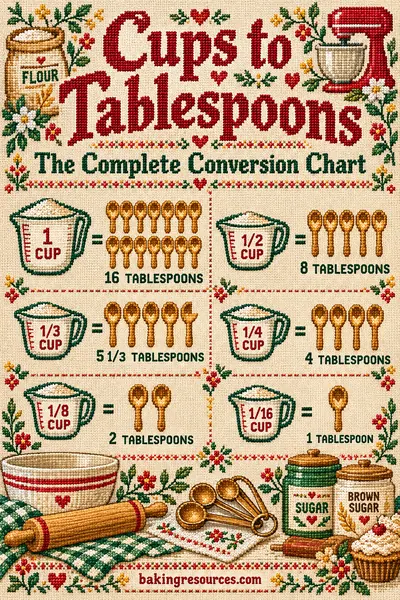 Free toolCups to Tablespoons Converter (Plus Halving Chart)Work out my amount →
Where these definitions come from, and why they vary
Pinch, dash and smidgen are much older than measuring spoons. For most of cooking history they simply meant "a little bit," and the cook decided how little. Nobody wrote down an official size, and no US government standard defines them the way a teaspoon or cup is defined.
The numbers most people use today come from mini measuring spoon sets, which started labeling tiny spoons with these old names. Most sets agree on the big three:
- Dash: 1/8 teaspoon
- Pinch: 1/16 teaspoon
- Smidgen: 1/32 teaspoon
Some sets add a "tad" at 1/4 teaspoon, and a few include a "drop" spoon marked 1/64 teaspoon. Those extras are less consistent from brand to brand, so treat them as nice to know rather than rules.
Older cookbooks are looser still. Some describe a pinch as "less than 1/8 teaspoon," and some describe a dash of liquid as "a few drops" or "a quick shake." So if you are cooking from a family recipe card, the writer probably meant whatever their own fingers picked up. The good news is that for salt and spices at these tiny sizes, the difference between 1/16 and 1/8 teaspoon rarely ruins anything. It just nudges the flavor.
Pinch, dash and smidgen in grams
Volume is only half the story. The same tiny spoon holds very different weights depending on what is in it. Fine table salt packs tightly, flaky kosher salt is full of air, and ground spices are light and fluffy. These weights use about 6 g per teaspoon for table salt, 5 g for Morton kosher, 3 g for Diamond Crystal kosher, about 2.5 g for most ground spices and 4.2 g for granulated sugar.
| Ingredient | Smidgen (1/32 tsp) | Pinch (1/16 tsp) | Dash (1/8 tsp) | Tad (1/4 tsp) |
|---|---|---|---|---|
| Table salt or fine sea salt | About 0.2 g | About 0.4 g | About 0.8 g | About 1.5 g |
| Morton kosher salt | About 0.2 g | About 0.3 g | About 0.6 g | About 1.3 g |
| Diamond Crystal kosher salt | About 0.1 g | About 0.2 g | About 0.4 g | About 0.8 g |
| Ground spice (cinnamon, nutmeg, cayenne) | About 0.1 g | About 0.2 g | About 0.3 g | About 0.6 g |
| Granulated sugar | About 0.1 g | About 0.3 g | About 0.5 g | About 1.1 g |
| Water, milk, juice | About 0.15 g (0.15 mL) | About 0.3 g (0.3 mL) | About 0.6 g (0.6 mL) | About 1.2 g (1.2 mL) |
Two things jump out. First, a pinch of table salt carries about twice the salt of a pinch of Diamond Crystal kosher salt, because Diamond Crystal crystals are hollow flakes. That matters far more in teaspoon amounts than in pinches, and our guide to kosher salt vs table salt walks through the full swap. Second, almost everything in this table weighs less than a gram. Most home kitchen scales read in 1 gram steps, so they can't measure a pinch at all. For anything under about 1/4 teaspoon, a measuring spoon is more accurate than a scale. The ingredient weight chart has teaspoon weights for leaveners and flavorings too.
 Baking guideKosher Salt vs Table Salt: Conversion Chart and GramsGet the details →
 Free toolIngredient Weight Chart: Grams per Cup, Tablespoon and TeaspoonGet my number →
How big is a finger pinch, really?
Here is where the neat spoon chart meets real hands. What you pick up depends on how many fingers you use, how big your hands are, and what you are pinching.
Two-finger pinch
Thumb and index finger, the way most people picture a pinch. With fine table salt this tends to land close to the 1/16 teaspoon definition, sometimes a bit less. It is the pinch most older recipes had in mind.
Three-finger pinch
Thumb plus index and middle finger. Chefs often use this grip for kosher salt because the flakes are big and easy to grab. It picks up noticeably more, often closer to a dash (1/8 teaspoon) than a pinch.
Pinch of a fluffy spice
Ground cinnamon, nutmeg and cloves are light and clumpy. A finger pinch of them can be anywhere from a smidgen to a dash depending on whether the powder is fresh and loose or packed in the jar.
How to calibrate your own pinch
This takes about two minutes and you only need to do it once. Take a normal pinch of table salt and drop it into a 1/8 teaspoon measure. Repeat until the spoon is level and full, counting as you go. If it takes two pinches, your pinch is right on the 1/16 teaspoon definition. If it takes one, your pinch is really a dash. If it takes three or four, you have a dainty pinch. Now you know how to adjust when a recipe matters, like a delicate custard or a spice blend you want to repeat exactly.
Drops: liquids, extracts and food coloring
A drop is the one small measure that only applies to liquids. Recipes use drops for things that are so strong a quarter teaspoon would be too much: peppermint extract, almond extract, orange oil, and food coloring.
The size of a drop depends on the bottle opening, how fast you tip it, and how thick the liquid is. A common working size is about 0.05 mL, which puts roughly 100 drops in a teaspoon. Thin, alcohol-based extracts tend to make smaller drops than thicker liquids like glycerin-based coloring. So "3 drops" is a direction, not a precise amount.
A few practical tips:
- Drip over a spoon, not the bowl. Bottle tips sometimes let go of several drops at once. Catch them in a spoon first, then add what you want.
- Start low with potent flavors. Peppermint and almond extract are several times stronger than vanilla. One drop, stir, smell, then decide. Our almond extract substitute guide covers how strong the common swaps are.
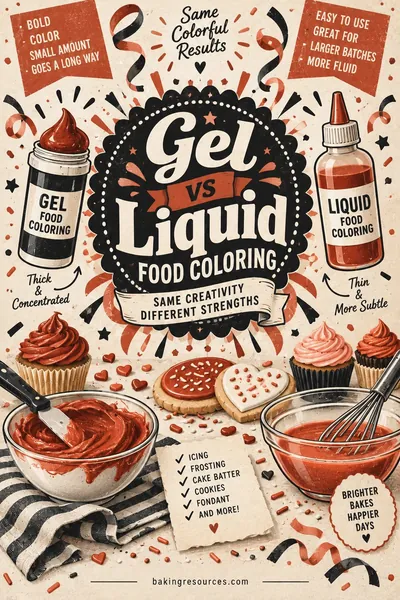
- Coloring is different. Gel and liquid food colors are dosed very differently, and a drop of gel colors far more frosting than a drop of liquid. The gel vs liquid food coloring guide has a dose calculator for that job.
 Baking guideAlmond Extract Substitute: 6 Swaps With Exact AmountsPick a substitute →
 Baking guideGel vs Liquid Food Coloring: How Much to Use + Dose CalculatorTake a look →
When a recipe says "a dash of vanilla," it usually means a small splash, about 1/8 teaspoon. Vanilla is mild enough that a little more or less is fine. If you are out, the vanilla extract substitute page has swaps measured to the spoon.
 Baking guideVanilla Extract Substitute: 9 Swaps and Exact RatiosSee the swaps →
What "to taste" means, and when you should not taste
"Salt to taste" or "season to taste" means there is no fixed amount: you add a little, taste, and keep going until it is right for you. It shows up most in savory cooking, sauces, fillings and toppings. The usual method is to add a pinch at a time, stir well, wait a few seconds for it to dissolve, and taste again. Salt and spice are easy to add and almost impossible to take out, so small steps win.
Baking is trickier, for two reasons:
- Raw batter and dough are not safe to taste. Raw eggs can carry Salmonella, and raw flour can carry E. coli, even when it looks clean and dry. Food safety guidance says not to eat raw dough or batter, so you can't season a cake batter by tasting it.
- Salt does more than flavor. In bread it controls how fast yeast works and makes the dough stronger. Changing it by taste would change the rise.
So when a baking recipe says "salt to taste," use a sensible starting amount instead. For cakes, cookies and quick breads, about 1/4 to 1/2 teaspoon of table salt per cup of flour is the usual range. If you are using salted butter, start at the low end, and our salted vs unsalted butter guide shows how much salt each stick already brings. Things you can safely taste, like a cooked pie filling, a cooked custard sauce, a frosting made without raw egg, or a glaze, can be seasoned the normal way, a pinch at a time.
 Baking guideSalted vs Unsalted Butter: How to Swap in Any RecipeRead it next →
When a pinch really matters, and when it doesn't
A pinch is tiny, but some ingredients are so strong that even a tiny amount shows up. Others barely register. This table helps you decide when to reach for a proper mini spoon and when your fingers are fine.
| Ingredient | How much a pinch changes things | Use a spoon or your fingers? |
|---|---|---|
| Salt in cookies, cakes, frosting | Noticeable. It sharpens sweetness and chocolate flavor | Fingers are fine for "a pinch"; use spoons for larger amounts |
| Cayenne or chili powder | Big. A pinch adds a warm finish; a dash adds real heat | Spoon, at least until you know your pinch |
| Ground cloves | Big. Cloves overpower other spices quickly | Spoon, and lean small |
| Nutmeg, cardamom | Medium. A pinch is clear in custards and cream | Either |
| Cinnamon | Mild. A pinch is a hint in the background | Fingers |
| Sugar in a savory dish or sauce | Mild. It rounds off acidity | Fingers |
| Baking soda or baking powder | Can matter. Too much tastes soapy or bitter | Spoon, always |
| Cream of tartar for egg whites | Helps whites hold; a pinch per 1 or 2 whites is typical | Either |
Leaveners are the one place where "about a pinch" is not good enough. If a recipe gives baking soda as a pinch, it usually means 1/16 teaspoon, and a heavy-handed three-finger pinch could double it. Cloves deserve the same care. If yours ran out, our cloves substitute page explains which swaps are gentler.
 Baking guideCloves Substitute: 8 Easy Swaps for Ground ClovesGet the swap chart →
Worked example: scaling pinches up for a big batch
Pinches are fine in a single batch, but they get messy when you double or triple a recipe. Counting out twelve pinches is slow and the errors add up. Convert them to spoons instead.
Say a spiced cookie recipe makes 3 dozen and calls for:
- A pinch of ground cloves
- A dash of cayenne
- A smidgen of black pepper
- 2 pinches of salt on top of the 1/2 teaspoon already in the dough
You want 12 dozen for a cookie swap, so you need four times the recipe. Here is the math:
- Cloves: 1 pinch x 4 = 4 pinches. Four pinches is 4/16 = 1/4 teaspoon.
- Cayenne: 1 dash x 4 = 4 dashes. Four dashes is 4/8 = 1/2 teaspoon.
- Black pepper: 1 smidgen x 4 = 4 smidgens. Four smidgens is 4/32 = 1/8 teaspoon, which is one dash.
- Extra salt: 2 pinches x 4 = 8 pinches. Eight pinches is 8/16 = 1/2 teaspoon, added to the 2 teaspoons of salt the scaled dough already needs.
Now every amount is a normal measuring spoon. That is both faster and more accurate, because one level 1/4 teaspoon is more consistent than four finger pinches. If you're scaling the whole recipe, the guide to scaling recipes covers the parts that do not scale in a straight line, like bake time and pan size.
 Baking guideHow to Scale a Recipe Up or Down Without Ruining ItShow me how →
Going the other way works too. If you halve a recipe that calls for 1/8 teaspoon of something, half of that is 1/16 teaspoon, which is exactly one pinch.
Worked example: turning pinches into grams for a recipe card
Some bakers like to write everything in grams. Here is how a pinch looks on a gram-based recipe card, using a batch of whipped cream for a pie.
The recipe says: 1 cup heavy cream, 2 tablespoons powdered sugar, 1/2 teaspoon vanilla, and a pinch of salt.
- A pinch of table salt is about 0.4 g.
- A pinch of Diamond Crystal kosher salt is about 0.2 g.
- Most kitchen scales show 0 g for either one.
So in practice you write "a pinch (about 0.4 g table salt)" on the card and measure it with a 1/16 teaspoon spoon or your fingers. Writing 0 g, or rounding up to 1 g, would both be wrong. That is the honest limit of weighing: below about a gram, spoons win. Our kitchen scale vs measuring cups guide explains where each tool is strongest.
 Baking guideKitchen Scale vs Measuring Cups: Why Weight WinsRead the guide →
If you double that whipped cream, two pinches equal a dash, 1/8 teaspoon, which is about 0.8 g of table salt. Still too small for most scales, but now an ordinary 1/8 teaspoon measure does the job.
Why sweet recipes call for a pinch of salt
It can look odd to see "a pinch of salt" in whipped cream, caramel, hot cocoa or a fruit pie filling. The salt is not there to make anything taste salty. At that tiny amount, it works on how you taste everything else.
- It softens bitterness. Chocolate, cocoa, coffee and dark caramel all have a bitter edge. A little salt makes that edge less noticeable, so the rich flavors come forward.
- It makes sweetness taste rounder. Very sweet things can taste flat and one-note. A pinch of salt gives them a bit of contrast, so the sugar tastes cleaner rather than cloying.
- It lifts fruit. In apple, berry or cherry fillings, a pinch of salt makes the fruit taste brighter, a little like a squeeze of lemon does.
The amount matters, though. A pinch, about 1/16 teaspoon, is below the point where most people would call the dish salty. A full 1/4 teaspoon in a single cup of whipped cream would be easy to taste. That is why these recipes say a pinch and not a measured spoonful: it is meant to stay in the background.
If your butter is salted, you can often skip that pinch, since the butter already brings some salt. Each stick of salted butter carries about 1/4 teaspoon of salt, give or take by brand, which is about four pinches' worth.
Other vague measures in old family recipes
Pinch and dash are not the only fuzzy words you will find on a handwritten recipe card. Older American cookbooks and family recipes use a whole set of everyday measures. None of them had a strict size, but these are the usual working guesses:
| Old measure | Rough modern amount | Notes |
|---|---|---|
| Saltspoon | About 1/4 teaspoon | The tiny spoon from an old salt cellar |
| Scant (as in "scant cup") | A little under the full measure | Fill the cup, then take out a spoonful or two |
| Heaping or rounded | A little over the full measure | Do not level it off; leave a mound on top |
| Knob of butter | About 1 to 2 tablespoons | A chunk you could cut off the end of a stick |
| Butter the size of a walnut | About 2 tablespoons | A common phrase in old cake and biscuit recipes |
| Butter the size of an egg | About 1/4 cup (4 tablespoons) | Half a stick |
| Teacup | About 3/4 cup | Old teacups were smaller than a measuring cup |
| Handful | About 1/4 to 1/2 cup | Depends on the hand and the ingredient |
These are estimates, not standards, so use them as a starting point and trust the dough or batter. If a cake batter looks much thicker or thinner than you expect, the old measure was probably different from the guess. A good habit with a treasured family recipe is to make it once using these guesses, write down what you actually used in modern spoons and cups, and keep that version with the original card. Next time you have a repeatable recipe instead of a riddle.
The same goes for pinches on those cards. If Grandma's recipe says "a pinch of nutmeg" and the cookies always tasted strongly of nutmeg, her pinch was probably generous, maybe closer to a dash. Bake a test batch with a dash, taste the cooled cookies, and adjust from there. Writing "1/8 tsp" next to the word pinch saves the next baker in the family the same guesswork.
Pinches of spice in holiday pies and cookies
Thanksgiving and Christmas baking is where pinches show up the most. Pumpkin pie, gingerbread, spice cookies and mulled cider spice blends all lean on small amounts of strong spices. A few things to know before the holiday rush:
- Ground spices fade. A jar of nutmeg or cloves that has been open since last December may have lost a lot of its punch. If the spice smells faint when you open the jar, a "pinch" will taste like nothing. Either buy fresh or use a little more.
- Cloves and allspice are the strong ones. In a pumpkin pie spiced with cinnamon and ginger, a pinch of cloves is plenty. A dash can take over.
- Make your own blend once. If you bake several spiced things, mix a jar of your own blend so you are not pinching five jars each time. The pumpkin pie spice substitute page gives a homemade blend with exact amounts.
- Salt helps sweet things. A pinch of salt in caramel sauce, whipped cream or a sugar glaze makes the sweetness taste rounder. It is one of the most useful pinches in holiday baking.
If a holiday recipe calls for a pinch of a spice you do not have, swap in something close rather than leaving it out. The nutmeg substitute guide, for example, lists swaps by the teaspoon so you can scale them down to a pinch.
Common mistakes with pinches and dashes
- Pinching kosher salt when the recipe meant table salt. By volume, a pinch of kosher salt has less salt, so the result can taste flat. The reverse, a pinch of table salt where the writer used kosher, makes things saltier. At pinch size it is a small difference, but it adds up if the recipe has several.
- Using a three-finger pinch for leaveners. Baking soda is strong. Use a spoon.
- Shaking straight from the jar over the bowl. A "dash" from a shaker can be anything from a few grains to a heap when the lid comes loose. Shake into your palm or a spoon first.
- Counting pinches for a big batch. Convert to teaspoons once you need more than about four pinches. Sixteen pinches is a teaspoon.
- Treating "to taste" as "skip it." Leaving salt out entirely makes sweets taste flat. Use the starting amounts above.
- Tasting raw batter to check seasoning. Raw egg and raw flour are not safe to eat. Season by the recipe, or taste only cooked fillings and sauces.
- Using a damp finger. Wet fingers pick up far more salt or spice and leave clumps behind. Pinch with dry hands.
Tools that make tiny measures easy
You do not need special equipment to measure a pinch, but a few cheap tools make it much easier to repeat:
- Mini measuring spoon set. The usual set has a tad, dash, pinch and smidgen, and sometimes a drop. If you bake often, it is the simplest fix for vague recipes.
- A 1/8 teaspoon measure. Most standard spoon sets include one. Half-fill it for a pinch, or level it for a dash.
- A small dish for salt. Keeping salt in an open dish instead of a shaker makes pinching fast and consistent, and you can see how much you take.
- Droppers or dropper-top bottles. For extracts and oils you use by the drop, a dropper bottle makes drops much more even than tipping a full bottle.
If you want to get better at measuring generally, the guide to measuring baking ingredients covers spoons, cups, scales, and the leveling habits that make the biggest difference.
Questions people ask
How much is a pinch of salt in teaspoons?
A pinch of salt is about 1/16 teaspoon by the common definition used on mini measuring spoon sets. For fine table salt that weighs about 0.4 grams. For Diamond Crystal kosher salt, which is much lighter, a pinch weighs about 0.2 grams. A real finger pinch can be anywhere from half to double that, depending on how many fingers you use.
Is a dash bigger than a pinch?
Yes. By the usual definitions a dash is 1/8 teaspoon and a pinch is 1/16 teaspoon, so a dash is twice as much as a pinch. A smidgen is smaller than both at 1/32 teaspoon. Some older cookbooks use these words more loosely, so if a recipe is from a family card, the writer may simply have meant a small shake.
How many pinches are in a teaspoon?
There are 16 pinches in a teaspoon if you use the 1/16 teaspoon definition. That also means 8 dashes or 32 smidgens make a teaspoon, and 48 pinches make a tablespoon. When a scaled recipe needs more than about four pinches of something, it is faster and more accurate to switch to measuring spoons.
How much is a dash of liquid?
A dash of liquid is usually treated as 1/8 teaspoon, about 0.6 mL, or roughly 12 drops from a dropper. In practice it means a quick splash from the bottle. Older recipes sometimes say a dash of liquid is just a few drops, so for strong flavors like peppermint or almond extract, start with less and add more after tasting a cooked result.
How much is a smidgen?
A smidgen is 1/32 teaspoon on most mini measuring spoon sets, half of a pinch. For table salt that is about 0.2 grams, and for ground spices it is around 0.1 gram. It is the smallest dry measure most recipes use, and it is mostly for very strong ingredients like cayenne, ground cloves or black pepper in a sweet recipe.
How much is a pinch of cinnamon or nutmeg?
A pinch of ground cinnamon or nutmeg is about 1/16 teaspoon, which weighs roughly 0.2 grams. Ground spices are light and fluffy, so a finger pinch of them varies more than a pinch of salt. Cinnamon is mild, so a pinch is just a hint. Nutmeg and especially cloves are stronger, so a pinch of either is easy to notice in custards, whipped cream and pie fillings.
Can I weigh a pinch on a kitchen scale?
Not really. A pinch of salt weighs well under 1 gram, and most home kitchen scales only read in 1 gram steps, so they will show zero. For anything smaller than about 1/4 teaspoon, a measuring spoon is more accurate than a scale. Jewelry or pocket scales that read to 0.01 grams can weigh a pinch, but few home bakers need one.
What does salt to taste mean in a baking recipe?
It means the amount is up to you, but in baking you usually cannot taste raw batter or dough safely, because raw eggs and raw flour can carry bacteria. Use a starting point instead: about 1/4 to 1/2 teaspoon of table salt per cup of flour for cakes, cookies and quick breads. Cooked fillings, sauces and glazes can be seasoned by tasting, a pinch at a time.