
How Much Dough for a 12 Inch Pizza, Plus Every Other Size

A 12 inch pizza takes about 255 grams (9 ounces) of dough for a classic New York style crust: thin in the middle, with a slim, chewy rim. For a thin and crispy crust, use about 190 grams. For a thicker hand-tossed crust, use about 320 grams, and for a thick pan pizza, about 385 grams. Those weights come from how much dough each style spreads over the 113 square inches of a 12 inch circle.
Once you know the weight, you can divide any batch of dough into the right size balls or scale a recipe to make exactly what you need. Pick your pizza size and crust style in the calculator below to get the dough weight for each ball.
Free calculator
Pizza dough ball calculator
Pick your pizza size and crust style to see how much dough to weigh out for each ball.
More free baking tools



Dough for a 12 inch pizza, by crust style
The same 12 inch circle can be a crisp cracker or a thick, fluffy pan pie. The difference is how much dough you spread over it. This chart gives the usual range for each style and a good target to aim for.
| Crust style | Dough per square inch | Range for 12 inch | Target |
|---|---|---|---|
| Thin and crispy | About 0.06 oz | 175 to 210 g | 190 g (6.7 oz) |
| New York style | About 0.08 oz | 240 to 275 g | 255 g (9 oz) |
| Neapolitan style | About 0.085 oz | 255 to 290 g | 275 g (9.7 oz) |
| Hand-tossed (thicker, chewy) | About 0.10 oz | 305 to 335 g | 320 g (11.3 oz) |
| Pan pizza (thick, in an oiled pan) | About 0.12 oz | 355 to 415 g | 385 g (13.6 oz) |
If you are not sure which style you want, start with 250 to 260 grams. That is the classic home pizza: easy to stretch, thin enough to cook through in a home oven, and with enough rim to hold onto. Once you have made it once, go up or down 30 to 50 grams next time depending on whether you wanted it thicker or thinner.
Pizza recipes online disagree on these numbers, and that is fine. Some bakers like a slightly thicker New York slice, others go thinner. Pan pizza varies the most because it depends so much on the pan and how high you let it rise. Treat the targets as a reliable starting point, not a rule.
Dough ball weights for every pizza size
The same approach works for any size. Here are the targets for the common home pizza sizes, in grams.
| Pizza size | Thin and crispy | New York | Neapolitan | Hand-tossed | Pan |
|---|---|---|---|---|---|
| 8 inch (personal) | 85 g | 115 g | 120 g | 145 g | 170 g |
| 10 inch | 135 g | 180 g | 190 g | 225 g | 265 g |
| 12 inch | 190 g | 255 g | 275 g | 320 g | 385 g |
| 14 inch | 260 g | 350 g | 370 g | 435 g | 525 g |
| 16 inch | 340 g | 455 g | 485 g | 570 g | 685 g |
To convert to ounces, divide grams by 28.35, or use the grams to ounces converter. A 255 gram ball is 9 ounces, a 350 gram ball is about 12 1/3 ounces, and a 455 gram ball is almost exactly 1 pound.
 Free toolGrams to Ounces Converter (1 oz = 28.3495 g)Do the math for me →
Very small pizzas often get a little extra dough in practice, because the rim takes up a bigger share of a small pie. If your 8 inch pizzas come out thin at the edges, add 10 to 15 grams. True Neapolitan pizzas are usually 10 to 12 inches, since they are made for a very hot oven that cooks a pie in a couple of minutes, so the bigger Neapolitan numbers are only a guide.
How the math works: dough per square inch
Pizza makers figure dough weight with a simple idea often called the thickness factor: how many ounces of dough cover each square inch of pizza. You multiply the pizza's area by that number.
- Find the area. Area of a circle = 3.14 x radius x radius. A 12 inch pizza has a 6 inch radius, so 3.14 x 6 x 6 = about 113 square inches.
- Multiply by the thickness factor. For New York style, 113 x 0.08 = about 9 ounces.
- Convert to grams. 9 x 28.35 = about 255 grams.
The useful thing about this method is what it shows about bigger pizzas. Diameter and area do not grow at the same rate. A 14 inch pizza is only 2 inches wider than a 12 inch, but it has about 154 square inches, 36 percent more. A 16 inch pizza has about 201 square inches, close to 80 percent more than a 12 inch. That is why a 16 inch pizza needs nearly twice the dough of a 12 inch, not just a little more.
Going smaller works the same way. A 10 inch pizza has about 79 square inches, roughly 70 percent of a 12 inch, and an 8 inch has about 50, less than half. So a 255 gram ball for a 12 inch New York pizza could instead make two 8 inch personal pizzas with a little dough to spare.
It also explains why two 12 inch pizzas (226 square inches together) give you more pizza than one 16 inch (201 square inches), using a little more dough.
What each crust style looks and tastes like
Thin and crispy
Think tavern-style or bar pizza: a cracker-like base that snaps rather than folds, usually cut into squares. The dough is rolled or pressed very thin and pricked all over with a fork so it bakes flat. Docking is explained in the guide on what docking dough is.
 Baking guideWhat Is Docking Dough? Why Bakers Prick the CrustSee the timing chart →
New York style
A thin, foldable center with a slim, chewy rim. It is usually made with bread flour, which gives a strong, stretchy dough that can go thin without tearing. The comparison of bread flour vs all-purpose flour explains why the higher protein helps.
 Baking guideBread Flour vs All Purpose Flour: What Really ChangesSee the chart →
Neapolitan style
A soft, thin center with a tall, puffy, airy rim, often with charred spots. It is made for very hot ovens. In a home oven it bakes up more like a New York pizza with a bigger rim. The rim holds a good share of the dough, which is why the ball is a little heavier than a New York ball for the same size.
Hand-tossed
The thicker, softer crust you get at many delivery chains, with a bready rim and a center that holds lots of toppings without flopping. More dough, a slightly longer bake.
Pan pizza
Thick and fluffy, with a fried, crispy bottom from oil in the pan. The dough rises in the pan before baking, so it gets tall and airy. Pan pizzas are often made in rectangular pans too. For those, multiply length by width for the area: a 9x13 inch pan is 117 square inches, so it takes about 400 grams of dough at 0.12 ounces per square inch, and a 10x14 inch pan takes about 475 grams.
Rectangular and sheet pan pizza: dough by pan size
Not every pizza is round. Grandma-style, Sicilian and Detroit-style pizzas are baked in rectangular pans, and the same per-square-inch method works for them. Measure the inside of the pan, multiply length by width, and multiply by the thickness you want. Grandma pizza is thinner, pressed into an oiled pan and baked soon after. Sicilian and Detroit pizzas are thick and rise in the pan before baking.
| Pan | Area | Grandma style (about 0.09 oz per sq in) | Sicilian or Detroit style (about 0.12 oz per sq in) |
|---|---|---|---|
| 8x8 inch square | 64 sq in | About 165 g | About 220 g |
| 9x13 inch | 117 sq in | About 300 g | About 400 g |
| 10x14 inch | 140 sq in | About 355 g | About 475 g |
| Half sheet, 13x18 inch | 234 sq in | About 595 g | About 795 g |
Notice that a 9x13 pan has almost exactly the same area as a 12 inch round, so a 12 inch pizza recipe moves straight into a 9x13 pan. A half sheet pan has about twice the area of a 12 inch pizza, which makes it an easy way to feed a crowd from one pan: two 12 inch dough balls pressed together fill it for a grandma-style pie.
Pan pizza dough needs a generous coat of oil, about 2 to 3 tablespoons in a 9x13 pan, both to stop sticking and to fry the bottom crisp. Press the dough toward the corners, and if it shrinks back, cover it and wait 15 to 20 minutes before pressing again. By the end of its rise in the pan, it will relax all the way into the corners on its own.
Worked example: how many 12 inch pizzas from one recipe?
Say your pizza dough recipe uses 3 cups of all-purpose flour (about 375 grams if you spoon and level), 1 cup of water, 1 1/2 teaspoons of salt, 1 teaspoon of instant yeast and 2 teaspoons of olive oil. How many pizzas does it make?
- Add up the dough. The flour is 375 grams and the water about 237 grams. Salt, yeast and oil add about 20 grams more. Total: about 630 grams. Weigh the finished dough if you can; you will usually lose 10 to 20 grams to the bowl and your hands.
- Divide by your target. Say you end up with about 615 grams after losses. At 255 grams for a New York style 12 inch: 615 / 255 = 2.4.
- Decide what to do with the remainder. You have three good options:
- Make 2 New York style 12 inch pizzas and one small pizza, about 7 inches, with the leftover 105 grams.
- Make 2 hand-tossed 12 inch pizzas at about 305 grams each, at the lighter end of the hand-tossed range.
- Make 3 thin and crispy 12 inch pizzas at about 205 grams each.
This is the main reason to weigh dough. A recipe that says "makes 2 pizzas" might mean two thick 12 inch pies or two thin 14 inch pies, and the only way to know which you will get is to weigh the dough and pick a target.
Scaling a recipe to make exactly the dough you need
If you want exactly 4 balls of 255 grams, it is easier to build the recipe from the weight you need than to scale someone else's recipe and hope. The tool for this is baker's percentage, where every ingredient is written as a percentage of the flour weight. A simple New York style dough looks like this:
- Flour: 100 percent (bread flour or all-purpose)
- Water: 62 percent
- Salt: 2 percent
- Instant yeast: 0.5 percent for an overnight rise in the fridge, or 1 percent for a same-day dough
- Olive oil: 2 percent
Those add up to about 166.5 percent with the smaller yeast amount. To make any amount of dough, divide the total dough weight you want by 1.665 to get the flour, then work out the rest. Add about 3 percent extra to cover what sticks to the bowl. The guide to baker's percentage walks through the method in detail.
 Baking guideBakers Percentage Explained: Scale Any Bread RecipeRead the guide →
| You want | Flour | Water | Salt | Instant yeast (overnight) | Olive oil |
|---|---|---|---|---|---|
| 2 balls of 255 g | 315 g | 195 g | 6 g (1 tsp table salt) | 1.6 g (1/2 tsp) | 6 g (1 1/2 tsp) |
| 4 balls of 255 g | 630 g | 390 g | 13 g | 3 g (1 tsp) | 13 g (1 tbsp) |
| 6 balls of 255 g | 945 g | 585 g | 19 g | 5 g (1 1/2 tsp) | 19 g (1 1/2 tbsp) |
For a same-day dough, double the yeast in each row. If you would rather measure the yeast in packets, the guide to how much yeast is in a packet has the conversion, and the recipe converter can scale any other pizza recipe you already like.
 Baking guideHow Much Yeast Is in a Packet? Grams, Spoons and UsesRead the dough guide →
 Free toolRecipe Converter: Halve, Double or Scale Any RecipeConvert it now →
Hydration, the water percentage, changes how the dough handles. At 62 percent it is easy to stretch and not too sticky. Higher hydration makes a lighter, airier crust but a stickier dough. The bread hydration calculator shows what different water levels feel like.
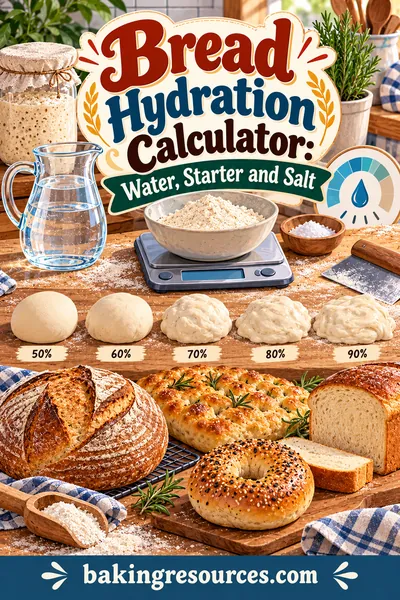 Baking guideBread Hydration Calculator: Water, Starter and SaltGet the details →
Store-bought dough: what a 1 pound ball makes
Grocery store pizza dough is usually sold in bags or tubs of about 1 pound, which is 454 grams. Here is what that makes, using the chart above:
- One 16 inch New York style pizza (455 grams), right on target.
- One 14 inch hand-tossed pizza (435 grams), with a little to spare.
- One 12 inch pan pizza (385 grams), plus enough for a few garlic knots.
- Two 12 inch thin and crispy pizzas (190 grams each), with about 75 grams left over.
- Four 8 inch personal New York style pizzas (about 115 grams each).
If you want one New York style 12 inch pizza from a 1 pound bag, cut off about 255 grams and use the rest for a second smaller pizza or breadsticks. Store-bought dough is often cold and tight straight from the fridge. Let it sit, covered, at room temperature for 1 to 2 hours before you try to stretch it.
How many pizzas to make for a group
Once you know how much dough goes into each pizza, the last question is how many to make. A round pizza is usually cut into 8 slices, and most adults eat 2 to 3 slices of a 12 inch pizza at a meal.
- 12 inch pizza: 8 slices, feeds about 2 to 3 adults.
- 14 inch pizza: 8 larger slices, feeds about 3 to 4 adults.
- 16 inch pizza: 8 to 12 slices, feeds about 4 to 5 adults.
- Kids: plan 1 to 2 slices of a 12 inch pizza each.
Toppings change the math a little. Loaded pizzas with lots of meat and cheese fill people up faster, while plain cheese and thin crust pizzas disappear quickly. If you are serving a big salad or other dishes, plan toward the low end of each range.
For a pizza night with 8 adults and 4 kids, plan on about 4 twelve inch pizzas, which is 4 x 255 = 1,020 grams of New York style dough, or the "4 balls" row in the recipe table above. Add a fifth ball if you have big eaters or want leftovers. Extra dough balls keep in the fridge for a couple of days, so making one more than you think you need costs nothing.
Dividing and shaping dough balls
Getting the weight right is only useful if the balls are shaped well. A tight, smooth ball stretches into an even circle. A loose, lumpy one stretches into an oval with thin spots.
- Weigh as you divide. Set a bowl on the scale, cut a piece of dough, and add or trim small pieces until you hit your target. Tuck any small add-on pieces into the bottom of the ball.
- Shape a tight ball. Fold the edges of the piece into the center, flip it over so the folds are underneath, and roll it on the counter under a cupped hand until the top is smooth and taut.
- Rest them covered. Put each ball in a lightly oiled container or on an oiled tray, cover well so the surface does not dry out, and let them rest.
- Proof or chill. For a same-day dough, let the balls rise at room temperature until puffy and relaxed. For better flavor, refrigerate them for 1 to 3 days. The guide on how long pizza dough should rise gives the full timing by method.
 Baking guideHow Long Should Pizza Dough Rise? Times by MethodGet the proofing tips →
If you make dough balls for different sizes or styles at once, label the containers with the weight. A 255 gram ball and a 320 gram ball look surprisingly alike after a night in the fridge, and the label saves you from stretching the wrong one.
Raw pizza dough contains raw flour, which is not safe to eat even when it is just a nibble. Keep little hands out of the dough bowl and bake any scraps.
Stretching to the right size without tearing
A 255 gram ball wants to be a 12 inch pizza, but it needs help to get there. Mark a 12 inch circle on your parchment or peel the first few times so you can see when you are done.
- Start with relaxed dough. If the dough springs back every time you push it out, the gluten is too tight. Cover it and walk away for 10 to 15 minutes, then try again.
- Press, then stretch. Press the ball into a disc with your fingertips, leaving a 1/2 inch border untouched for the rim. Then drape it over your knuckles and rotate, letting gravity stretch it.
- Keep the center from going too thin. Most tears happen in the middle. Stretch from the edges, not the center.
- Use the right flour. A dusting of flour or semolina on the counter stops sticking without drying out the dough.
If the stretched pizza comes out bigger than 12 inches, your crust will be thinner than planned. That is fine, but next time use a slightly heavier ball, or stop stretching sooner. Bake temperature matters as much as dough weight for the final crust, and the guide to pizza oven temperature covers home ovens, stones and steels.
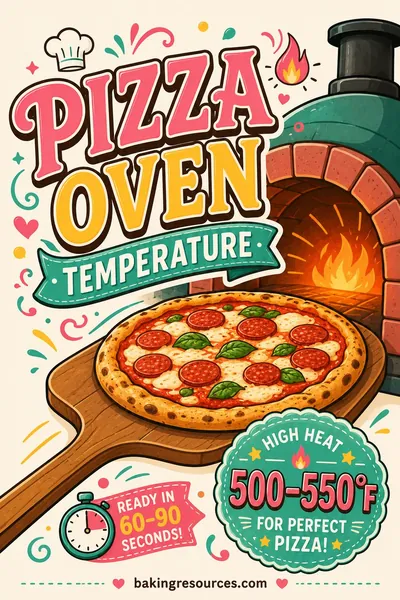 Baking guidePizza Oven Temperature: Home Oven, Stone, and Wood-FiredLearn more →
Troubleshooting: crust too thin, too thick or tearing
Crust too thin or crackly
The ball was too light for the size, or it was stretched past 12 inches. Add 20 to 30 grams next time, or stretch to the mark and stop.
Crust too thick and bready
Too much dough for the size, or the pizza was not stretched all the way. Drop the ball weight by 30 grams, or switch to the next style down in the chart.
Soggy center
Usually a crust that is too thin in the middle with too many wet toppings, or an oven that is not hot enough. Preheat the oven and baking stone or steel fully, and go lighter on the sauce.
Dough tears when stretched
The dough is too cold, too tight, or underdeveloped. Let cold dough warm up longer, rest tight dough, and knead a little more next time. The guide on how to knead dough shows the windowpane test for checking gluten.
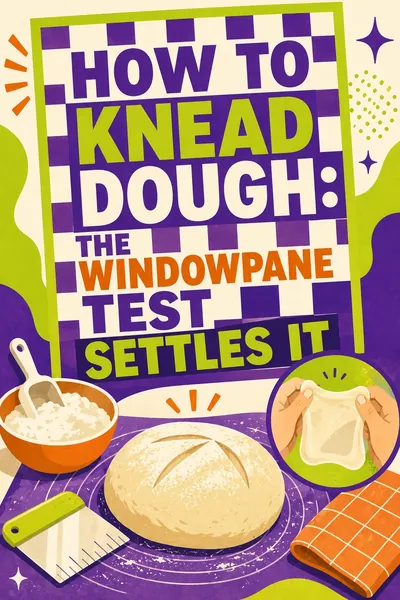 Baking guideHow to Knead Dough: The Windowpane Test Settles ItCheck the rise times →
Dough too sticky to handle
The dough may have more water than you are used to, or it may be overproofed. Use a light dusting of flour on your hands, not in the dough. The guide on why dough gets too sticky covers the other causes.
Winter pizza nights and make-ahead dough for the holidays
Homemade pizza is an easy way to feed a crowd during the holidays, whether it is a movie night with visiting cousins or a New Year's Eve party. Doing the dough ahead takes the pressure off.
- Make dough 1 to 3 days ahead. Mix, divide, ball, and refrigerate the dough. It gets better in the fridge, and on party day you just pull the balls out 1 to 2 hours before baking.
- Freeze extra balls. Lightly oil each ball, wrap it tightly, and freeze it in a freezer bag for up to 3 months for best quality. Thaw overnight in the fridge, then let it sit at room temperature for 1 to 2 hours before stretching.
- Plan for a cold kitchen. Winter kitchens often sit in the low to mid 60s, and dough rises much more slowly there. Give it extra time or a warmer spot rather than adding more yeast.
- Set up a topping bar. Pre-stretched dough on parchment, a tray of toppings, and guests building their own pizzas keeps a party moving. Make personal 8 inch pizzas at about 115 grams of dough each so everyone gets their own.
For more party ideas around the pizza, the list of New Year's Eve party food ideas has easy sides and desserts that bake alongside.
Common mistakes when portioning pizza dough
- Guessing by eye. Dough balls that look the same can differ by 50 grams or more. Weigh them.
- Scaling dough by diameter instead of area. A 16 inch pizza needs nearly twice the dough of a 12 inch, not a third more.
- Measuring flour by the scooped cup. Scooped flour can weigh 20 percent more than spooned flour, which throws off the whole recipe. Weigh the flour or spoon and level it.
- Stretching cold dough. Cold dough tears and shrinks back. Let it come up to room temperature first.
- Forgetting the leftovers in the bowl. Plan about 3 percent extra dough to cover what sticks to the bowl and your hands.
- Rolling a hand-tossed dough with a rolling pin. A pin presses out the gas that makes the rim puffy. Use your hands for New York, Neapolitan and hand-tossed crusts, and save the pin for thin and crispy.
- Using the same ball weight for every style. A pan pizza needs about 50 percent more dough than a New York pizza of the same size.
Questions people ask
How many grams of dough for a 12 inch pizza?
About 255 grams for a New York style 12 inch pizza, with a normal range of 240 to 275 grams. Use about 190 grams for a thin and crispy crust, about 275 grams for Neapolitan style, about 320 grams for a thicker hand-tossed crust, and about 385 grams for a pan pizza. Weigh the dough rather than guessing, since balls that look alike can differ a lot.
How many ounces of dough for a 12 inch pizza?
About 9 ounces of dough makes a 12 inch New York style pizza. A thin crust takes about 6 1/2 to 7 ounces, a hand-tossed crust about 11 ounces, and a pan pizza about 13 1/2 ounces. The math is the area of the pizza, about 113 square inches, times the ounces of dough per square inch for the style you want.
How much dough do I need for a 14 inch pizza?
About 350 grams, or 12 1/3 ounces, for a New York style 14 inch pizza. A 14 inch pizza has about 36 percent more area than a 12 inch, so it needs about a third more dough. A thin crust 14 inch takes about 260 grams, and a hand-tossed one about 435 grams.
How much dough for a 12 inch thin crust pizza?
About 190 grams, or 6.7 ounces, for a 12 inch thin and crispy pizza, with a range of about 175 to 210 grams. Roll or press it thin, prick it all over with a fork so it does not puff, and bake it hot on a preheated stone, steel or sheet pan. For a thin but foldable New York crust instead, use about 255 grams.
How many pizzas does a pound of dough make?
A 1 pound ball of dough, about 454 grams, makes one 16 inch New York style pizza, one 14 inch hand-tossed pizza, or one 12 inch pan pizza. It also makes two 12 inch thin and crispy pizzas or four 8 inch personal pizzas. Most store-bought dough comes in 1 pound bags.
Why does my 12 inch pizza come out too thick?
Either the dough ball was too heavy for the size, or it was not stretched all the way to 12 inches. Weigh the ball, aiming for about 255 grams for a classic crust, and mark a 12 inch circle on your parchment so you know when to stop. If the dough keeps springing back, rest it 10 to 15 minutes before stretching more.
How do I scale a pizza dough recipe?
Decide how many balls you need and how much each should weigh, then multiply to get the total dough. Add about 3 percent for what sticks to the bowl. Divide that total by the sum of the recipe's baker's percentages, about 1.665 for a basic dough, to get the flour weight. Every other ingredient is then a set percentage of that flour.
Can I freeze pizza dough balls?
Yes. Lightly oil each ball, wrap it tightly, and freeze it in a freezer bag for up to 3 months for best quality. Thaw it overnight in the refrigerator, then let it sit covered at room temperature for 1 to 2 hours before stretching. Freezing works best on dough that has already had its first rise.